Artwork
Hyacinthe Rigaud
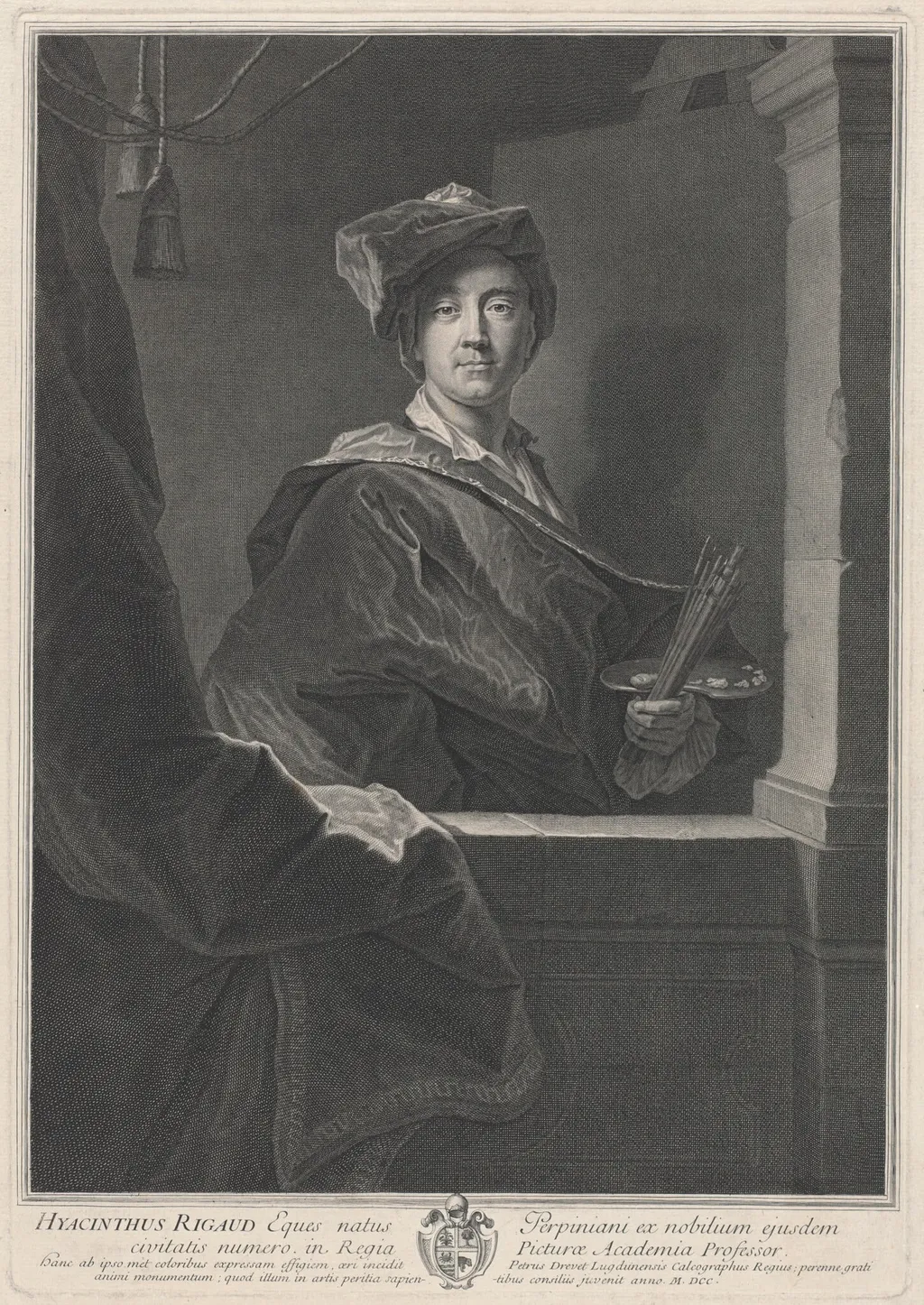
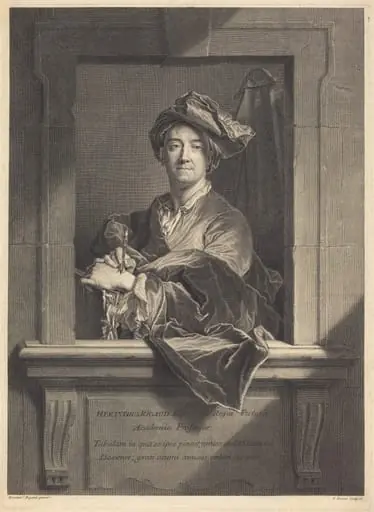
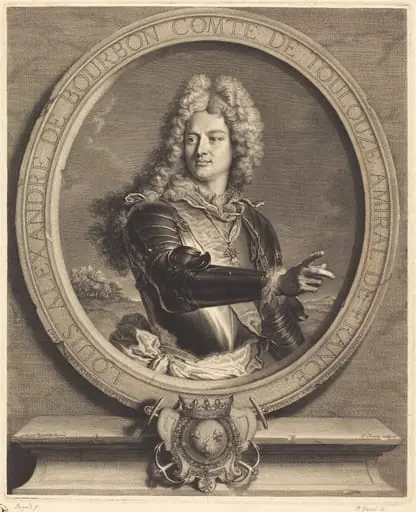
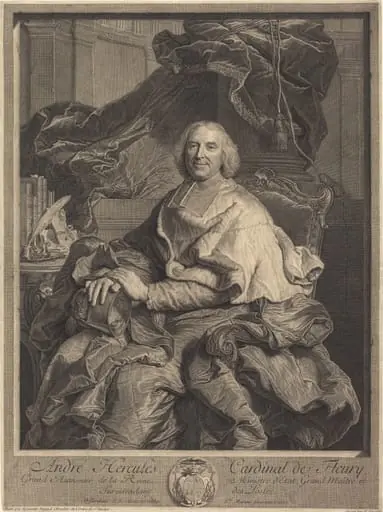
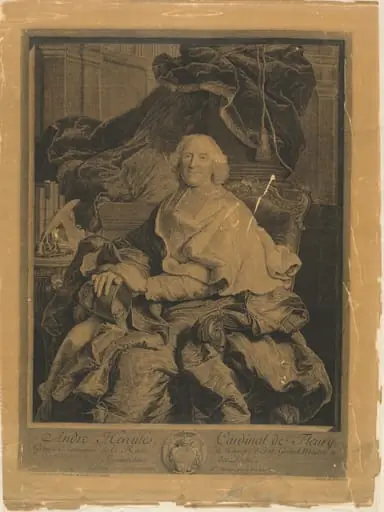
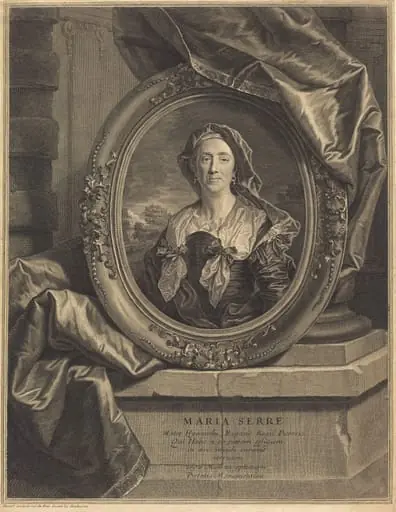
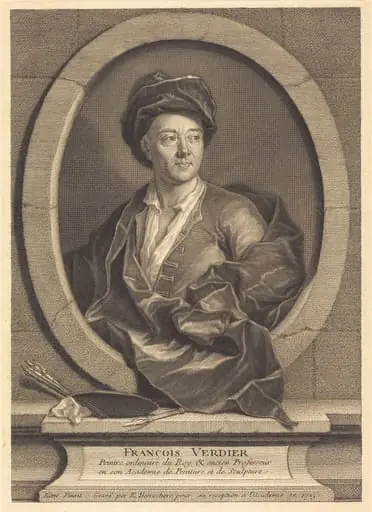
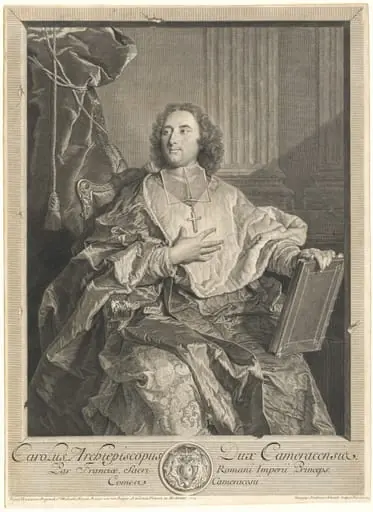
Hyacinthe Rigaud is an ink print by the Baroque artist Pierre Drevet. It dates from 1700 and is held in the collection of the National Gallery of Art.
About this work
Overview
This 1700 engraving, executed on laid paper, presents a portrait of the French painter Hyacinthe Rigaud. The image was produced by the engraver Pierre Drevet, a member of a distinguished family of portrait engravers active in France from the late 17th through the 18th centuries.
Subject & Meaning
Rigaud is shown in a dark coat and a broad-brimmed hat, holding a palette and brushes, gestures that identify him unmistakably as a painter. His posture—leaning against a window frame and gazing directly at the viewer—conveys a composed, professional demeanor, emphasizing his status as a noble artist of his time.
Technique & Style
Drevet employed delicate, fine lines to model the figure’s features and clothing, creating subtle gradations of light and shadow. The monochrome medium of engraving allows for precise rendering of texture, from the sheen of the coat to the wooden window frame, while the plain background focuses attention on the sitter and his tools.
History & Provenance
Produced in the year 1700, the print reflects the collaborative practice of the period, where leading portrait painters were commemorated through the work of skilled engravers. The Drevet family’s long-standing reputation for high‑quality portrait prints helped disseminate images of prominent cultural figures like Rigaud across France and beyond.
Context
At the turn of the 18th century, portrait engravings served both as a means of honoring distinguished individuals and as a commercial product for a growing market of art collectors. This work exemplifies how engravers such as Pierre Drevet translated painted likenesses into reproducible prints, extending the reach of the original portrait.
Artist & collection
Artist
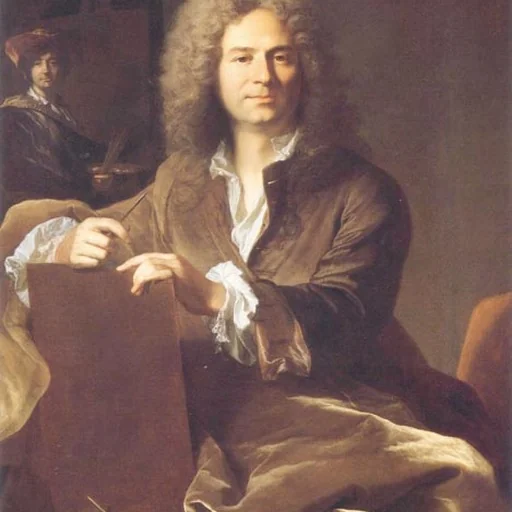
The Drevet Family were leading portrait engravers of France for over a hundred years. Their fame began with Pierre, and was sustained by his son, Pierre-Imbert, and by his nephew, Claude.