Artwork
Untitled
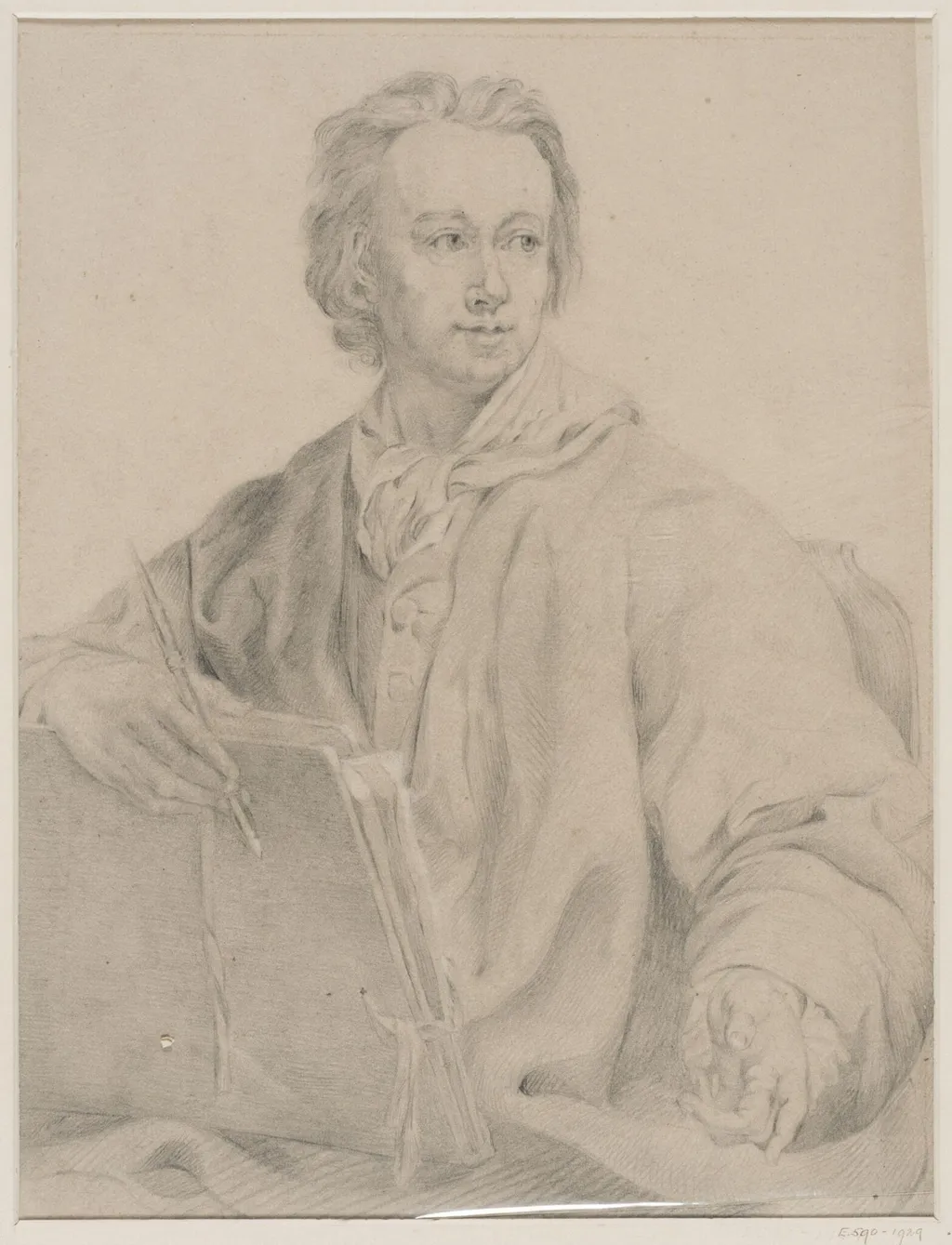
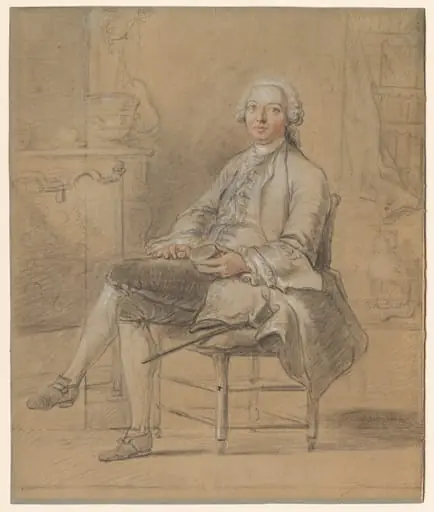
Untitled is a drawing by the Romanticist artist Anton Raphael Mengs. It dates from 1750 and is held in the collection of the Victoria and Albert Museum.
About this work
Overview
Its immediacy reflects the artist’s engagement with self-representation as part of a broader practice of studio documentation.
Created in 1750, this drawing by Anton Raphael Mengs is a preparatory study for an engraving by Domenico Cunego. Executed in pencil or chalk, it captures the artist in a relaxed, introspective pose. The composition is spare, with minimal background elements, focusing attention on the figure’s posture and expression. Its immediacy reflects the artist’s engagement with self-representation as part of a broader practice of studio documentation.
Subject & Meaning
Mengs depicts himself seated, wearing a loose coat, one leg crossed, holding a sheet of paper in his left hand. The gesture suggests contemplation or the act of creation, reinforcing the artist’s identity as a thinker and maker. The presence of a dog at his feet adds a quiet, domestic note, softening the formality of the portrait. There is no overt symbolism—instead, the image conveys a sense of private, unguarded presence.
Technique & Style
The drawing employs light, fluid lines to suggest form without heavy definition. Soft shading around the face and shoulders models volume, while the fabric of the coat is rendered with swift, tentative strokes. The background is reduced to faint outlines of a chair and the dog’s curled shape, emphasizing the figure’s solitude. The technique prioritizes observation over finish, aligning with the academic tradition of preparatory studies.
History & Provenance
This drawing was made as a working model for an engraving by Domenico Cunego, a skilled reproductive artist active in Rome. The engraving, completed shortly after, circulated the image more widely, but the original sketch remained in Mengs’s possession or within his circle. Its survival offers insight into the collaborative process between painter and engraver in 18th-century artistic production.
Context
Mengs worked during the transition from Rococo to Neoclassicism, favoring clarity and restraint over ornamental excess. This drawing reflects his interest in naturalistic representation and personal introspection, values that would later inform Neoclassical portraiture. Though often associated with formal commissions, his private sketches reveal a more intimate side of his artistic process, distinct from the grandeur of his public works.
Legacy
The drawing stands as an example of how artists used self-portraiture not for public display but as a tool for reflection and technical rehearsal. Its modest scale and unfinished quality contrast with the polished engravings derived from it, highlighting the gap between studio practice and mass reproduction. It remains a quiet testament to the artist’s daily engagement with his own image.
Artist & collection


![Head of a Gentleman [recto], by Joseph Ducreux](https://artifactworldgallery.com/img/joseph-ducreux--head-of-a-gentleman-recto--30a49475a608e388-w320.webp)