Artwork
松に鴉図|Two Crows on a Pine Branch
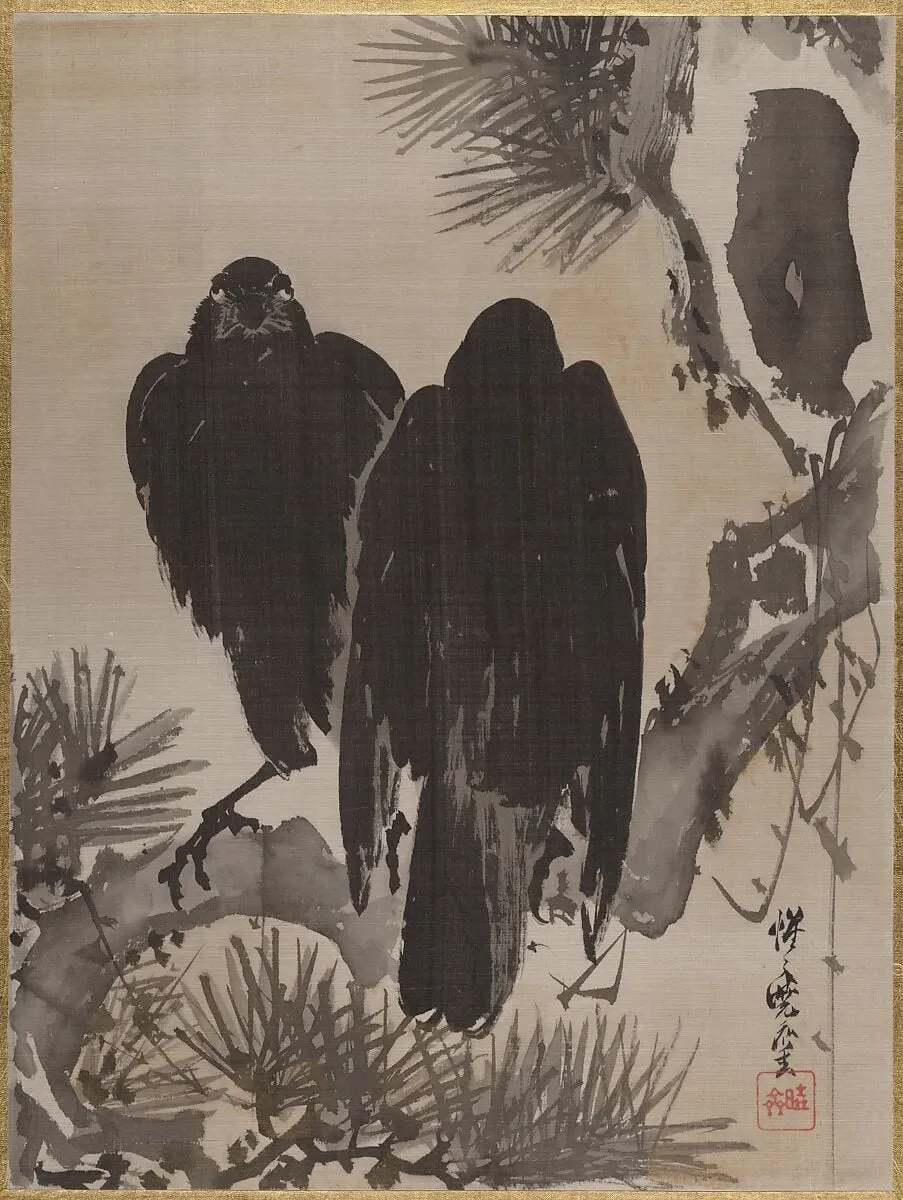
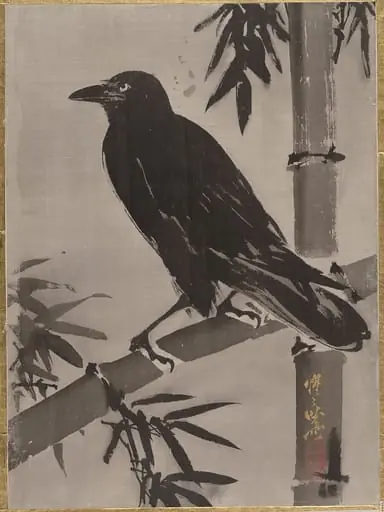
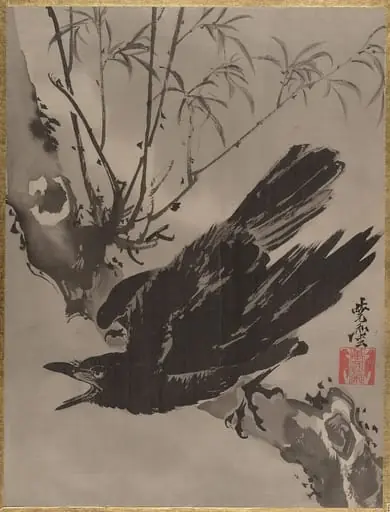
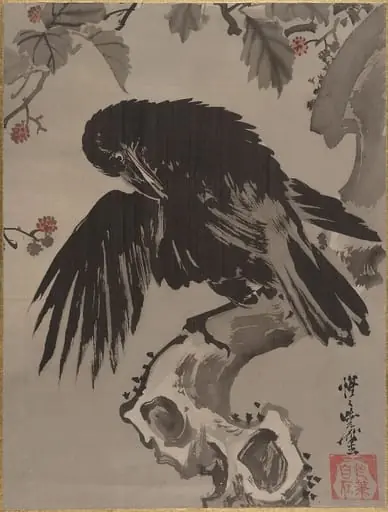
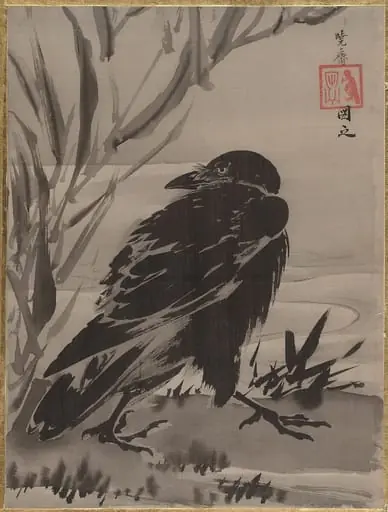
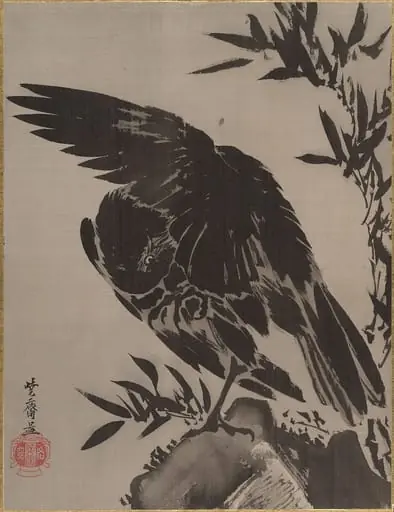
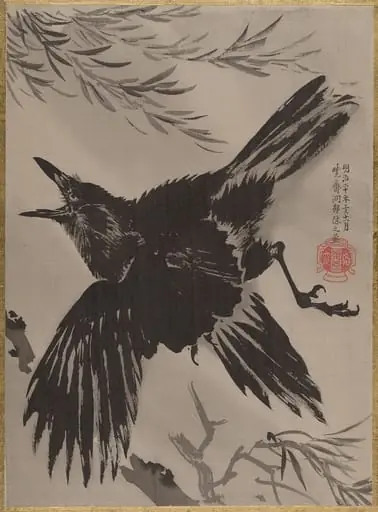
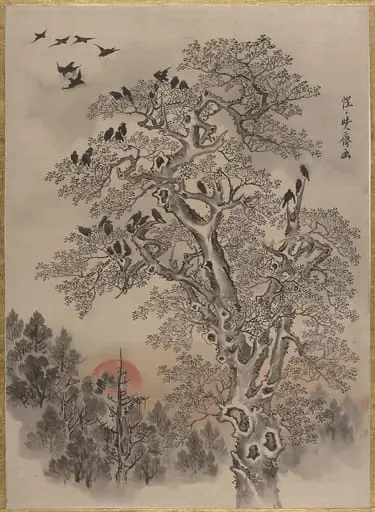
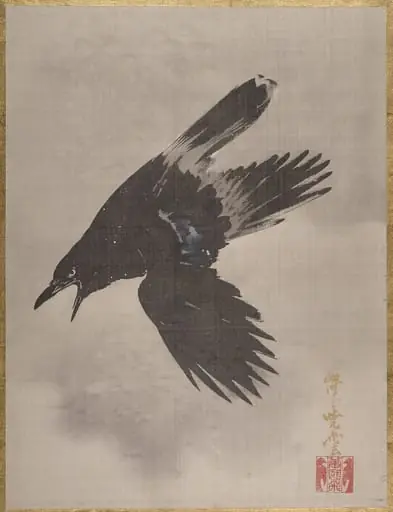
松に鴉図|Two Crows on a Pine Branch is an ink painting by the Impressionist artist Kawanabe Kyōsai 河鍋暁斎. It dates from 1887 and is held in the collection of the Metropolitan Museum of Art. Created circa 1887 by Kawanabe Kyōsai, this small album leaf presents a brief scene of two crows perched on a pine branch.
About this work
Overview
Created circa 1887 by Kawanabe Kyōsai, this small album leaf presents a brief scene of two crows perched on a pine branch. Executed in ink and color on silk, the work belongs to the ukiyo‑e tradition and reflects Kyōsai’s characteristic independence as a painter and caricaturist.
Subject & Meaning
The composition focuses on a gnarled pine branch dusted with snow, upon which two black crows sit facing opposite directions. The opposing gazes suggest vigilance, a common motif in Japanese landscape painting where birds often symbolize watchfulness or omens.
Technique & Style
Kyōsai applied ink directly onto silk without a preliminary sketch, using swift, continuous strokes that convey a sense of immediacy. The brushwork captures the texture of the pine needles and the birds’ forms in a simplified, sharply defined manner, echoing his study of live crows in Tokyo parks.
History & Provenance
The piece is an example of Kyōsai’s later output, produced after he had established a reputation for both serious and satirical works. It remains an album leaf, a format traditionally used for collecting small, portable paintings, and is catalogued among his surviving silk works.
Context
During the late 19th century, ukiyo‑e artists increasingly explored natural subjects beyond the urban scenes that had dominated earlier prints. Kyōsai’s choice of a winter pine and crows aligns with this broader shift toward atmospheric landscape motifs while retaining his personal, expressive brush technique.
Artist & collection
Artist
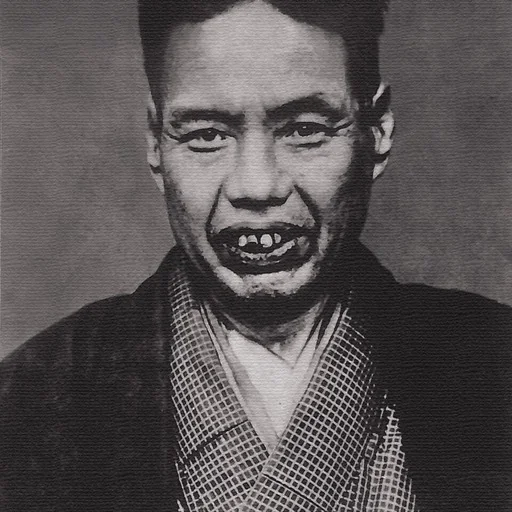
Kawanabe Kyōsai (河鍋 暁斎; May 18, 1831 – April 26, 1889) was a Japanese painter and caricaturist. In the words of art historian Timothy Clark, "an individualist and an independent, perhaps the last virtuoso in traditional Japanese painting".