Artwork
Landscape with a Tree-Lined Lane
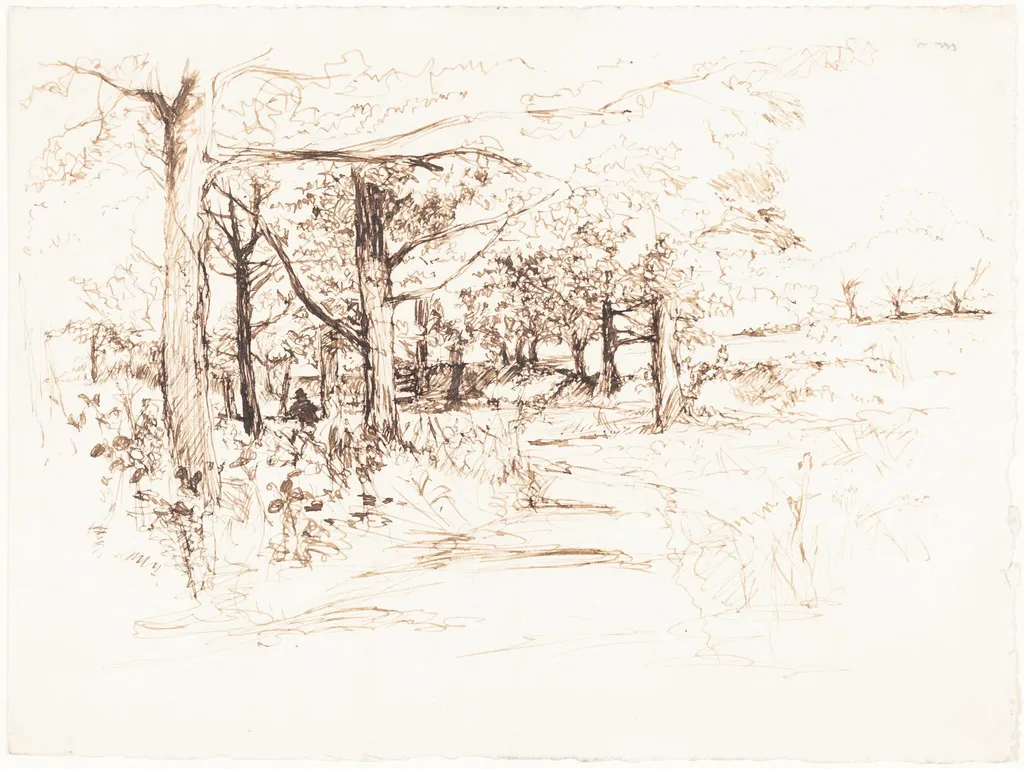
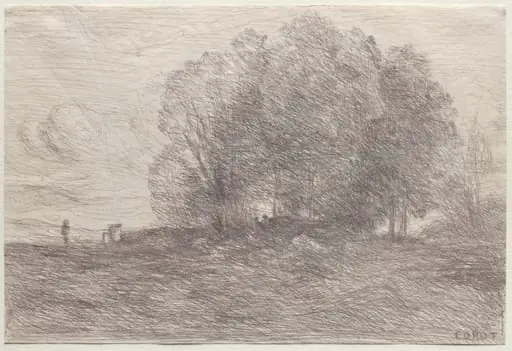
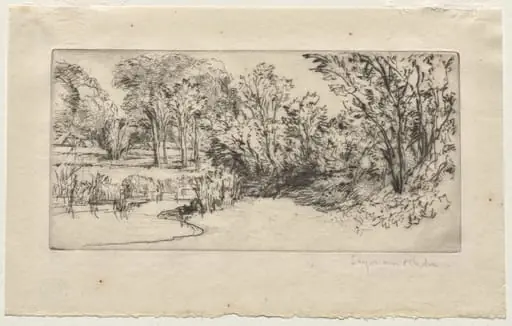
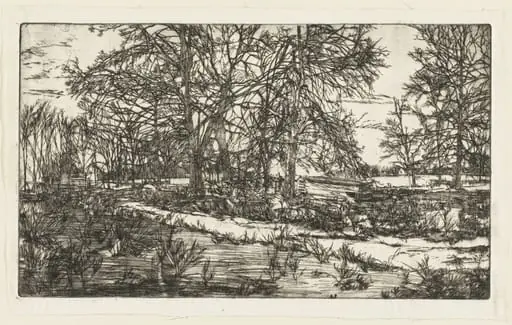
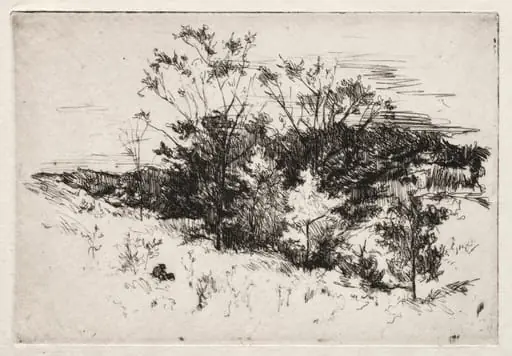
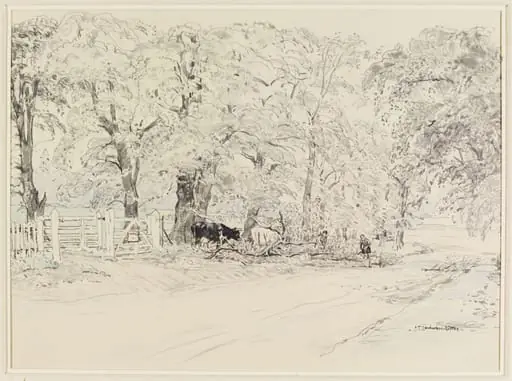
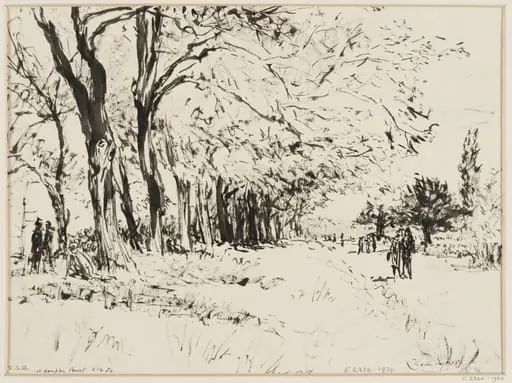
Landscape with a Tree-Lined Lane is an ink drawing by the Impressionist artist Henry Eddowes Keene. It dates from 1858 and is held in the collection of the National Gallery of Art.
About this work
Overview
Created in 1858, this drawing by Henry Eddowes Keene captures a quiet rural path bordered by trees. Executed in pen and brown ink on wove paper, it reflects a spontaneous, observational approach. The composition is unadorned, focusing on the rhythm of the lane and the natural forms flanking it, without idealization or dramatic emphasis.
Subject & Meaning
The scene depicts a modest, everyday landscape—a tree-lined lane receding into the distance. There is no human presence or narrative, suggesting an interest in the quiet rhythms of the natural world. The simplicity of the subject implies a contemplative engagement with place, valuing atmosphere over storytelling.
Technique & Style
Keene employed rapid, overlapping pen strokes to model form and texture. Bare branches are rendered with loose, angular lines, while the ground suggests dry vegetation through undulating, irregular marks. The absence of wash or heavy shading emphasizes line as the primary vehicle for structure and depth, resulting in a tactile, unfinished quality.
History & Provenance
The drawing dates from 1858, a period when Keene was actively producing topographical and landscape sketches. Its survival in good condition suggests it was preserved as a study or personal record rather than a finished work. No documented exhibition or ownership history prior to modern collection records is known.
Context
In mid-19th century Britain, landscape drawing was often tied to topographical surveying and amateur artistic practice. Keene’s work aligns with this tradition, valuing direct observation over studio composition. The sketchy style reflects a broader interest in capturing transient effects of light and season, common among contemporaries engaged in plein air study.
Legacy
This drawing exemplifies the quiet, unpretentious side of Victorian landscape practice. While not widely exhibited or reproduced, it contributes to understanding how artists of the time engaged with the natural world through direct, unpolished mark-making. Its preservation offers insight into the working methods of lesser-known regional draftsmen.
Artist & collection