Artwork
Chōdayu of the Okamotoya from the series ?
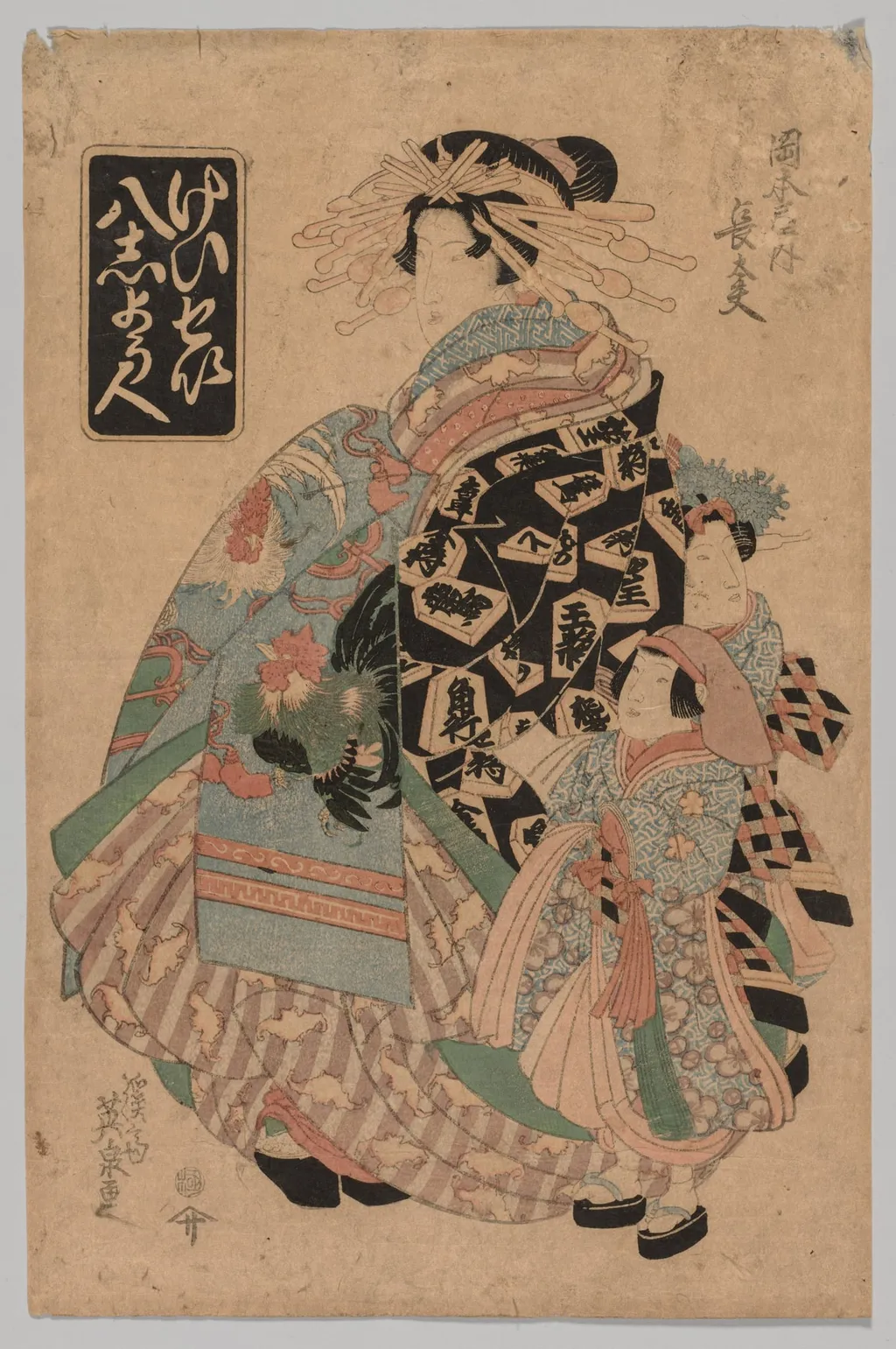
Chōdayu of the Okamotoya from the series ? is a print by the Romanticist artist Keisai Eisen. It dates from 1819 and is held in the collection of the Cleveland Museum of Art.
About this work
Overview
Created in 1819 by Keisai Eisen, this woodblock print is part of a series depicting courtesans from Edo-period brothels. It is currently held in the collection of The Cleveland Museum of Art. The work exemplifies the ukiyo-e tradition, capturing a single figure with refined detail and quiet elegance, reflecting the visual culture of urban pleasure districts in early 19th-century Japan.
Subject & Meaning
The figure is Chōdayu, a courtesan affiliated with the Okamotoya establishment. Her poised stance and elaborate attire signify her status within the licensed pleasure quarters. The fan and ornate hair bow are not merely decorative but serve as markers of rank and refinement, reinforcing the social hierarchy embedded in the world of Edo’s entertainment districts.
Technique & Style
Eisen employed fine linework and layered color printing to render the kimono’s intricate floral and striped patterns. The subdued background emphasizes the figure, while the delicate shading on the fabric suggests texture without overt realism. The fan’s design and the bow’s symmetry reflect the period’s aesthetic preference for balanced, stylized forms characteristic of ukiyo-e portraiture.
History & Provenance
The print was produced during Eisen’s most active period as a designer of bijin-ga, or pictures of beautiful women. It entered the Cleveland Museum of Art’s collection through established channels of early 20th-century Japanese art acquisition, likely via private collectors or dealers who brought ukiyo-e prints to the West during the Japonisme wave.
Context
In early 1800s Edo, courtesan prints served both as entertainment and as fashion records. Each figure represented a real establishment and its highest-ranking women, whose likenesses were sought by patrons and admirers. Eisen’s series contributed to a broader market of printed imagery that blurred the lines between art, commerce, and social documentation.
Legacy
Eisen’s work, though less celebrated than contemporaries like Hiroshige or Hokusai, remains a vital record of Edo’s visual culture. His attention to textile detail and psychological nuance influenced later generations of printmakers and continues to inform scholarly understanding of gender, class, and aesthetics in Japanese urban life.
Artist & collection
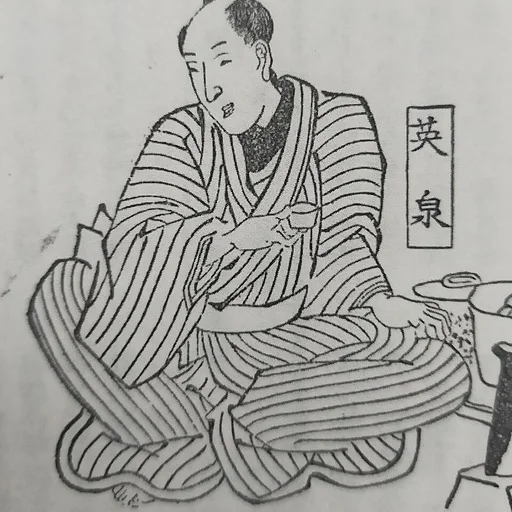
Artist
Eisen lived in Edo (now Tokyo) when the city pulsed with theaters, teahouses, and woodblock prints.

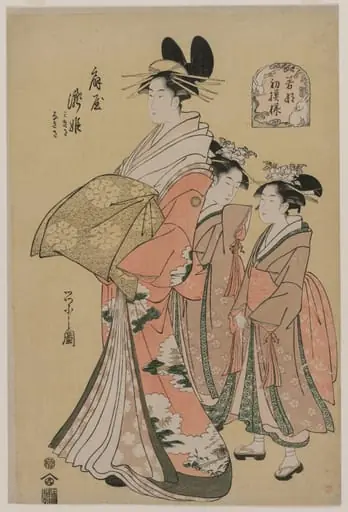 The Courtesan Takihime and Attendants (from the series New Patterns of Young Greens)
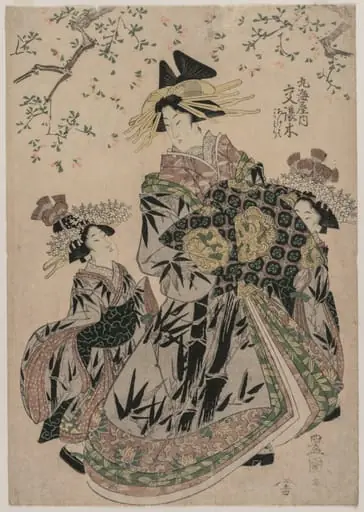 The Courtesan Katakoshigi (?) of Maruebiya with her Kamuro Ageha and Midori
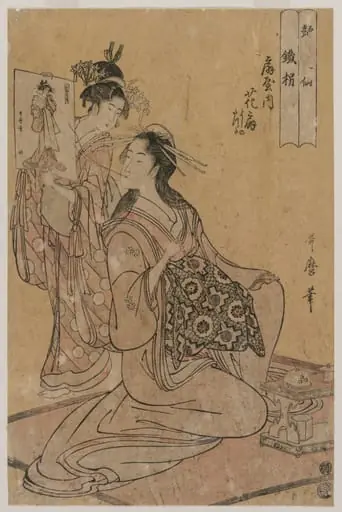 The Courtesan Hana-ogi of Ogiya as the Sennin Tekkai (from the series Eight Immortals of Sensuality)
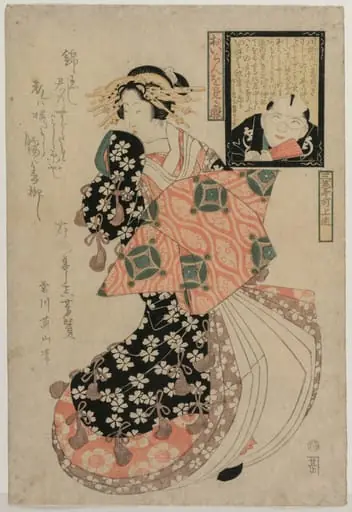 Eyes for Looking at a Courtesan
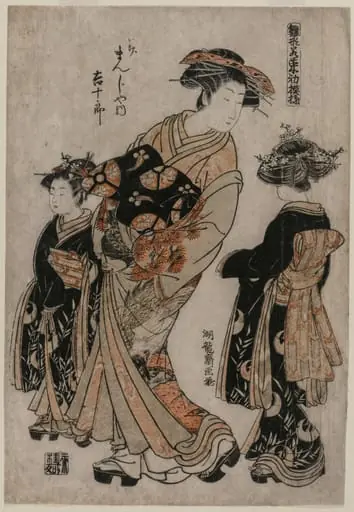 The Courtesan Kichijuro of Kage Manjiya with Two Kamuro (from the series Models for Fashions: New Designs as Fresh as Young Leaves)
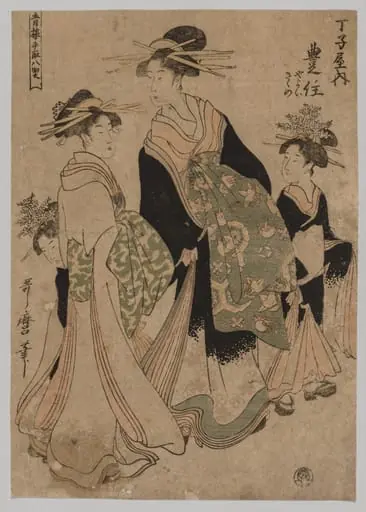 Courtesans and Attendants
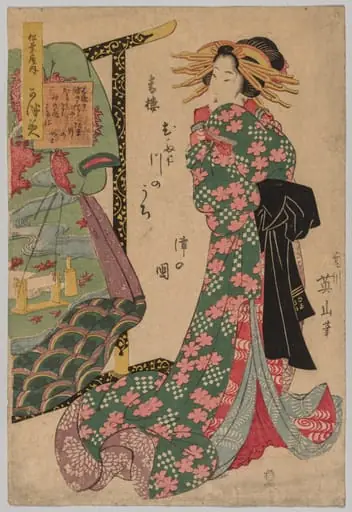 Courtesan Beside Kimono Rack
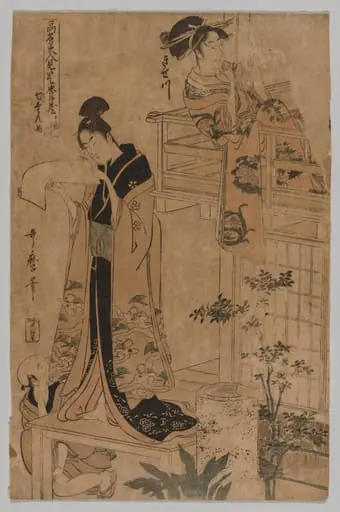 Act VII from the series The Storehouse of Loyal Retainers As Portrayed by Famous Beauties in Twelve Leaves
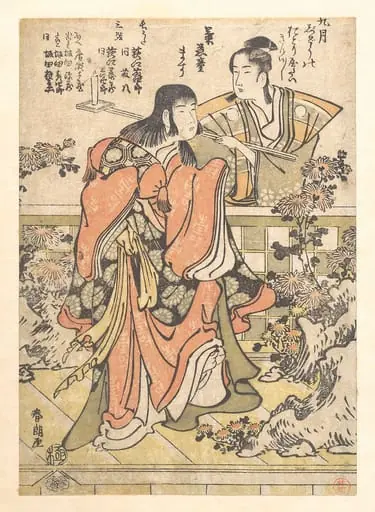 Untitled
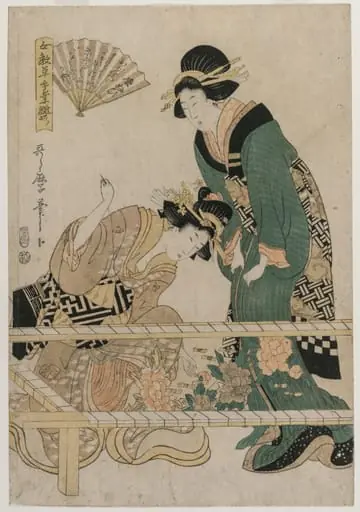 Chinese Embroidery (from the series Instructive Patterns for Women's Handicraft)
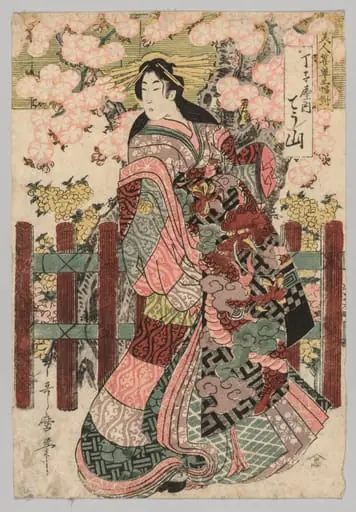 Chōzan of Chōjiya from the series Triptych of Beauties Before Blinds
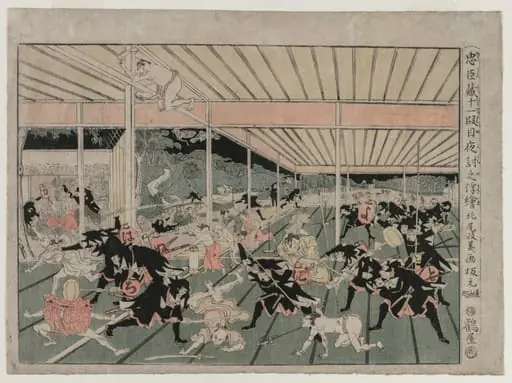 Chushingura: Act XI (from the series Perspective Pictures for The Treasure House of Loyalty)