Artwork
Eyes for Looking at a Courtesan
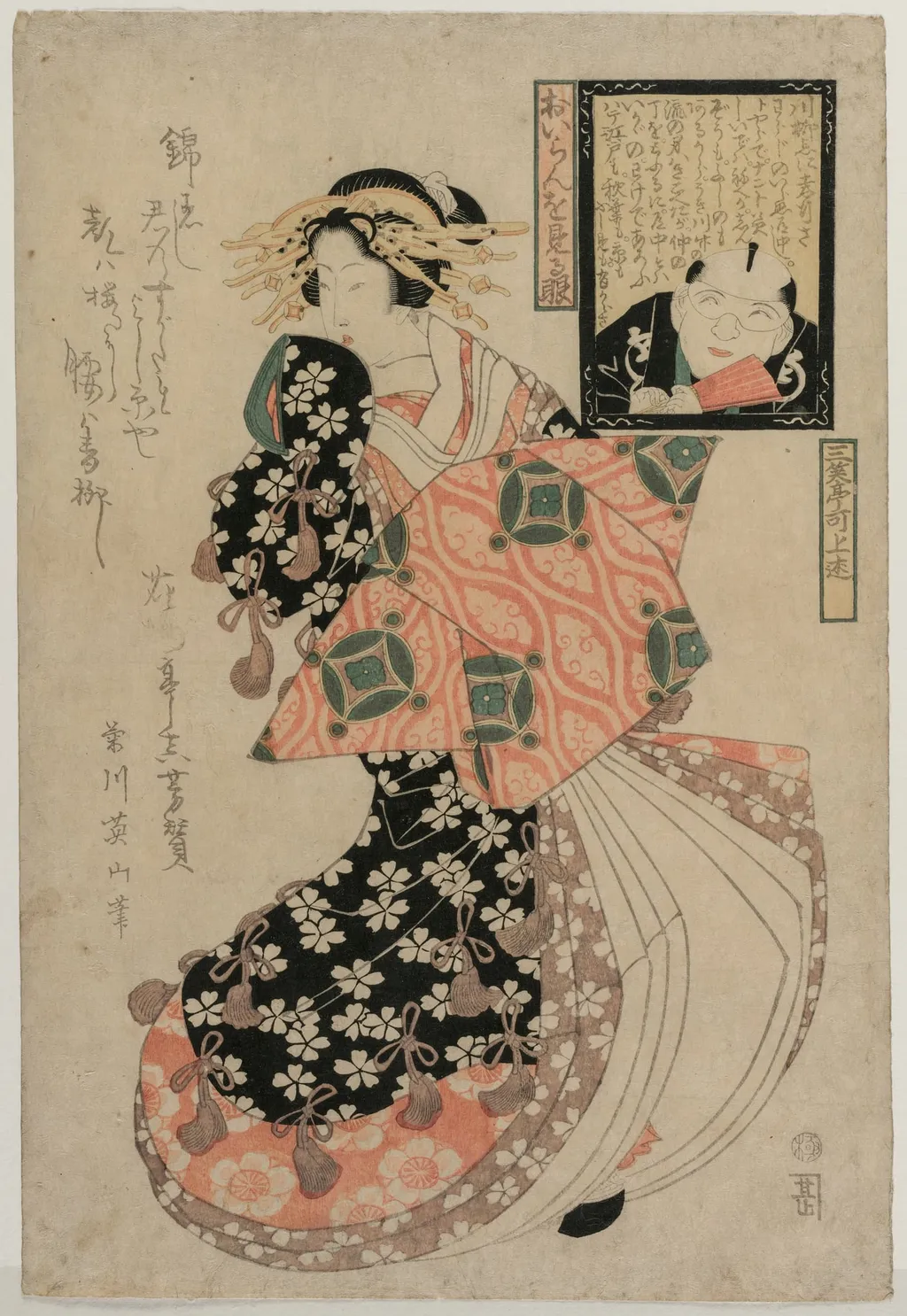
Eyes for Looking at a Courtesan is a print by the Romanticist artist Kikukawa Eizan. It dates from 1810 and is held in the collection of the Cleveland Museum of Art.
About this work
Overview
Eyes for Looking at a Courtesan is a woodblock print by Kikukawa Eizan, dated around 1810.
Eyes for Looking at a Courtesan is a woodblock print by Kikukawa Eizan, dated around 1810. It depicts a courtesan in formal attire, rendered in the ukiyo-e tradition. The work is part of the collection at The Cleveland Museum of Art and exemplifies the refined aesthetic of early 19th-century Japanese printmaking, focusing on the grace and poise of its subject within a restrained compositional framework.
Subject & Meaning
The subject is a courtesan, a figure associated with the pleasure quarters of Edo-period Japan. Her poised stance and delicate accessories suggest a moment of quiet self-possession rather than overt performance. The title implies a gaze directed at her, inviting contemplation of her presence and social role. The work reflects the cultural fascination with beauty, etiquette, and the nuanced identity of women in urban entertainment districts.
Technique & Style
Eizan employed fine line work and subtle color gradations typical of the ukiyo-e genre. The kimono features alternating geometric and floral motifs in red, white, and black, executed with precision through multiple woodblocks. The fan, rendered in solid red, contrasts with the muted background, drawing attention to the figure’s gesture. Hair and facial details are delicately rendered, enhancing the sense of intimacy and refinement without overt realism.
History & Provenance
Created during the Bunka era, the print was likely produced for a commercial market of urban patrons interested in fashionable imagery. It entered the Cleveland Museum of Art’s collection through established channels of early 20th-century Japanese art acquisition. Its preservation reflects the museum’s long-standing commitment to documenting the evolution of Japanese print culture beyond Western artistic frameworks.
Context
This print emerged during a period when ukiyo-e artists increasingly focused on individualized portraits of courtesans and actors, moving beyond broad genre scenes. Eizan’s style, influenced by the earlier Torii and Kaigetsudō schools, emphasized elegance and psychological subtlety. The work aligns with broader trends in Edo-period visual culture that celebrated transient beauty and social performance within licensed entertainment districts.
Legacy
Eizan’s work contributed to the evolution of bijin-ga, or pictures of beautiful women, by infusing traditional motifs with a quieter, more introspective tone. While not widely known outside specialist circles, his prints are valued for their technical precision and emotional restraint. This piece remains a reference for scholars studying the intersection of fashion, gender, and print media in late Edo Japan.
Artist & collection

Artist
Kikukawa Eizan was a designer of ukiyo-e style Japanese woodblock prints. He first studied with his father, Eiji, a minor painter of the Kanō school, and subsequently with Suzuki Nanrei (1775–1844), of the Shijō…

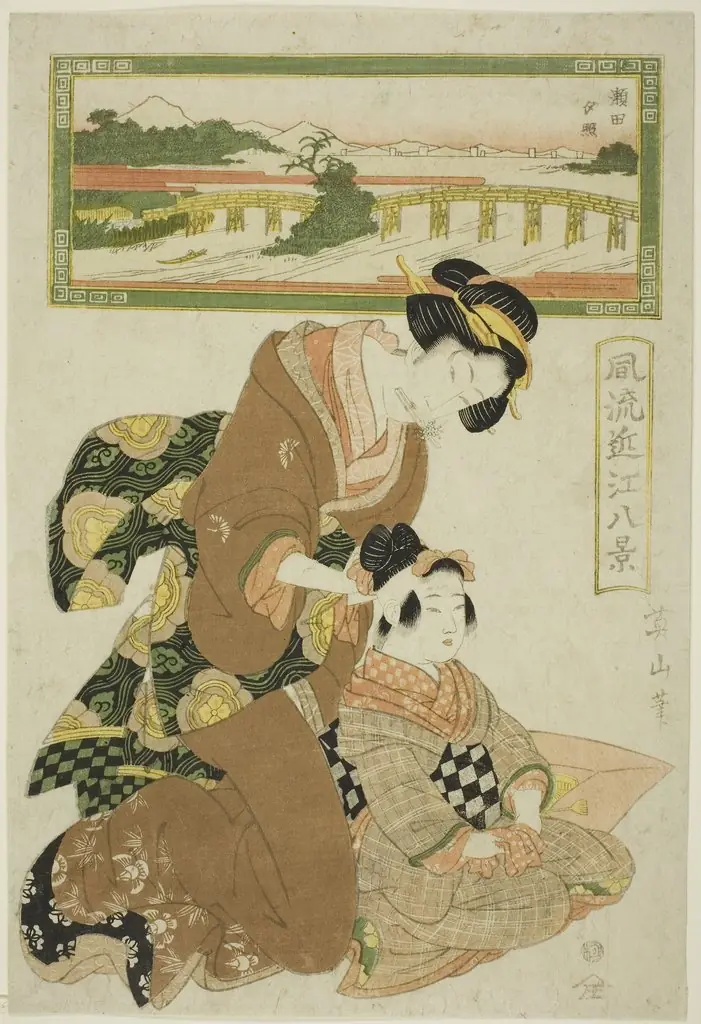 Evening Glow at Seta (Seta sekisho), from the series "Fashionable Eight Views of Omi (Furyu Omi hakkei)"
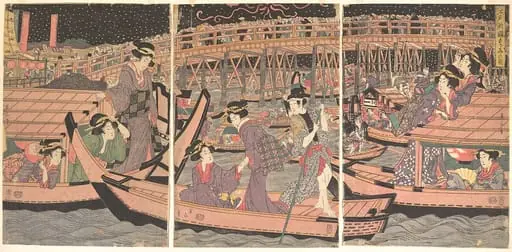 Untitled
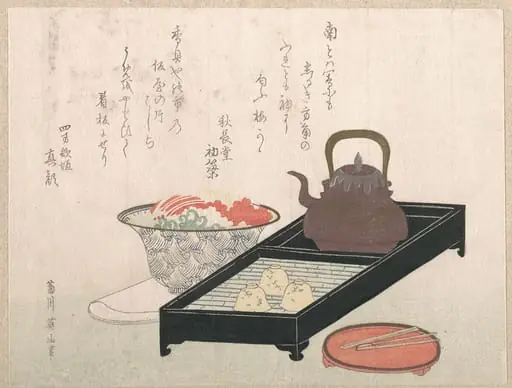 Untitled
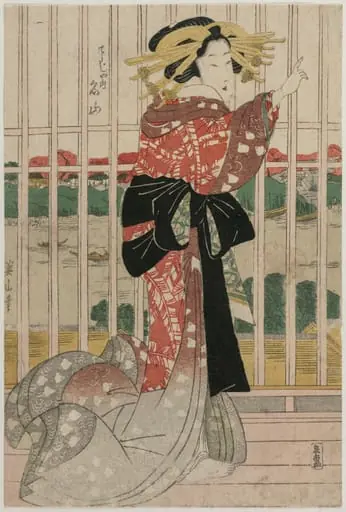 The Courtesan Meizan of the Chojiya on a Balcony Overlooking the Sumida River
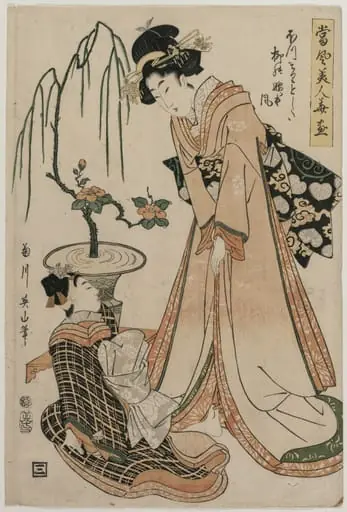 A Lady-in-Waiting with Waist as Slender as a Willow from the series Flowers and Modern Beauties
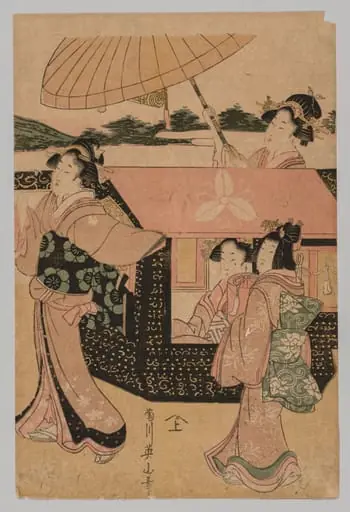 No Title
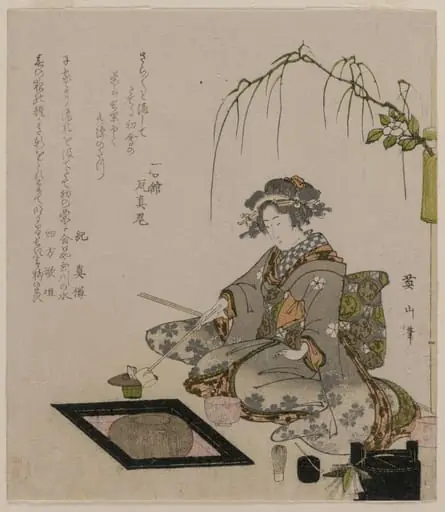 Woman Performing the Tea Ceremony
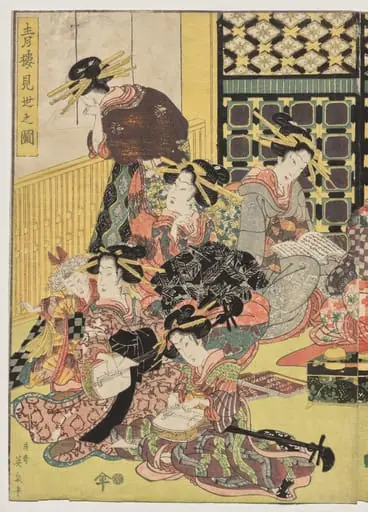 A Picture of the Viewing in the Pleasure Quarters
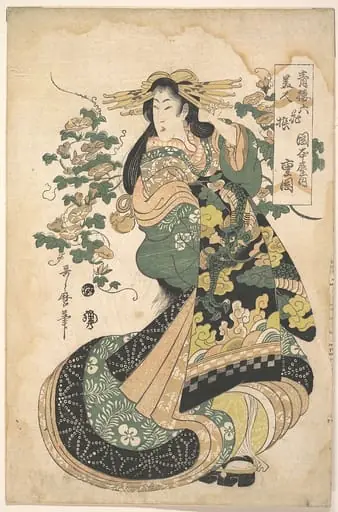 青楼美人 六花撰 岡本屋内 重岡|A Courtesan with Morning-glories on the Background
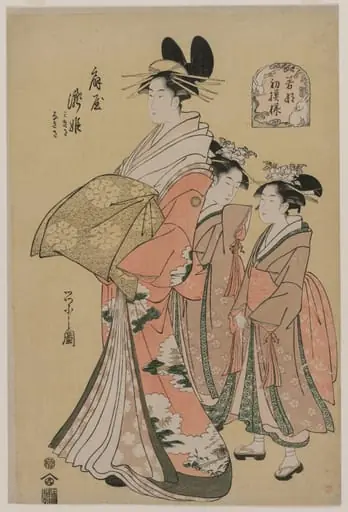 The Courtesan Takihime and Attendants (from the series New Patterns of Young Greens)
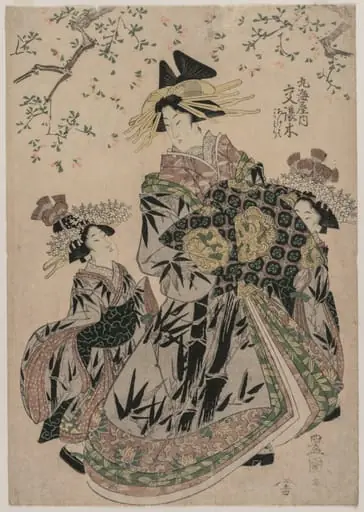 The Courtesan Katakoshigi (?) of Maruebiya with her Kamuro Ageha and Midori
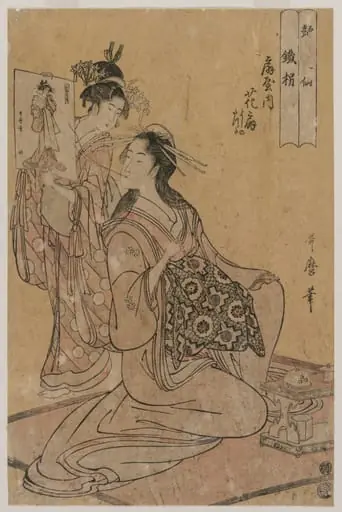 The Courtesan Hana-ogi of Ogiya as the Sennin Tekkai (from the series Eight Immortals of Sensuality)
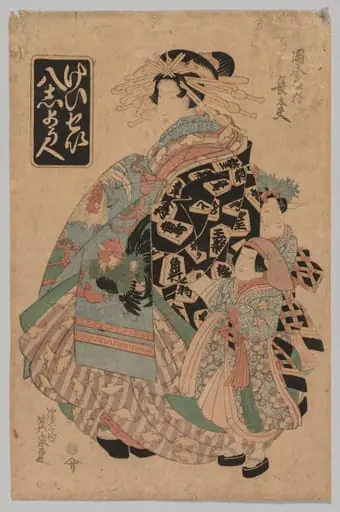 Chōdayu of the Okamotoya from the series ?
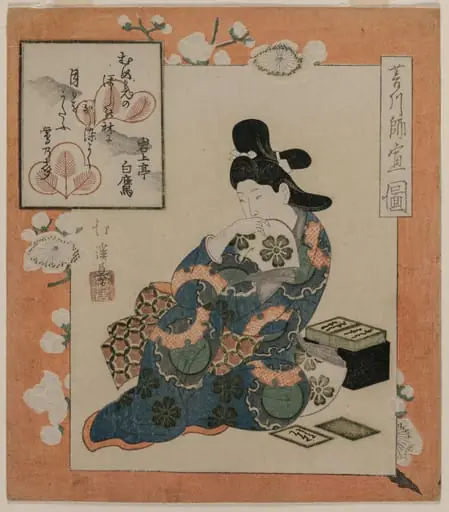 A Picture by Hishikawa Moronobu: Woman with a Set of Poem Cards
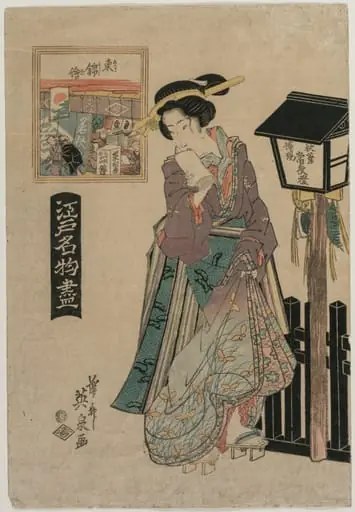 Pictures of Eastern Brocade (from the series Famous Products of Edo)