Artwork
The Courtesan Katakoshigi (?) of Maruebiya with her Kamuro Ageha and Midori
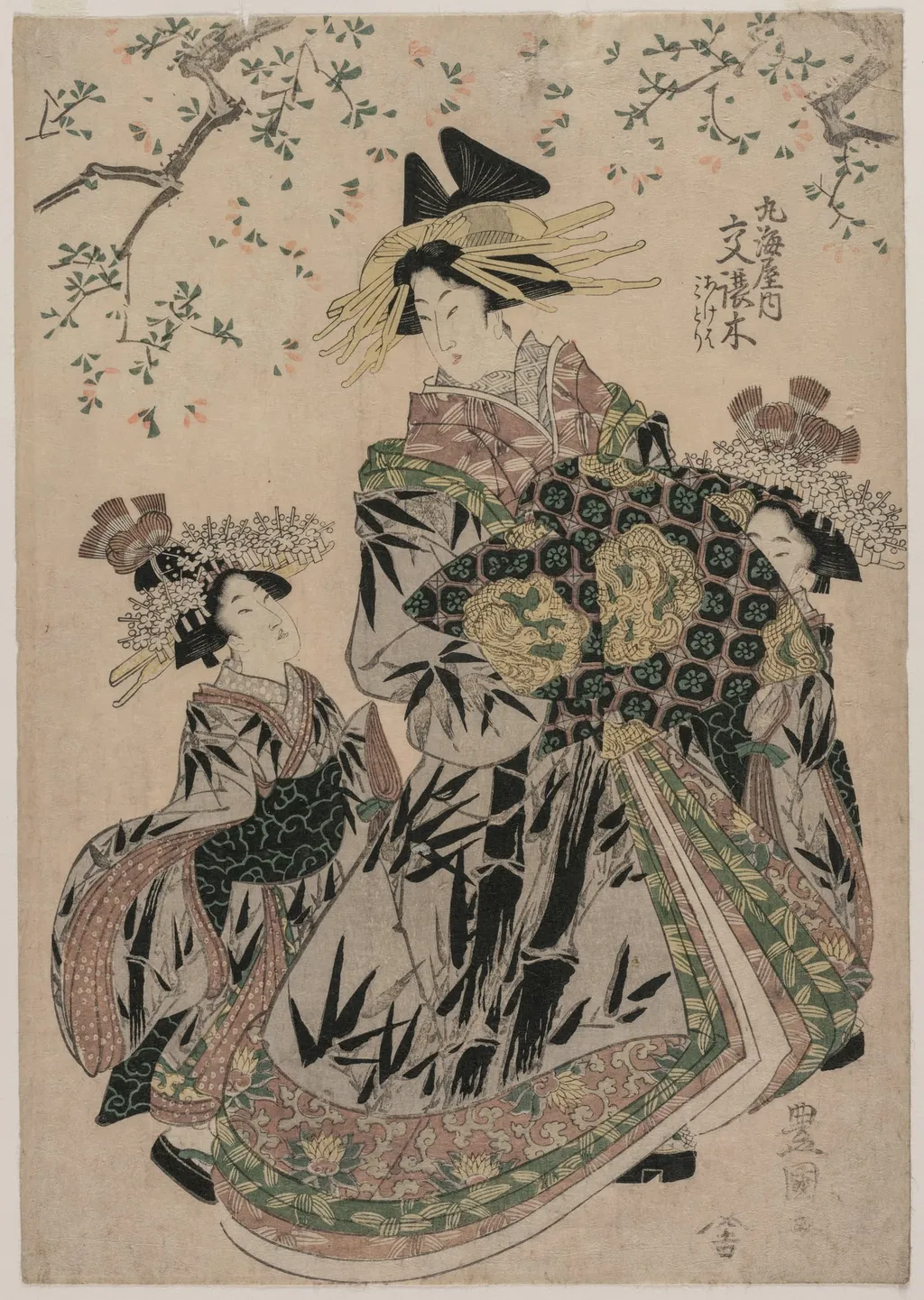
The Courtesan Katakoshigi (?) of Maruebiya with her Kamuro Ageha and Midori is a print by the Romanticist artist Utagawa Toyokuni I. It dates from 1805 and is held in the collection of the Cleveland Museum of Art.
About this work
Overview
The composition exemplifies the ukiyo‑e genre’s focus on urban pleasure districts, capturing a moment of refined leisure.
Utagawa Toyokuni’s woodblock print, dated around 1805, portrays a courtesan identified as Katakoshigi from the Maruebiya establishment, accompanied by her attendant and a green‑clad figure. The composition exemplifies the ukiyo‑e genre’s focus on urban pleasure districts, capturing a moment of refined leisure. The work is part of the Cleveland Museum of Art’s collection, where it is displayed as a representative example of early nineteenth‑century Japanese printmaking.
Subject & Meaning
The central figure is a high‑ranking courtesan, distinguished by elaborate attire and stylized makeup, signifying her status within the licensed quarters. Flanking her are a kamuro—a young apprentice attendant—wearing a patterned kimono, and a figure dressed in green, possibly a companion or patron. The arrangement reflects the social hierarchy and the performative aspects of entertainment culture in Edo‑period Japan.
Technique & Style
Executed in the ukiyo‑e tradition, the print employs multiple woodblocks to achieve intricate line work and vivid coloration. Toyokuni’s characteristic bold outlines and dynamic poses are evident, while the delicate rendering of textiles showcases his skill in depicting fabric patterns. The use of a limited palette, with emphasis on reds and greens, enhances the visual hierarchy of the figures.
History & Provenance
Created circa 1805, the print entered the Cleveland Museum of Art’s holdings through acquisition in the twentieth century, though the exact path of ownership remains undocumented in public records. Its presence in a major American institution underscores the broader diffusion of Japanese prints to Western collections during the early modern period.
Context
Toyokuni was a leading figure of the Utagawa school, renowned for his depictions of kabuki actors and pleasure‑quarter personalities. This work aligns with his prolific output of bijin-ga—images of beautiful women—reflecting contemporary tastes for idealized femininity and the commercial appeal of courtesan portraiture in Edo’s bustling urban landscape.
Own this work as a print
Artist & collection

Artist
Toyokuni was a born showman who made sure the energy of Edo’s kabuki stage never faded on paper.

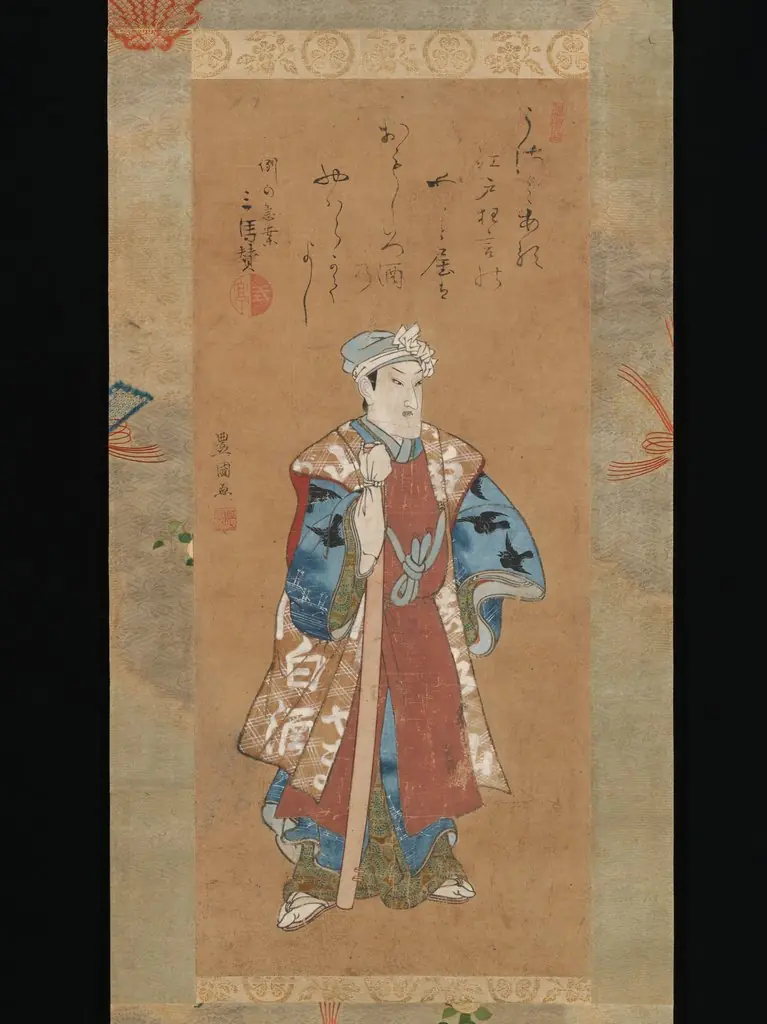 Bandō Mitsugorō II as Shinbei in the Kabuki Play "Sukeroku"
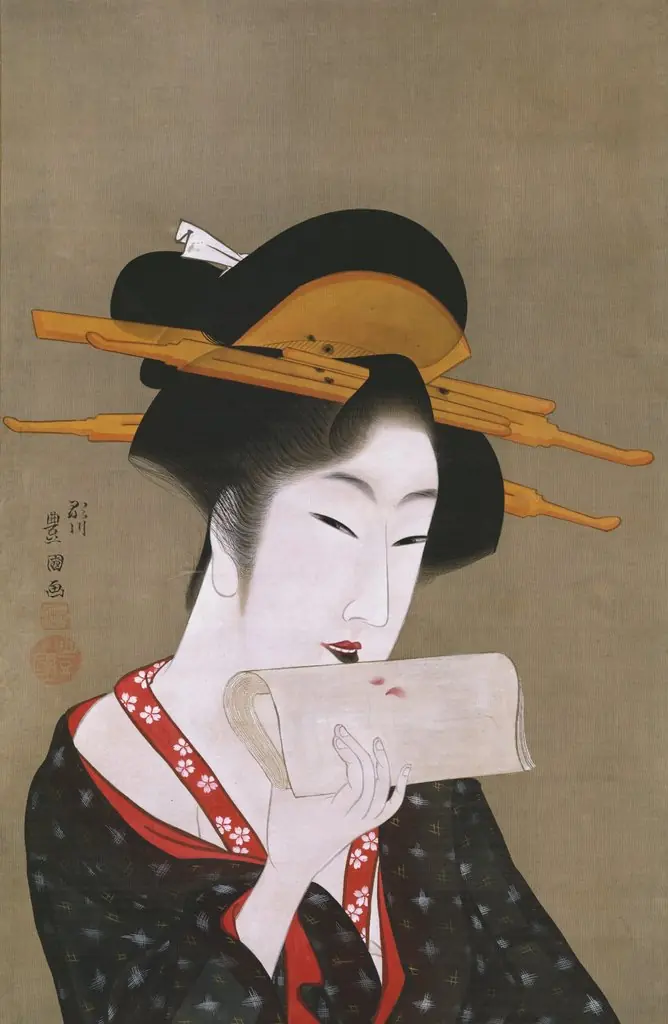 Beauty Blotting Her Lip Rouge
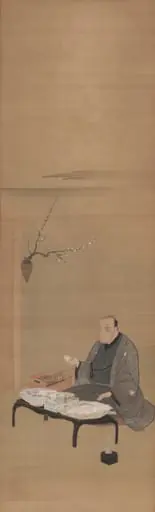 Portrait of Kinokuniya Bunzaemon
 Untitled
 Tokaido Yotsuya Kaidan|Onoe Matsusuke as the Ghost of the Murdered Wife Oiwa, in "A Tale of Horror from the Yotsuya Station on the Tokaido Road"
 Untitled
 Untitled
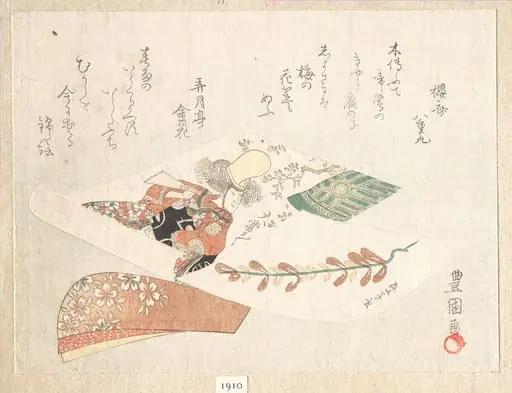 娘道成寺図の錦絵|Print of a Kabuki Dancer from the Maiden of the Dōjōji Temple (Musume Dōjōji)
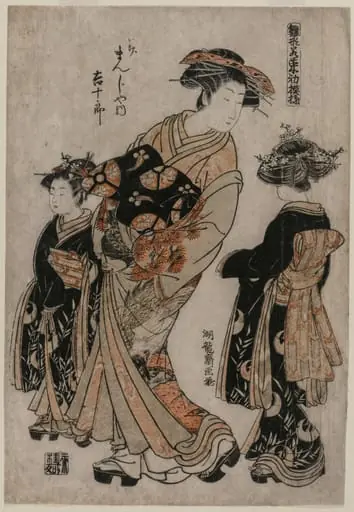 The Courtesan Kichijuro of Kage Manjiya with Two Kamuro (from the series Models for Fashions: New Designs as Fresh as Young Leaves)
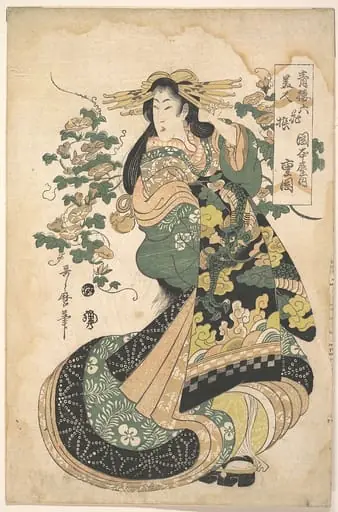 青楼美人 六花撰 岡本屋内 重岡|A Courtesan with Morning-glories on the Background
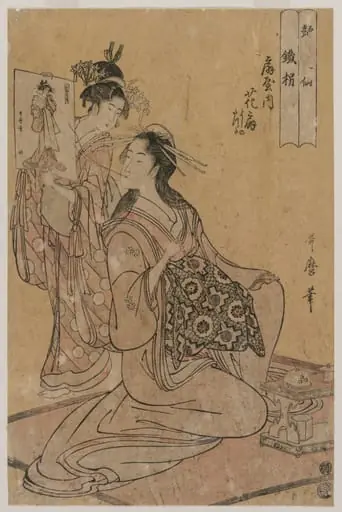 The Courtesan Hana-ogi of Ogiya as the Sennin Tekkai (from the series Eight Immortals of Sensuality)
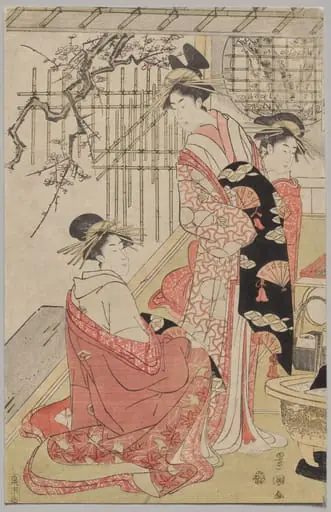 Courtesans of the Ōgiya on a Spring Outing
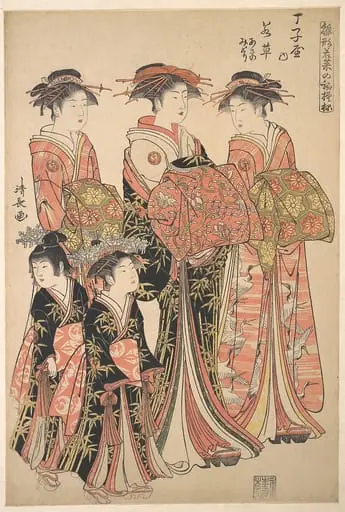 鳥居清長画 「雛形若菜の初模様 丁子屋の若草・ あさの・みどり」|The Courtesan Wakakusa of the Chōjiya Brothel, and Attendants Asano and Midori, from the series “A Pattern Book of the Year’s First Designs, Fresh as Spring Herbs” (Hinagata wakana no hatsumoyō)
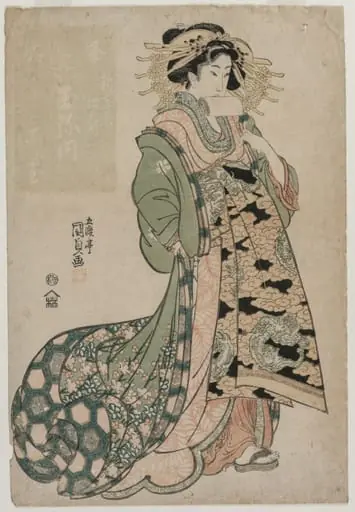 The Courtesan Shiratama of the Tamaya
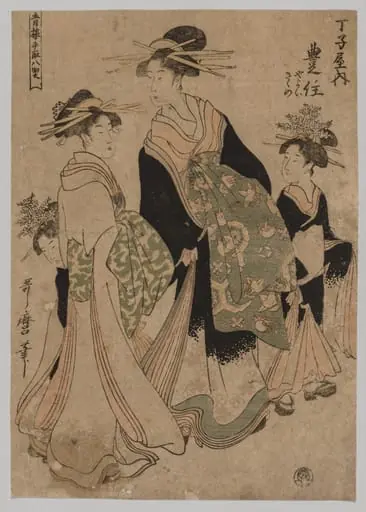 Courtesans and Attendants
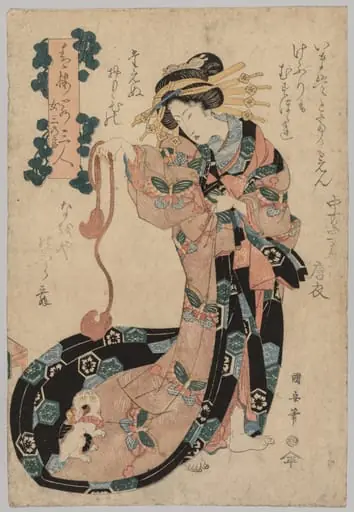 Courtesan
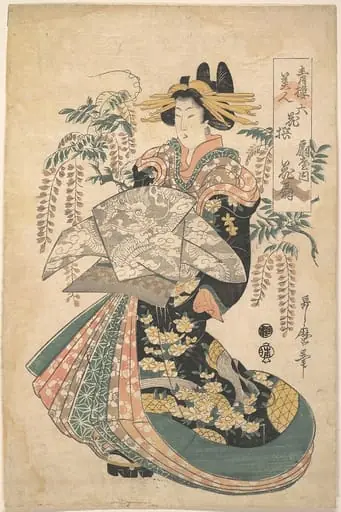 青楼美人 六花撰 扇屋内花扇|A Courtesan with Wisteria on the Background
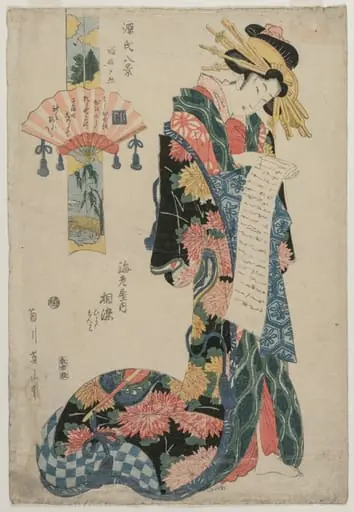 The Courtesan Aizome of the Ebiya (From the series Eight Views of the Tale of Genji)