Artwork
Untitled
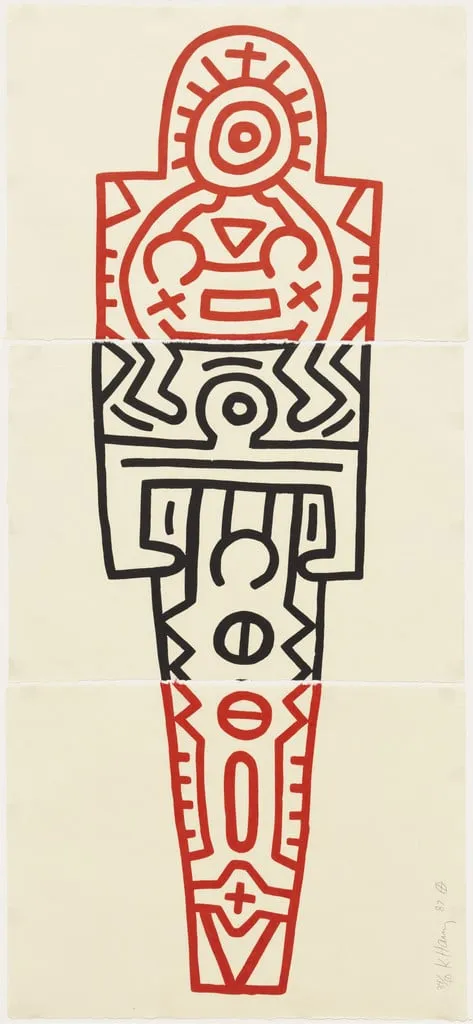
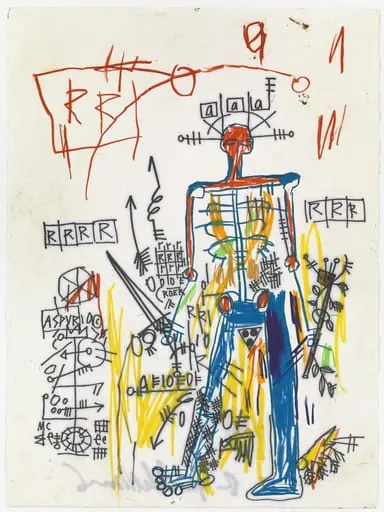
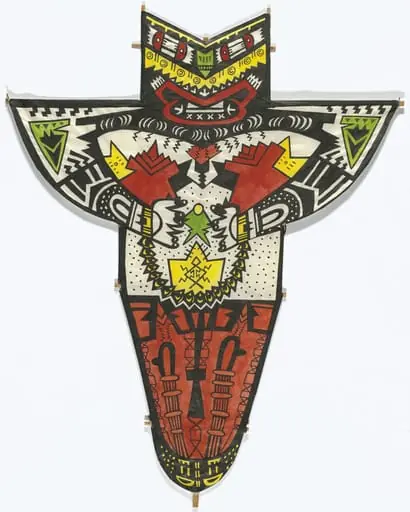
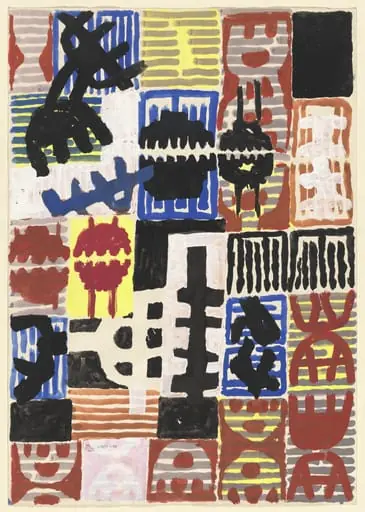
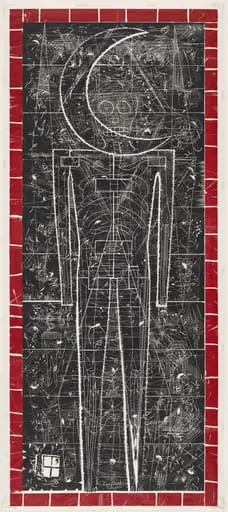
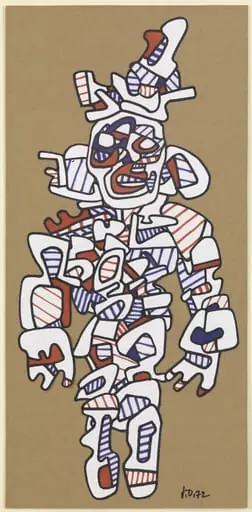
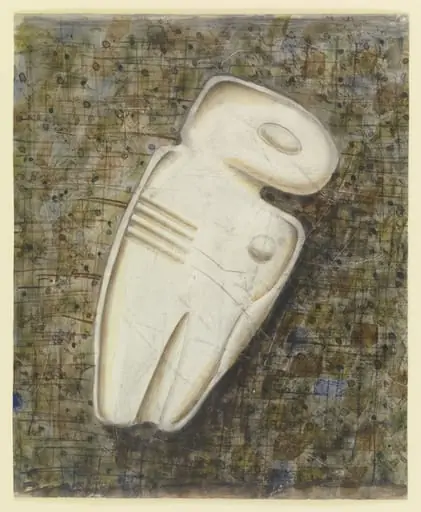
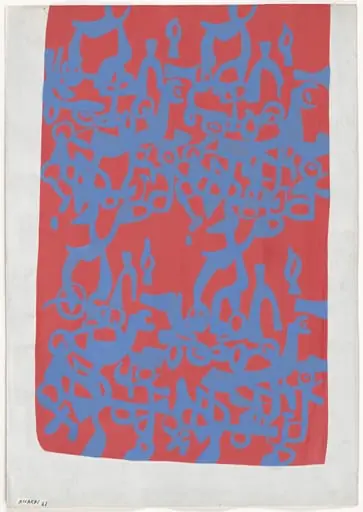
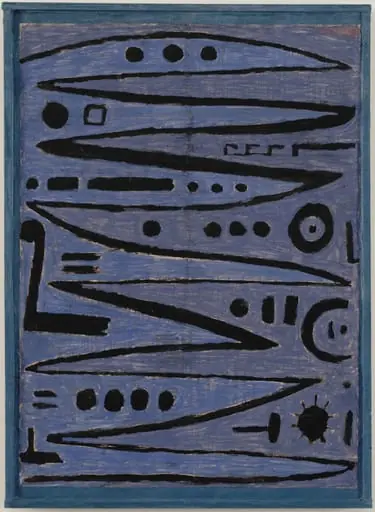
Untitled is an ink print by Keith Haring. It dates from 1989 and is held in the collection of the Museum of Modern Art.
About this work
Overview
It reflects his signature style—bold, linear, and densely patterned—developed through his early subway drawings in New York.
Created in 1989, this woodcut on three joined sheets is one of Keith Haring’s later printed works. It reflects his signature style—bold, linear, and densely patterned—developed through his early subway drawings in New York. The composition is vertical, emphasizing elongated form and rhythmic repetition. The print was produced using carved woodblocks, a medium Haring adopted to extend his graphic language beyond public murals into more permanent, reproducible forms.
Subject & Meaning
The central figure is an abstracted human form, its head filled with symbolic motifs—gears, crosses, zigzags—suggesting internal complexity or cognitive overload. The body, layered with geometric and organic patterns, evokes a sense of contained energy or systemic overload. Haring rarely offered explicit narratives, but the work resonates with themes of human vulnerability, technological saturation, and the body as a site of cultural and psychological signals.
Technique & Style
Haring employed woodcut to achieve sharp, high-contrast lines and flat areas of color. Black ink defines the figure’s outline and internal patterns, while red accents add urgency and visual rhythm. The carving technique preserves the hand of the artist: thick, confident strokes mimic his earlier chalk drawings. The use of three sheets allows for an extended vertical format, enhancing the figure’s towering presence while maintaining the raw, unpolished quality characteristic of his printmaking.
History & Provenance
This work entered The Museum of Modern Art’s collection shortly after its creation, reflecting institutional recognition of Haring’s contribution to contemporary print culture. It was produced during a period when he was increasingly focused on making art accessible through multiples, following his earlier public interventions. The piece aligns with his broader effort to dissolve boundaries between street art, fine art, and mass reproduction.
Context
Made in 1989, the year of Haring’s death, the work emerges amid heightened public awareness of the AIDS crisis, which deeply affected him personally. His imagery, though often playful, carried undertones of mortality and social urgency. The dense patterning may reflect the overwhelming sensory and emotional landscape of the time, while his continued use of accessible forms underscored his commitment to public communication over elite art markets.
Legacy
Haring’s woodcuts, including this one, helped legitimize street-derived aesthetics within institutional frameworks. His fusion of graphic simplicity with symbolic density influenced a generation of artists working at the intersection of activism and visual culture. The work remains a touchstone for discussions on how public art languages can be translated into gallery contexts without losing their immediacy or social resonance.
Artist & collection
Artist
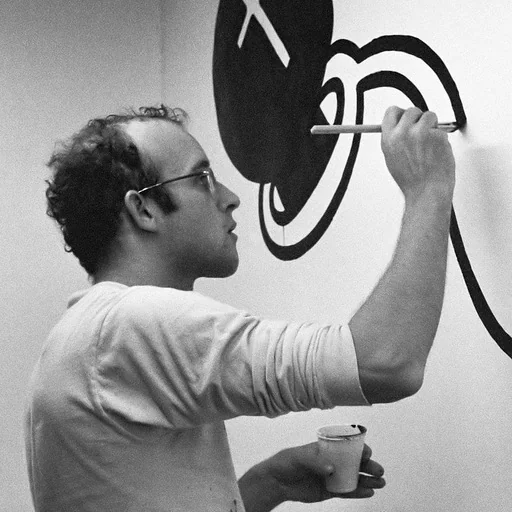
Keith Allen Haring (May 4, 1958 – February 16, 1990) was an American artist and activist.