Artwork
Interior of London Bridge Theatre
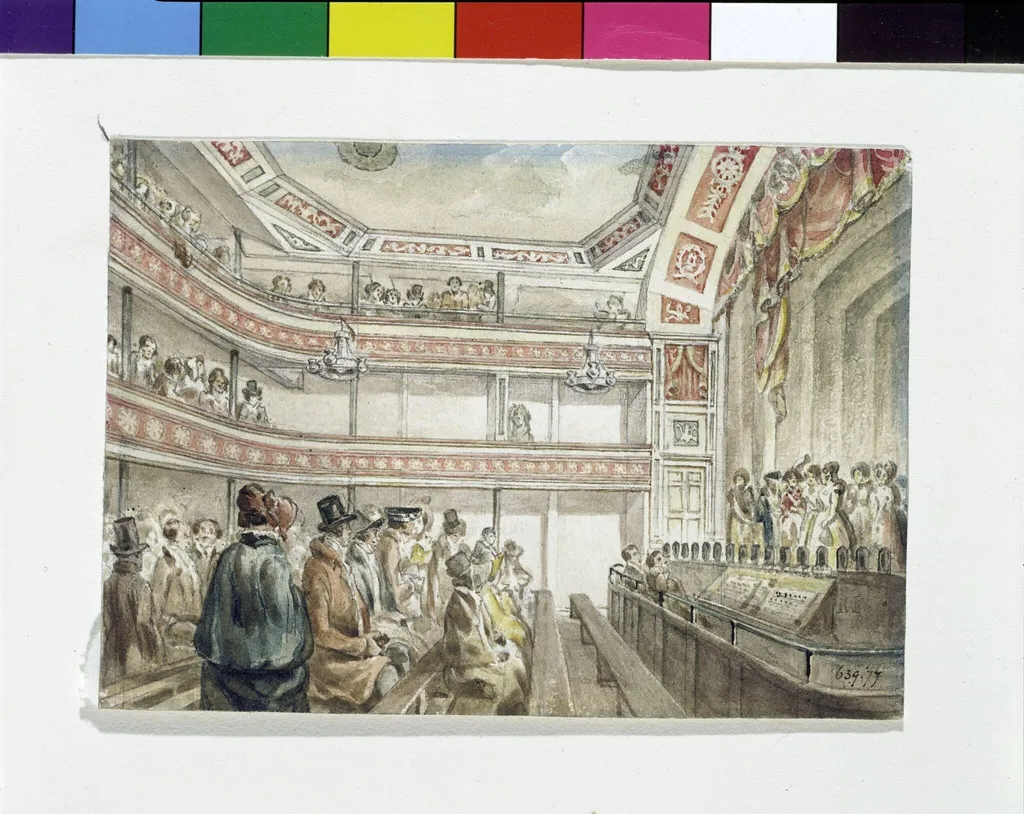
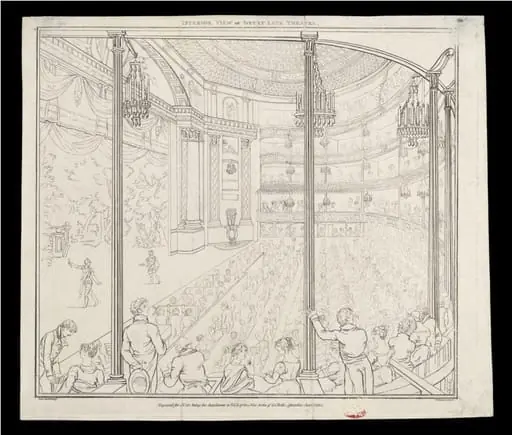
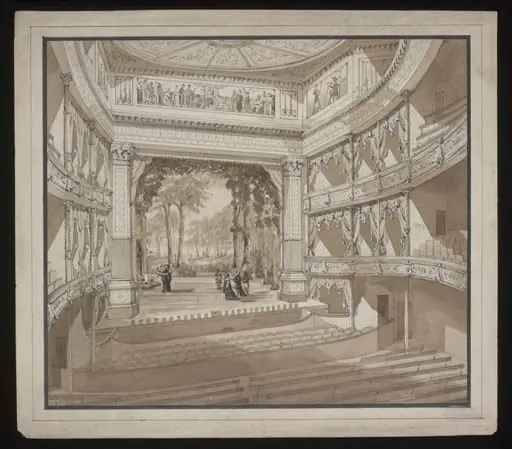
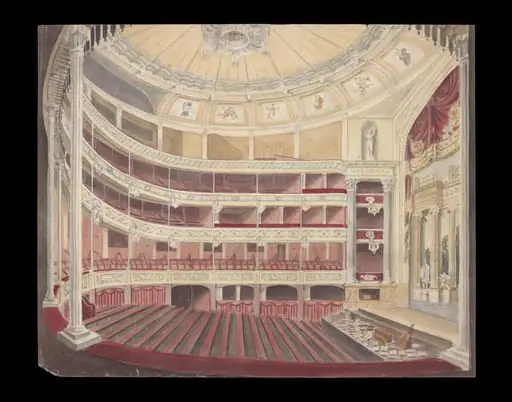
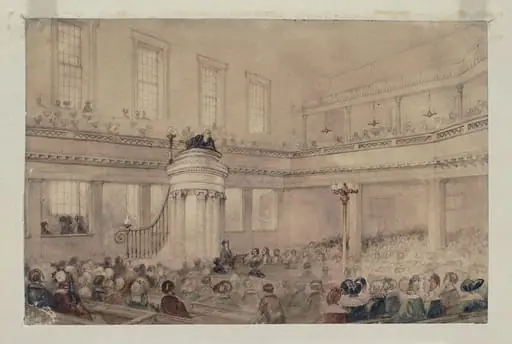
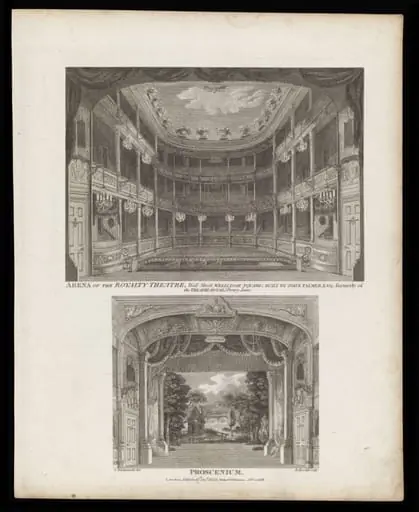
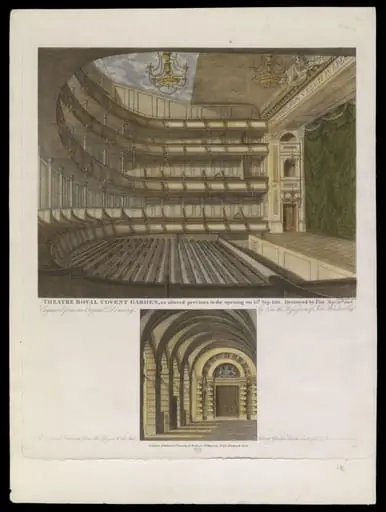
Interior of London Bridge Theatre is a watercolor work on paper by the Romanticist artist Kennedy. It dates from 1806 and is held in the collection of the Victoria and Albert Museum. This watercolour presents a view of the London Bridge Theatre’s interior, capturing both the stage and the surrounding audience.
About this work
Overview
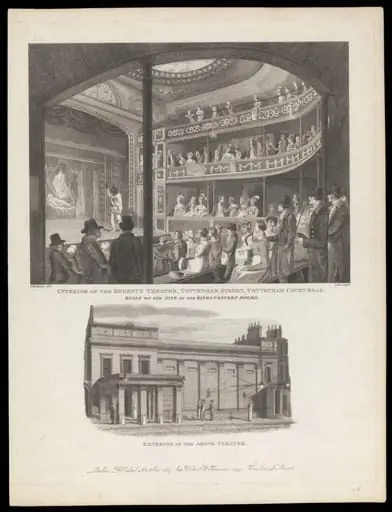
This watercolour presents a view of the London Bridge Theatre’s interior, capturing both the stage and the surrounding audience. The composition records a packed house, with rows of spectators, a balcony above, and ornate wall decorations, all rendered in a loose, expressive wash typical of the medium.
Subject & Meaning
The scene corresponds to the concluding tableau of Andrew Cherry’s drama *The Soldier’s Daughter*, a work performed at Drury Lane in the early nineteenth century (1804 and again in 1809). By depicting this specific moment, the artist highlights the theatrical atmosphere and the communal experience of performance.
Technique & Style
Executed in watercolour, the piece employs broad, fluid strokes that convey movement and the bustling energy of the venue rather than meticulous detail. The palette is subdued, with dim lighting suggested by chandeliers and the glow of stage illumination, while gold trim and painted backdrops hint at the theatre’s decorative richness.
History & Provenance
The London Bridge Theatre, situated near the Globe Tavern on Bedale Street, was demolished between 1856 and 1860 to accommodate railway arches for the South Eastern Railway’s expansion toward Cannon Street and Charing Cross. The watercolour thus serves as a visual record of a lost architectural space.
Context
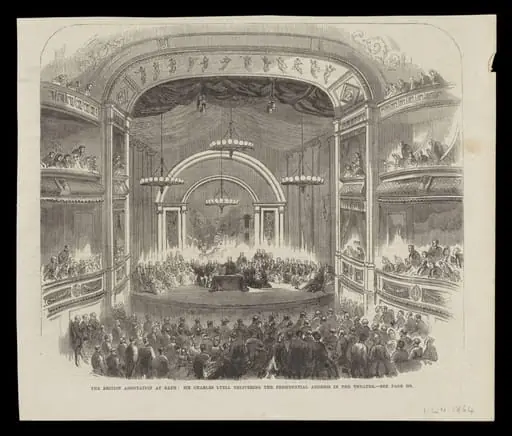
During the early 1800s, London’s theatrical scene was a central social venue, and venues like the London Bridge Theatre catered to a broad public. The inclusion of a Drury Lane production underscores the interconnectedness of London’s performance venues and the popularity of contemporary drama.
Artist & collection
Artist