Artwork
Untitled
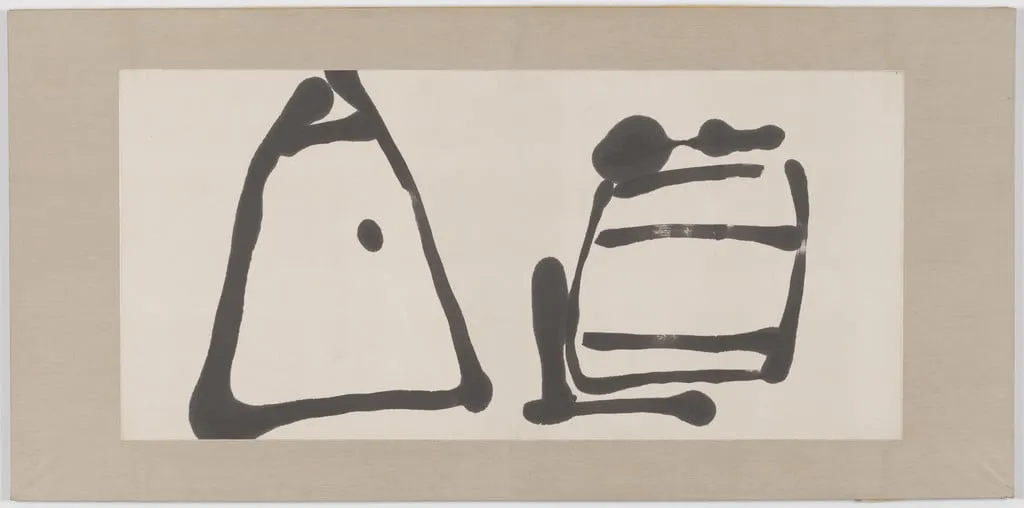
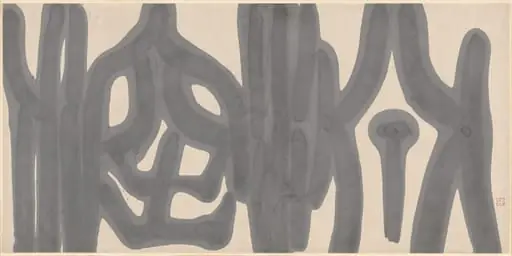
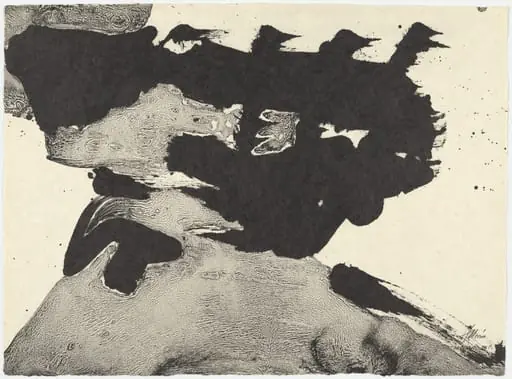
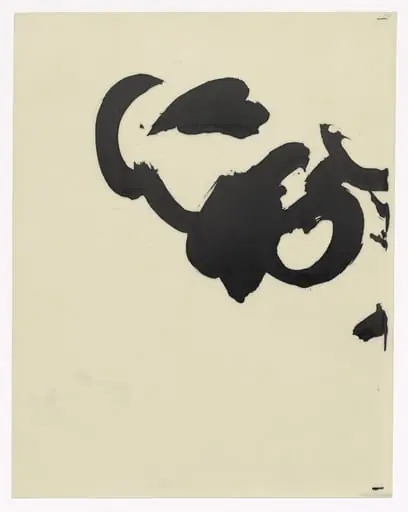
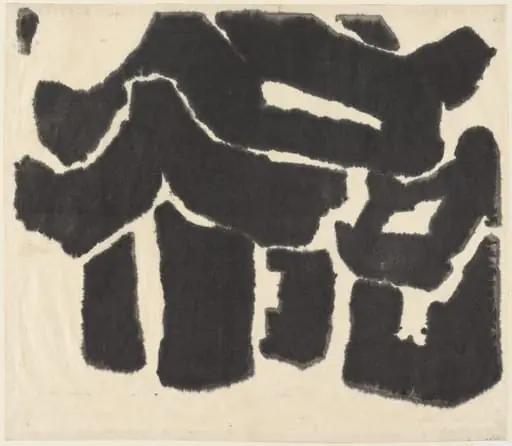
Untitled is an ink drawing by Ikeda Fumio. It dates from 1953 and is held in the collection of the Museum of Modern Art.
About this work
Overview
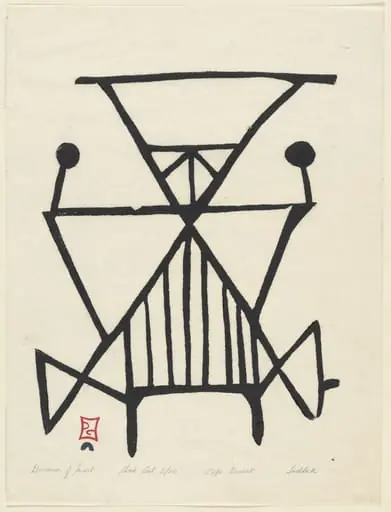
Created around 1953, this ink drawing by Ikeda Fumio—who also worked under the pen name Suijo—is part of the Museum of Modern Art’s collection. Executed on paper with black ink, the work presents a stark composition of two abstract forms set against a plain white field, emphasizing line and shape over representational content.
Subject & Meaning
The juxtaposition of these geometric motifs invites contemplation of balance and spatial tension without depicting any recognizable subject.
The left element consists of a triangular outline containing a small central circle and a sweeping curve that rises from its apex, while the right element is a rectangular block marked by three parallel horizontal strokes and a single curved line at its upper edge. The juxtaposition of these geometric motifs invites contemplation of balance and spatial tension without depicting any recognizable subject.
Technique & Style
Ikeda employs a minimalist approach, using precise black ink contours to define the forms and selectively filling portions to create contrast. The drawing’s clean lines and restrained palette echo the aesthetic principles of traditional Japanese ink art, yet its abstract vocabulary aligns with mid‑century modernist explorations of form and negative space.
History & Provenance
The piece entered the Museum of Modern Art’s holdings after its acquisition in the mid‑20th century, reflecting the institution’s interest in post‑war Japanese artists who engaged with international modernism. Its dating to circa 1953 places it within a productive period for Ikeda, during which he experimented with graphic abstraction.
Context
During the early 1950s, Japanese artists were increasingly dialoguing with Western avant‑garde movements while retaining native visual traditions. Ikeda’s drawing exemplifies this synthesis, merging the disciplined brushwork of sumi‑e with the geometric reduction favored by contemporary European abstraction, thereby situating the work at a cultural crossroads.
Artist & collection