Artwork
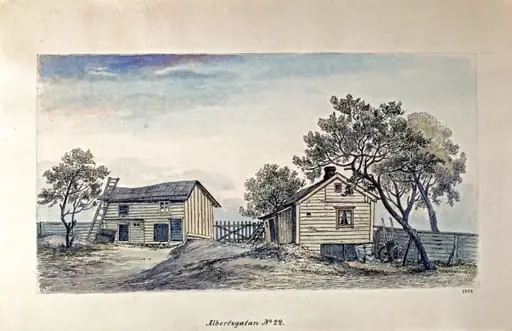
Albertinkatu 24
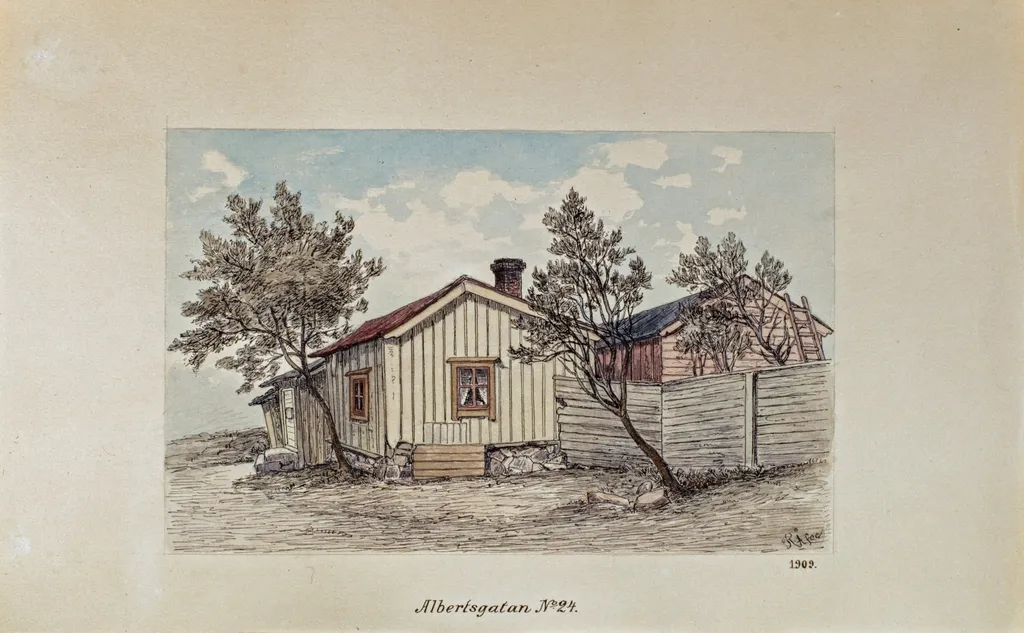
Albertinkatu 24 is a drawing by Rudolf Åkerblom. It dates from 1897 and is held in the collection of the Helsinki City Museum.
About this work
Overview
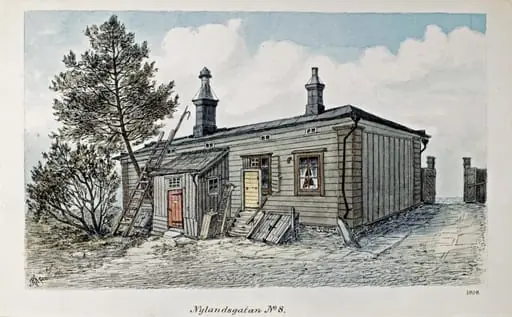
Rudolf Åkerblom created this pencil drawing around 1897, depicting a modest wooden cottage at Albertinkatu 24 in Helsinki.
Rudolf Åkerblom created this pencil drawing around 1897, depicting a modest wooden cottage at Albertinkatu 24 in Helsinki. The scene is rendered with quiet precision, focusing on the structure’s simple form and its immediate surroundings. No figures are present, and the absence of activity enhances the sense of stillness. The address is inscribed at the base, grounding the image in a specific, real location rather than an imagined one.
Subject & Meaning
The drawing captures an ordinary domestic dwelling, unadorned and unremarkable in appearance. Its significance lies not in grandeur but in its ordinariness — a quiet record of everyday life in late 19th-century Finland. The inclusion of the street address transforms the sketch into a documentary gesture, suggesting an interest in the tangible, the local, and the overlooked aspects of the urban fringe.
Technique & Style
Åkerblom employs fine, controlled pencil lines to suggest texture and form. The damp ground is indicated by soft, smudged strokes, while the fence and tree trunks are defined with parallel hatching. The sky is left largely unmarked, with only faint cloud shapes suggested by lighter pressure. The overall approach is restrained, prioritizing clarity and observation over expressive flourish.
History & Provenance
The drawing is believed to have been made during Åkerblom’s early career, likely as part of his personal studies or sketches of Helsinki’s residential outskirts. It remained in private hands for much of the 20th century before entering a public collection. Its survival reflects a growing interest in documenting vernacular architecture during a period of rapid urban change in Finland.
Context
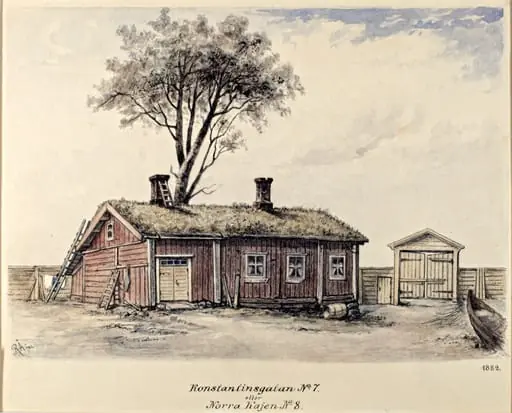
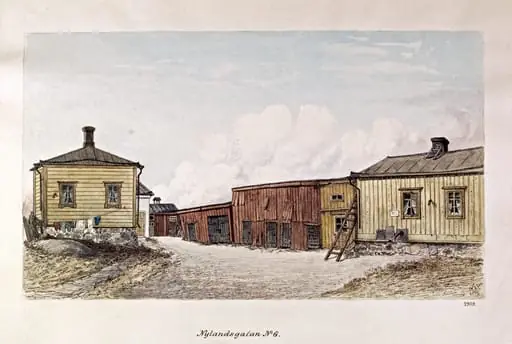
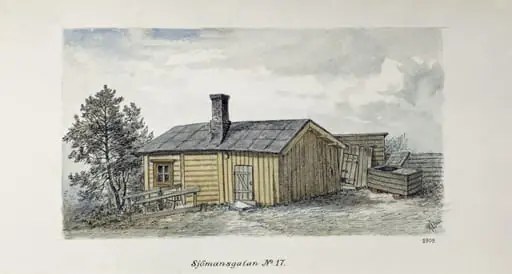
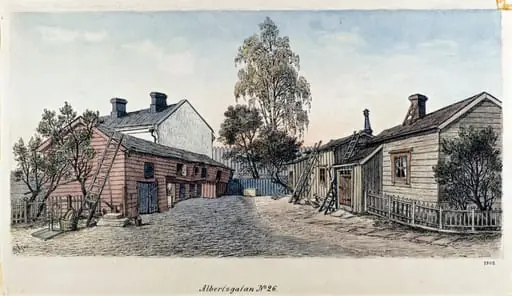
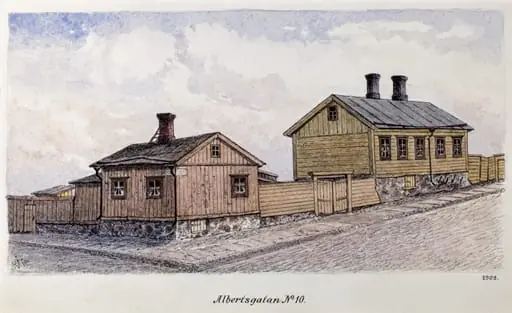
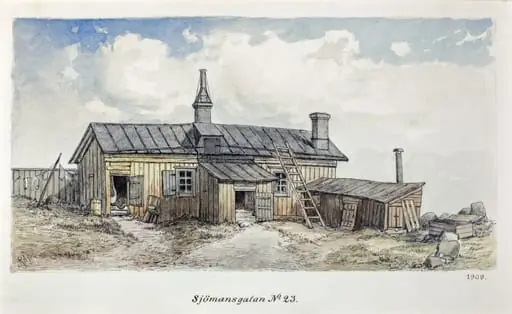
In the 1890s, Helsinki was expanding beyond its historic center, and areas like Albertinkatu were transitioning from rural peripheries to suburban neighborhoods. Åkerblom’s sketch captures this liminal moment — a time when wooden cottages still stood amid open land, before modernization altered their context. The drawing serves as a visual record of a disappearing rural character within an emerging city.
Legacy
Though not widely exhibited, the drawing contributes to a broader archive of Finnish topographical sketches from the late 19th century. It exemplifies how artists engaged with their immediate environment through careful observation rather than idealization. Its quiet realism continues to inform contemporary understandings of domestic space and urban development in Finland’s cultural history.
Artist & collection