Artwork
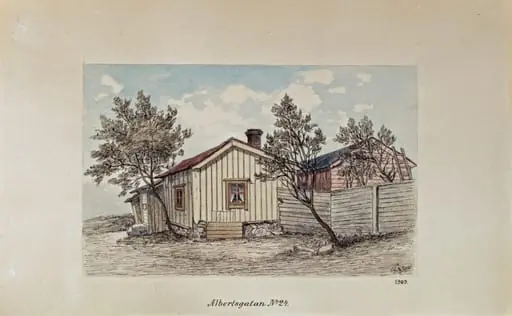
Albertinkatu 22
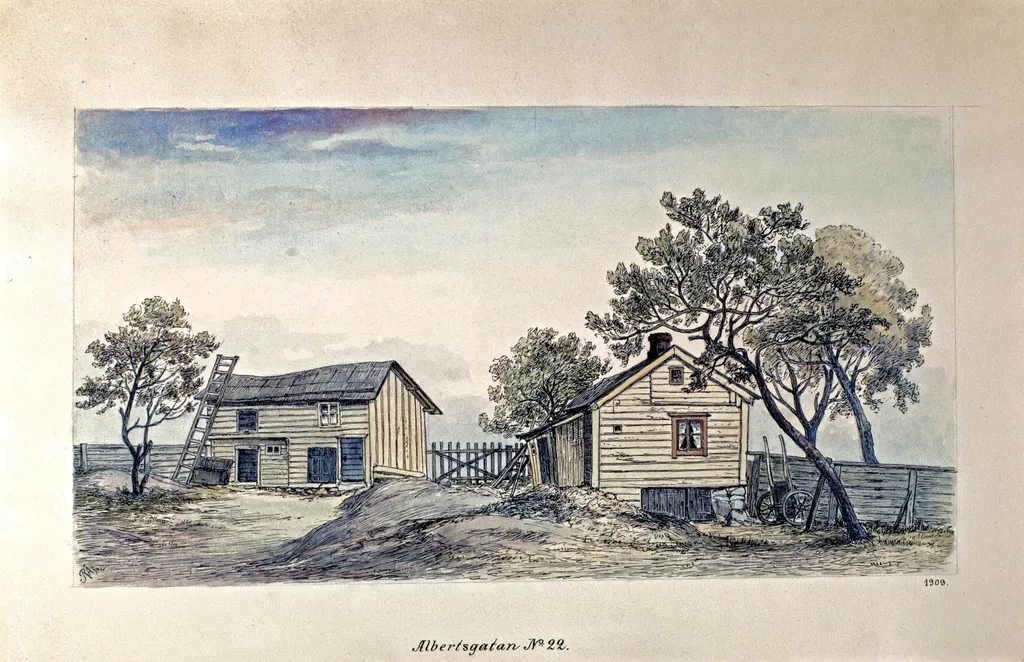
Albertinkatu 22 is a drawing by Rudolf Åkerblom. It dates from 1897 and is held in the collection of the Helsinki City Museum.
About this work
Overview
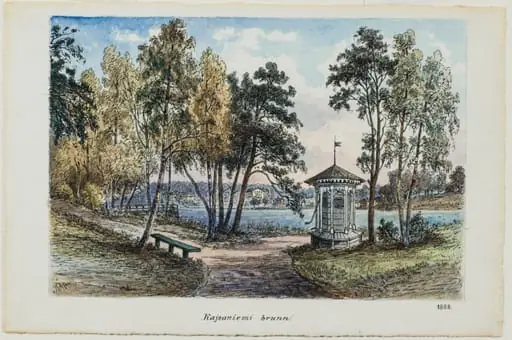
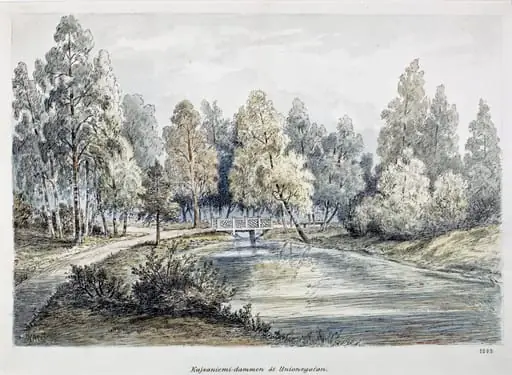
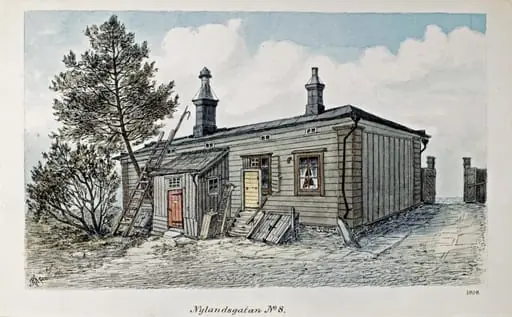
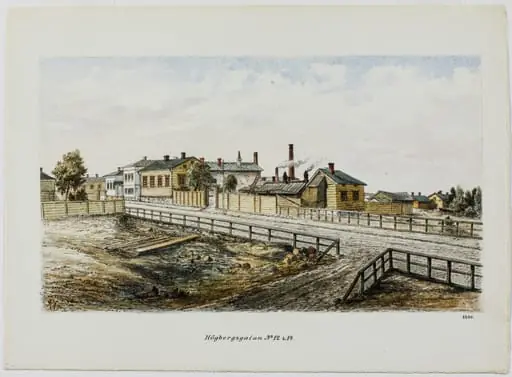
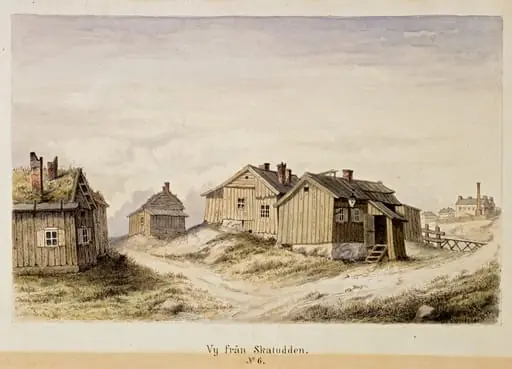
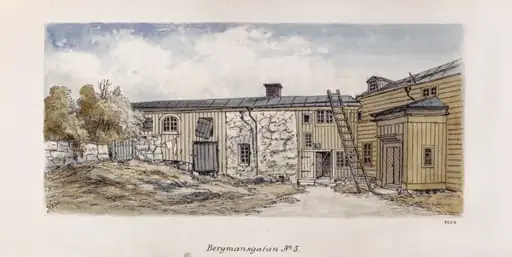
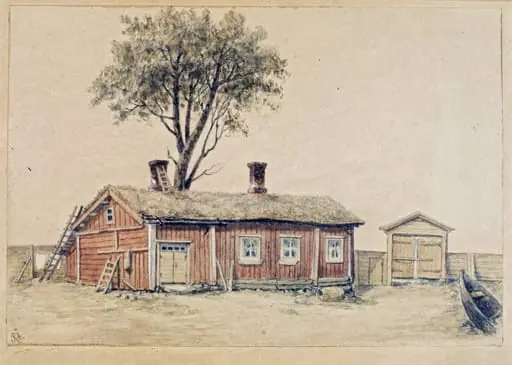
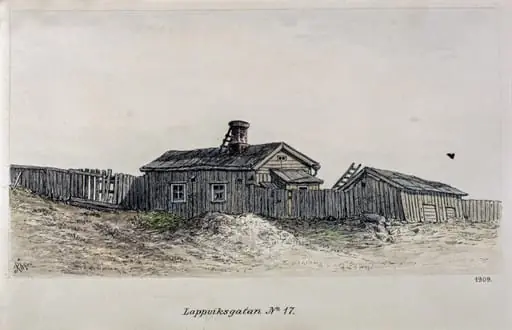
Rudolf Åkerblom created this pencil drawing around 1897, depicting a quiet residential scene along a Finnish waterfront. Two modest wooden dwellings stand near the water’s edge, surrounded by trees and open sky. The composition emphasizes stillness and simplicity, with no human figures present, focusing instead on the quiet architecture and natural surroundings.
Subject & Meaning
The scene captures everyday domestic life in late 19th-century Finland, with no overt narrative or symbolism. The ladder, rocking chair, and modest structures suggest routine, rest, and private habitation. The absence of people invites contemplation of solitude and the rhythms of ordinary existence in a rural or semi-rural setting.
Technique & Style
Åkerblom employed delicate pencil lines to define architectural details like wooden planks and tree branches. Subtle cross-hatching adds texture to surfaces such as the ground and roof shingles, while the sky is rendered with light, even strokes. The water is suggested by smooth, unbroken lines, reinforcing the calm atmosphere of the scene.
History & Provenance
The drawing is part of Åkerblom’s personal sketches from his time in Helsinki, likely made during his studies or early career. It was preserved within his family collection before entering institutional holdings. No public exhibition history is documented prior to the 20th century, suggesting it was intended as a private study rather than a public work.
Context
Created during Finland’s national awakening, the image reflects a quiet, unidealized view of domestic life, contrasting with grander nationalist imagery of the era. Åkerblom’s focus on humble dwellings aligns with broader European trends in sketching everyday environments, emphasizing observation over romanticism.
Legacy
Though not widely exhibited, the drawing remains a representative example of Åkerblom’s observational skill and his interest in ordinary spaces. It contributes to the understanding of Finnish graphic art in the late 1800s, particularly in how artists recorded the built environment with quiet precision.
Artist & collection