Artwork
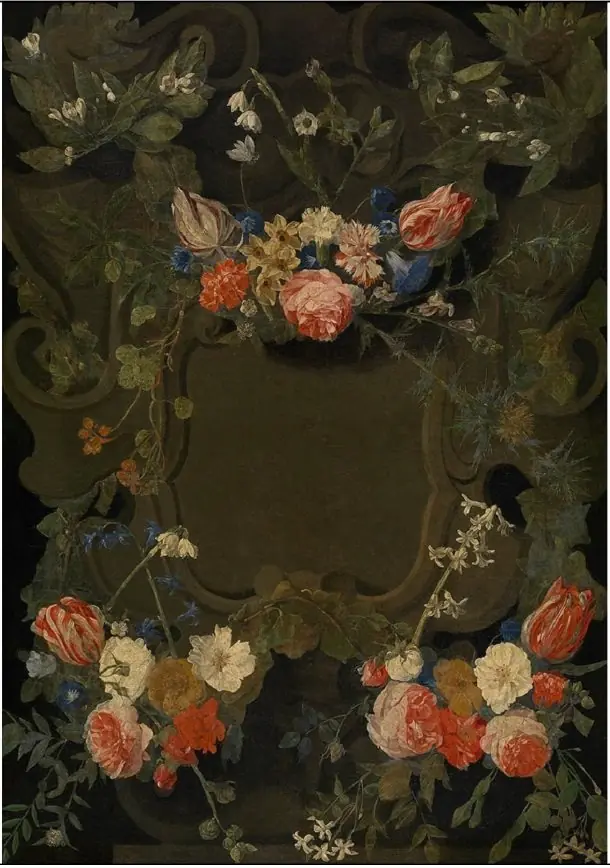
Cunună de flori cu Nașterea lui Isus (în registrul inventar: Nașterea Domnului și o cunună de flori)
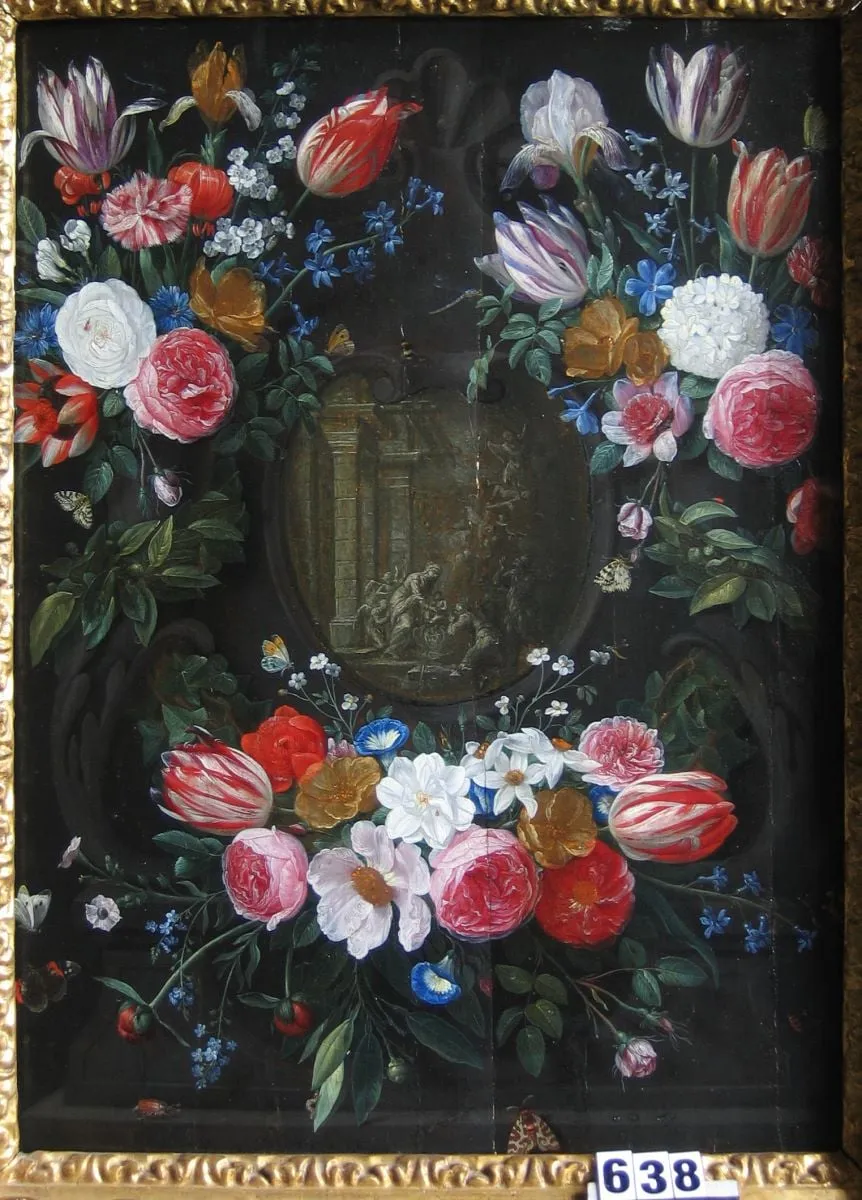
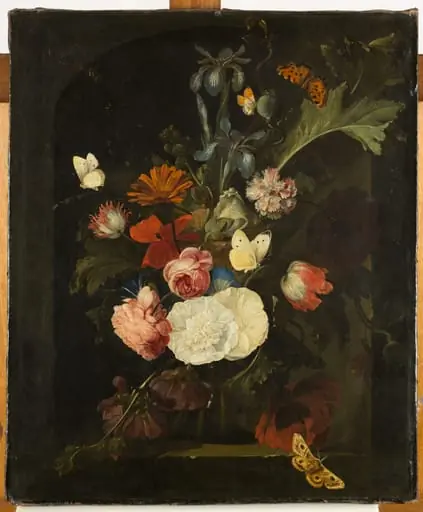
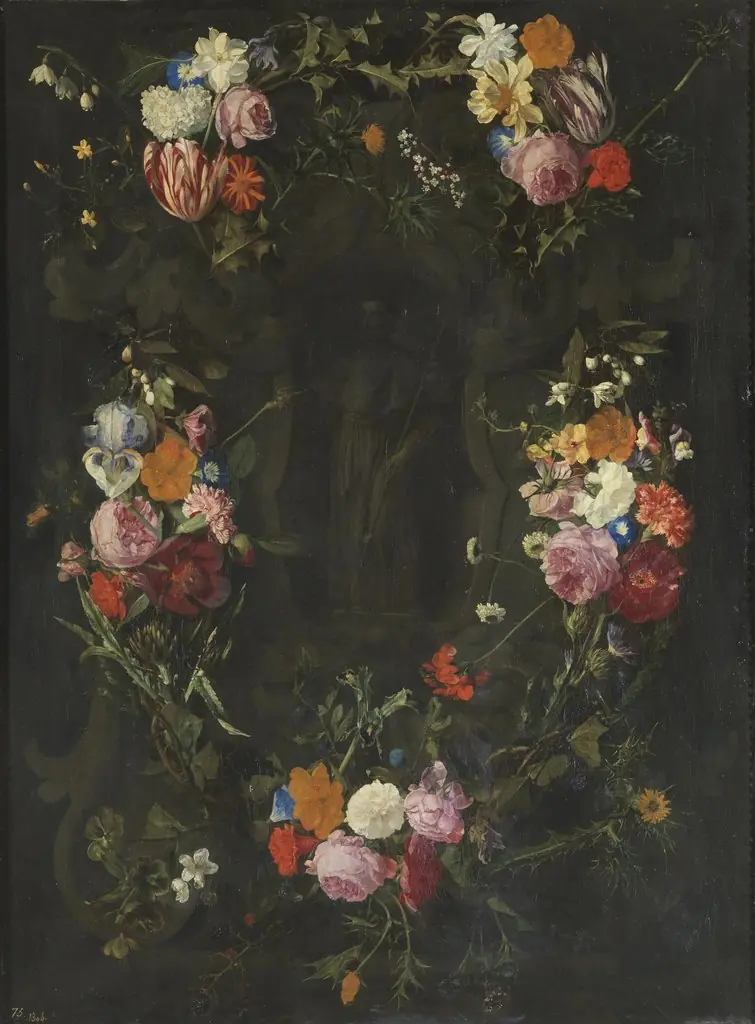
Cunună de flori cu Nașterea lui Isus (în registrul inventar: Nașterea Domnului și o cunună de flori) is a print by the Baroque artist Jan van cel Bătrîn Kessel. It dates from 1654 and is held in the collection of the Brukenthal National Museum. Painted in 1654 by Jan van Kessel the Elder, this work combines a still life of vibrant flowers with a miniature religious scene.
About this work
Overview
The composition centers on a lush arrangement of blooms spilling beyond the frame, concealing within them a quiet depiction of the Nativity.
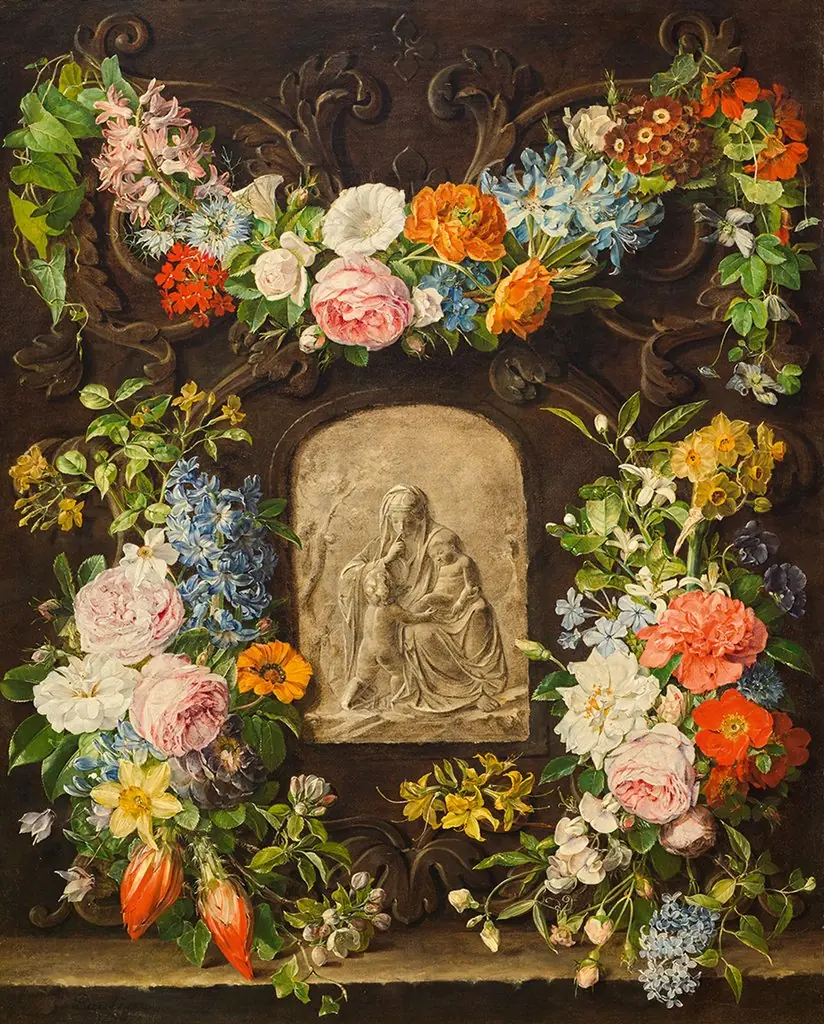
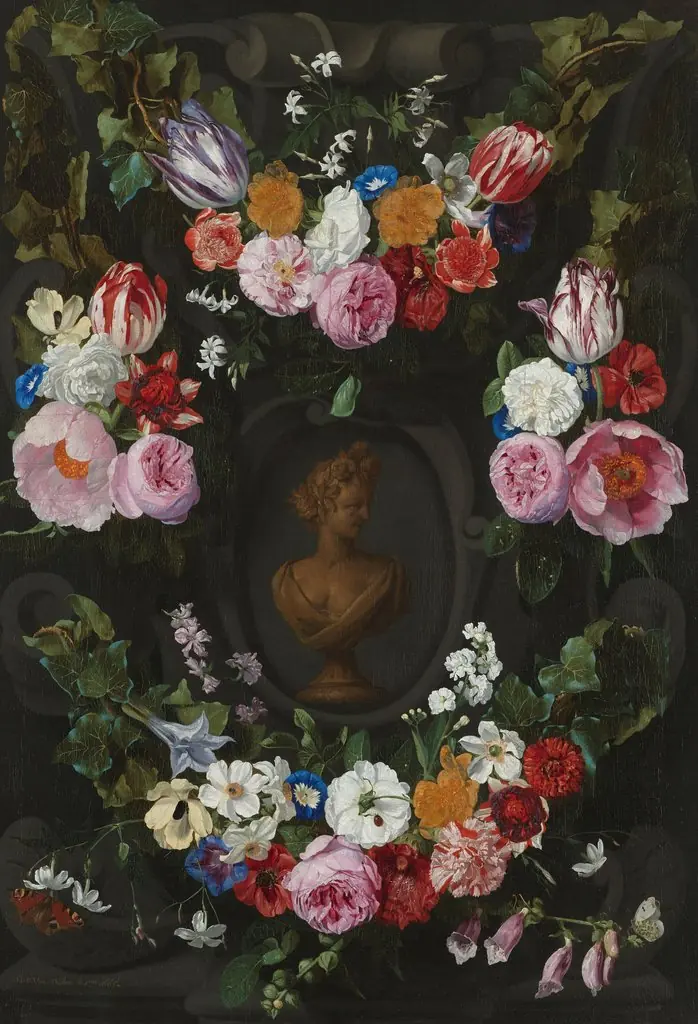
Painted in 1654 by Jan van Kessel the Elder, this work combines a still life of vibrant flowers with a miniature religious scene. The composition centers on a lush arrangement of blooms spilling beyond the frame, concealing within them a quiet depiction of the Nativity. The contrast between the opulent flora and the subdued sacred imagery creates a layered visual experience, typical of Flemish still-life traditions that embedded spiritual meaning within natural detail.
Subject & Meaning
The painting juxtaposes the transient beauty of flowers with the eternal significance of Christ’s birth. The hidden Nativity scene, partially obscured by blossoms, invites contemplation and suggests divine presence within the natural world. Flowers like tulips, roses, and daisies, each carrying symbolic associations of purity, love, and humility, reinforce the theological message without overt declaration, aligning with devotional practices of the time.
Technique & Style
Van Kessel rendered each petal with meticulous precision, capturing dewdrops, subtle gradients, and delicate veining to enhance realism. The deep, unmodulated background isolates the floral arrangement, heightening its luminosity. The Nativity scene is rendered in miniature scale and muted tones, deliberately subordinate to the surrounding flora, demonstrating a sophisticated balance between spectacle and subtlety characteristic of Baroque still life.
History & Provenance
Created in Antwerp during the mid-17th century, the work reflects the city’s thriving market for detailed still-life paintings. It entered institutional collections under the inventory title 'The Nativity and a Wreath of Flowers,' indicating its dual nature was recognized early. Its survival with intact condition suggests careful ownership, likely by a private collector with both artistic and religious interests.
Context
In Habsburg-ruled Flanders, still-life painting flourished as a vehicle for moral and spiritual reflection. Artists like van Kessel responded to Counter-Reformation ideals by embedding religious narratives within secular subjects. The elaborate floral displays echoed contemporary botanical studies and the era’s fascination with nature’s order, while the concealed Nativity catered to private devotion amid public religious tensions.
Legacy
The painting exemplifies a niche within Flemish art where naturalism served devotional ends. Though not widely reproduced, it influenced later still-life traditions that merged symbolic flora with hidden narratives. Its preservation in museum collections underscores its value as a case study in how visual complexity could convey layered spiritual meaning without explicit iconography.
Artist & collection
Artist
This artist painted delicate bouquets of roses and other flowers, often paired with insects or religious scenes.