Artwork
A Mounted Prince Hunting Lion in a Rocky Landscape
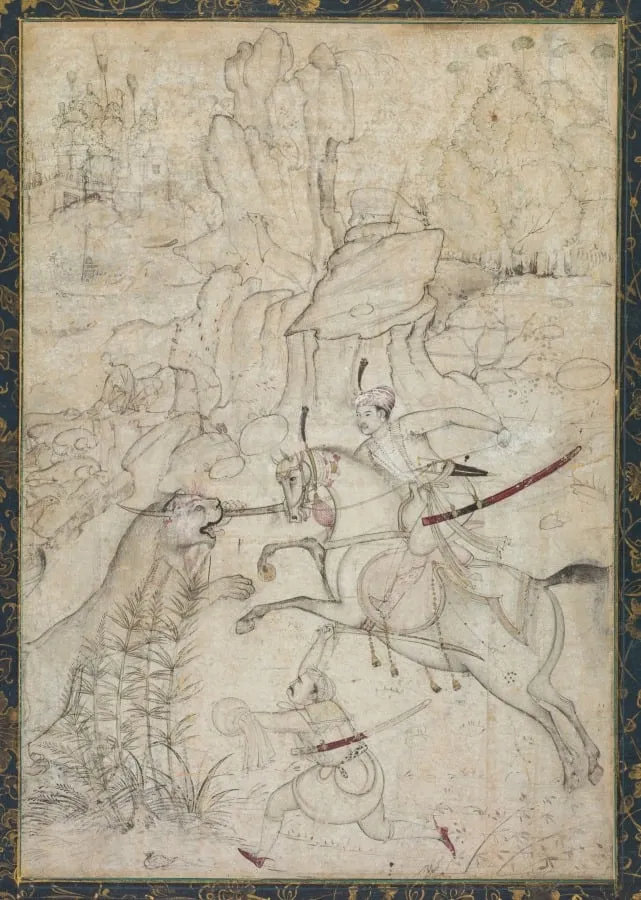
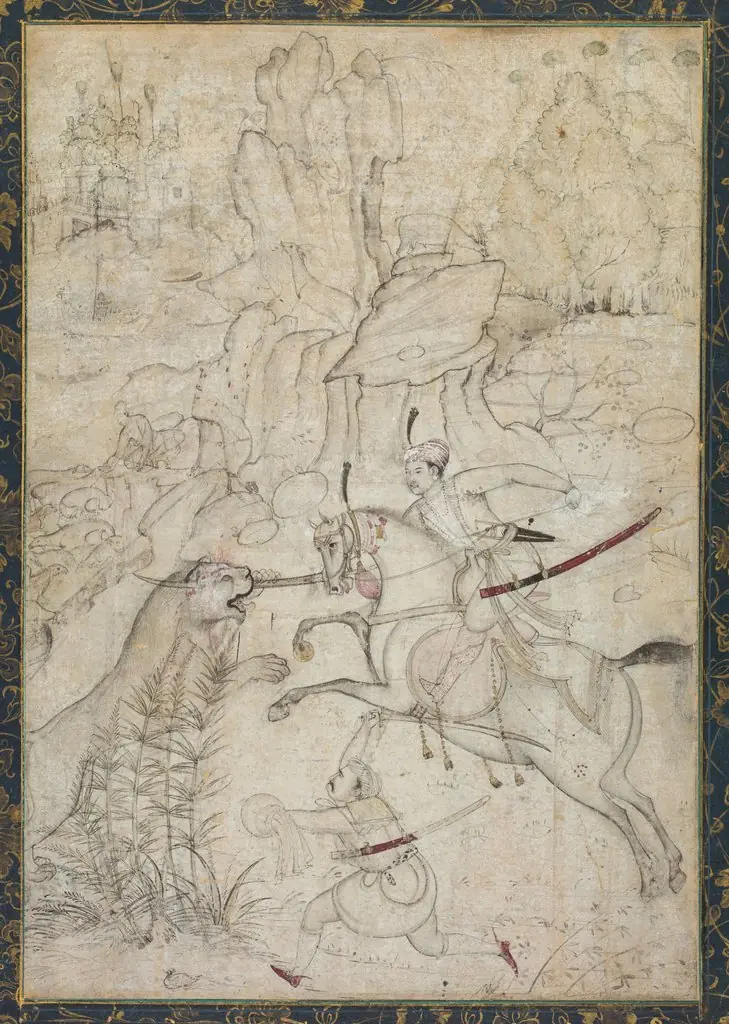
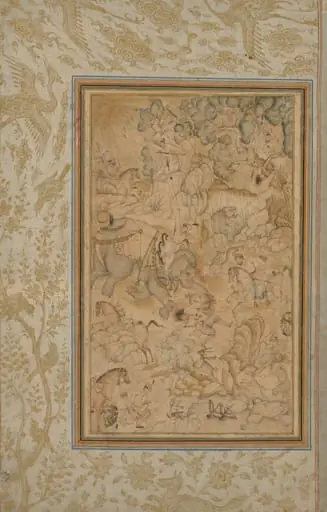
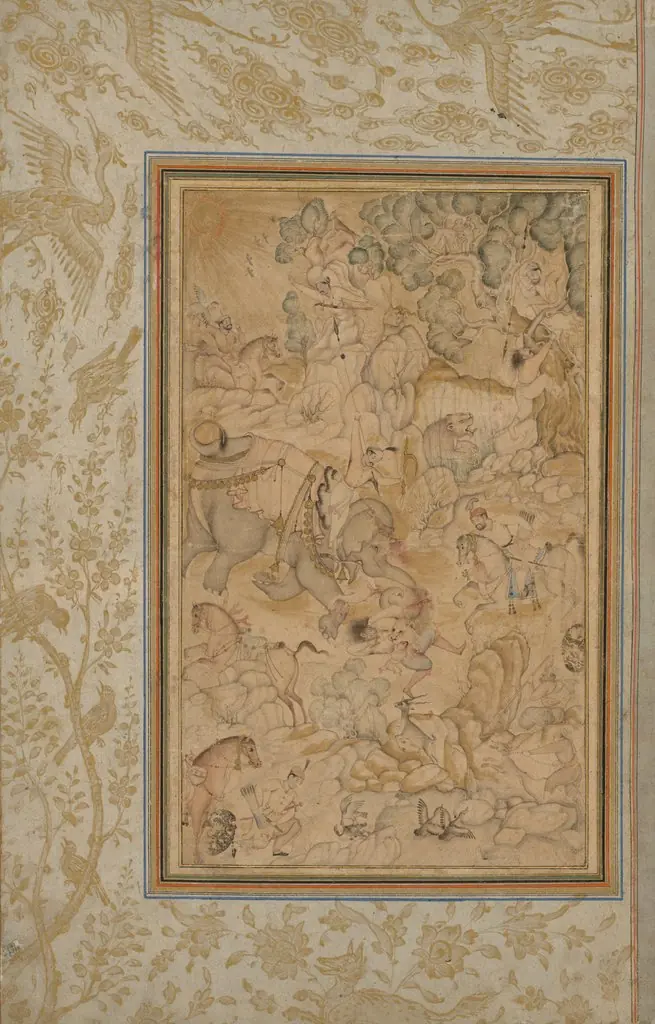
A Mounted Prince Hunting Lion in a Rocky Landscape is an unspecified painting by the Mughal Painting artist Khem Karan. It dates from 1600 and is held in the collection of the Cleveland Museum of Art. The work depicts a Mughal prince on horseback confronting a lion in a rugged landscape.
About this work
Overview
The work depicts a Mughal prince on horseback confronting a lion in a rugged landscape. The prince, composed and confident, strikes the animal with a single sword blow while his horse rears, one foreleg bent to counterbalance. A shepherd tending sheep appears in the distant background, suggesting the safety afforded by the prince’s bravery.
Subject & Meaning
The scene draws on Persian epic traditions where heroic figures demonstrate courage through lion hunts, a ritual associated with royal authority in Iran and the Near East. The calm demeanor of the prince contrasts with the anxious expression of his attendant, emphasizing the ruler’s control over danger.
Technique & Style
Rendered as a study, the drawing leaves extensive white space around the central figures, indicating the artist’s process of arranging composition before adding colour. The sketch combines dynamic action—rearing horse, snarling lion—with a restrained, almost schematic treatment of the surrounding rocks and dry grass.
History & Provenance
Created within the Mughal artistic tradition, the piece reflects the cultural lineage the empire claimed from Persian heritage. It likely served as a preparatory design for a larger, fully painted composition, a common practice among court artists of the period.
Context
Lion hunting was a ceremonial display of power and bravery for rulers in the Mughal court, echoing similar practices in earlier Persian and Near Eastern societies. The inclusion of a peaceful shepherd in the background underscores the protective role of the sovereign over his subjects.
Artist & collection
Artist
Khem Karan painted lively battle scenes and royal hunts for the Mughal court around 1600.