Artwork
Akbar and Rai Surjan Hada
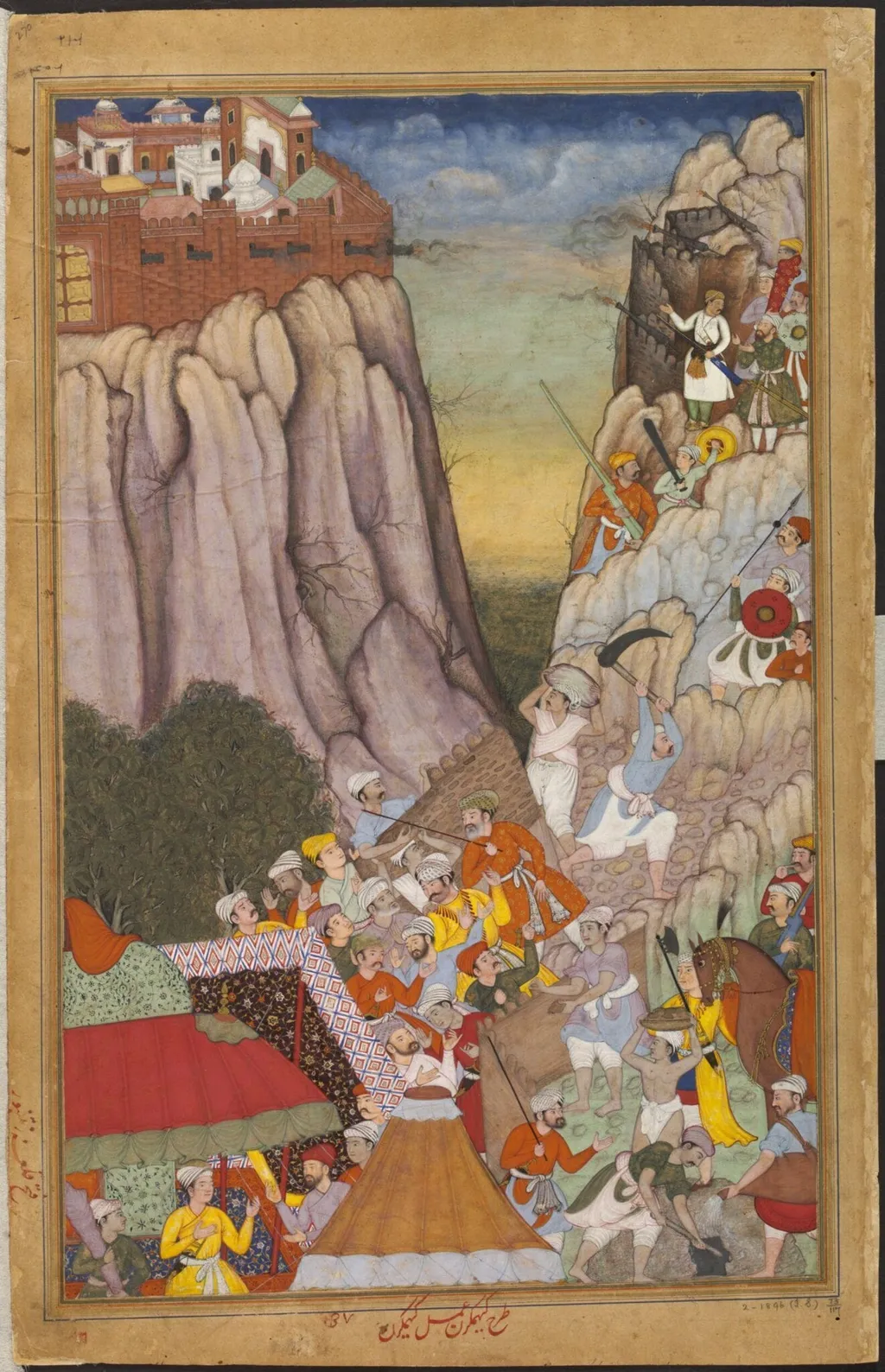
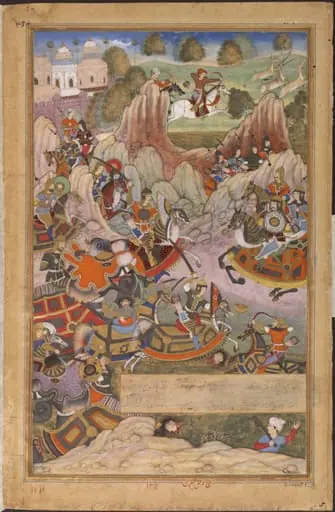
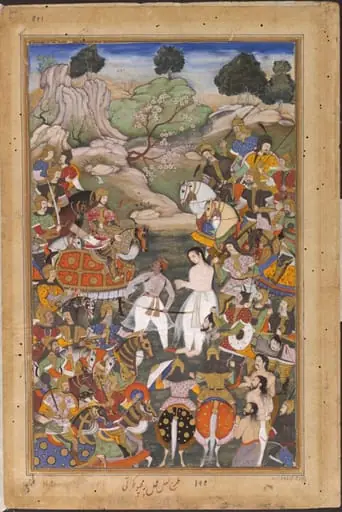
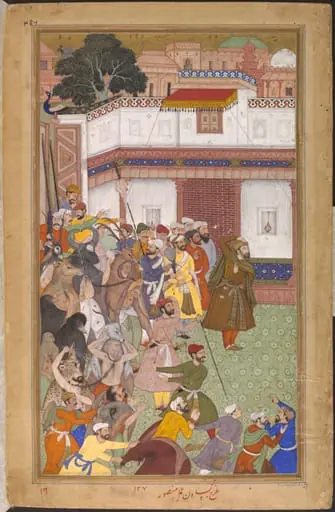
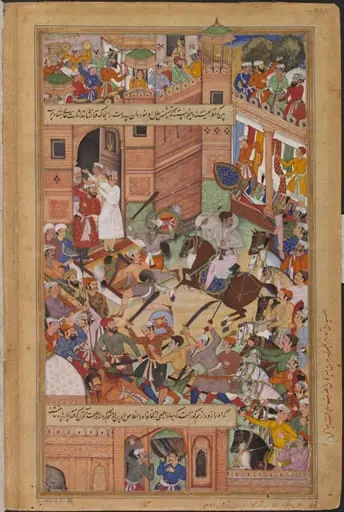
Akbar and Rai Surjan Hada is a paint painting by the Mughal Painting artist Khem Karan. It dates from 1592 and is held in the collection of the Victoria and Albert Museum. This painting is one of many illustrations created for the Akbarnama, the official historical record of Emperor Akbar’s reign.
About this work
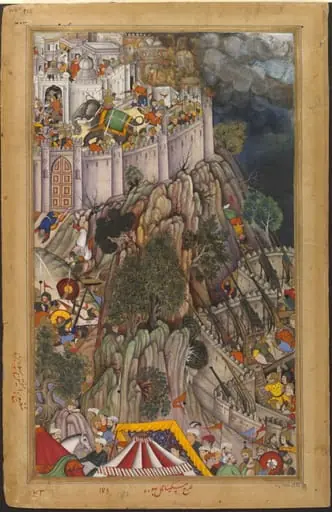
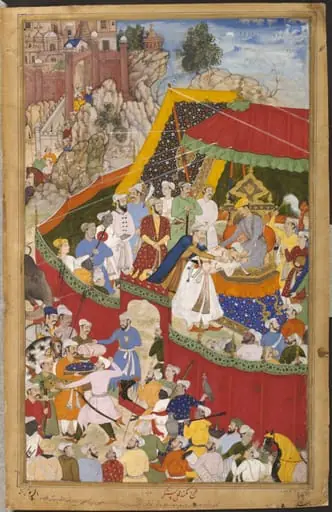
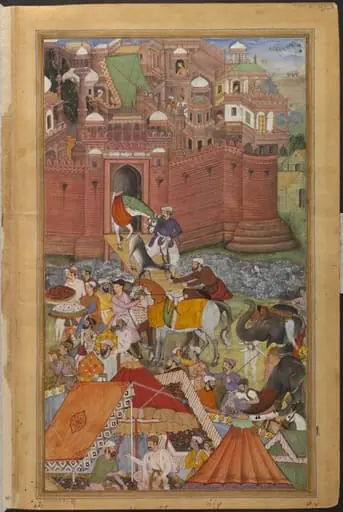
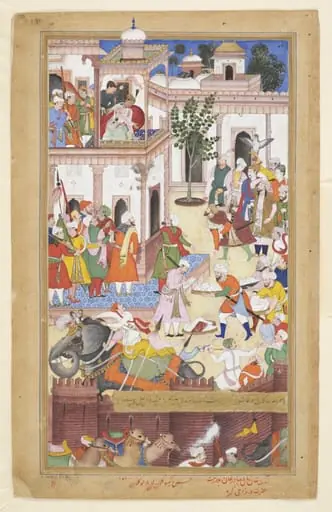
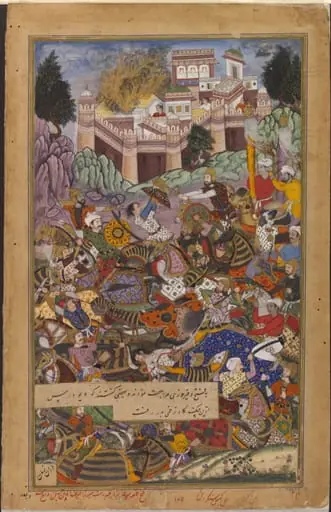
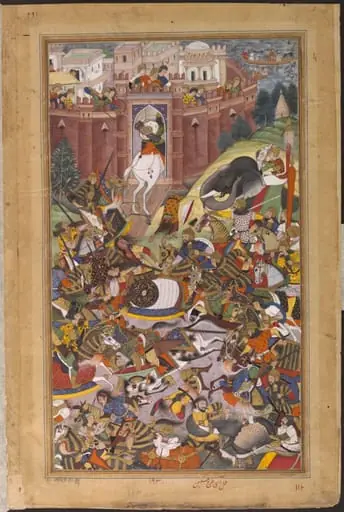
This painting shows Akbar, in white, watching his army attack a Rajput fortress. Smoke and dust fill the scene. Soldiers on horseback and foot charge below.
It comes from the Akbarnama, a book about Akbar’s reign. Many artists worked on it together. This page was painted around 1590.
Ever seen other Mughal miniatures? Check out the Victoria and Albert Museum’s collection.
Overview
This painting is one of many illustrations created for the Akbarnama, the official historical record of Emperor Akbar’s reign.
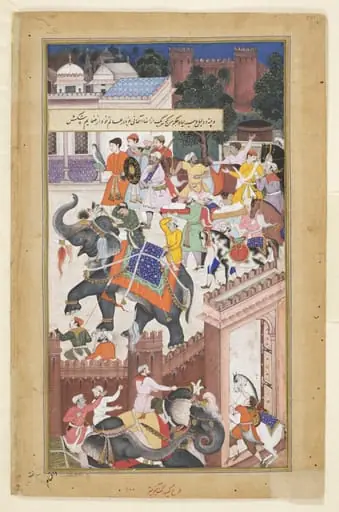
This painting is one of many illustrations created for the Akbarnama, the official historical record of Emperor Akbar’s reign. Executed around 1592–1594, it captures a military campaign against the Rajput stronghold of Ranthambhor in 1569. Produced in the imperial atelier, the work reflects a collaborative effort by dozens of artists under centralized direction, blending narrative clarity with intricate detail typical of Mughal manuscript painting.
Subject & Meaning
The scene portrays Akbar observing from a elevated position as his forces assault Ranthambhor Fort. His calm demeanor contrasts with the chaos below, emphasizing imperial authority and strategic detachment. The depiction serves not merely as documentation but as a visual assertion of Mughal dominance, reinforcing the legitimacy of Akbar’s rule through the portrayal of military success and controlled command.
Technique & Style
The painting employs fine brushwork, layered pigments, and precise line work characteristic of Mughal miniature traditions. Spatial depth is suggested through overlapping forms and atmospheric haze, while figures are rendered with individualized features despite the crowded composition. The use of muted earth tones and smoky grays enhances the tension of battle, balancing realism with stylized representation common in courtly illustration.
History & Provenance
After its completion, the Akbarnama manuscript remained in imperial hands, passing from Akbar to his son Jahangir and later to Shah Jahan. In the 19th century, it entered private collection through Major-General John Clarke, who acquired it during his service in Oudh. The Victoria and Albert Museum purchased the volume in 1896 from his widow, securing its place in a major Western collection of South Asian art.
Context
The Akbarnama was commissioned as a dynastic chronicle to legitimize Mughal rule through written and visual narrative. Its production coincided with Akbar’s efforts to consolidate power and foster a syncretic court culture. The involvement of numerous artists—Hindu, Muslim, and Persian—reflects the emperor’s policy of inclusive patronage, making the manuscript both a historical record and a cultural artifact of imperial pluralism.
Legacy
The Akbarnama illustrations set a standard for historical narrative in Mughal art, influencing later imperial manuscripts and shaping perceptions of Mughal power. Its survival and institutional preservation have allowed ongoing scholarly study of 16th-century Indian court life, military practice, and artistic collaboration. Today, it remains a key reference for understanding the intersection of politics, art, and historiography in early modern South Asia.
Artist & collection
Artist
Khem Karan painted lively battle scenes and royal hunts for the Mughal court around 1600.