Artwork
Albrecht Durer
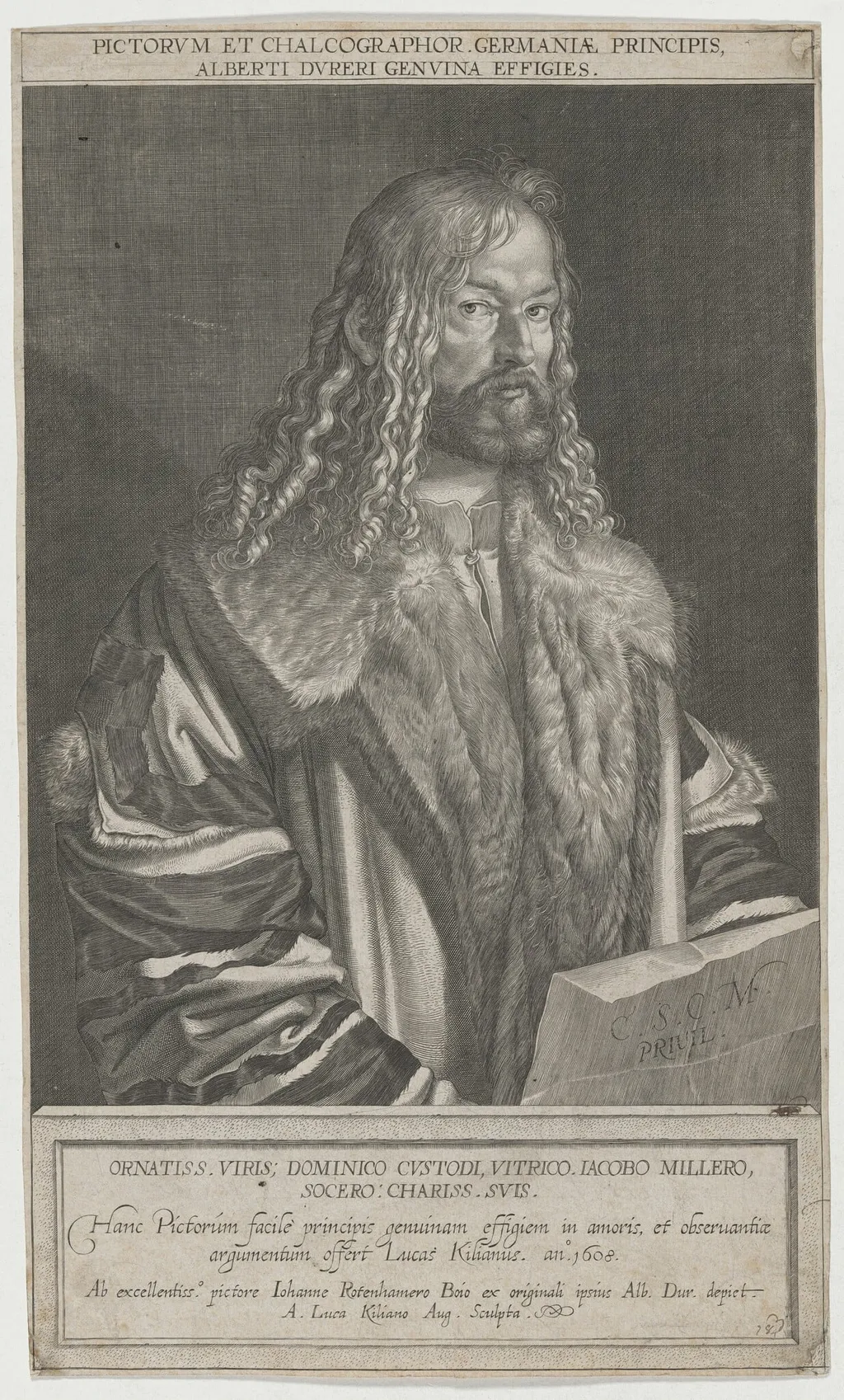
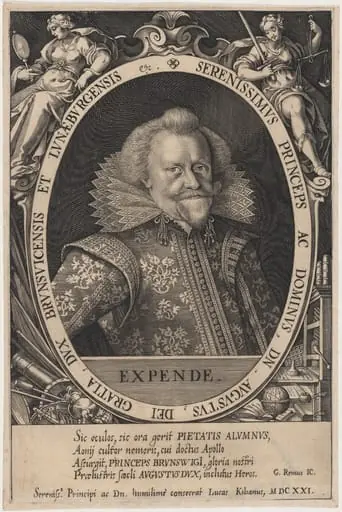
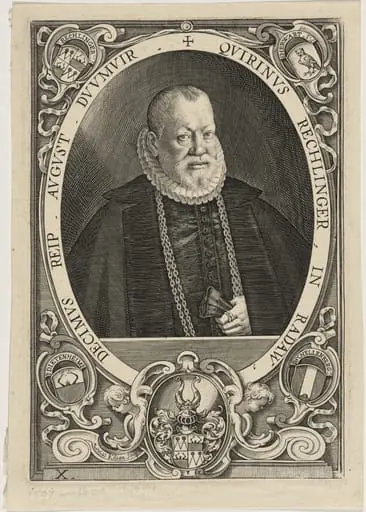
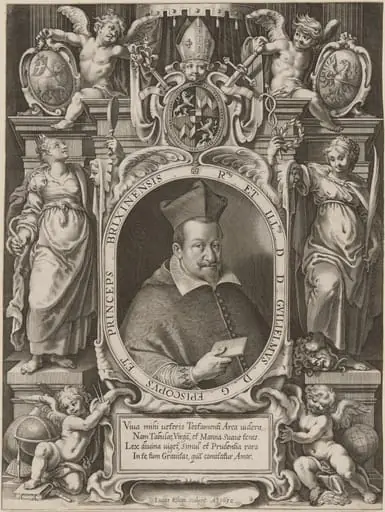
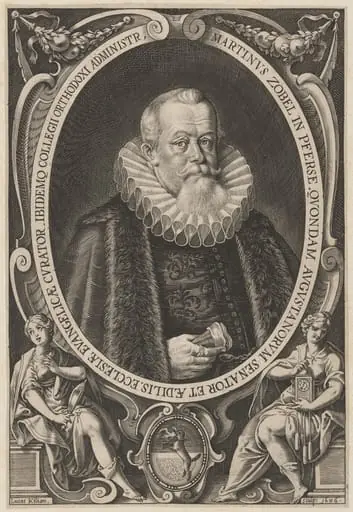
Albrecht Durer is an ink print by the Baroque artist Lucas Kilian. It dates from 1608 and is held in the collection of the National Gallery of Art.
About this work
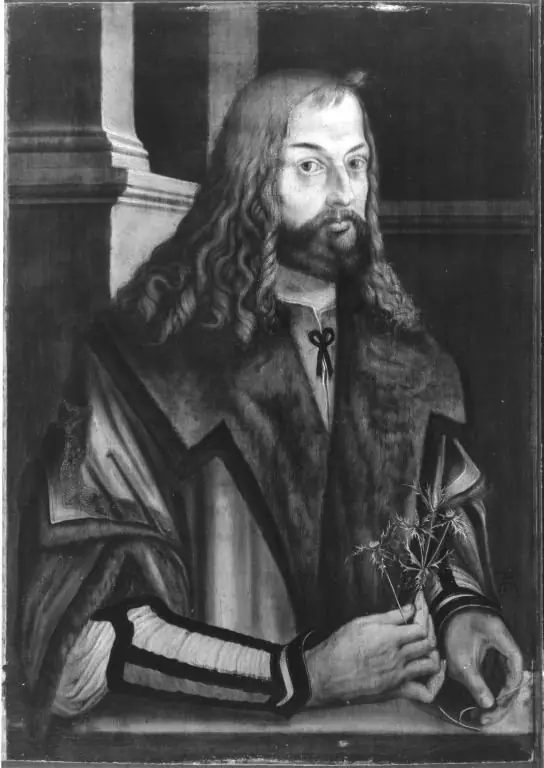
He’s wearing a fur-lined robe over a dark shirt, and his hands rest on a small ledge.
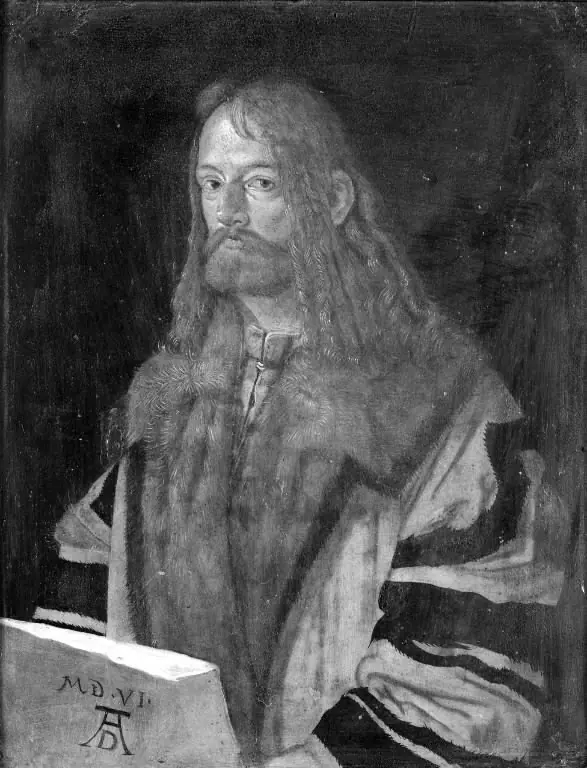
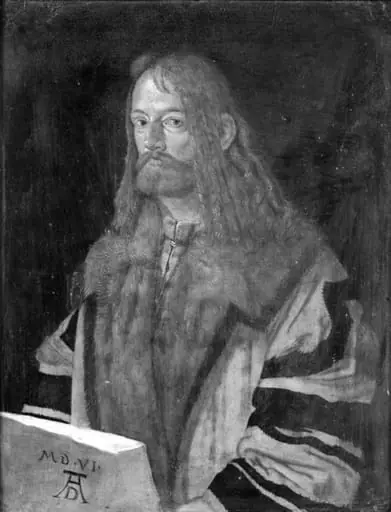
This is a black-and-white portrait of a man with long curly hair and a thick beard. He’s wearing a fur-lined robe over a dark shirt, and his hands rest on a small ledge. The background is plain, but his face looks serious, almost intense.
The text at the top calls him *Albrecht Dürer*, a famous artist. This print was made in 1608 by Lucas Kilian, who copied Dürer’s original image.
Next, look up engraving to see how artists like Kilian carved these detailed lines.
Overview
Lucas Kilian created this 1608 engraving as a reproductive portrait of Albrecht Dürer, based on an earlier image by the Nuremberg artist. Executed in the Augsburg tradition, the work exemplifies the workshop practice of translating existing portraits into printed form. Kilian, part of a family of engravers trained in the Custos workshop, specialized in precise, detailed renderings that facilitated the dissemination of artists' likenesses across Europe.
Subject & Meaning
The portrait depicts Dürer with a solemn expression, long curled hair, and a thick beard, dressed in a fur-lined robe that signals his status. His hands rest on a ledge, suggesting contemplation or authorship. The plain background focuses attention on his face and attire, reinforcing his identity as a respected figure in the visual arts. The inscription above confirms his name, anchoring the image as a commemorative representation rather than a fictionalized portrait.
Technique & Style
Kilian employed fine, controlled lines typical of reproductive engraving, using cross-hatching and delicate tonal gradations to model form and texture. The fur trim, hair, and facial features are rendered with meticulous attention to detail, demonstrating his technical command. The black-and-white medium emphasizes contrast and clarity, aligning with the Augsburg workshop’s emphasis on fidelity to the original model rather than expressive interpretation.
History & Provenance
The engraving was produced in 1608 by Lucas Kilian, working within a family dynasty of printmakers established in Augsburg. It derives from an earlier portrait of Dürer, likely a drawing or painting from the early 1500s. As part of a broader trend in early 17th-century print culture, this image served to preserve and circulate the likeness of a revered predecessor, ensuring his continued presence in artistic memory.
Context
In the decades following Dürer’s death, his reputation grew as a model of the learned artist. Engravers like Kilian played a key role in shaping this legacy by producing standardized portraits for collectors and scholars. The Augsburg workshop system, with its emphasis on technical precision and reproduction, allowed such images to circulate widely, contributing to the mythos of Northern Renaissance artists beyond their lifetimes.
Legacy
Kilian’s engraving became one of the most widely distributed images of Dürer in the 17th century, influencing later depictions and scholarly iconography. While not original, its clarity and craftsmanship ensured its endurance in printed collections and art-historical texts. It stands as a testament to the role of reproductive prints in constructing the visual memory of early modern artists.
Artist & collection
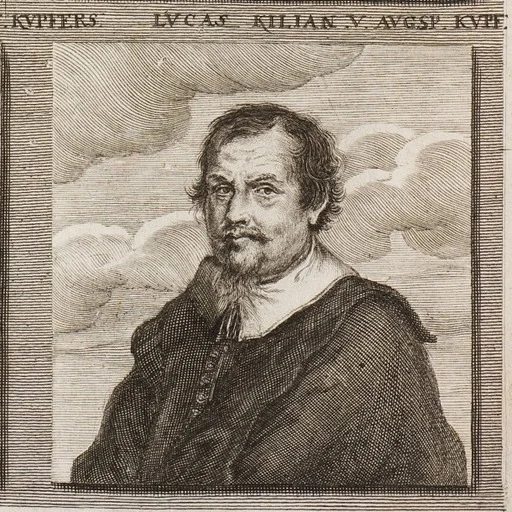
Artist
Lucas Kilian (Lucas Kilianus Augustanus; 1579–1637) was a German engraver and etcher from the Kilian family of engravers in Augsburg.