Artwork
William von Welsberg, Archbishop of Brixen
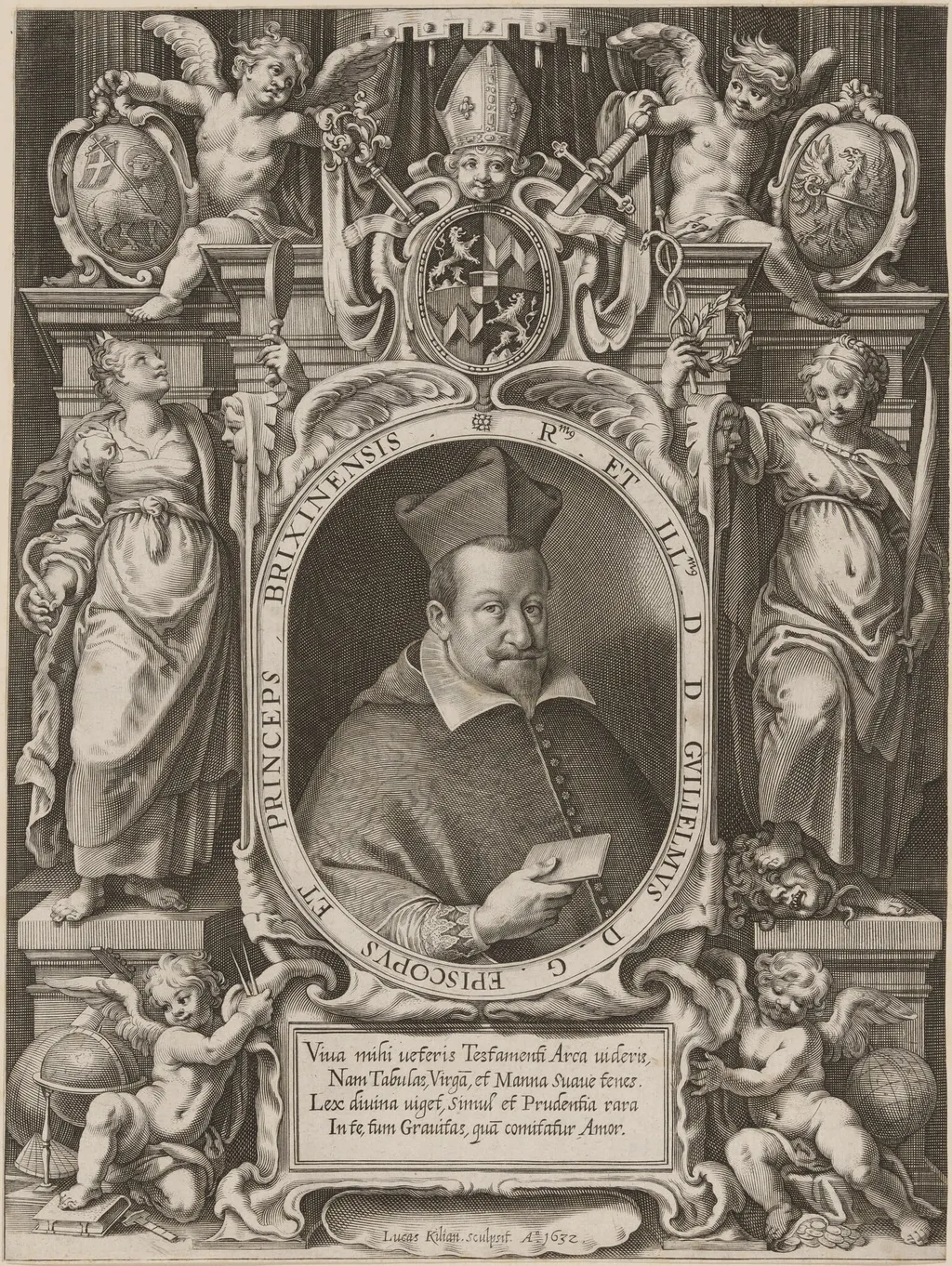
William von Welsberg, Archbishop of Brixen is an ink print by the Baroque artist Lucas Kilian. It dates from 1632 and is held in the collection of the National Gallery of Art.
About this work
Overview
This 1632 engraving by Lucas Kilian portrays William von Welsberg, Archbishop of Brixen, in a formal, seated pose, surrounded by symbolic and decorative elements.
Subject & Meaning
The subject, William von Welsberg, is depicted in bishop’s attire, holding a book (symbolizing knowledge or scripture) and a ring (likely signifying his office or a saint’s relic). Encircling him are cherubs, a lion-adorned shield (possibly a coat of arms), and Latin-inscribed scrolls, collectively conveying his religious authority and heritage.
Technique & Style
Kilian employed sharp, detailed lines to achieve depth, with cross-hatching techniques (characteristic of the period) used to create three-dimensional effects. The composition balances the finely rendered bishop’s face with intricate, patterned decorations and miniature scenes in the background and corners.
History & Provenance
Created in 1632 by Lucas Kilian, a renowned German engraver and etcher from Augsburg, this work was produced within the Custos workshop, founded by his stepfather. Kilian was noted for his portraits and printed works.
Context
This engraving reflects the early 17th-century European tradition of portraying ecclesiastical figures with symbols of their rank and spiritual significance, often in highly detailed and ornate styles.
Legacy
While specific lasting impacts of this engraving are not widely documented, it exemplifies Kilian’s contribution to the development of engraving techniques and the representation of religious figures in early 17th-century German art.
Artist & collection
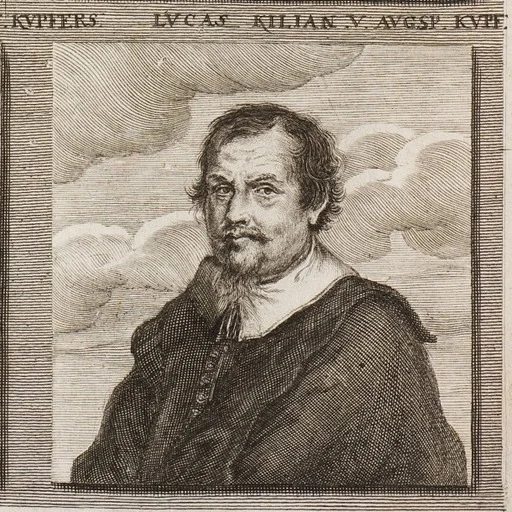
Artist
Lucas Kilian (Lucas Kilianus Augustanus; 1579–1637) was a German engraver and etcher from the Kilian family of engravers in Augsburg.

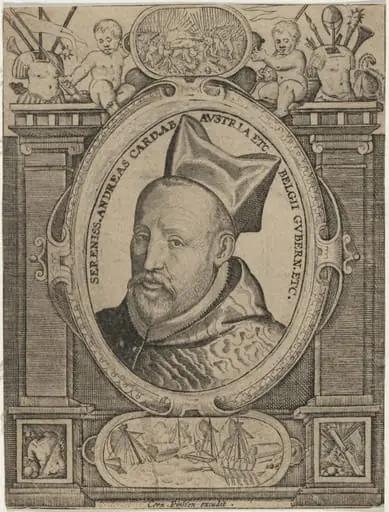 Andreas, Cardinal of the Holy Roman Empire
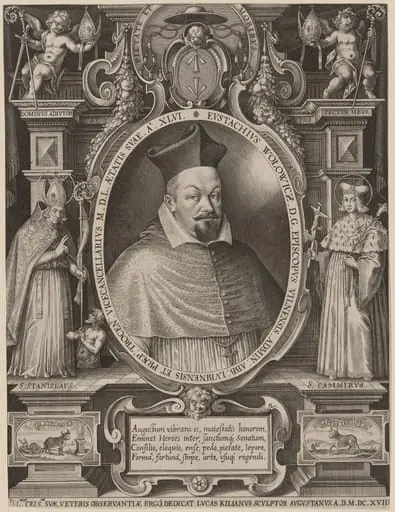 Eustace Wolowicz, Archbishop of Vilna
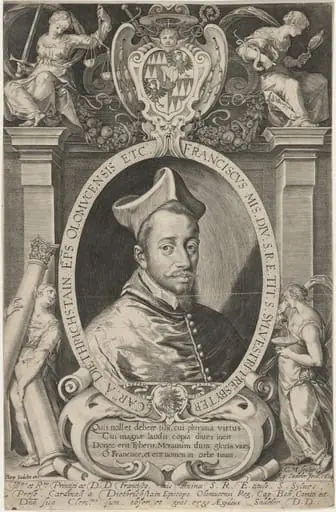 Francis Sylvestri, Cardinal
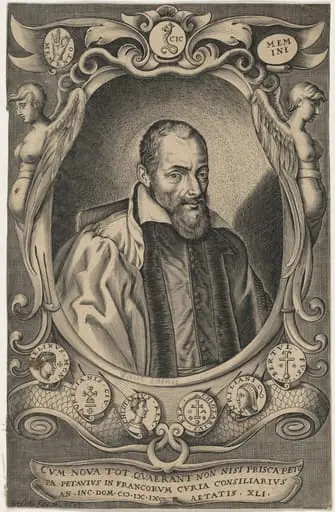 Petavius (?)
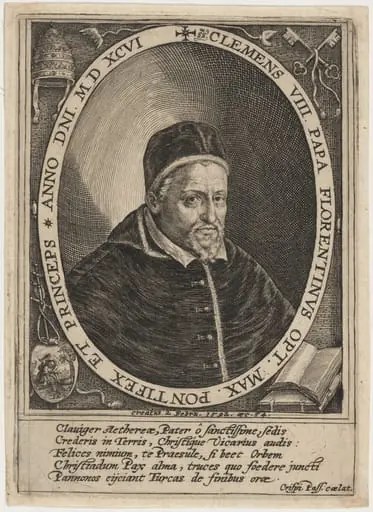 Pope Clement VIII
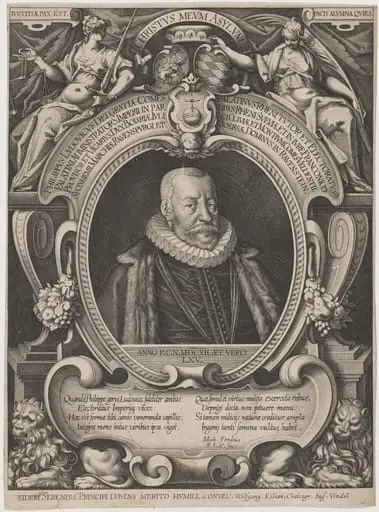 Philip Louis, Count Palatine
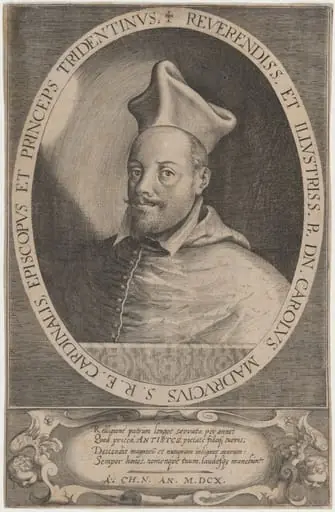 Cardinal Carolus Madrucius
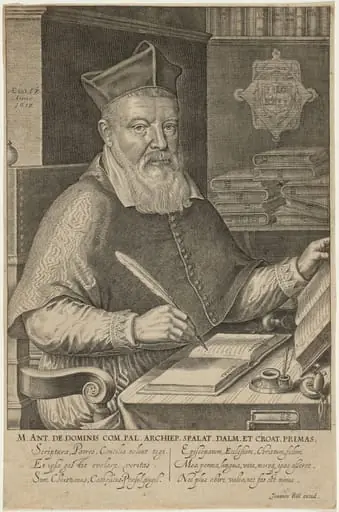 Marc Antonis De Dominis
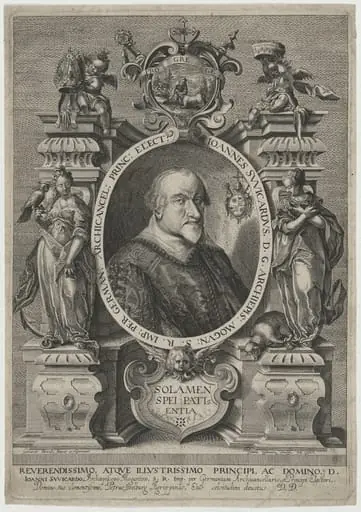 Joannes Swicardus, Archbishop of Maguntino
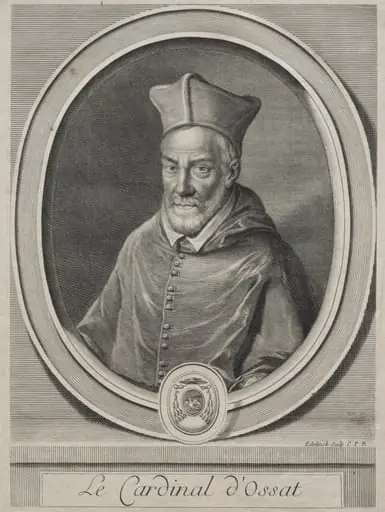 Cardinal Arnaud d'Ossat
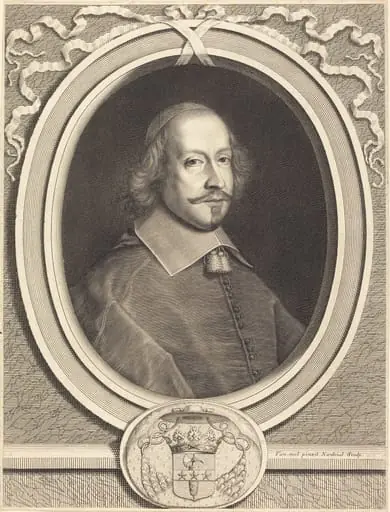 Cardinal Jules Mazarin
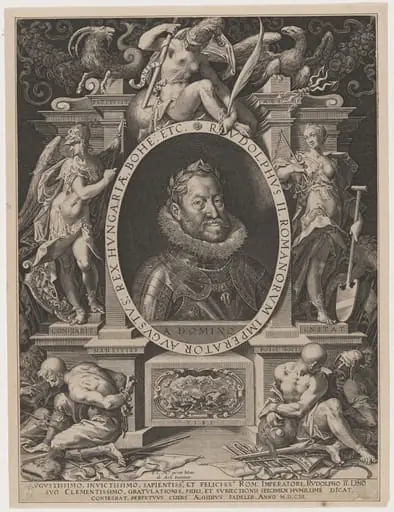 Emperor Rudolph II