Artwork
Claudia de Medici, Wife of Leopold of Austrian Tyrol
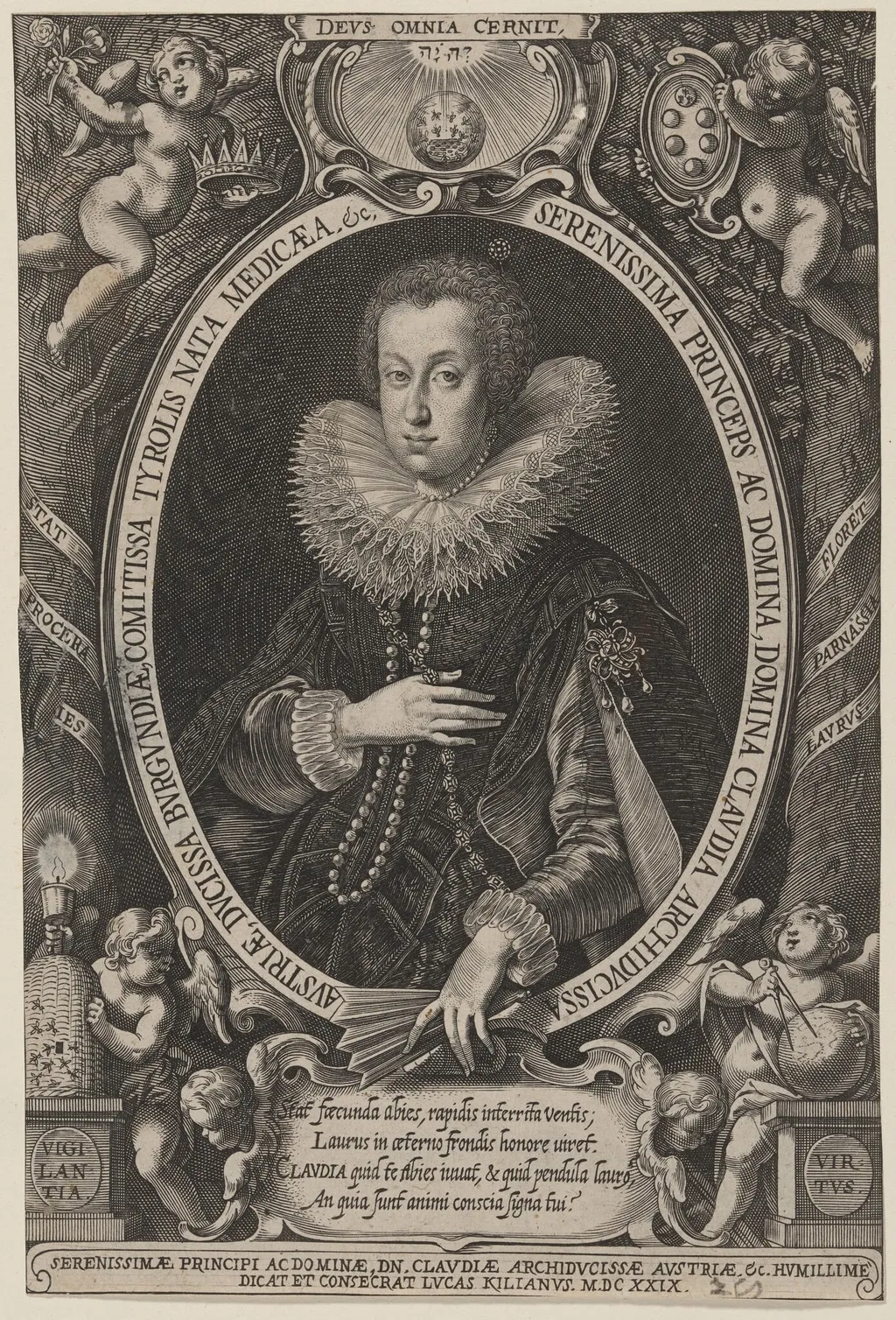
Claudia de Medici, Wife of Leopold of Austrian Tyrol is an ink print by the Baroque artist Lucas Kilian. It dates from 1629 and is held in the collection of the National Gallery of Art.
About this work
Overview
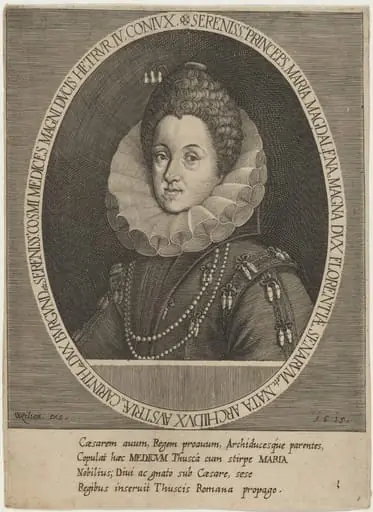
This 1629 engraving by Lucas Kilian presents Claudia de' Medici, consort of Archduke Leopold V of Austria-Tyrol, in a formal portrait format. Executed in black ink on paper, the work belongs to the tradition of Augsburg printmaking, where Kilian was active as a skilled engraver. The image combines portraiture with allegorical elements, typical of elite commemorative prints of the period.
Subject & Meaning
Claudia is depicted with regal poise, her attire signaling noble status through a stiff, ruffled collar and beaded necklace.
Claudia is depicted with regal poise, her attire signaling noble status through a stiff, ruffled collar and beaded necklace. The oval border encircling her features cherubs holding a crown and shield, symbols of sovereignty and protection. Latin inscriptions and a poetic verse at the base elevate her image beyond mere likeness, framing her as a virtuous and divinely favored consort within Habsburg dynastic ideology.
Technique & Style
Kilian employed fine-line engraving on copper, using dense cross-hatching to model volume and texture in fabric, hair, and skin. The background swirls and intricate lettering were meticulously carved, demonstrating the precision demanded by Augsburg’s printmaking workshops. The monochrome palette enhances the graphic clarity of the composition, emphasizing line and pattern over color.
History & Provenance
Created in 1629, the engraving was likely commissioned to commemorate Claudia’s marriage into the Habsburg family. Kilian, trained in the Custos workshop, produced such portraits for noble patrons across the Holy Roman Empire. The print circulated among aristocratic circles, serving both as a personal memento and a political statement of dynastic alliance.
Context
In early 17th-century Germany, engraved portraits of noblewomen were common tools of political representation. Claudia’s image aligns with a broader trend of using print to project familial prestige and religious virtue. Augsburg, a hub of print production, provided the technical infrastructure and market for such works, linking artistic craft with aristocratic identity.
Legacy
Kilian’s engraving remains a documented example of how print media reinforced noble status in the absence of photography. While not widely reproduced today, it contributes to scholarly understanding of early modern portraiture, gender representation, and the role of print in dynastic propaganda across Central Europe.
Artist & collection
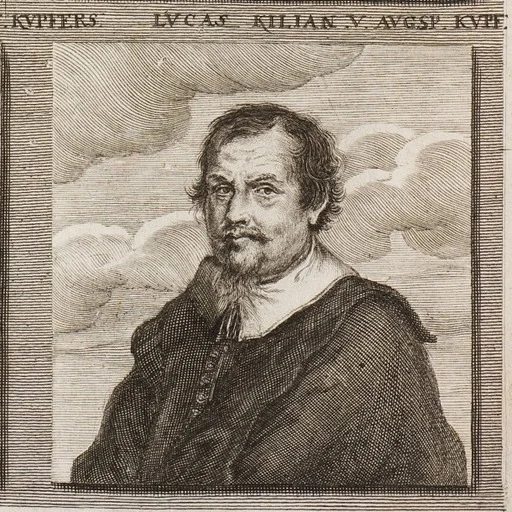
Artist
Lucas Kilian (Lucas Kilianus Augustanus; 1579–1637) was a German engraver and etcher from the Kilian family of engravers in Augsburg.