Artwork
Fanny Wocke
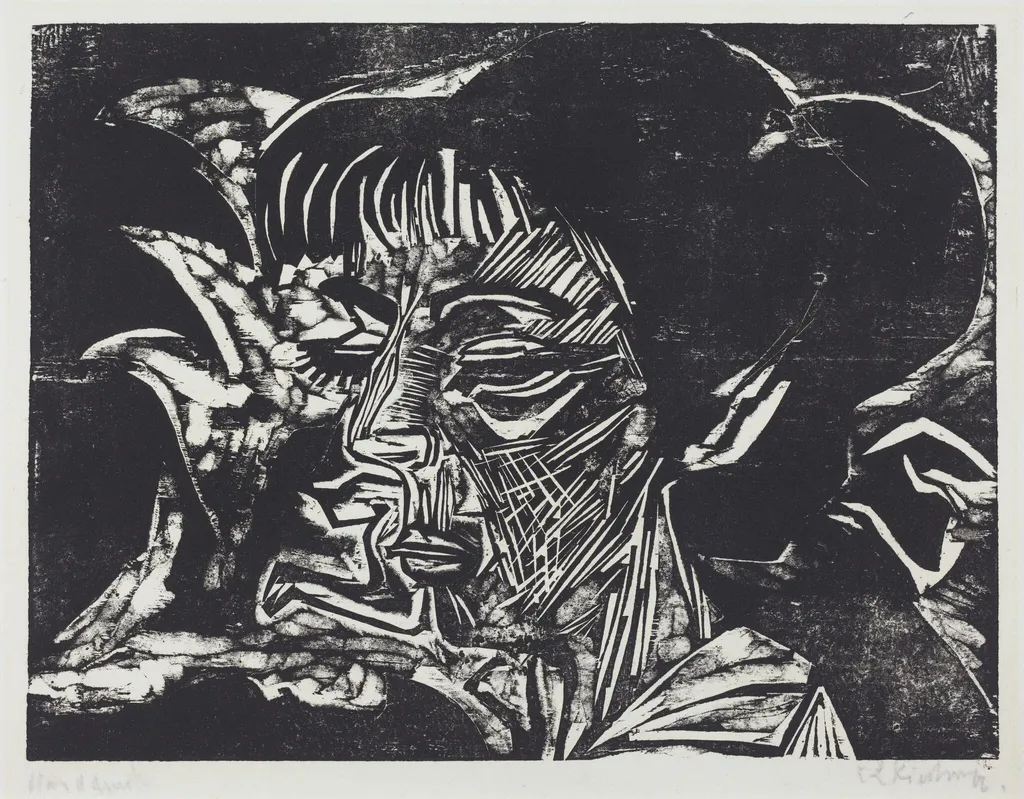
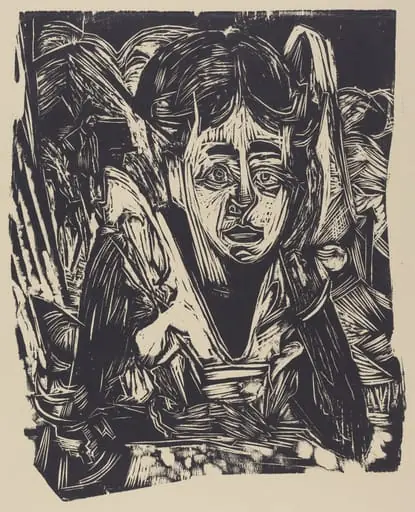
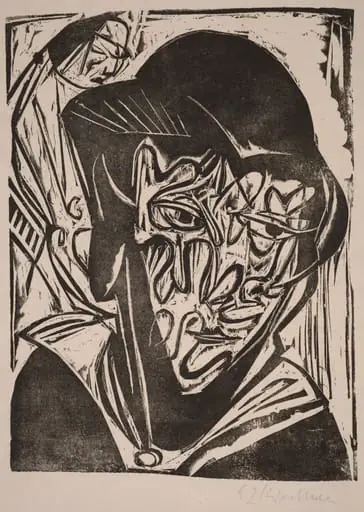
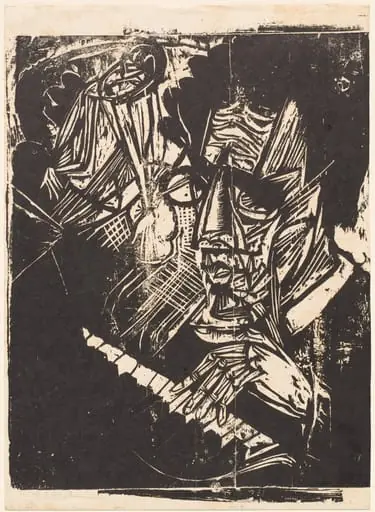
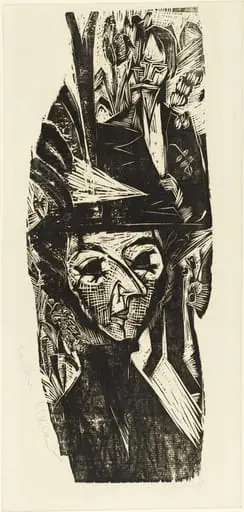
Fanny Wocke is an ink print by Ernst Ludwig Kirchner. It dates from 1916 and is held in the collection of the National Gallery of Art.
About this work
Overview
Ernst Ludwig Kirchner produced *Fanny Wocke* in 1916 as a woodcut printed on blotting paper.
Ernst Ludwig Kirchner produced *Fanny Wocke* in 1916 as a woodcut printed on blotting paper. A key figure in the German Expressionist movement and co-founder of Die Brücke, Kirchner used the woodcut medium to explore emotional intensity through direct, tactile mark-making. The choice of blotting paper, an unconventional support, heightened the print’s raw texture and immediacy, aligning with the group’s rejection of academic refinement.
Subject & Meaning
The portrait depicts Fanny Wocke, a woman whose face is partially obscured by an oversized hat with exaggerated feathers. The hat dominates the composition, reducing the sitter’s identity to a silhouette amid structural forms. This visual suppression may reflect Kirchner’s interest in anonymity, psychological distance, or the performative nature of social appearance during a time of personal and cultural upheaval.
Technique & Style
Kirchner carved the image directly into wood, using sharp, angular incisions that create a fractured, energetic line quality. Ink was pressed into the carved grooves and transferred onto blotting paper, which absorbed the ink unevenly, enhancing the print’s roughness. The absence of gradation and the stark contrast between dark forms and the pale ground emphasize emotional tension over naturalism, characteristic of Expressionist aesthetics.
History & Provenance
Created during Kirchner’s time in the Swiss Alps, where he sought refuge from urban stress and wartime anxiety, *Fanny Wocke* belongs to a series of portraits made between 1915 and 1918. After the Nazi regime labeled his work 'degenerate' in the 1930s, many of his prints were confiscated or destroyed. This piece survived, likely due to its small scale and private circulation, and remains a testament to his resilience under political repression.
Context
In 1916, Europe was engulfed in war, and Kirchner, like many Expressionists, turned inward, focusing on psychological states rather than external reality. The woodcut medium, accessible and immediate, suited his need for direct expression. Die Brücke’s earlier ideals of artistic liberation had evolved into a more introspective, fragmented style, reflecting both personal turmoil and the broader collapse of pre-war certainties.
Legacy
Fanny Wocke exemplifies Kirchner’s mature approach to printmaking: emotionally charged, formally stripped, and materially honest. Though overshadowed in public memory by his paintings, his woodcuts influenced later generations of printmakers who valued raw expression over technical polish. The work endures as a quiet but forceful record of individual presence amid societal fragmentation.
Own this work as a print
Artist & collection
Artist
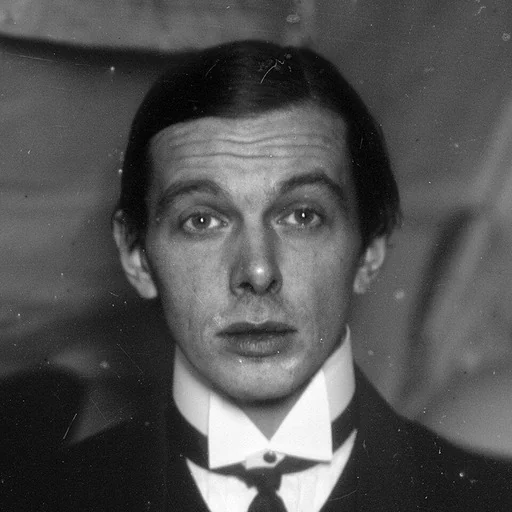
Ernst Ludwig Kirchner (6 May 1880 – 15 June 1938) was a German expressionist painter and printmaker.

![Dance Hall Bellevue [obverse], by Ernst Ludwig Kirchner](https://artifactworldgallery.com/img/ernst-ludwig-kirchner--dance-hall-bellevue-obverse--d1e14aac4297c69e-w320.webp)
![Nude Figure [reverse], by Ernst Ludwig Kirchner](https://artifactworldgallery.com/img/ernst-ludwig-kirchner--nude-figure-reverse--4b135f0364753e98-w320.webp)
![Two Nudes [obverse], by Ernst Ludwig Kirchner](https://artifactworldgallery.com/img/ernst-ludwig-kirchner--two-nudes-obverse--eb3914183f0bc96d-w320.webp)
![Dancing Couple in the Snow [reverse], by Ernst Ludwig Kirchner](https://artifactworldgallery.com/img/ernst-ludwig-kirchner--dancing-couple-in-the-snow-reverse--87ca007d7c05b553-w320.webp)