Artwork
Fehmarn Girls
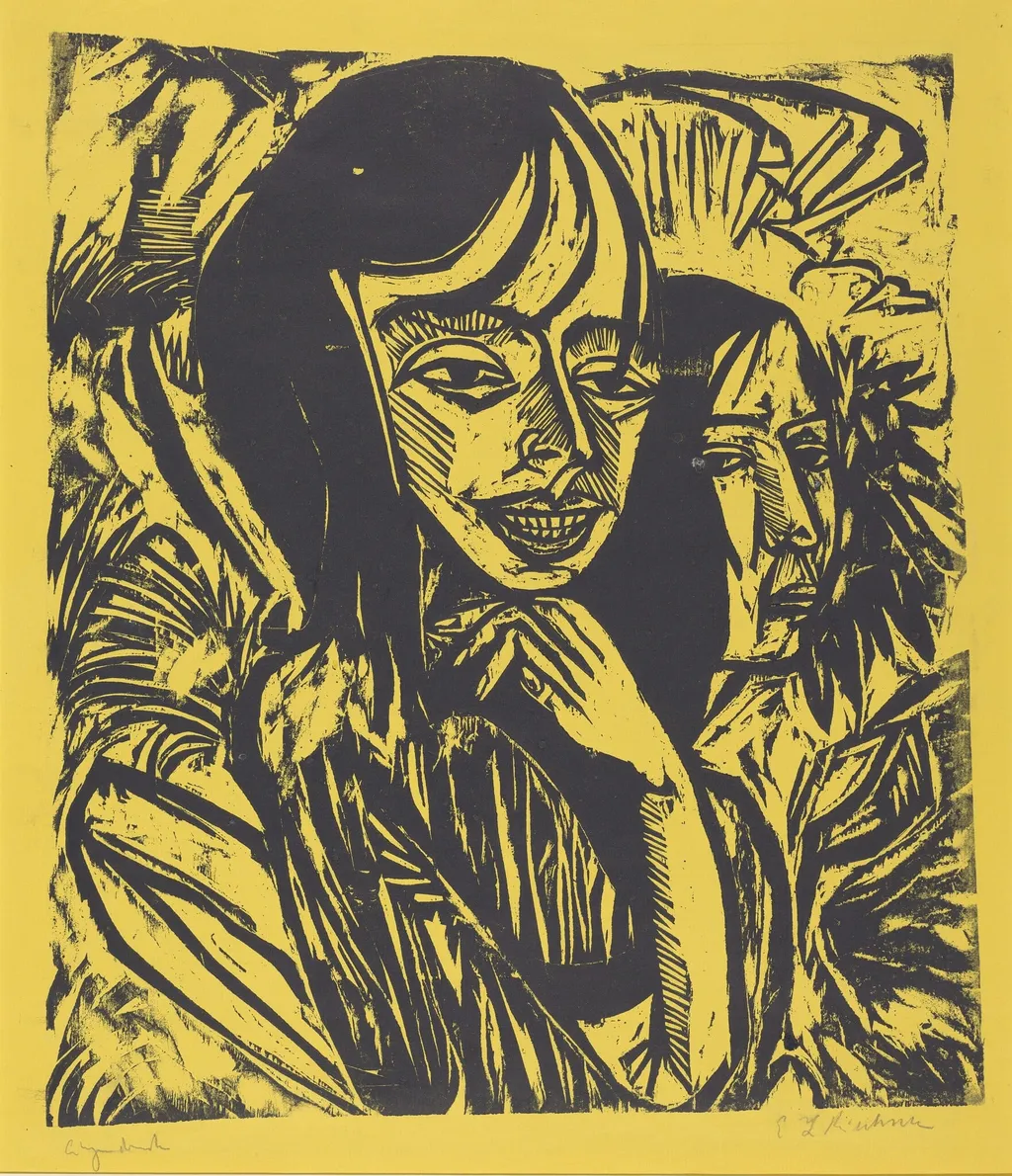
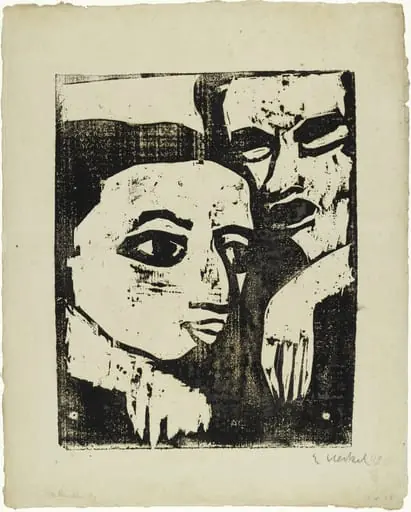
Fehmarn Girls is an ink print by Ernst Ludwig Kirchner. It dates from 1913 and is held in the collection of the National Gallery of Art.
About this work
Overview
The work exemplifies the artist’s role in advancing Expressionism, a movement that prioritized emotional intensity over realistic representation.
Ernst Ludwig Kirchner produced *Fehmarn Girls* in 1913 as a woodcut printed in black ink on yellow paper. The work exemplifies the artist’s role in advancing Expressionism, a movement that prioritized emotional intensity over realistic representation. Created during a period of experimentation, the print distills figures into stark, essential forms, reflecting Kirchner’s engagement with the principles of Die Brücke, the group he co-founded.
Subject & Meaning
The print depicts two young women, rendered with angular lines and exaggerated features. Their relaxed postures and broad smiles convey a sense of casual vitality, while the inclusion of a flower held by one figure introduces a subtle element of natural beauty. The composition’s simplicity and directness suggest an interest in capturing an unguarded moment, rather than idealized or narrative-driven imagery.
Technique & Style
Kirchner employed the woodcut technique, carving the image into a wooden block before applying ink and transferring it to paper. The method yields bold, unmodulated lines and high contrast between the black ink and yellow background, a hallmark of Expressionist printmaking. The figures’ flattened forms and sharp contours emphasize the medium’s graphic potential, while the absence of tonal gradation reinforces the work’s immediacy.
History & Provenance
Created in 1913, *Fehmarn Girls* emerged during Kirchner’s time on the Baltic island of Fehmarn, where he sought inspiration in rural life. The print predates the artist’s later persecution under the Nazi regime, which labeled his work—and that of many modernists—as “degenerate” in 1937. The print’s survival reflects its circulation within early 20th-century avant-garde circles, though its specific ownership history remains less documented than his paintings.
Context
The work belongs to a broader shift in early 20th-century art toward abstraction and emotional expression. Kirchner’s focus on simplified, rhythmic forms aligned with Die Brücke’s rejection of academic conventions, favoring instead a raw, primal aesthetic. The print’s subject—everyday figures in a natural setting—parallels the group’s interest in non-urban experiences, even as their style diverged sharply from representational traditions.
Legacy
Though less monumental than Kirchner’s paintings, *Fehmarn Girls* contributes to the understanding of Expressionist printmaking as a vehicle for bold experimentation. Its formal economy and emotional directness influenced later graphic artists, while its inclusion in discussions of “degenerate art” underscores the political stakes of modernist innovation. The print remains a concise example of Kirchner’s ability to distill complex ideas into stark, evocative imagery.
Own this work as a print
Artist & collection
Artist
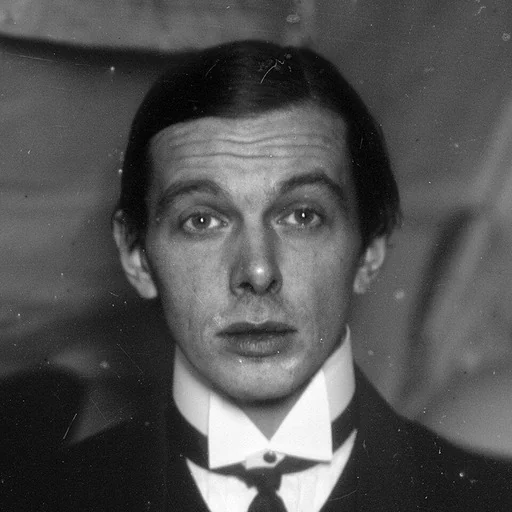
Ernst Ludwig Kirchner (6 May 1880 – 15 June 1938) was a German expressionist painter and printmaker.

![Dance Hall Bellevue [obverse], by Ernst Ludwig Kirchner](https://artifactworldgallery.com/img/ernst-ludwig-kirchner--dance-hall-bellevue-obverse--d1e14aac4297c69e-w320.webp)
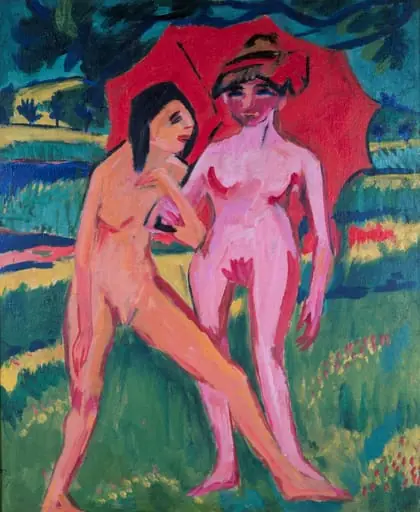
![Nude Figure [reverse], by Ernst Ludwig Kirchner](https://artifactworldgallery.com/img/ernst-ludwig-kirchner--nude-figure-reverse--4b135f0364753e98-w320.webp)
![Two Nudes [obverse], by Ernst Ludwig Kirchner](https://artifactworldgallery.com/img/ernst-ludwig-kirchner--two-nudes-obverse--eb3914183f0bc96d-w320.webp)
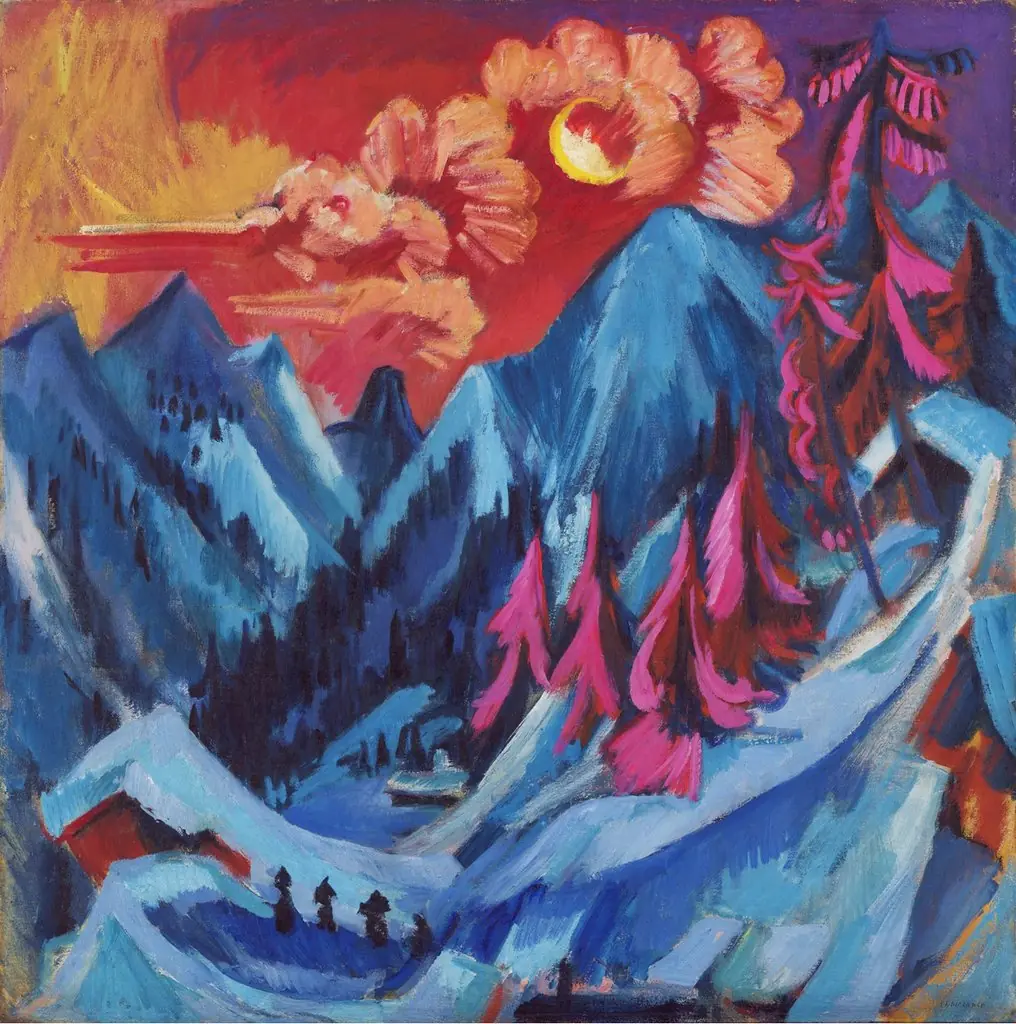
![Dancing Couple in the Snow [reverse], by Ernst Ludwig Kirchner](https://artifactworldgallery.com/img/ernst-ludwig-kirchner--dancing-couple-in-the-snow-reverse--87ca007d7c05b553-w320.webp)