Artwork
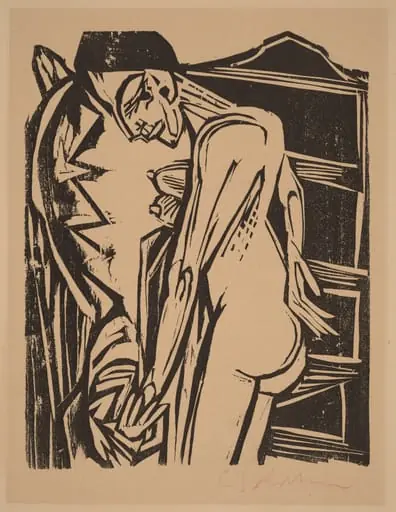
Standing Nude in a Room
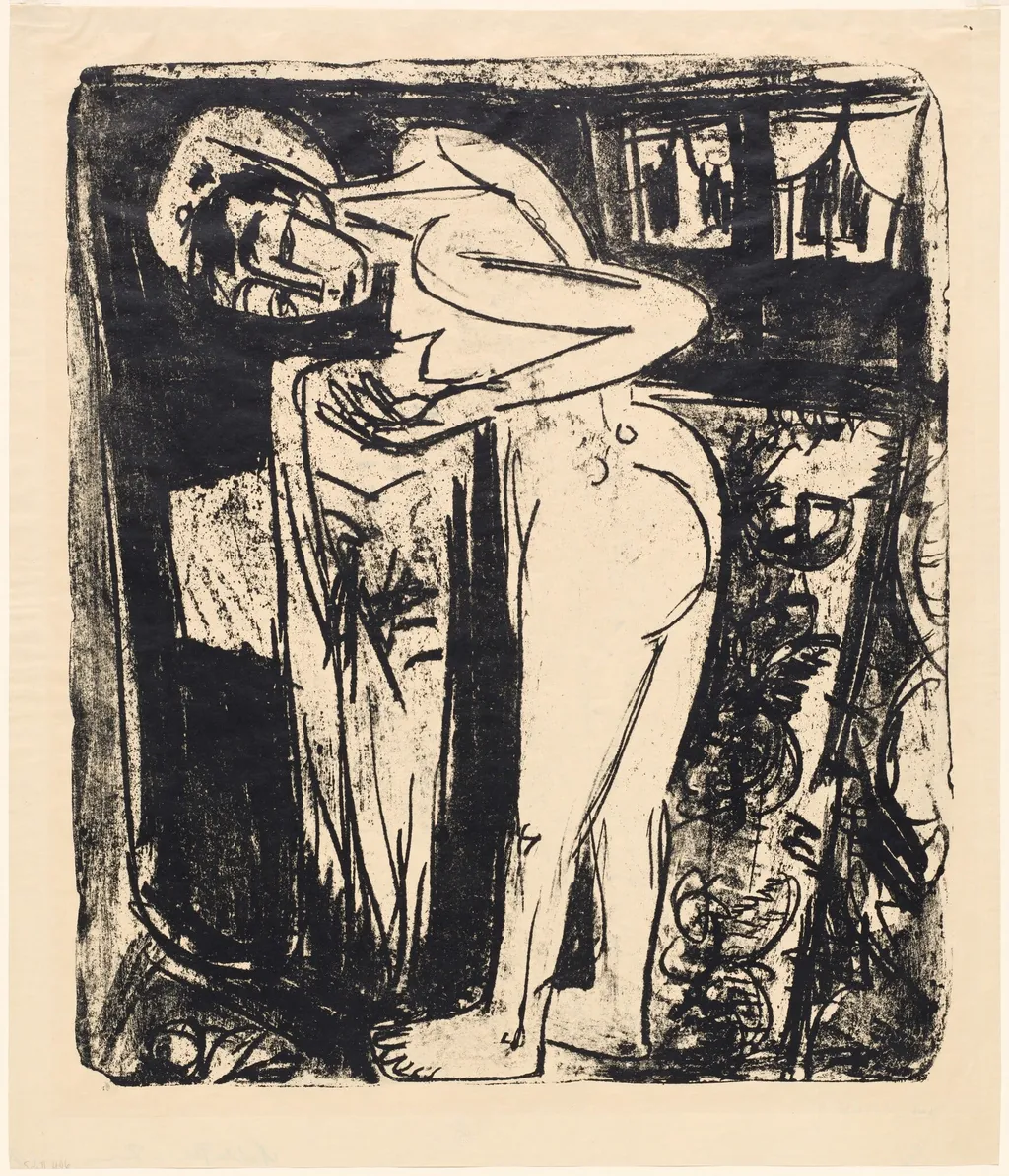
Standing Nude in a Room is an ink print by Ernst Ludwig Kirchner. It dates from 1921 and is held in the collection of the National Gallery of Art.
About this work
Overview
The image balances figuration with abstraction, using stark contrasts and simplified forms to convey psychological presence rather than physical realism.
Created in 1921, this lithograph by Ernst Ludwig Kirchner captures a solitary nude figure within an enclosed interior. Executed on wove paper, the work belongs to Kirchner’s later printmaking phase, following his foundational role in the Expressionist group Die Brücke. The image balances figuration with abstraction, using stark contrasts and simplified forms to convey psychological presence rather than physical realism.
Subject & Meaning
The figure, standing with back turned and head angled left, gazes downward in a posture of introspection. The lack of facial detail and the inward focus suggest emotional withdrawal rather than erotic display. The confined space and ambiguous architecture amplify a sense of isolation, reflecting Kirchner’s preoccupation with inner states and the alienation of modern life during a period of personal and political instability.
Technique & Style
Kirchner employed bold, angular lines and dense black shading to define form and space, characteristic of his lithographic method. The figure emerges from a flattened room through rhythmic contrasts of light and shadow, with minimal detail in the background. The absence of soft gradations and the emphasis on contour create a sense of tension, aligning with Expressionist goals of conveying emotion through formal distortion.
History & Provenance
Made during Kirchner’s time in Davos, Switzerland, after his retreat from urban life, this print reflects his evolving style amid personal hardship. Though produced before the Nazi regime’s rise, it later became a target of their cultural purge. The work’s survival and circulation in private and institutional collections attest to its endurance despite official condemnation as 'degenerate.'
Context
In the early 1920s, Kirchner distanced himself from the exuberance of his Die Brücke years, turning toward quieter, more introspective subjects. This lithograph emerged amid broader European shifts—postwar disillusionment, psychological exploration in art, and the growing tension between modernism and conservative cultural norms. His focus on the solitary nude reflects a broader trend among Expressionists to use the body as a vessel for emotional truth.
Legacy
The lithograph exemplifies Kirchner’s mature approach to printmaking, where economy of line and emotional resonance outweigh narrative clarity. It remains a key reference in studies of German Expressionism’s psychological depth and the role of the human figure in modernist print culture. Its reception under Nazi censorship underscores the political stakes of artistic expression in 20th-century Europe.
Artist & collection
Artist
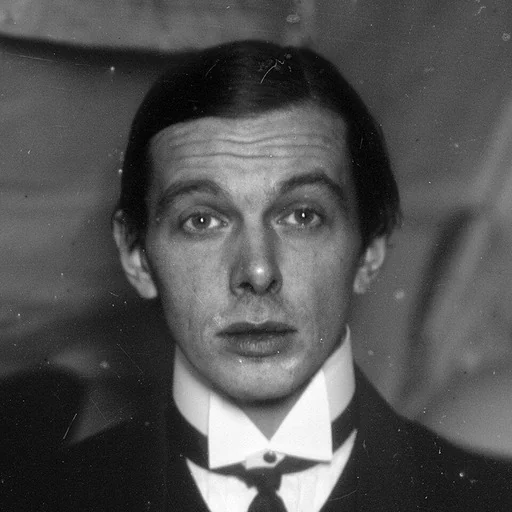
Ernst Ludwig Kirchner (6 May 1880 – 15 June 1938) was a German expressionist painter and printmaker.

![Dance Hall Bellevue [obverse], by Ernst Ludwig Kirchner](https://artifactworldgallery.com/img/ernst-ludwig-kirchner--dance-hall-bellevue-obverse--d1e14aac4297c69e-w320.webp)
![Nude Figure [reverse], by Ernst Ludwig Kirchner](https://artifactworldgallery.com/img/ernst-ludwig-kirchner--nude-figure-reverse--4b135f0364753e98-w320.webp)
![Two Nudes [obverse], by Ernst Ludwig Kirchner](https://artifactworldgallery.com/img/ernst-ludwig-kirchner--two-nudes-obverse--eb3914183f0bc96d-w320.webp)
![Dancing Couple in the Snow [reverse], by Ernst Ludwig Kirchner](https://artifactworldgallery.com/img/ernst-ludwig-kirchner--dancing-couple-in-the-snow-reverse--87ca007d7c05b553-w320.webp)
 Female Nude Before a Cabinet
 Peter Schlemihls wundersame Geschichte: Die Geliebte (Peter Schlemihl's Wondrous Story: The Beloved)
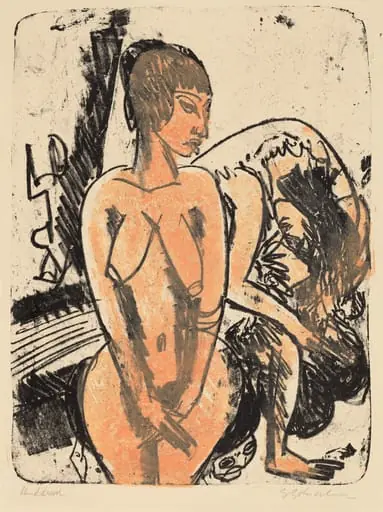 Two Women (Zwei Frauen)
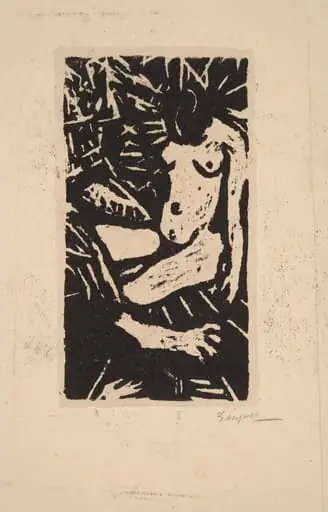 Seated Nude
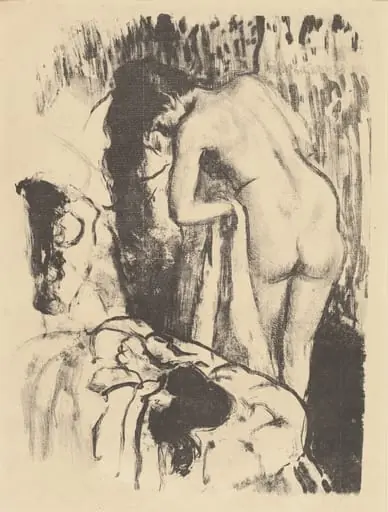 Nude Woman Standing, Drying Herself (Femme nue debout, a sa toilette)
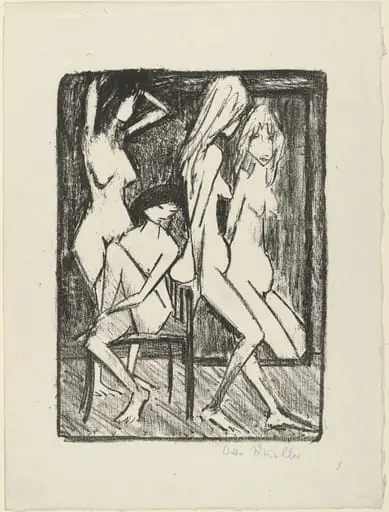 Untitled
 Untitled
 Seated Female
 Three Girls in front of a Mirror (Drei Madchen vor dem Speigel)
 Untitled
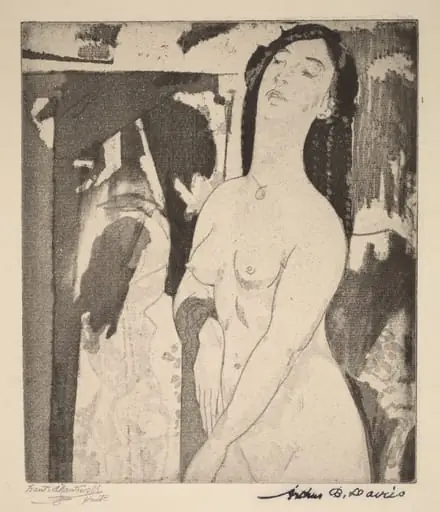 Doorway to Illusion
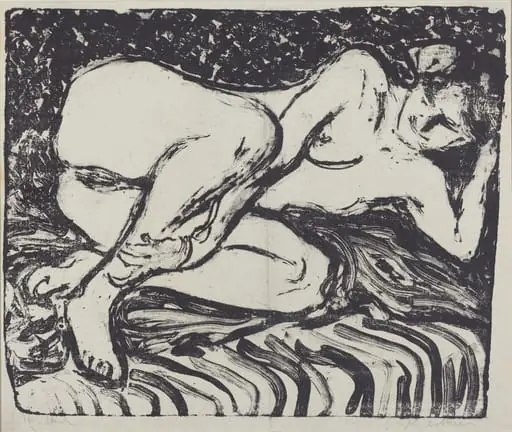 Reclining Nude