Artwork
Three Girls in front of a Mirror (Drei Madchen vor dem Speigel)
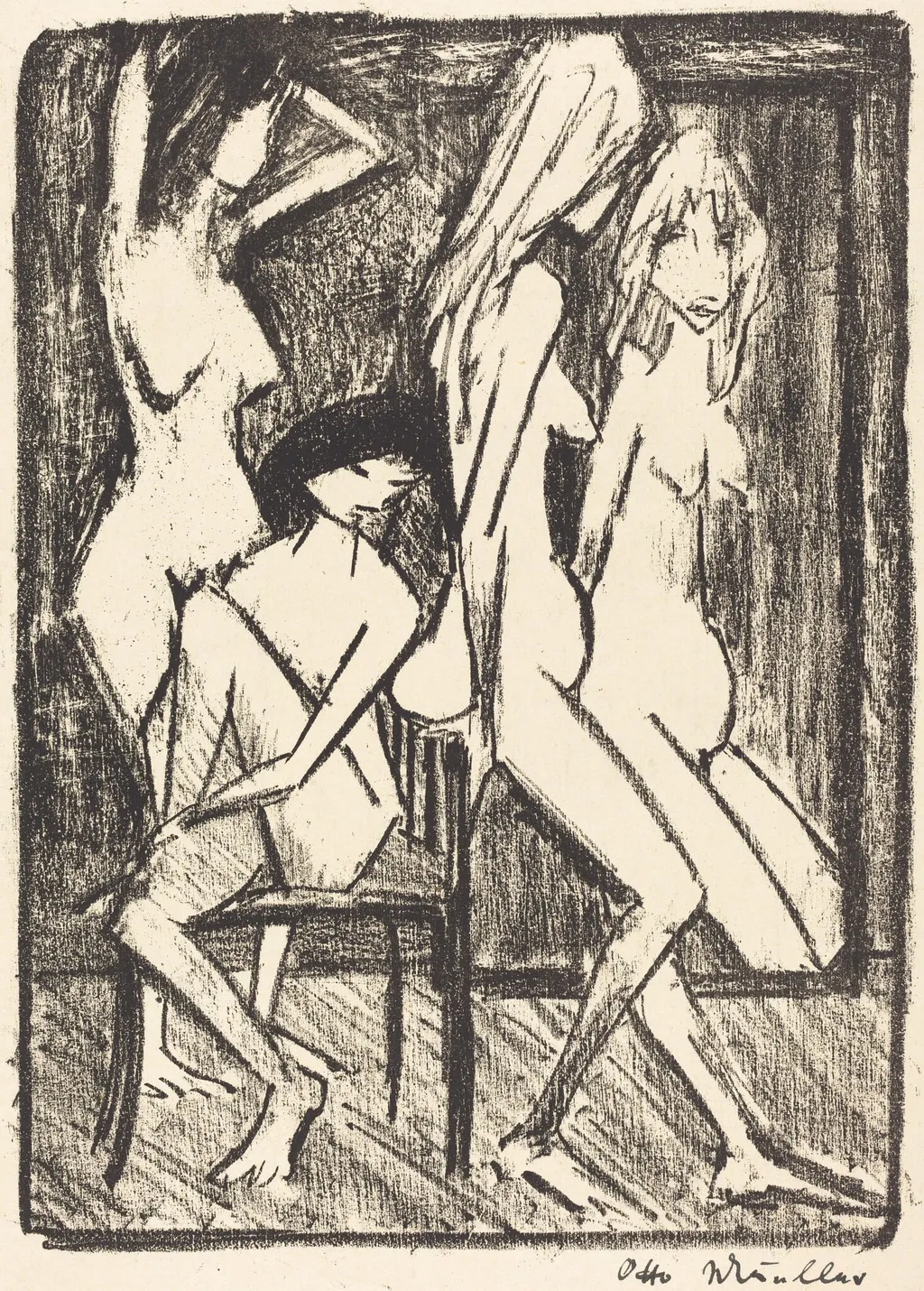
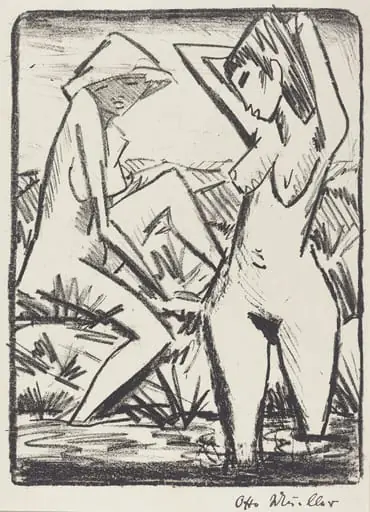
Three Girls in front of a Mirror (Drei Madchen vor dem Speigel) is an ink print by Otto Mueller. It dates from 1922 and is held in the collection of the National Gallery of Art.
About this work
Overview
Created around 1922, *Three Girls in front of a Mirror* is a lithograph by German artist Otto Mueller, a key figure in the Die Brücke group.
Created around 1922, *Three Girls in front of a Mirror* is a lithograph by German artist Otto Mueller, a key figure in the Die Brücke group. The work belongs to a series of prints exploring the human form through simplified geometry and emotional intensity. Mueller favored printmaking for its directness and accessibility, aligning with Die Brücke’s broader aim to break from academic traditions and reconnect art with raw, unfiltered experience.
Subject & Meaning
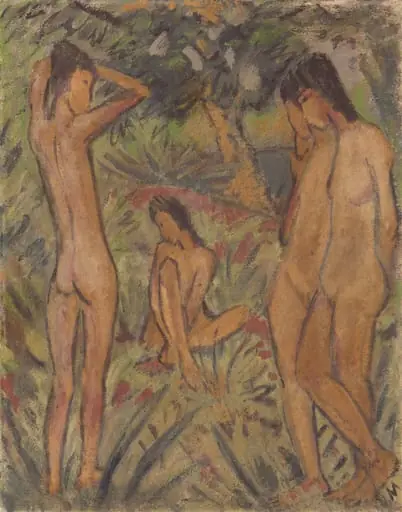
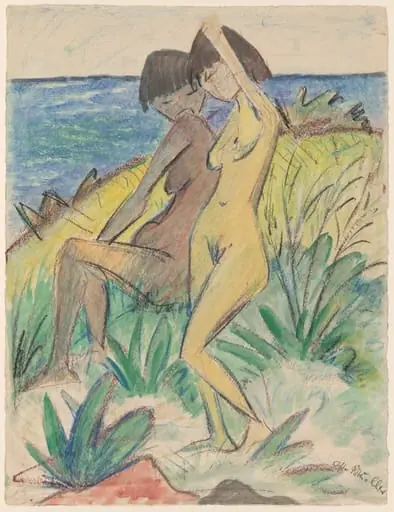
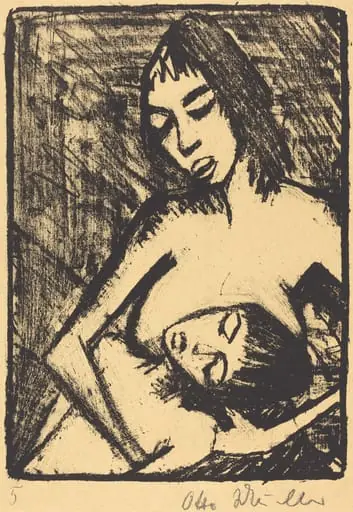
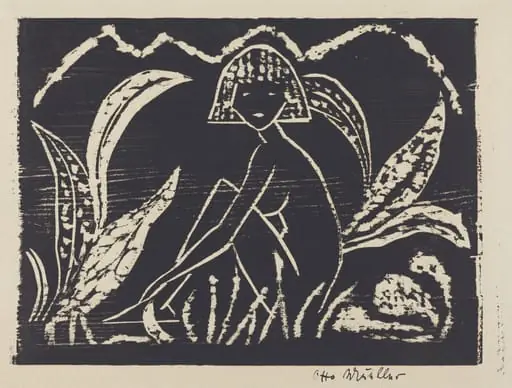
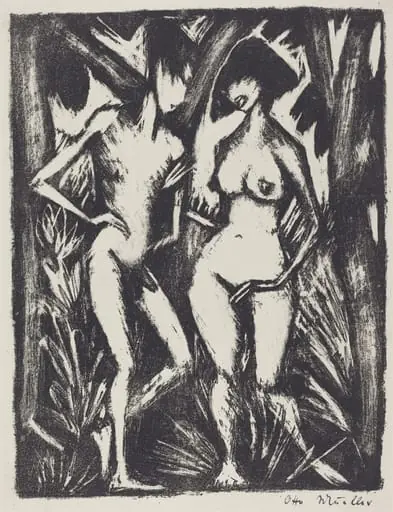
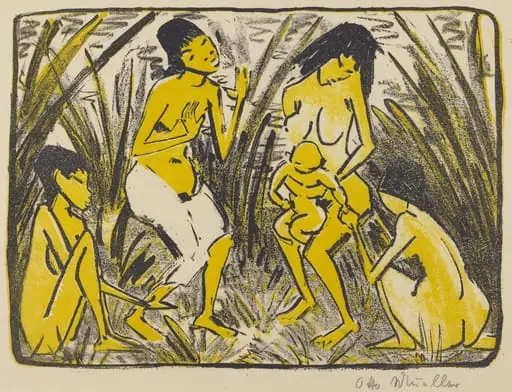
The image portrays three nude young women arranged in varied postures—seated and standing—facing a mirror whose surface is not depicted. Their reflections are suggested through the direction of their gaze and body orientation, inviting viewers to consider self-perception and vulnerability. The absence of the mirror shifts focus to the figures’ presence and inner state, reflecting Die Brücke’s interest in psychological depth over literal representation.
Technique & Style
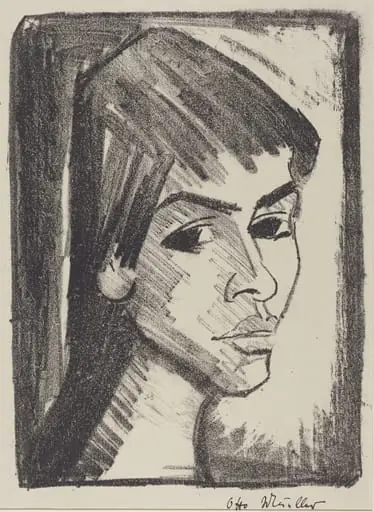
Mueller employed bold, uneven lines and minimal tonal variation to construct the figures with a sense of immediacy. The lithographic surface retains a sketchlike texture, emphasizing gesture over detail. Bodies are reduced to flowing contours and angular planes, avoiding naturalism in favor of expressive form. This approach reflects the artist’s affinity for folk art and non-Western sculpture, filtered through Expressionist sensibilities.
History & Provenance
The print emerged during a period when Mueller was deeply engaged with graphic arts, following his time in Dresden and later Berlin. While specific early ownership records are sparse, the work is held in major institutional collections, including the National Gallery of Art in Washington, D.C., where it contributes to broader narratives of early 20th-century German printmaking and the legacy of Die Brücke.
Context
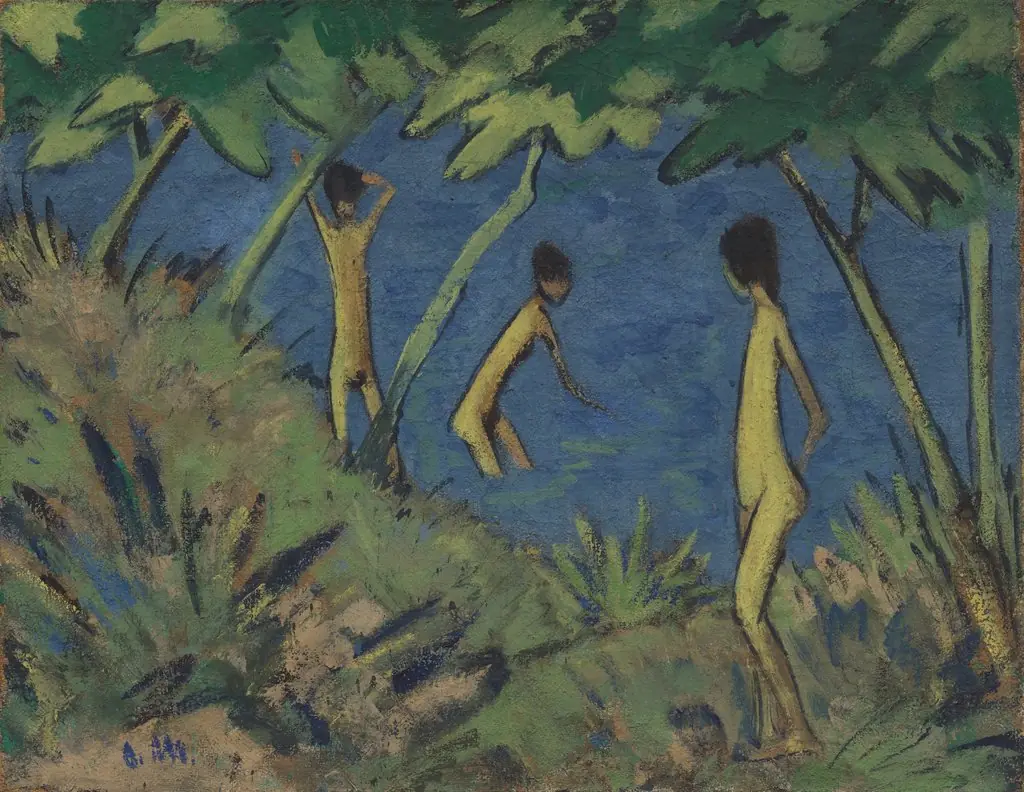
In the aftermath of World War I, German artists sought new modes of expression that rejected pre-war idealism. Die Brücke members, including Mueller, turned to the nude as a site of authenticity, often depicting figures in natural or intimate settings. This lithograph reflects a broader cultural shift toward introspection and a reexamination of the body as a vessel of emotional truth rather than aesthetic perfection.
Legacy
Mueller’s lithographs, including this one, helped redefine printmaking as a medium capable of conveying psychological weight alongside formal innovation. His influence extended to later generations of German artists interested in the expressive potential of line and simplification. The work remains a quiet but persistent example of how personal observation could be transformed into universal visual language.
Own this work as a print
Artist & collection

Artist
Otto Mueller (16 October 1874 – 24 September 1930) was a German painter and printmaker of the Die Brücke expressionist movement.