Artwork
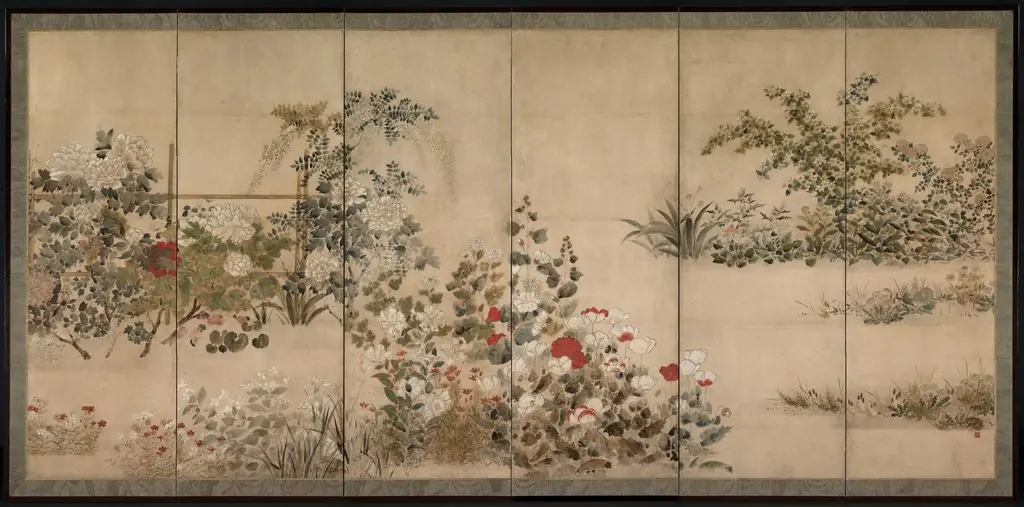
芥子図|Poppies
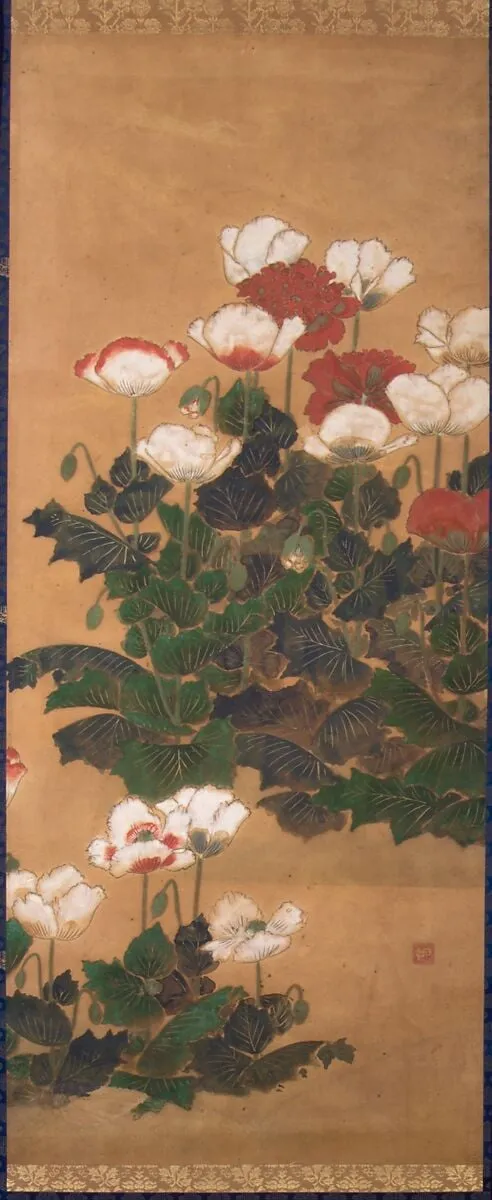
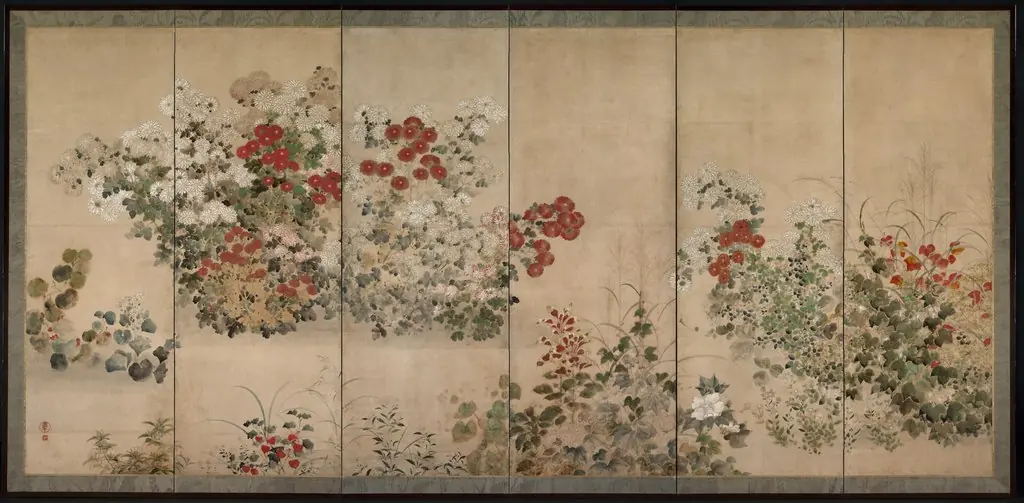
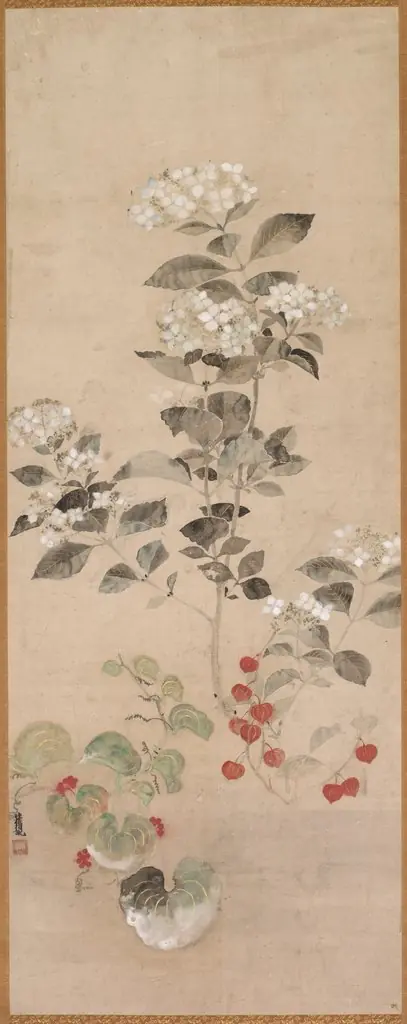
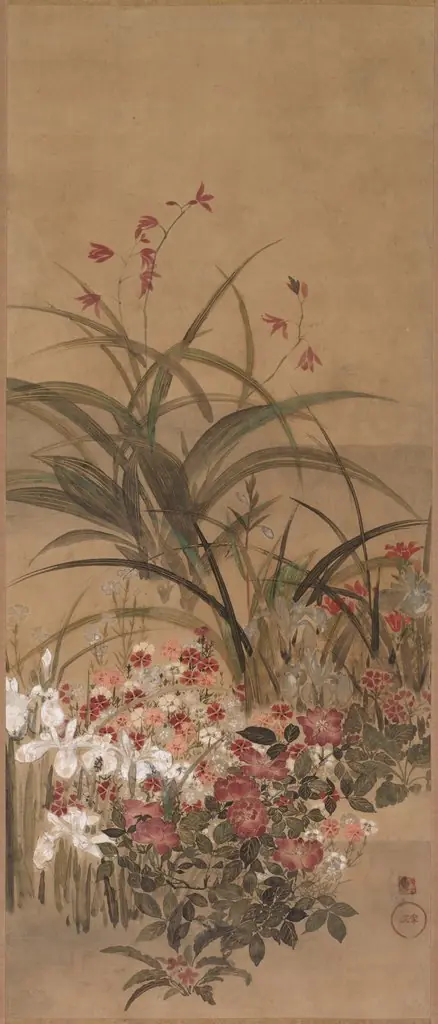
芥子図|Poppies is a gold painting by the Baroque artist Kitagawa Sōsetsu. It dates from 1650 and is held in the collection of the Metropolitan Museum of Art.
About this work
Overview
Kitagawa Sōsetsu’s hanging scroll, dated to around 1650, presents a solitary poppy rendered in vivid red against a luminous gold ground. Executed in color and gold on paper, the work exemplifies a restrained composition in which the flower occupies the central space while the surrounding surface remains largely unfilled, inviting quiet contemplation.
Subject & Meaning
The image focuses exclusively on a single poppy stem, its bright blossom outlined with fine black lines and accompanied by a few green leaves. By isolating the flower without any narrative backdrop, the piece emphasizes the fleeting beauty of the bloom, encouraging viewers to reflect on transience and the subtle presence of nature within a meditative setting.
Technique & Style
Applied with delicate brushwork, the red petals exhibit a soft gradation that blurs their edges, reminiscent of the sfumato approach where colors merge into one another. The gold paper serves both as a luminous field and as a visual counterpoint, allowing the pigment to appear to glow while maintaining a sense of spacious emptiness.
History & Provenance
Created during the early Edo period, the scroll was intended for display in a Japanese tea room, a context that prized understated elegance and moments of stillness. While specific ownership records are scarce, the work remains a representative example of Kitagawa Sōsetsu’s contributions to the genre of minimalist still‑life painting in 17th‑century Japan.
Artist & collection