Artwork
Queen Camel Church
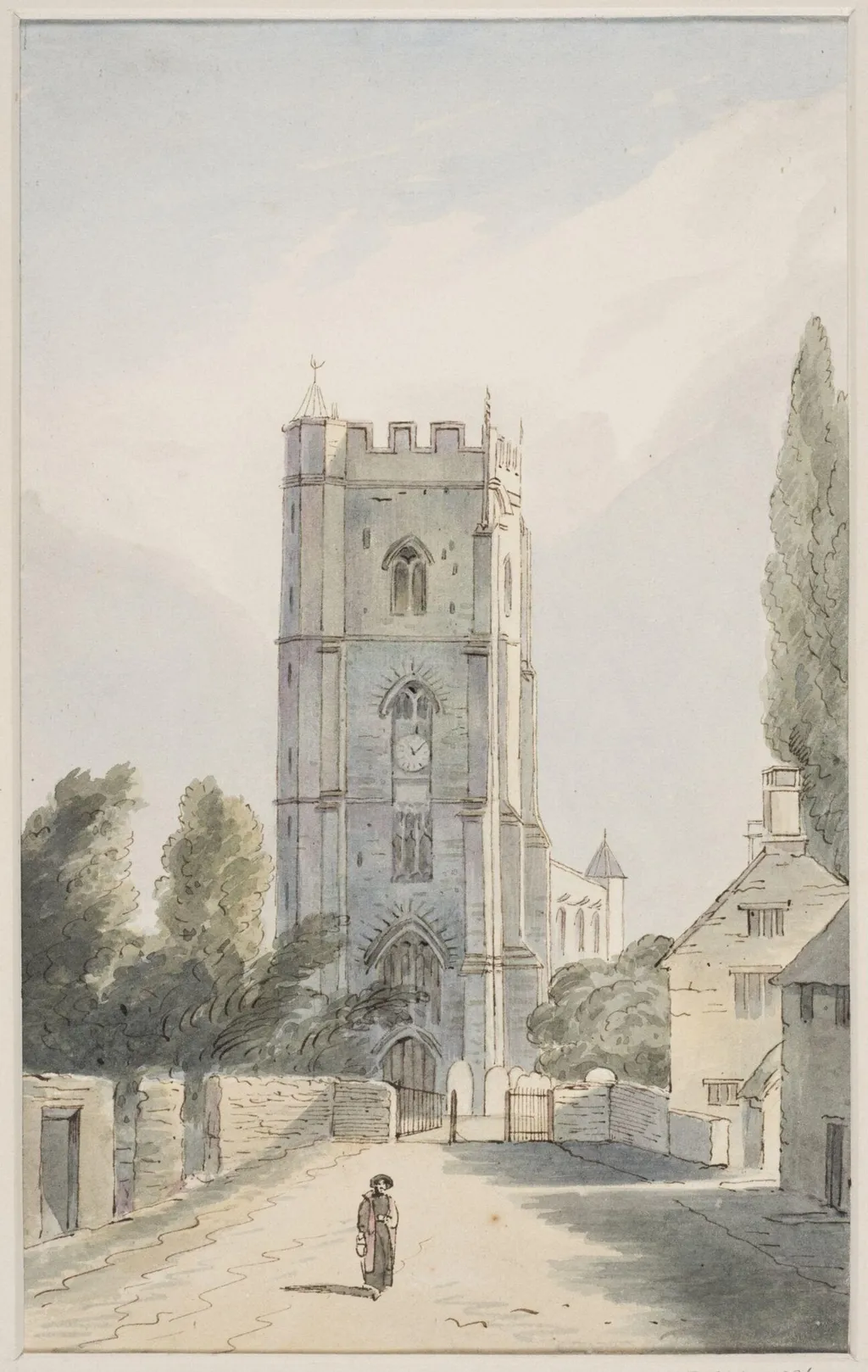
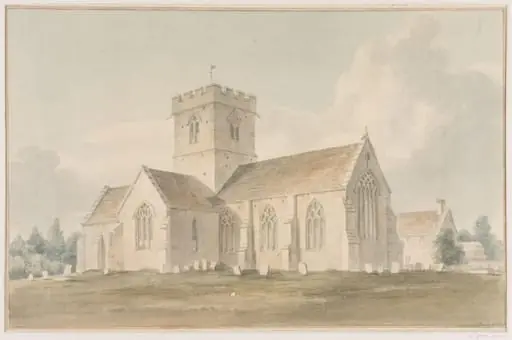
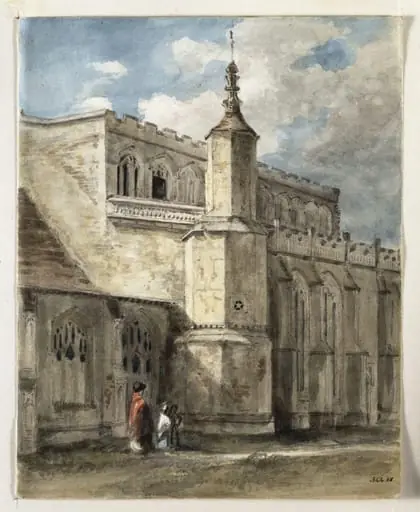
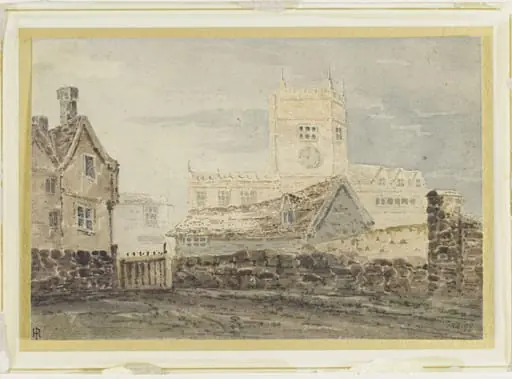
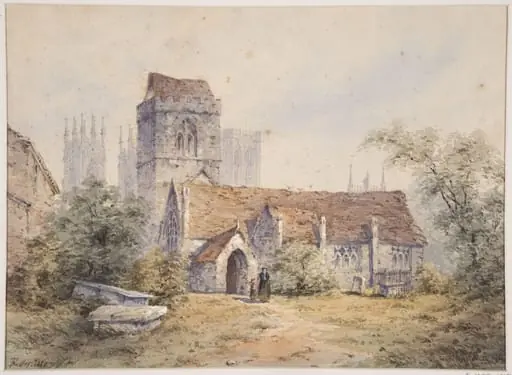
Queen Camel Church is a watercolor work on paper by the British Romanticist artist Elizabeth Grace Knight. It dates from 1837 and is held in the collection of the Victoria and Albert Museum.
About this work
Overview
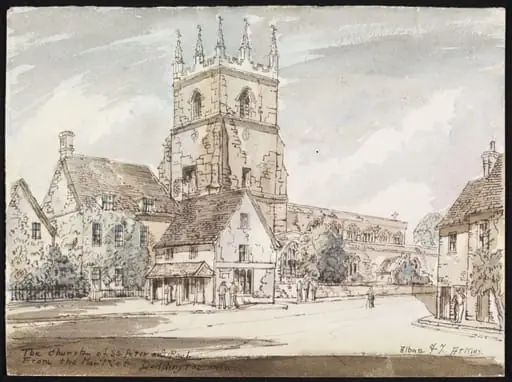
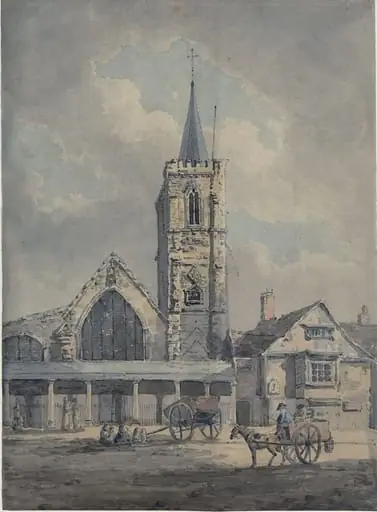
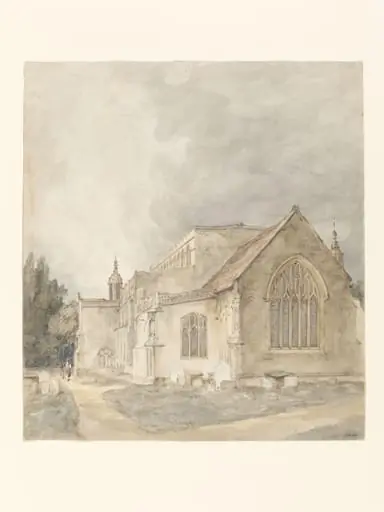
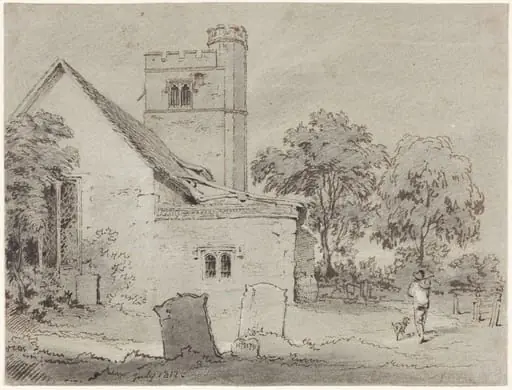
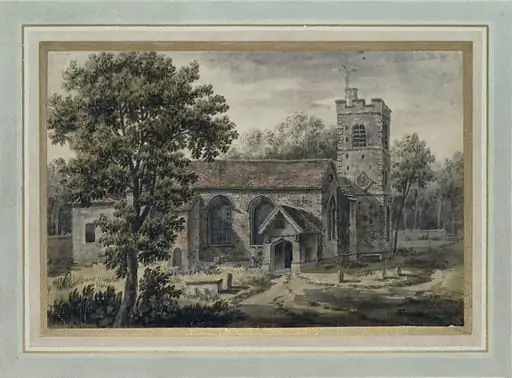
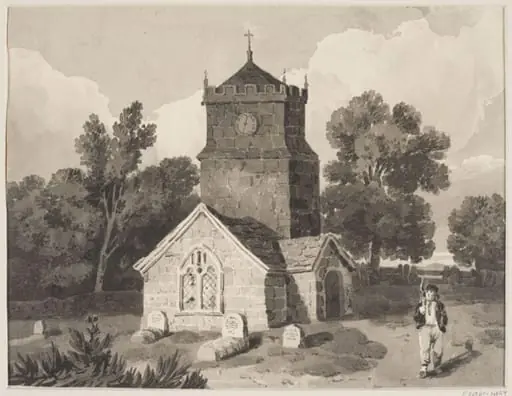
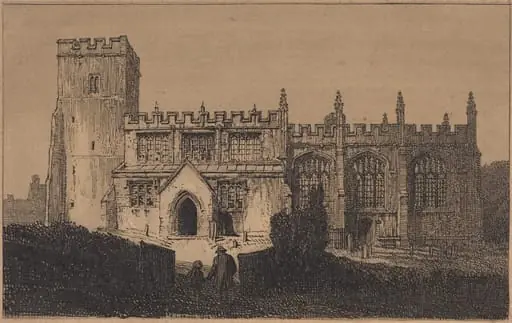
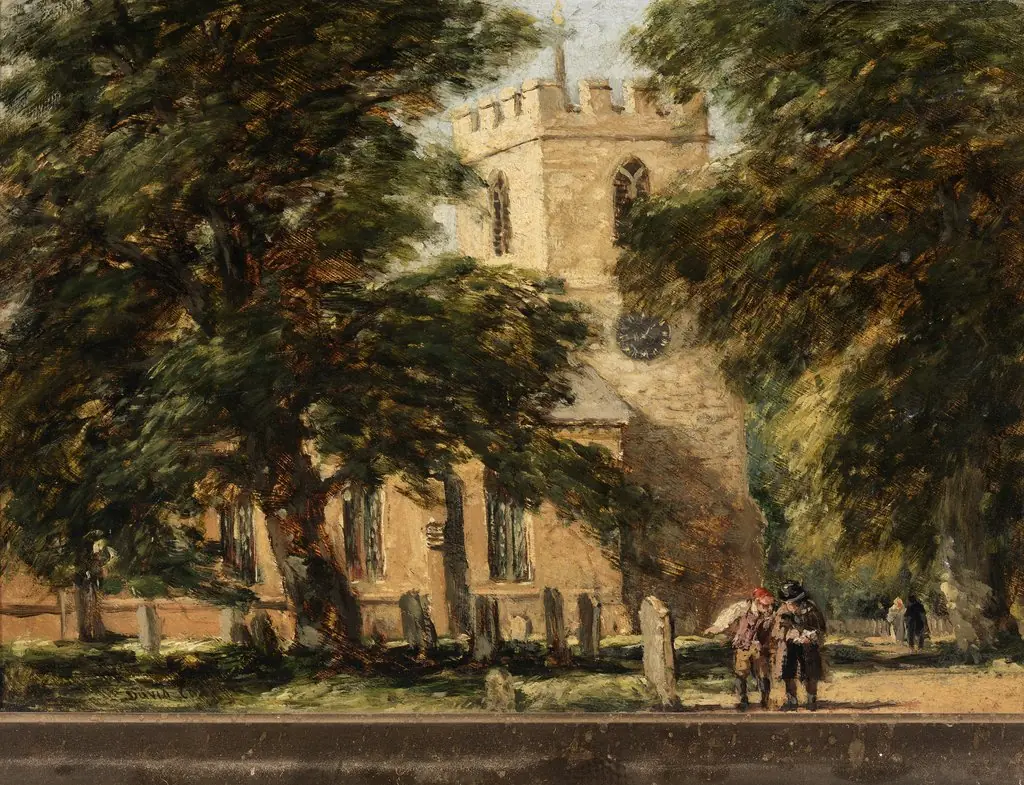
The work is a watercolour rendering of Queen Camel Church, presented from a street perspective. A single figure walks along a narrow path toward the building, which dominates the composition with its tall, clock‑topped tower and pointed windows.
Subject & Meaning
The scene captures a quiet moment in a rural setting, emphasizing the relationship between the solitary passerby and the historic church. The surrounding trees, a modest house, and a stone wall frame the structure, suggesting a tranquil, everyday encounter with heritage architecture.
Technique & Style
Executed in soft, muted pigments, the artist renders the church’s stonework and arched doorway with careful attention to texture, while the sky and foliage are treated with light, airy washes. This approach aligns with Romantic sensibilities that favor atmospheric effects and the evocative portrayal of historic sites.
Context
The piece reflects a 19th‑century interest in documenting regional landmarks, a practice common among watercolourists who traveled the English countryside. By focusing on both architectural detail and the surrounding landscape, the work situates Queen Camel Church within its natural environment.
Artist & collection
Artist
Elizabeth Grace Knight painted quiet village scenes in watercolor during the early 1800s.