Artwork
Carduus Maarianus
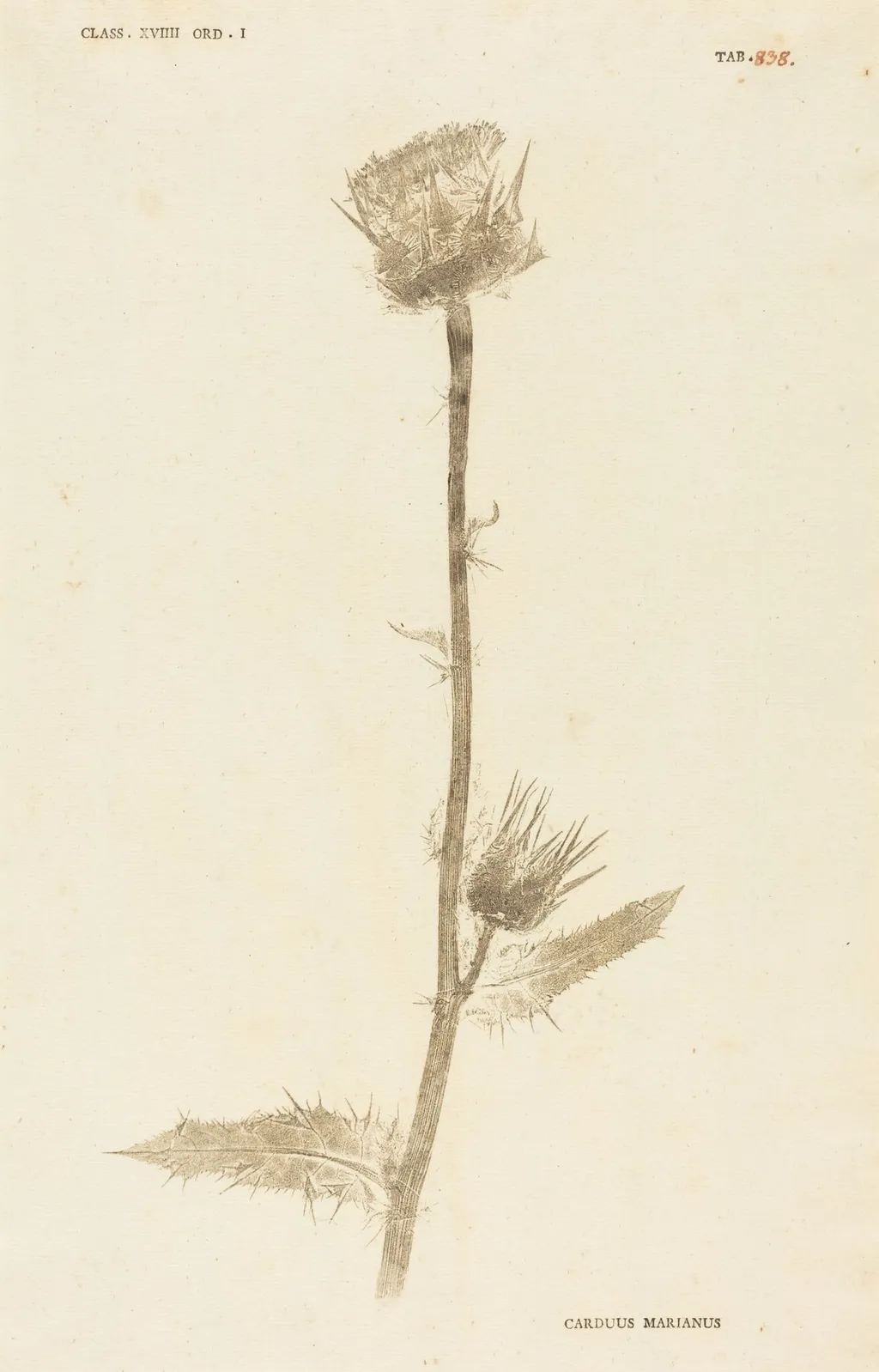
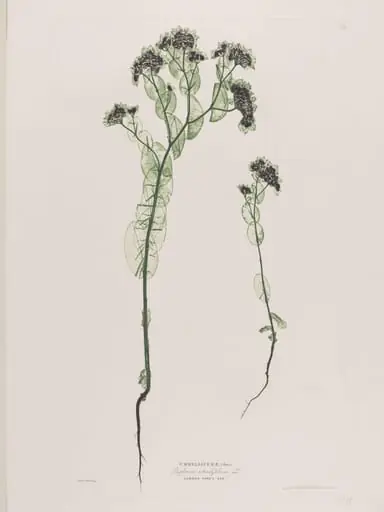
Carduus Maarianus is an ink print by the Romanticist artist Johann Hieronymus Kniphof. It dates from 1760 and is held in the collection of the National Gallery of Art.
About this work
Overview
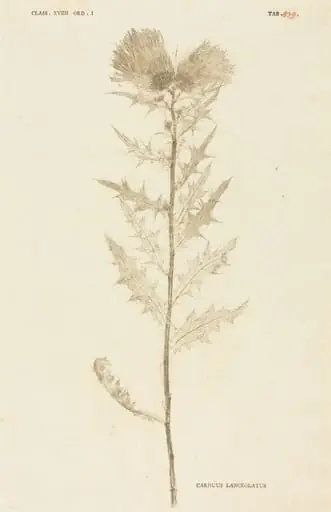
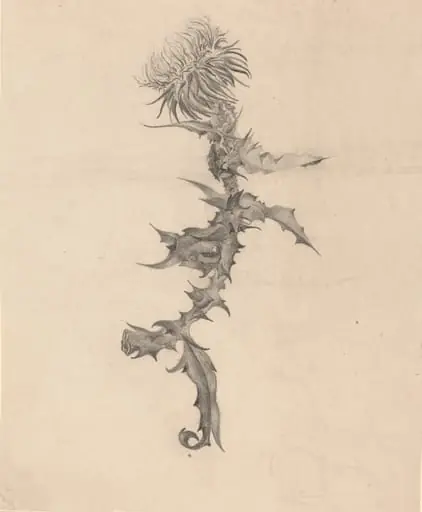
Carduus Maarianus, created by Johann Hieronymus Kniphof in 1760, is a unique print featuring a dried and pressed plant specimen. The artwork showcases a thistle-like plant with distinctive morphology, rendered through an innovative printing technique.
Subject & Meaning
The subject is Carduus Marianus, a plant species identified by its scientific name directly on the work. The depiction highlights the plant's characteristics: sharp, thorny leaves, a round, prickly head, a long, thin stem, and smaller lateral buds.
Technique & Style
The print was made by inking a pressed, dried Carduus Marianus plant and then re-pressing it between two sheets of paper. This method captures the plant's details, resembling a meticulous scientific illustration, characteristic of 18th-century botanical art.
History & Provenance
Created in 1760 by Johann Hieronymus Kniphof, specific provenance details (ownership history) of Carduus Maarianus are not provided in the available information.
Context
This work reflects the botanical interests of the 18th century, where accurate plant depiction was valued for both scientific and aesthetic purposes. Kniphof's technique combines artistry with the era's desire for natural history documentation.
Legacy
Carduus Maarianus contributes to the legacy of botanical printing and the work of Johann Hieronymus Kniphof, potentially influencing later techniques in botanical illustration and the intersection of art and natural science.
Artist & collection