Artwork
Umbelliferae (Buphorum rotundifolium, Lo.)
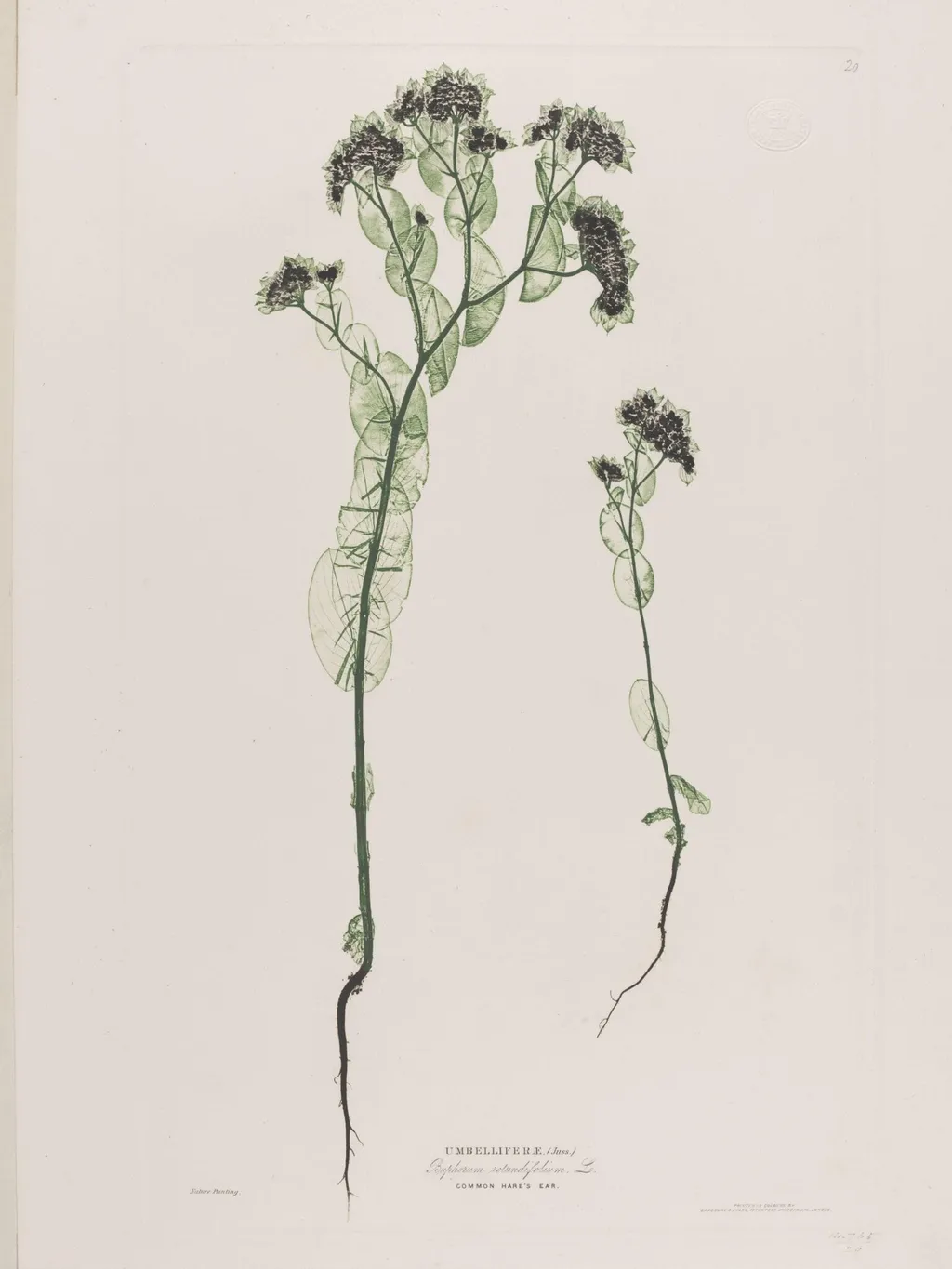
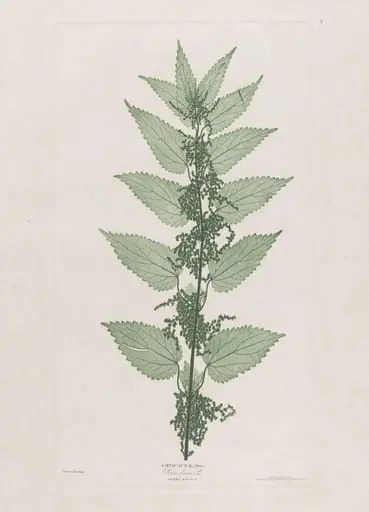
Umbelliferae (Buphorum rotundifolium, Lo.) is a print by the Impressionist artist Bradbury & Evans. It dates from 1854 and is held in the collection of the Victoria and Albert Museum. The work is a two‑colour nature print of the plant Umbelliferae (Buphorum rotundifolium, Lo.
About this work
It shows a flat, two-color image of a wild plant pressed between steel and lead, then rolled to leave a mark.
Bradbury & Evans made this print in 1854. It shows a flat, two-color image of a wild plant pressed between steel and lead, then rolled to leave a mark. Nature printing skips usual shading—it looks more like a pressed flower than a painted one.
The print uses two colors on the same plate, called à la poupée. You can see the real plant if you visit the Victoria and Albert Museum today.
Look up the Victoria and Albert Museum next.
Overview
The work is a two‑colour nature print of the plant Umbelliferae (Buphorum rotundifolium, Lo.), produced in 1854 by the firm Bradbury & Evans. It records the impression left by a specimen sandwiched between a polished steel plate and a lead plate, which was then run through a roller press.
Technique & Style
Nature printing creates a direct imprint of the object rather than a drawn representation. The lead plate receives the plant’s outline, which can be used as a printing matrix or electrotyped by depositing copper onto a mould in a copper‑sulphate bath. The two inks were applied to the same plate by the à la poupée method, using small dabbers; the colours merge at their edges, and under magnification faint black ink appears on some leaf surfaces.
Subject & Meaning
The image reproduces a pressed specimen of a wild Umbelliferae species, presenting the plant in a flattened, herbarium‑like form. Unlike conventional botanical illustration, the print lacks shading or three‑dimensional illusion, emphasizing the plant’s actual texture and outline.
History & Provenance
Henry Bradbury (1829–1860) introduced nature printing to Britain after studying the process with Alois Auer at the Imperial Printing Office in Vienna. Bradbury’s 1854 volume demonstrated the method’s capacity for fine detail, and the present print was issued that same year by Bradbury & Evans.
Context
Nature printing emerged in the mid‑19th century as a response to the demand for accurate botanical reproductions. The technique offered a level of fidelity that traditional engraving could not achieve, aligning with contemporary scientific interests in precise documentation of plant forms.
Artist & collection
Artist
Bradbury & Evans ran a London print shop that doubled as an early version of clickbait.

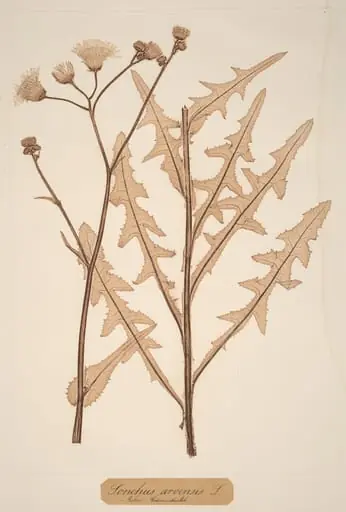 Sonchus arvensis
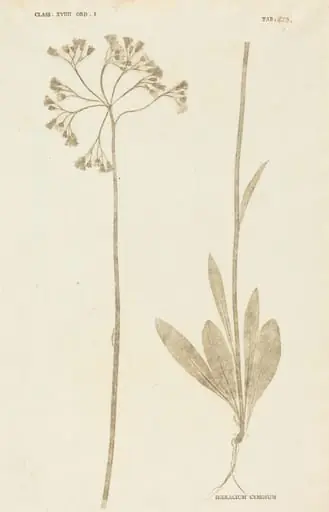 Hieracium Cymosum
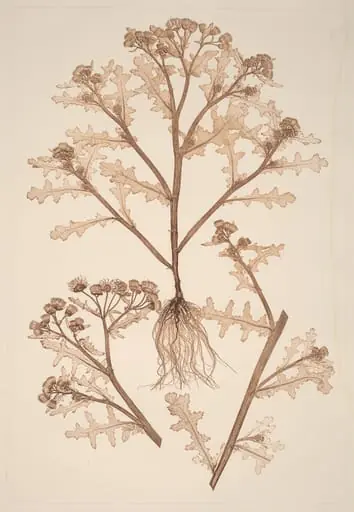 Senecio viscosus
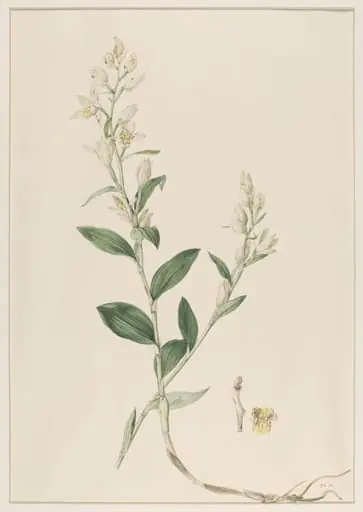 Epipactis Ensifolia
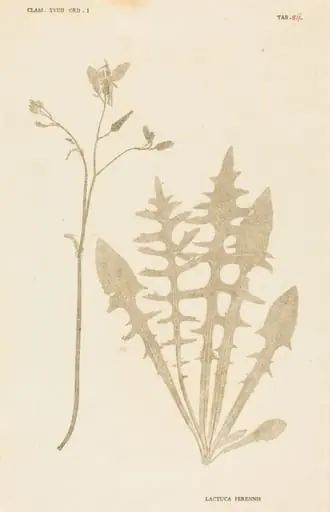 Lactuca Perennis
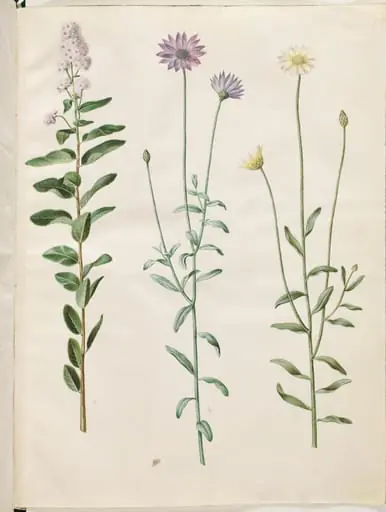 Spiraea salicifolia (pilebladet spiræa); Catananche caerulea (blå rasleblomst)
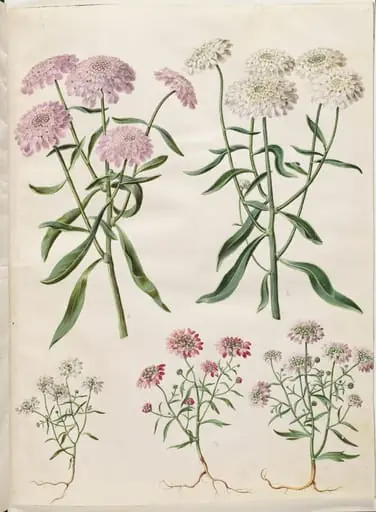 Iberis umbellata (skærm-sløjfeblomst); Iberis amara (bitter sløjfeblomst)
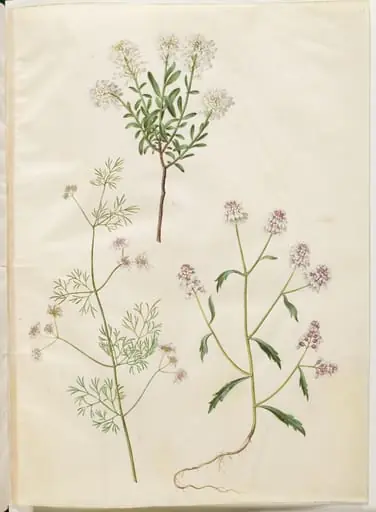 Iberis sempervirens (snepude); Coriandrum sativum (almindelig koriander); Iberis amara (bitter sløjfeblomst)
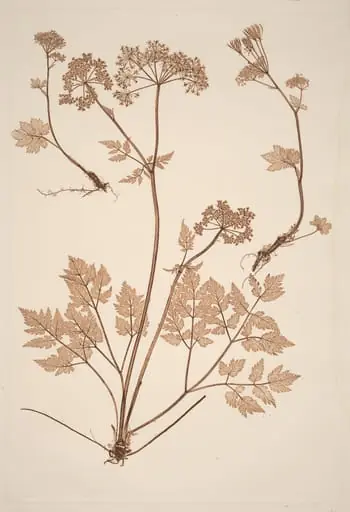 Chaerophyllum hirsistum
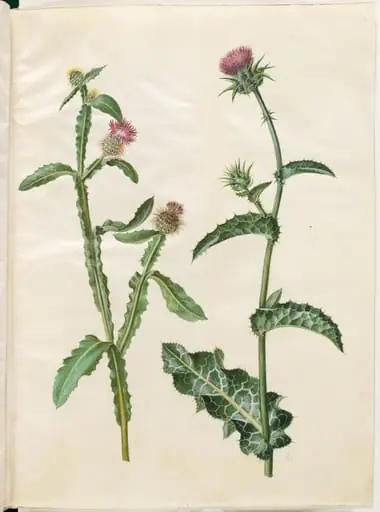 Centaurea seridis; Silybum marianum (almindelig marietidsel)
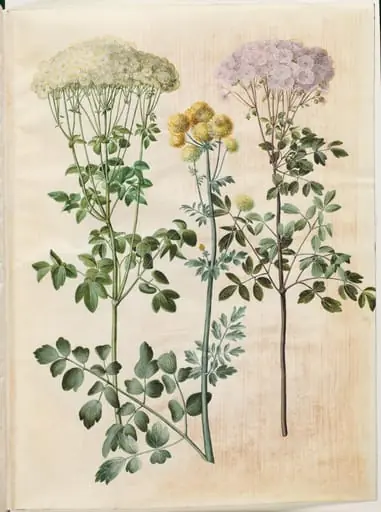 Thalictrum aquilegiifolium (akeleje-frøstjerne); Thalictrum flavum (gul frøstjerne)
 Great Nettle