Artwork
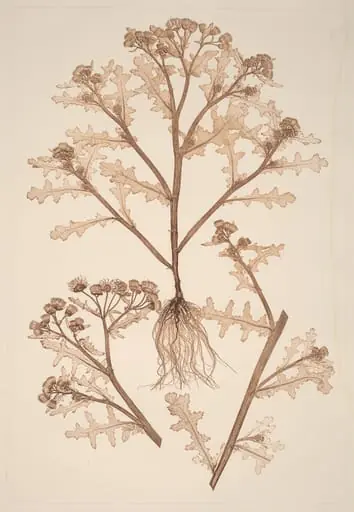
Sonchus arvensis
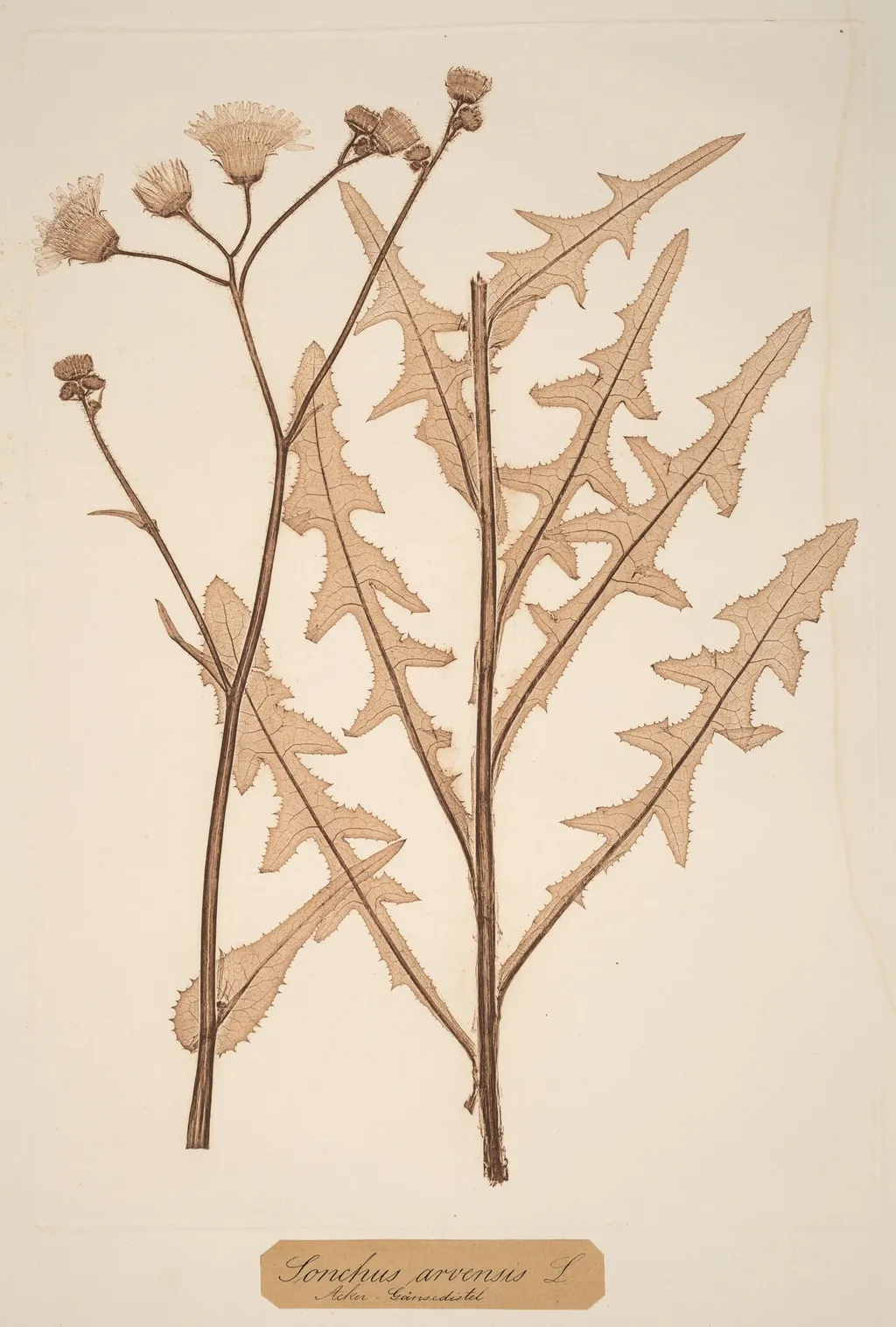
Sonchus arvensis is an ink print by the Impressionist artist Constetin von Ettinghausen. It dates from 1856 and is held in the collection of the National Gallery of Art.
About this work
Overview
Constentin von Ettinghausen’s 1856 print records the common sow thistle, Sonchus arvensis. The image presents the plant flattened, its narrow stems and spiny leaves rendered in muted brown against an unadorned paper field. The work serves as a botanical document rather than a decorative composition.
Subject & Meaning
The print captures the essential morphology of Sonchus arvensis, a herbaceous species known for its lance‑shaped leaves and clustered, downy flower heads. By isolating the plant from any surrounding context, the image emphasizes its structural characteristics for scientific observation.
Technique & Style
The artist employed a nature‑print process: a freshly dried specimen was placed between a copper and a lead plate, then the assembly was rolled to transfer the plant’s imprint. The lead plate was subsequently electroplated, allowing an intaglio impression to be taken with brown ink on wove paper. Fine cross‑hatching within the inked lines creates the illusion of texture and depth.
History & Provenance
Created in 1856, the print belongs to a period when naturalists increasingly used direct printing methods to document flora. It is attributed to von Ettinghausen, a practitioner known for integrating scientific inquiry with printmaking techniques. The work’s provenance traces through collections of 19th‑century botanical illustrations.
Context
During the mid‑19th century, botanical illustration shifted toward reproducible formats that could accompany scholarly texts. Von Ettinghausen’s method aligns with contemporary efforts to produce accurate, repeatable images of plant specimens for study and reference, reflecting the era’s blend of art and emerging scientific standards.
Artist & collection


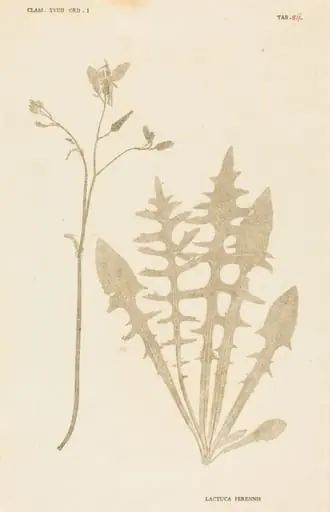 Lactuca Perennis
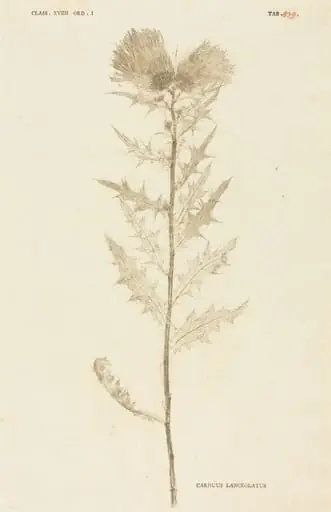 Carduus Lanceolatus
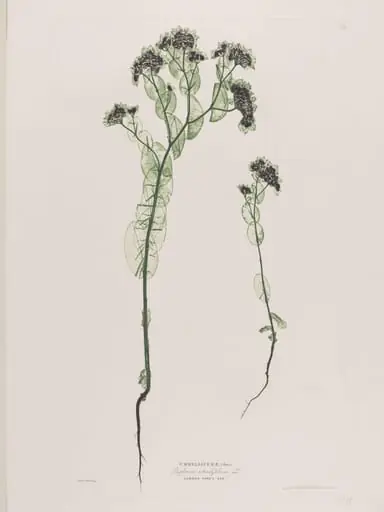 Umbelliferae (Buphorum rotundifolium, Lo.)
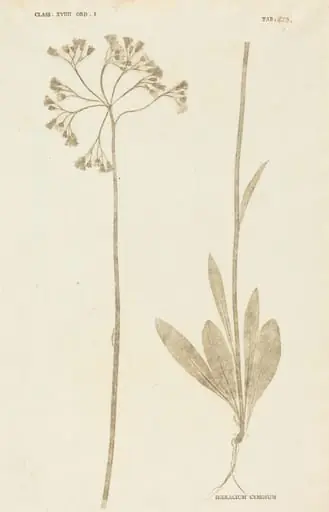 Hieracium Cymosum
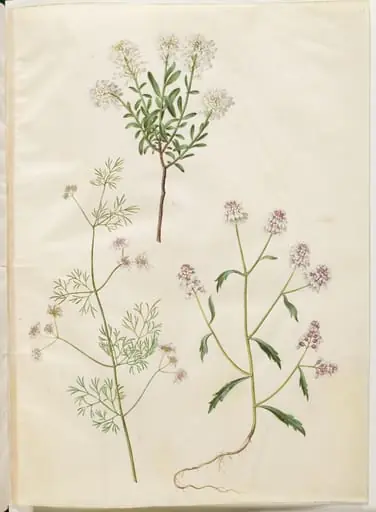 Iberis sempervirens (snepude); Coriandrum sativum (almindelig koriander); Iberis amara (bitter sløjfeblomst)
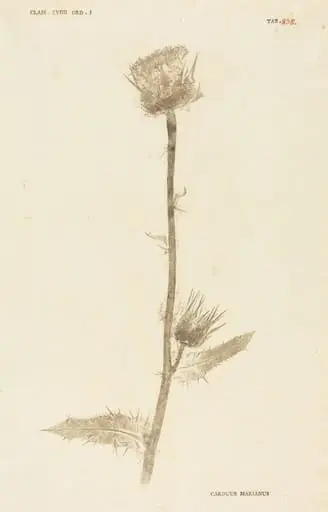 Carduus Maarianus
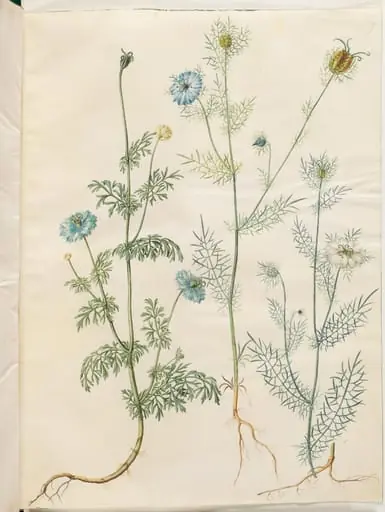 Nigella sativa (sortkommen); Nigella damascena (jomfru i det grønne)
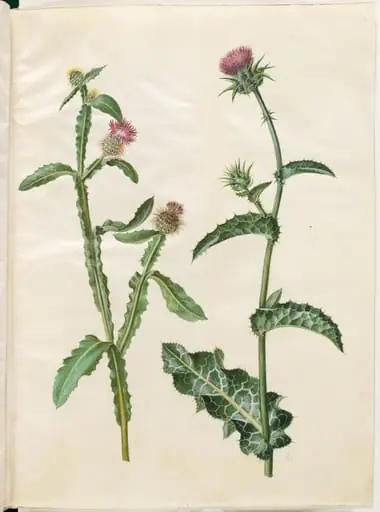 Centaurea seridis; Silybum marianum (almindelig marietidsel)