Artwork
Landscape with a Pyramid and Classical Ruins
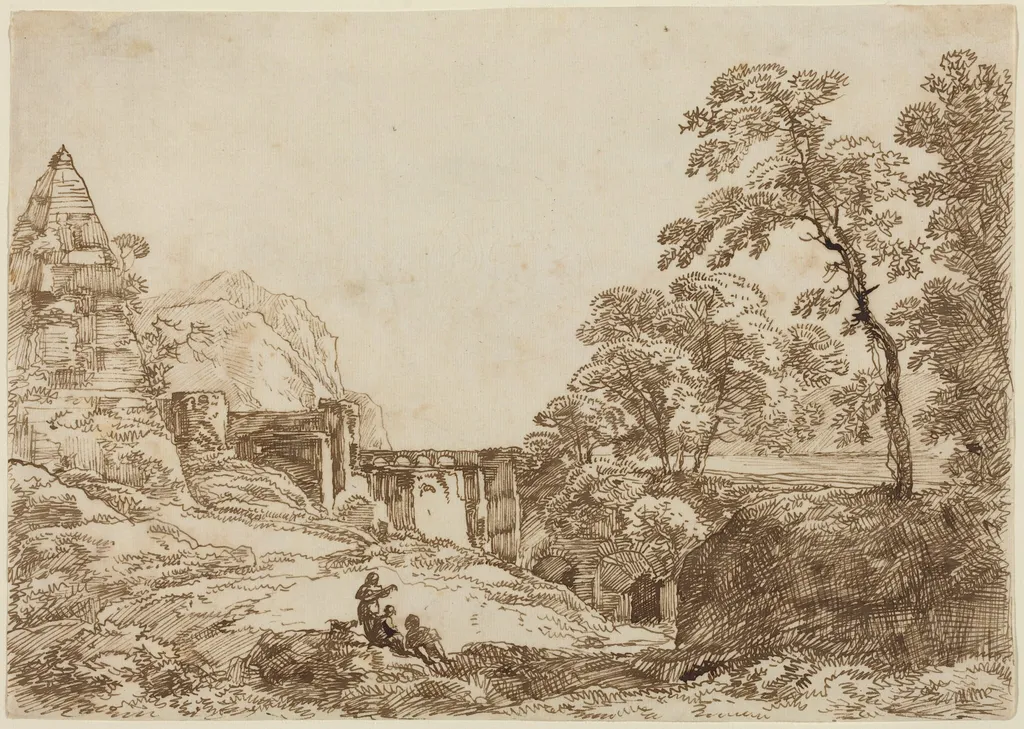
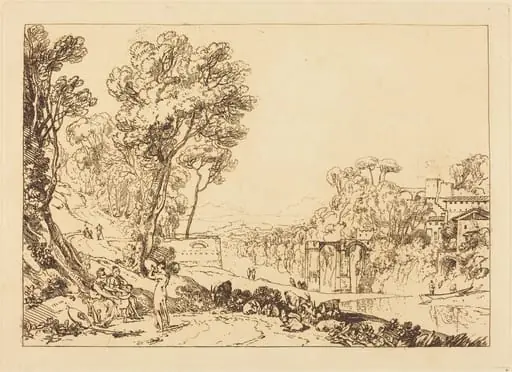
Landscape with a Pyramid and Classical Ruins is an ink drawing by the Baroque artist Franz Innocenz Josef Kobell. It dates from 1786 and is held in the collection of the National Gallery of Art.
About this work
Overview
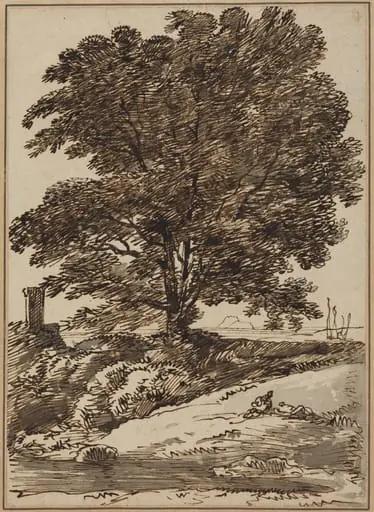
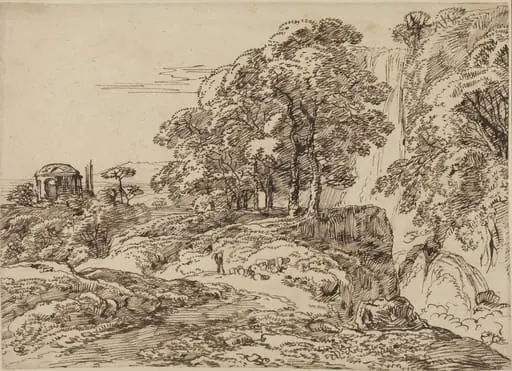
Franz Innocenz Josef Kobell’s 1786 drawing presents a tranquil landscape that juxtaposes a modest pyramid with the remnants of classical architecture. Executed on thin laid paper with pen and brown ink, the composition balances built forms and natural elements, inviting contemplation of antiquity within a quiet setting.
Subject & Meaning
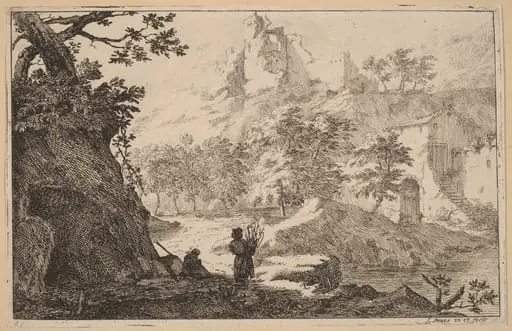
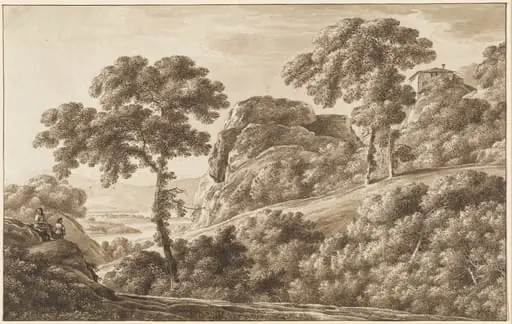
The work depicts a small stepped pyramid on the left, its summit level and unadorned, beside partially buried classical ruins that suggest a once‑grand structure now reclaimed by grass. A simple bridge arches over a dry riverbed, while two diminutive figures sit in the foreground, emphasizing the scale of the ancient monuments.
Technique & Style
Kobell employs fine pen work and extensive cross‑hatching to model light and shadow, creating texture in stone, foliage, and terrain. The layered lines generate depth without color, and the careful delineation of trees and bushes on the right side contrasts with the stark architectural forms.
History & Provenance
Created in 1786, the drawing reflects Kobell’s interest in antiquarian subjects during the late eighteenth century, a period when European artists frequently explored classical motifs. The piece remains a representative example of his early draughtsmanship, though specific ownership details are not recorded in the available sources.
Context
The inclusion of both Egyptian and classical elements mirrors contemporary scholarly fascination with ancient cultures, a trend fueled by archaeological discoveries and the Grand Tour. By integrating these motifs within a serene natural setting, Kobell aligns his work with the Enlightenment’s curiosity about history and the natural world.
Own this work as a print
Artist & collection