Artwork
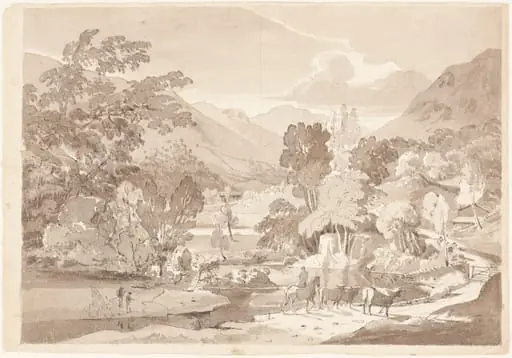
Traveler in a Mountainous Landscape at Sunset
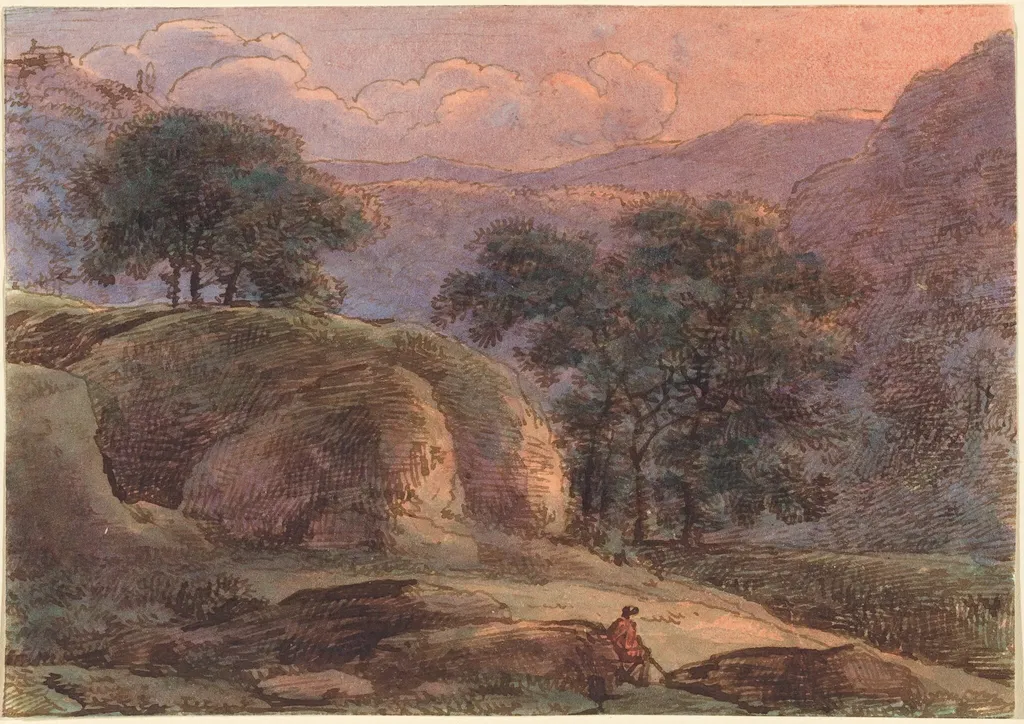
Traveler in a Mountainous Landscape at Sunset is an ink drawing by the Romanticist artist Franz Innocenz Josef Kobell. It dates from 1802 and is held in the collection of the National Gallery of Art. This drawing, executed in pen and brown ink with watercolor, dates to the early 19th century.
About this work
The artist used pen, brown ink, and watercolor to create this work, which is part of the Romanticism movement.
The painting is called Traveler in a Mountainous Landscape at Sunset.
It was made by Franz Innocenz Josef Kobell between 1800 and 1805.
The artist used pen, brown ink, and watercolor to create this work, which is part of the Romanticism movement.
This movement was about strong emotions and nature.
The National Gallery of Art, Washington holds this painting, giving us a glimpse into the past.
To learn more about this style, look into the movement: Romanticism.
Overview
This drawing, executed in pen and brown ink with watercolor, dates to the early 19th century. Attributed to Franz Innocenz Josef Kobell, it reflects the Romantic era’s preoccupation with nature’s grandeur and emotional resonance. The work captures a solitary figure traversing rugged terrain beneath a fading sky, a motif emblematic of the period’s fascination with human vulnerability amid vast landscapes.
Subject & Meaning
The composition centers on a lone traveler navigating a craggy, expansive landscape at dusk. The figure’s small scale against the towering mountains and dimming light underscores themes of isolation and the sublime—common in Romantic art. Such scenes often evoked contemplation of nature’s power and the transient nature of human existence, inviting viewers to reflect on their own place within the natural world.
Technique & Style
Kobell employed delicate penwork to define the landscape’s contours, layering translucent watercolor washes to evoke atmospheric depth. The muted palette and soft transitions between light and shadow typify Romantic draftsmanship, where precision in detail coexisted with an emphasis on mood. The technique balances meticulous linework with fluid, expressive brushstrokes, characteristic of the era’s approach to landscape studies.
History & Provenance
Created between 1800 and 1805, the drawing entered the collection of the National Gallery of Art in Washington, D.C. Its early ownership history remains undocumented, though its survival suggests it was preserved as a study or finished work within private or institutional holdings. The piece exemplifies the broader circulation of Romantic landscapes among European collectors during the early 19th century.
Context
The work emerges from the Romantic movement, which flourished in Europe as a counterpoint to Enlightenment rationalism. Artists of this period sought to evoke emotion through dramatic natural scenes, often depicting untamed wilderness or solitary figures. Kobell’s drawing aligns with this trend, reflecting a cultural shift toward valuing subjective experience and the sublime in art.
Legacy
While not among the most widely reproduced works of its kind, this drawing contributes to the understanding of Romantic landscape traditions. It offers insight into the technical and thematic concerns of early 19th-century draftsmanship, particularly the interplay between precision and emotive expression. Preserved in a major public collection, it remains accessible for study within the broader canon of Romantic art.
Artist & collection


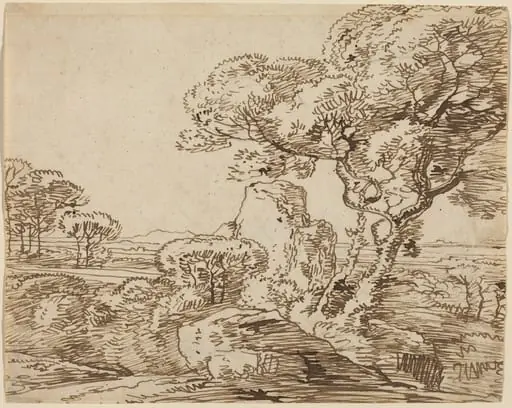
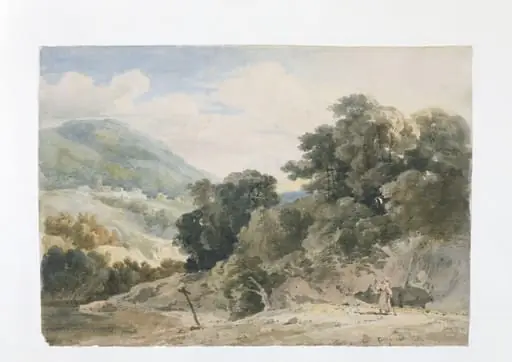 Landscape with hermit
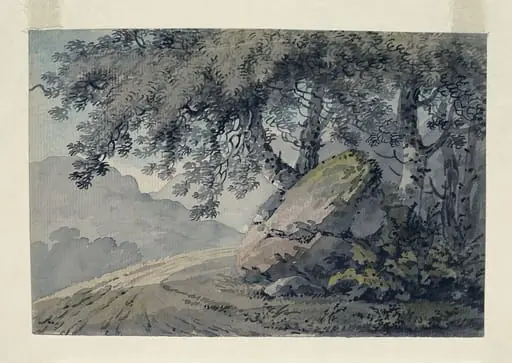 Mountain track with rock and trees
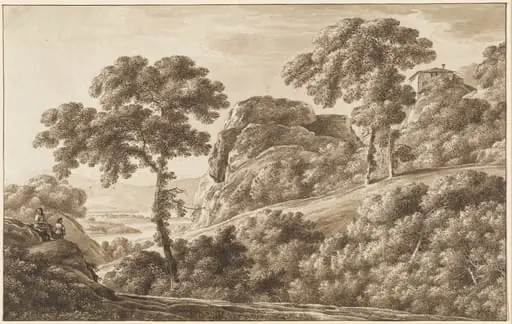 The Isar with Boulders on the Isarhohe
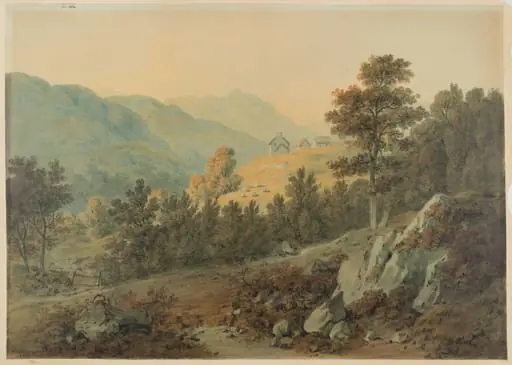 Untitled
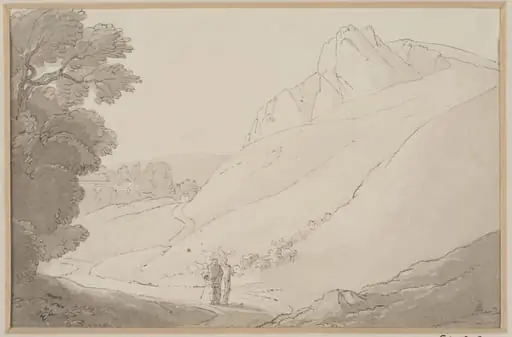 Untitled
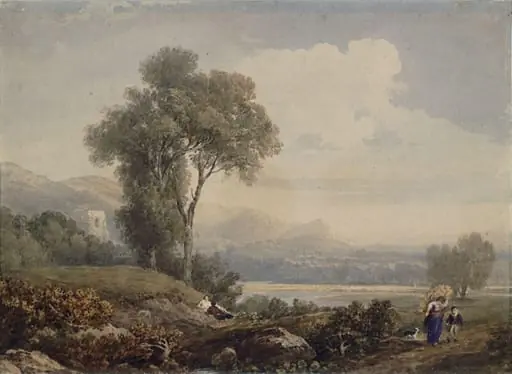 Landscape
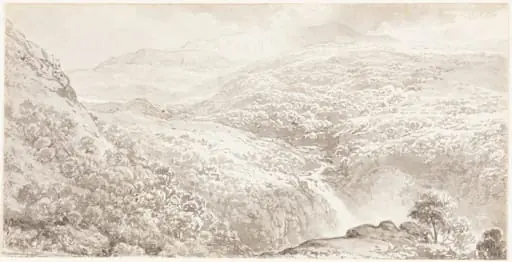 A Mountain Valley with a Waterfall
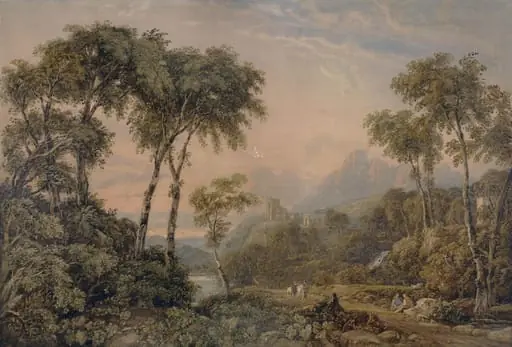 Landscape with Ruined Temple: Sunrise
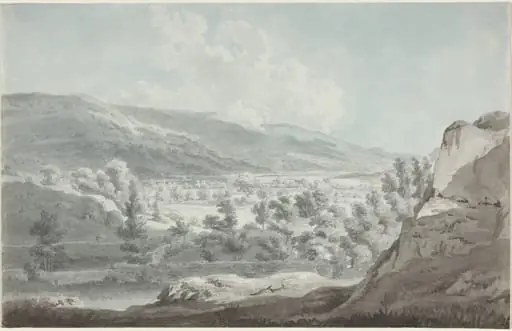 The Head of Ullswater
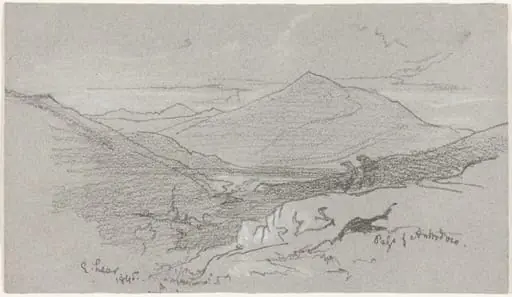 Mountainous View from Antrodoco
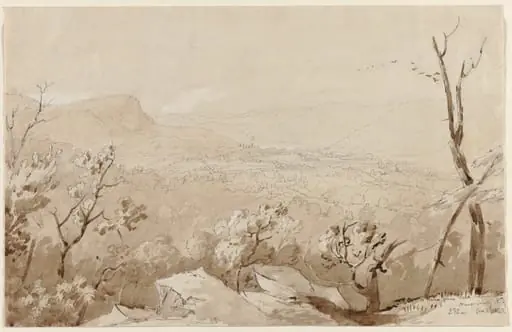 A View from Bald Mountain, Orange County, N.Y.
 A Mountainous Landscape