Artwork
Giesing
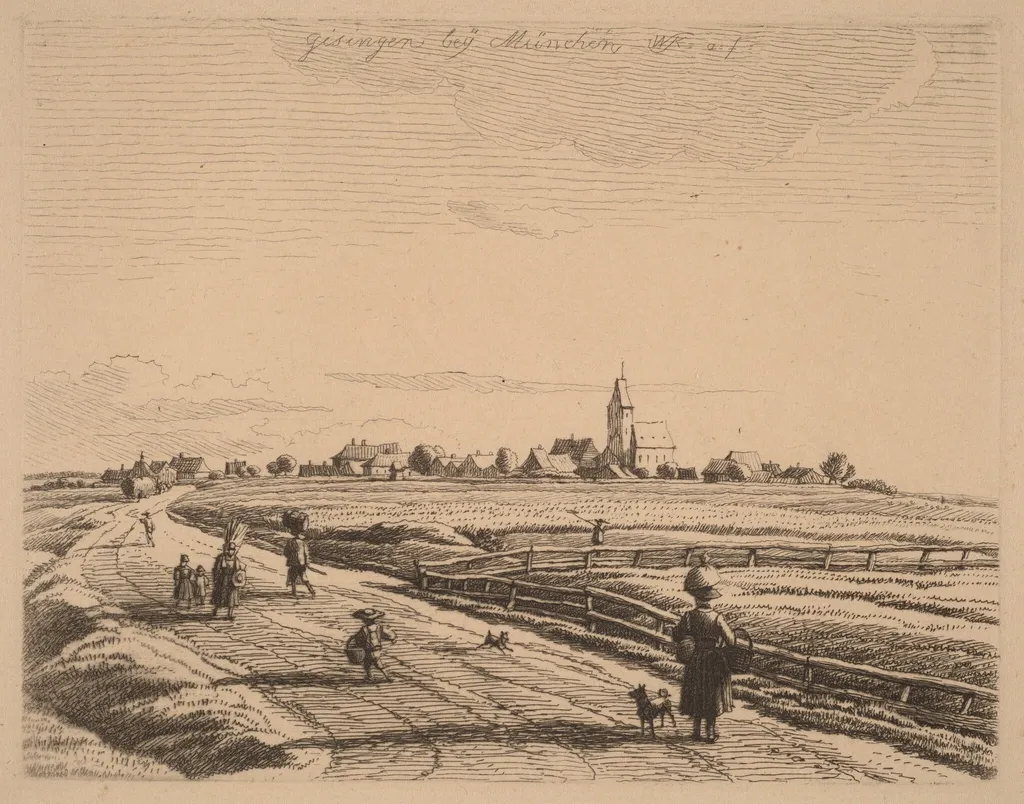
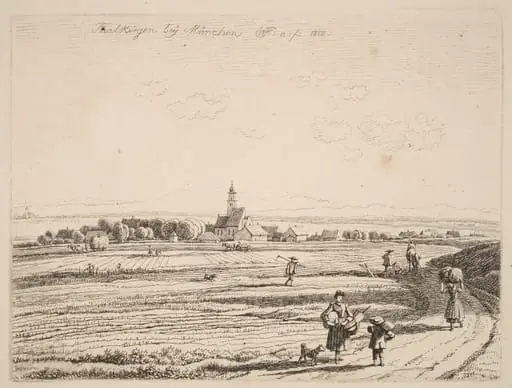
Giesing is an ink print by the Romanticist artist Wilhelm von Kobell. It dates from 1818 and is held in the collection of the National Gallery of Art.
About this work
Overview
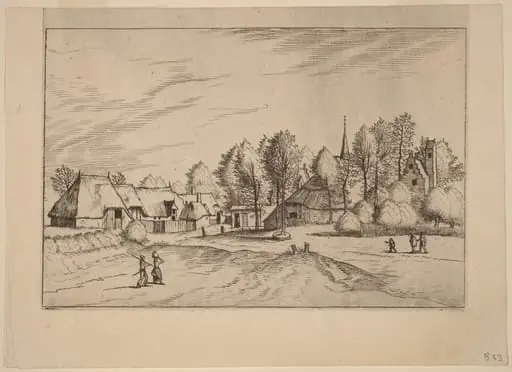
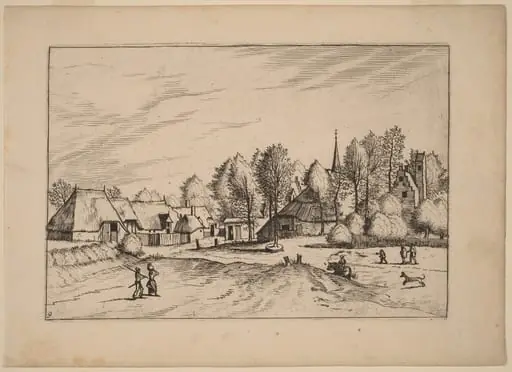
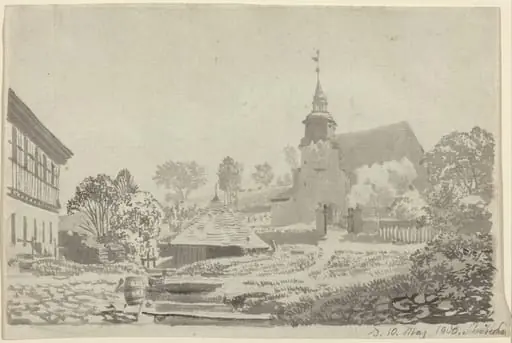
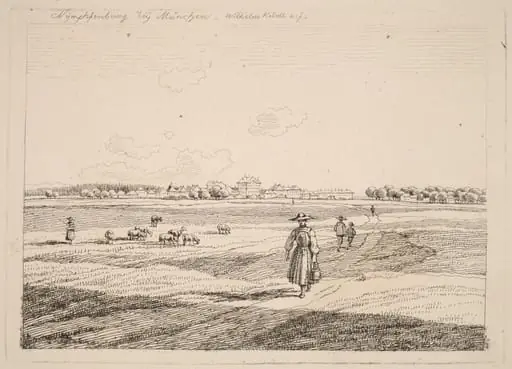
Wilhelm von Kobell’s 1818 print titled Giesing is an etching executed on laid paper. The work presents a tranquil rural settlement centered around a prominent church steeple, with modest thatched dwellings, fenced fields, and figures—farmers and livestock—moving through the landscape under a lightly clouded sky.
Subject & Meaning
The composition captures everyday agrarian life in the Bavarian district of Giesing, emphasizing the harmony between community and environment. By foregrounding laborers and their tools alongside the enduring church tower, the image suggests a balance of spiritual and worldly duties within a modest village setting.
Technique & Style
Kobell employed the traditional etching process, incising lines into a metal plate before transferring them onto paper. The resulting marks are deliberately rough and textured, allowing subtle gradations of light and shadow to model forms. This approach creates a sense of atmospheric depth while retaining the crispness characteristic of early‑19th‑century printmaking.
History & Provenance
Created in 1818, Giesing belongs to the early period of Kobell’s print output, a time when he documented Bavarian locales. The work has circulated among private collections and museum holdings, reflecting its role as a visual record of regional architecture and rural activity during the post‑Napoleonic era.
Artist & collection