Artwork
Schwabing
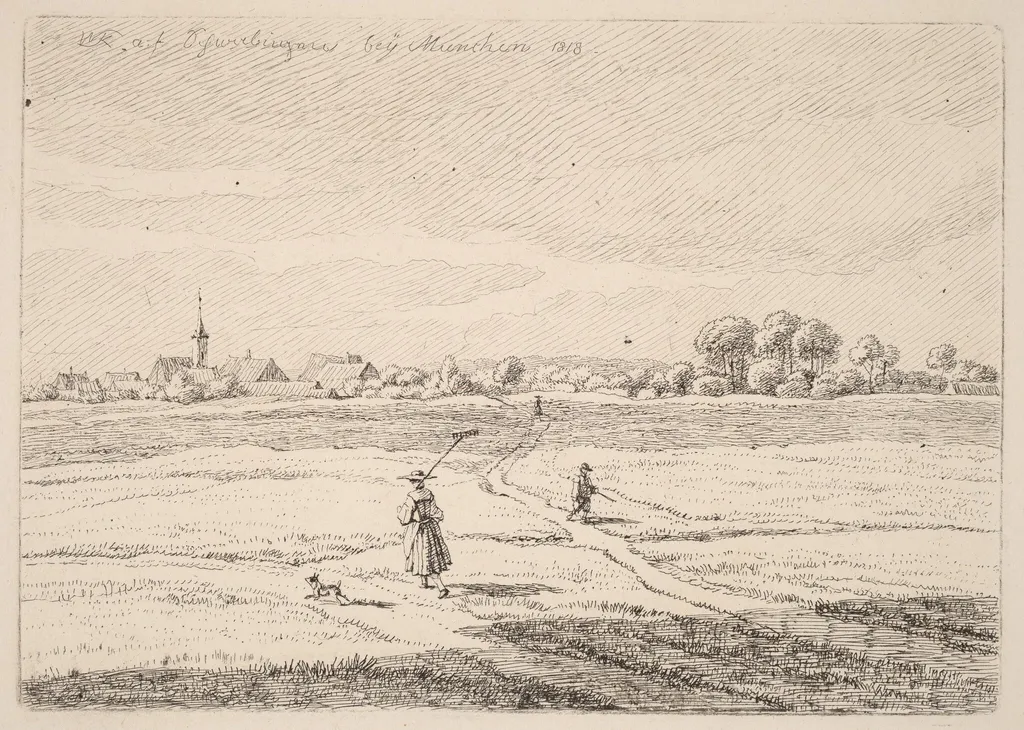
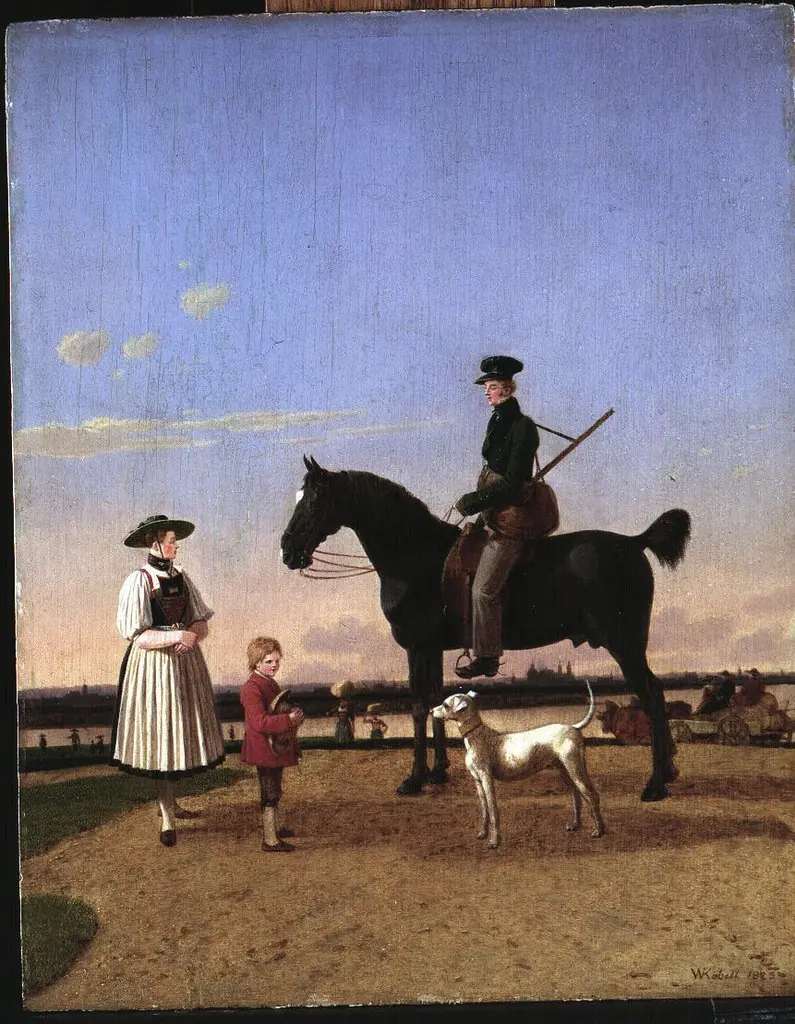
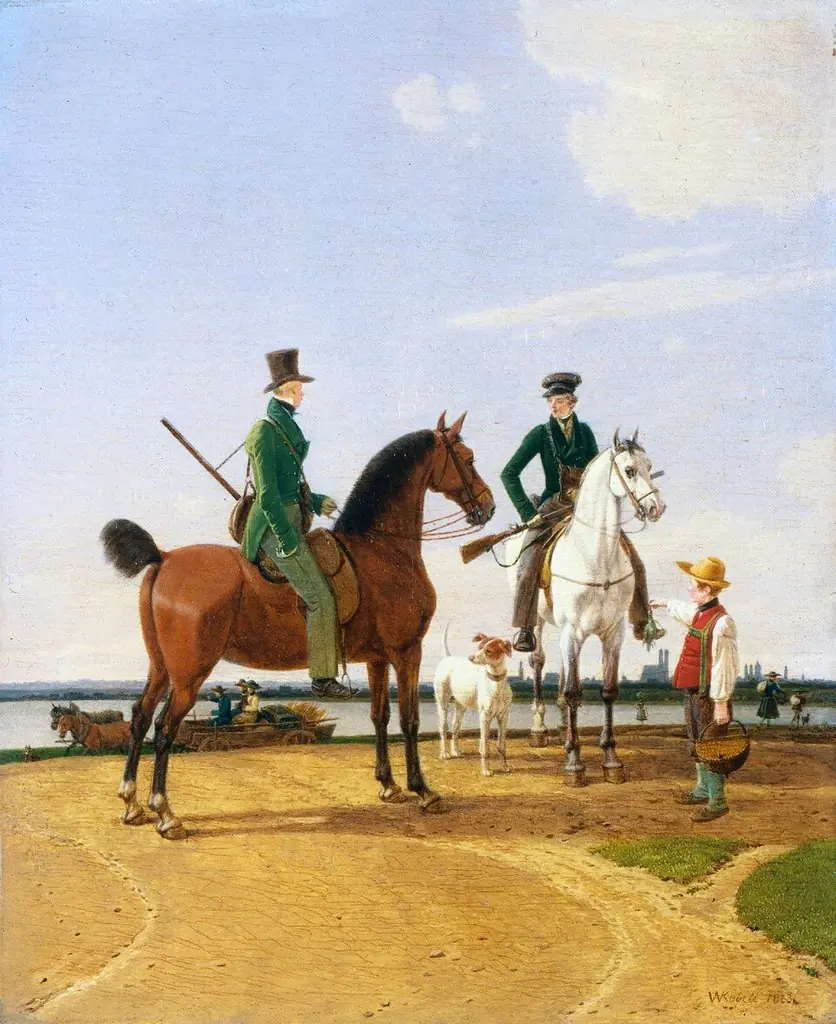
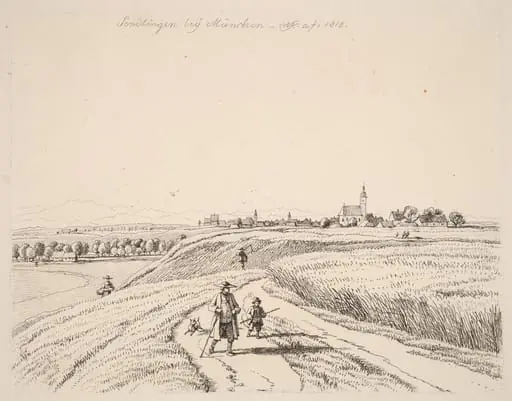
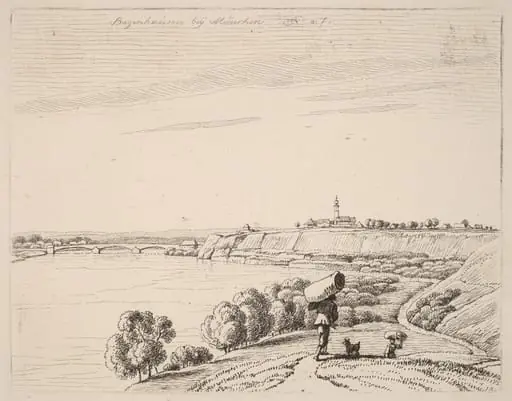
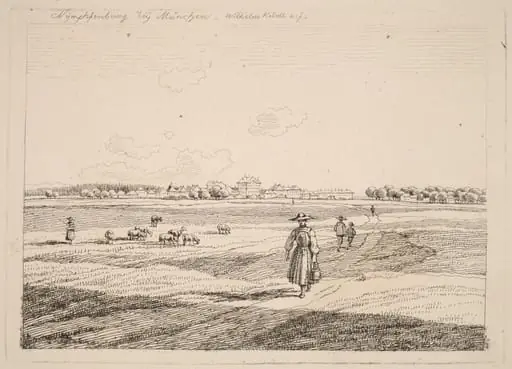
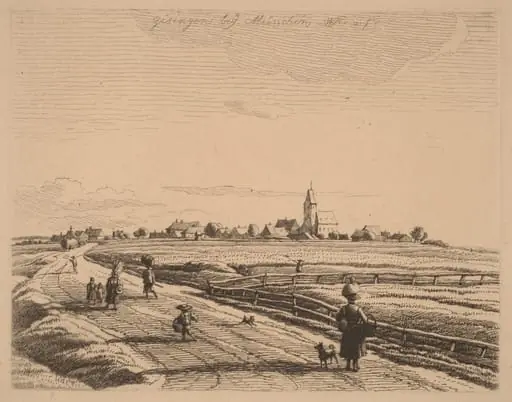
Schwabing is an ink print by the Romanticist artist Wilhelm von Kobell. It dates from 1818 and is held in the collection of the National Gallery of Art.
About this work
Overview
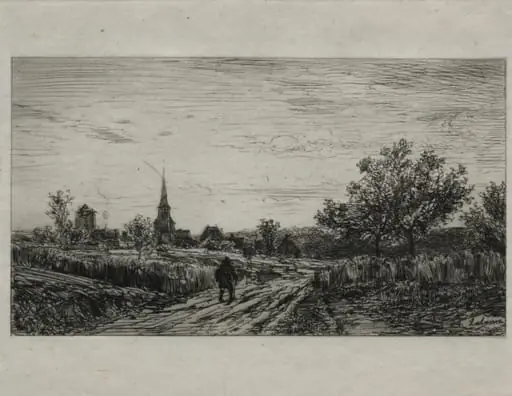
Schwabing is an etching on laid paper created by Wilhelm von Kobell in 1818, depicting a serene rural landscape.
Subject & Meaning
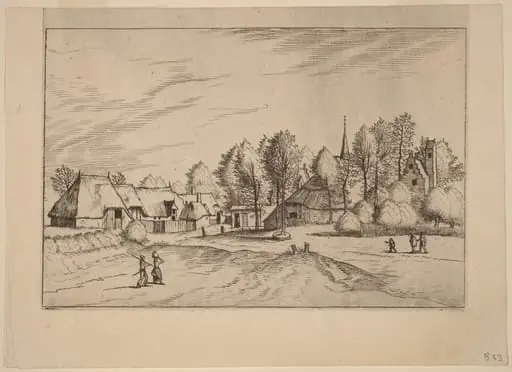
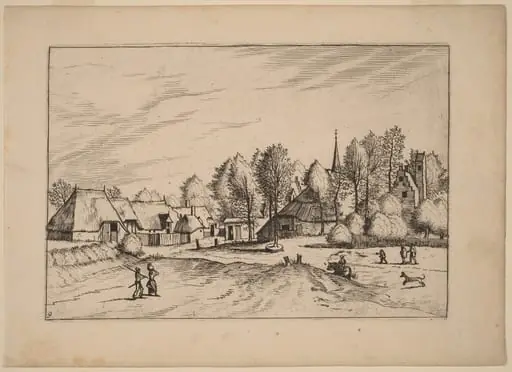
The scene features two individuals walking along a riverside path, accompanied by a dog and a person with a stick, set against a backdrop of a small village with a church steeple and dispersed trees, evoking a sense of peaceful everyday life.
Technique & Style
The etching utilizes fine lines to convey subtle textures of natural elements (grass, water) and clothing, achieving a balance of simplicity and detail. The rough, textured paper surface enhances the work's antiquated appearance.
History & Provenance
Created in 1818 by Wilhelm von Kobell, specific provenance details are not provided in the available information.
Context
Schwabing reflects the early 19th-century European artistic inclination towards capturing serene, idyllic landscapes, often emphasizing the interplay between human presence and nature.
Legacy
While specific legacy details of 'Schwabing' are not provided, it contributes to the broader understanding of 19th-century etching techniques and the aesthetic preferences of its time.
Own this work as a print
Artist & collection