Artwork
Nymphenburg
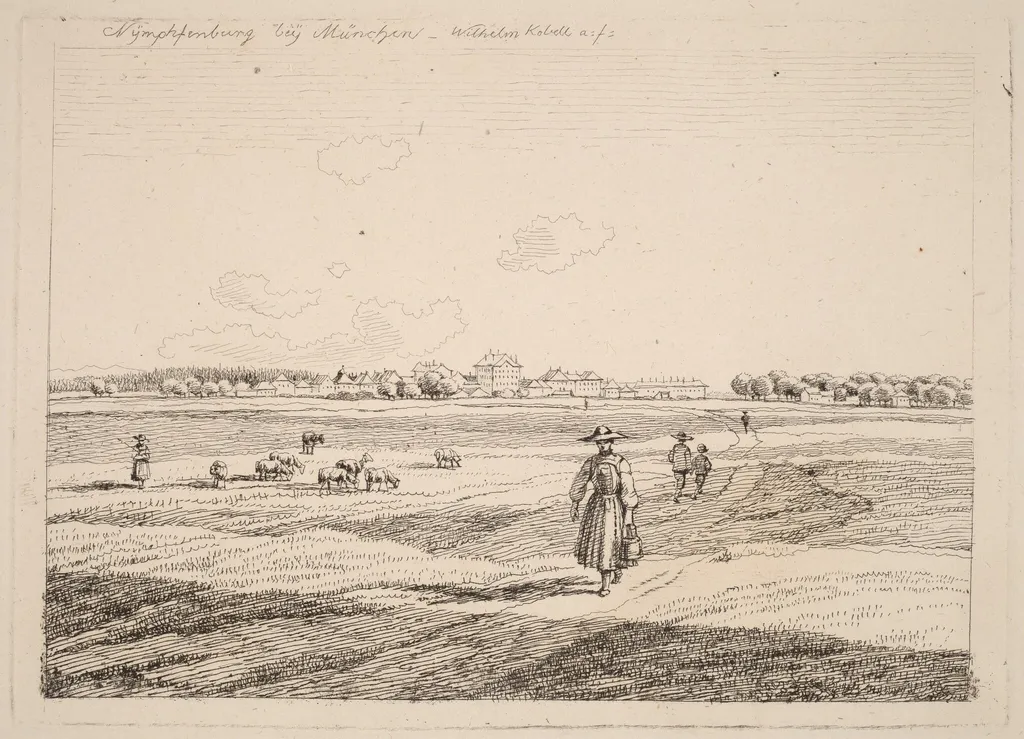
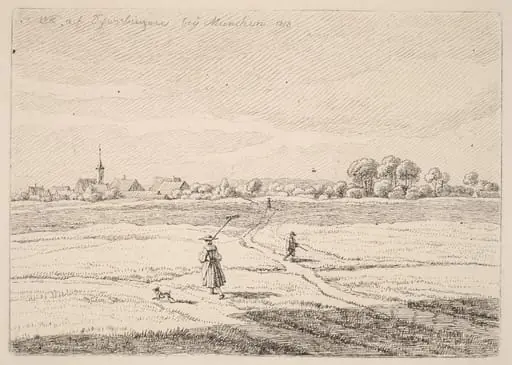
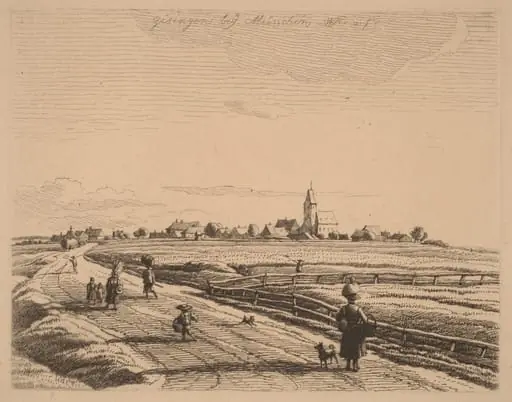
Nymphenburg is an ink print by the Romanticist artist Wilhelm von Kobell. It dates from 1818 and is held in the collection of the National Gallery of Art.
About this work
Overview
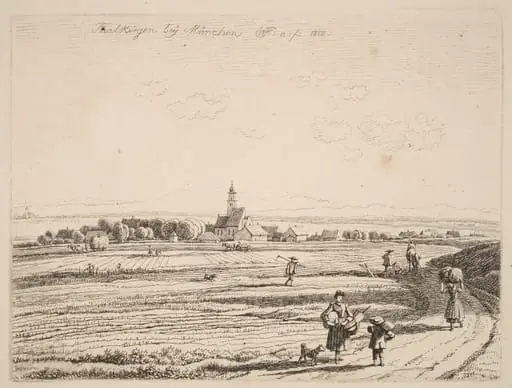
Nymphenburg is an 1818 etching on laid paper by Wilhelm von Kobell, depicting a serene rural landscape near a small town, characterized by a solitary female figure, distant agricultural activity, and a subdued architectural backdrop.
Subject & Meaning
The scene focuses on a woman standing alone by a plowed field, with people and animals working in the distance. The title references Nymphenburg, implying a location near Munich, Germany, though the emphasis is on capturing a quiet, everyday moment rather than a specific landmark.
Technique & Style
Kobell employed fine etching lines to convey texture, evident in the detailed plowed field. The work features selective, light shading, contributing to an overall sense of calm and simplicity.
History & Provenance
Created in 1818, the etching's provenance and exhibition history are not detailed here, focusing instead on its creation by von Kobell in the early 19th century.
Context
As an etching, Nymphenburg reflects the medium's capability for detailed, textured prints. The peaceful countryside depiction aligns with early 19th-century European artistic interests in rural life.
Own this work as a print
Artist & collection