Artwork
Foliage Study with Reed and Hops
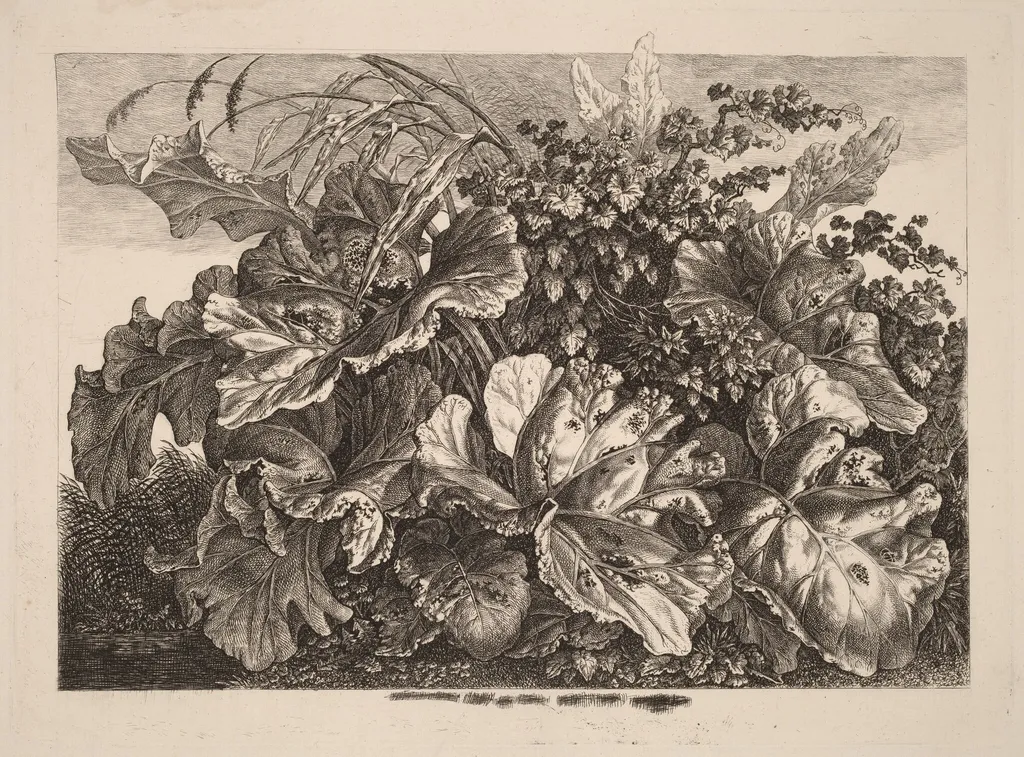
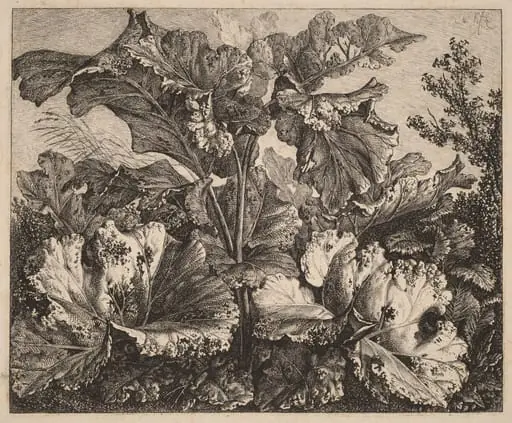
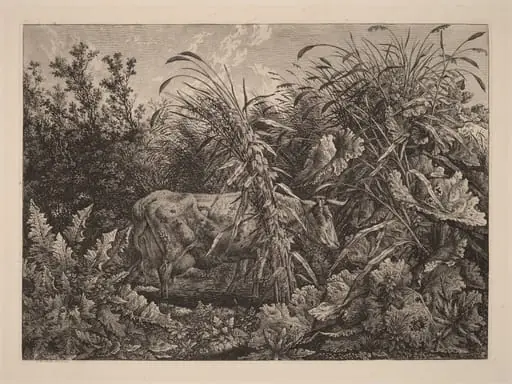
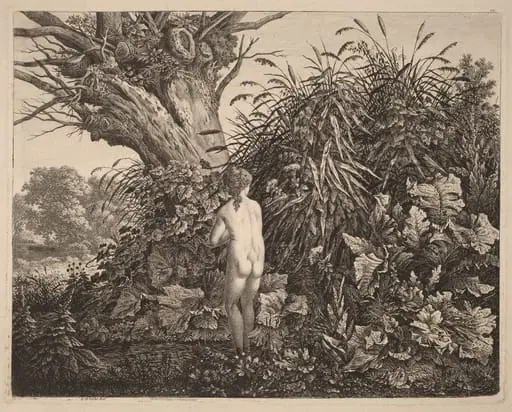
Foliage Study with Reed and Hops is an ink print by the Romanticist artist Carl Wilhelm Kolbe. It is held in the collection of the National Gallery of Art.
About this work
Overview
Foliage Study with Reed and Hops is an 1827 etching by German artist Carl Wilhelm Kolbe. Executed on laid paper, the work presents a close‑up study of plant forms rendered in monochrome. The composition concentrates on thick stems, broad leaves, and nascent buds, arranged in a tightly cropped field that emphasizes texture and line.
Subject & Meaning
The image functions as a botanical observation, isolating the structural details of reed and hop plants. By focusing on stems, foliage, and emerging flowers, Kolbe highlights the natural geometry and growth patterns of these species, inviting contemplation of their form rather than narrative content.
Technique & Style
Kolbe employed the traditional etching process, incising the design into a metal plate with acid to produce fine, controlled lines. The printed surface shows a textured laid paper background, enhancing the contrast between the delicate hatching that models volume and the stark black outlines that define each botanical element.
History & Provenance
Created in the early nineteenth century, the print reflects Kolbe’s interest in scientific illustration and the era’s growing fascination with detailed plant studies. While specific ownership records are limited, the work is catalogued among Kolbe’s print output and appears in collections focusing on German graphic art of the period.
Context
The etching belongs to a broader tradition of botanical prints that combined artistic skill with empirical observation. In the 1820s, such studies served both aesthetic and educational purposes, aligning with contemporary advances in natural history and the popularity of detailed plant documentation among artists and scholars alike.
Artist & collection


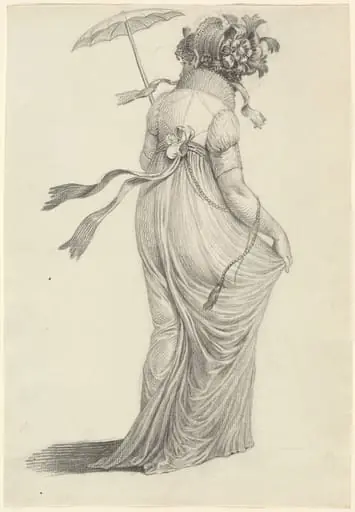 A Fashionable Young Woman Seen from Behind
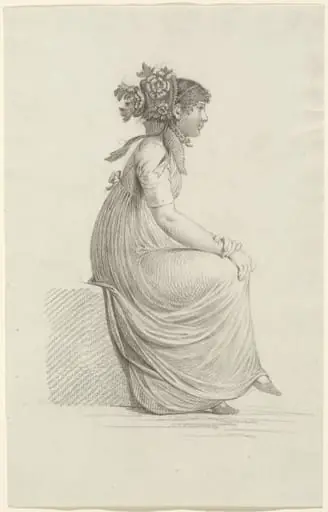 A Seated Young Woman Wearing a Fashionable Hat
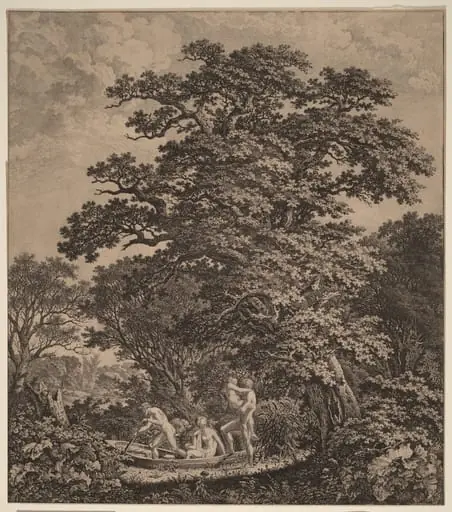 Landscape with Nudes Boarding a Boat
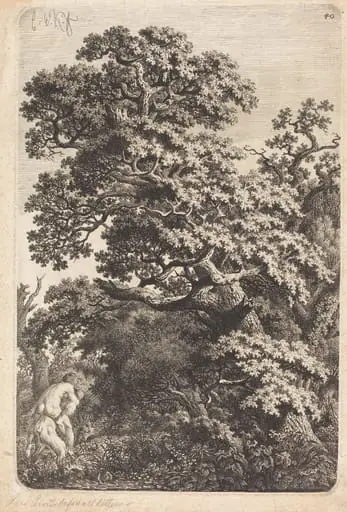 Satyr and Nymph in a Swamp
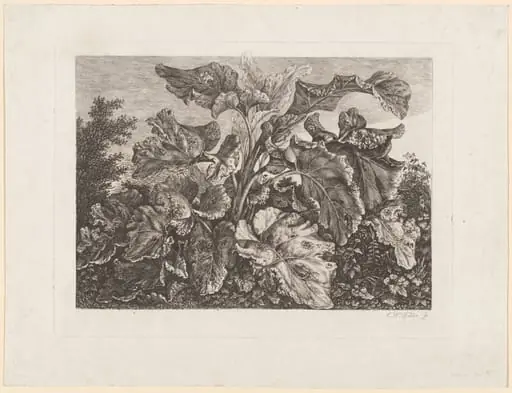 Plant Study with Burdock
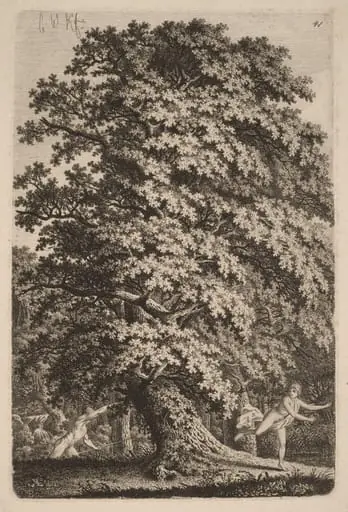 A Large Oak Tree in Gehölz. A Young Man with a Spear Follows a Young Girl.
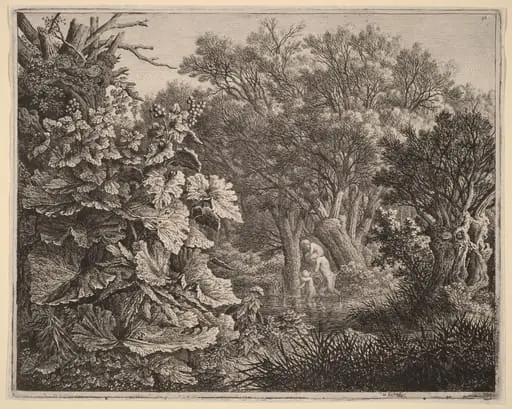 Landscape with Large Leaves and Three Satyrs
 Bathing Maiden