Artwork
The Cow in the Swamp
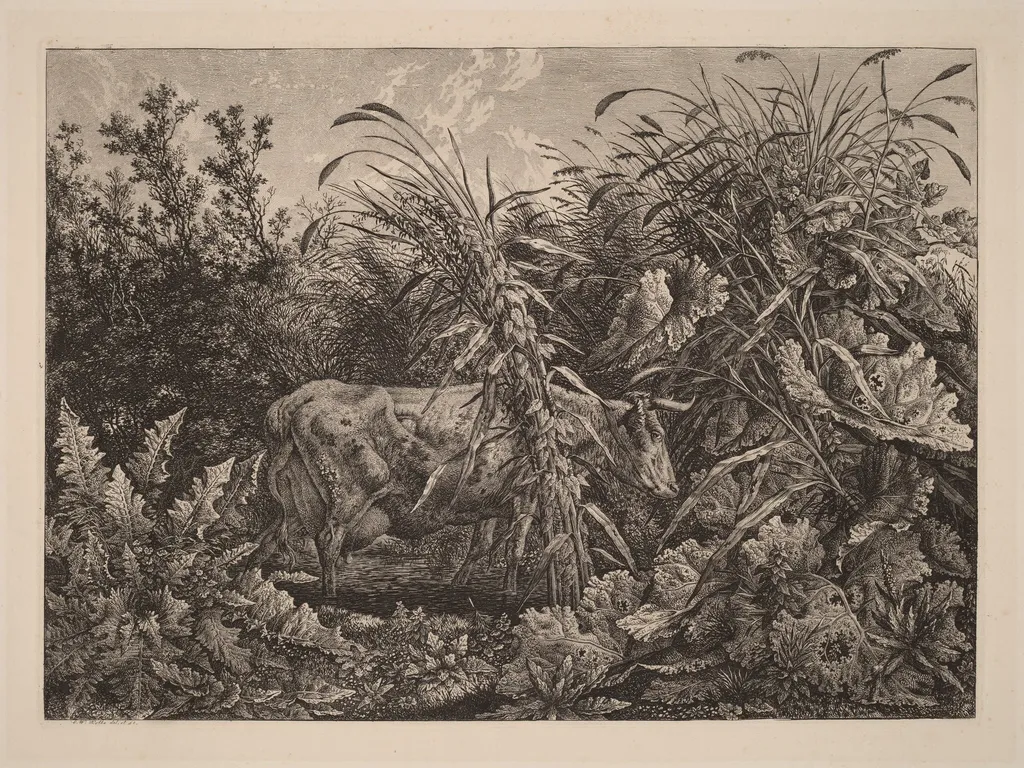
The Cow in the Swamp is an ink print by the Romanticist artist Carl Wilhelm Kolbe. It dates from 1802 and is held in the collection of the National Gallery of Art.
About this work
Overview
Carl Wilhelm Kolbe’s 1802 etching, titled *The Cow in the Swamp*, presents a solitary bovine positioned amid a wetland. Rendered in monochrome on laid paper, the composition balances the animal’s placid stance against a dense thicket of reeds and water‑logged vegetation, suggesting a quiet yet untamed environment.
Subject & Meaning
The work captures a moment of pastoral resilience: the cow, unperturbed, stands amid tangled, overhanging flora that hints at the encroaching forces of nature. The juxtaposition of the animal’s calm demeanor with the chaotic surrounding plants may allude to themes of domestication coexisting with wild landscapes.
Technique & Style
Kolbe employed traditional etching methods, incising lines into a copper plate before printing onto laid paper. Varying hatching and cross‑hatching generate tonal depth, rendering the reeds as thick, shadowed masses and the water as murky. This approach, typical of early‑19th‑century printmaking, emphasizes texture and atmospheric perspective without reliance on color.
History & Provenance
Created in 1802, the print reflects Kolbe’s engagement with German Romantic sensibilities. While specific ownership records are limited, the piece has appeared in several 19th‑century collections of German graphic art, indicating its circulation among connoisseurs of etching during the period.
Context
During the turn of the 19th century, German artists often explored rural motifs to express a connection to the land. Kolbe’s depiction aligns with this trend, using the swamp setting to foreground the tension between cultivated livestock and the untamed natural world, a recurring concern in contemporary literature and visual art.
Artist & collection


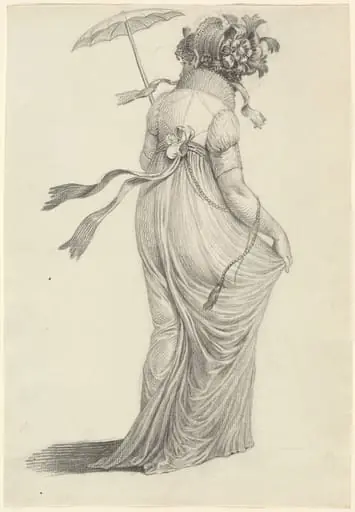 A Fashionable Young Woman Seen from Behind
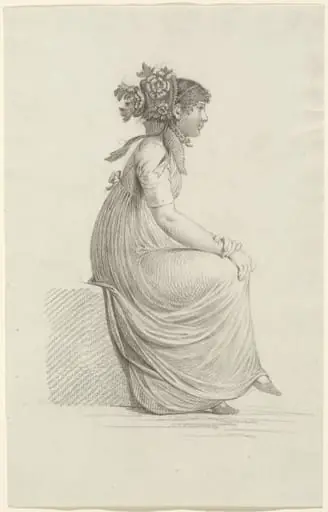 A Seated Young Woman Wearing a Fashionable Hat
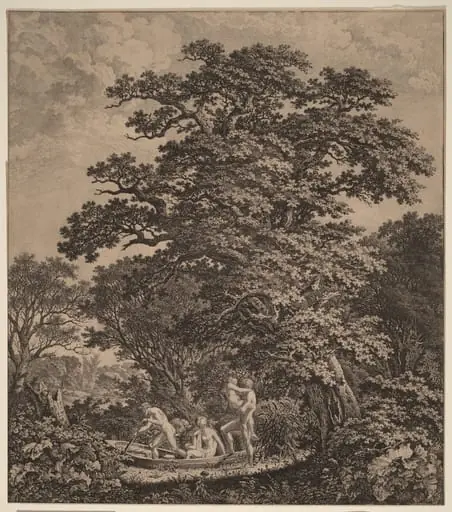 Landscape with Nudes Boarding a Boat
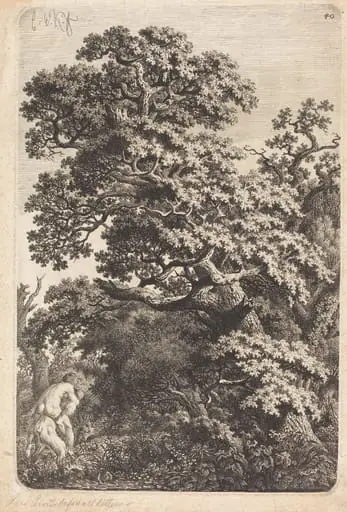 Satyr and Nymph in a Swamp
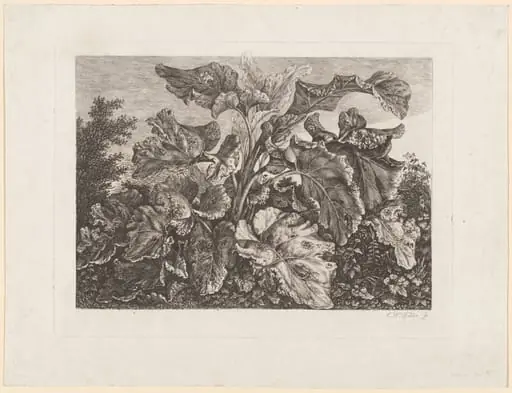 Plant Study with Burdock
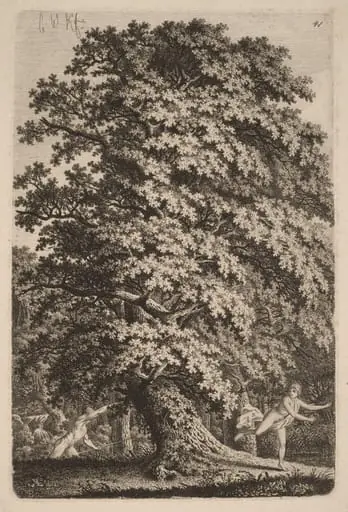 A Large Oak Tree in Gehölz. A Young Man with a Spear Follows a Young Girl.
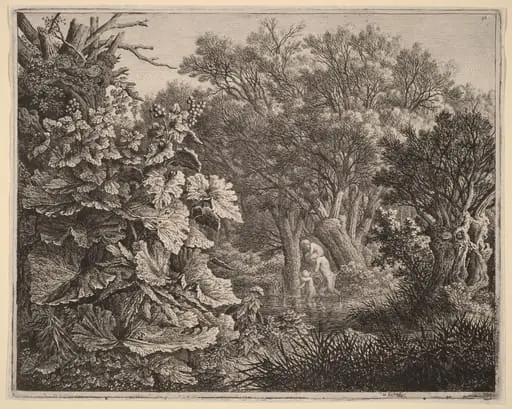 Landscape with Large Leaves and Three Satyrs
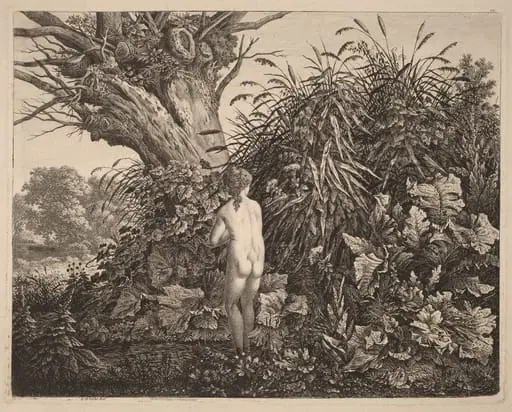 Bathing Maiden
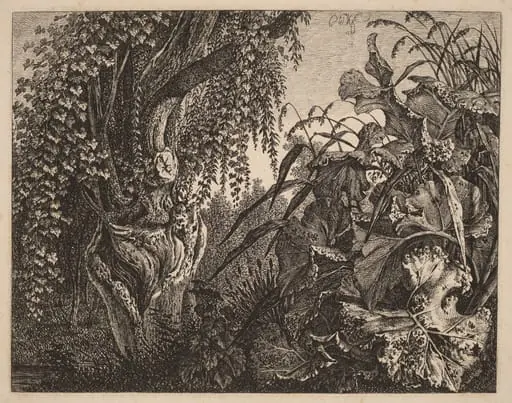 A Thicket; a Gnarled Willow Tree at Left, a Thicket of Vegetation at Right
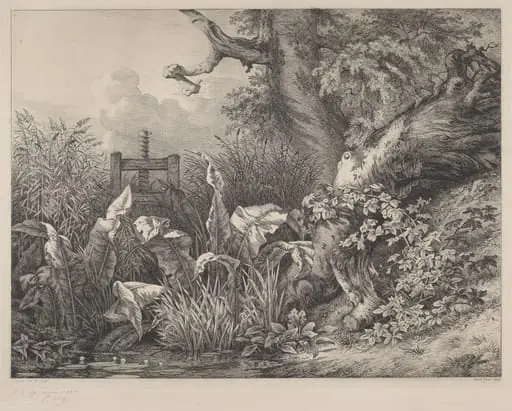 Water Dock and Brambles at a Sluice
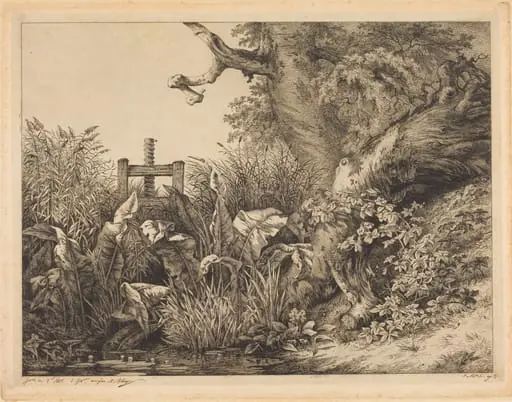 Water Dock and Brambles at a Sluice
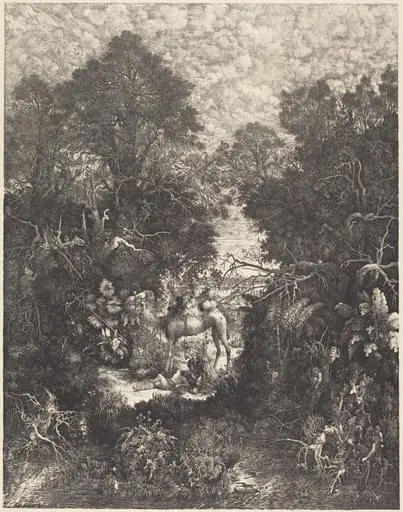 The Good Samaritan (Le Bon Samaritain)
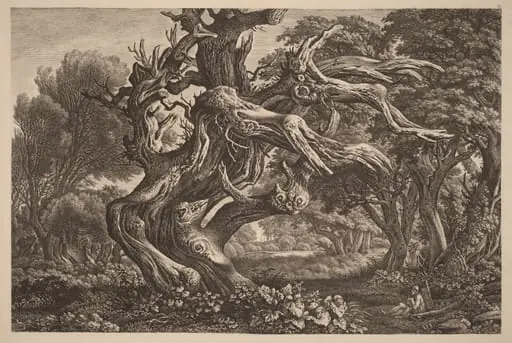 A Dead Oak Tree
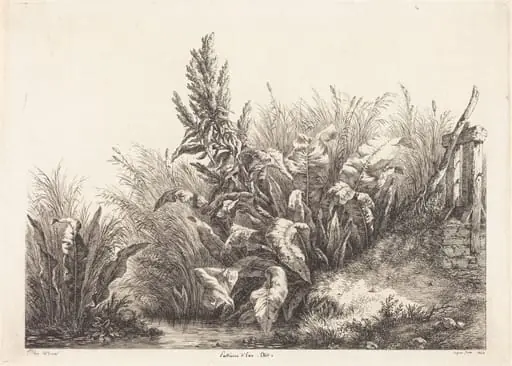 Patience d'eau, étude (Study of a Patience-Dock)
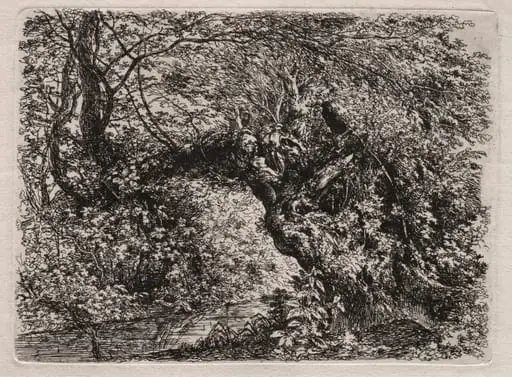 The Old Willow at a Brook
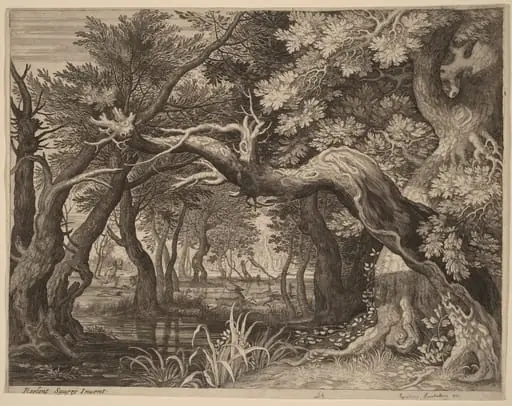 Stag Hunt near a Pool
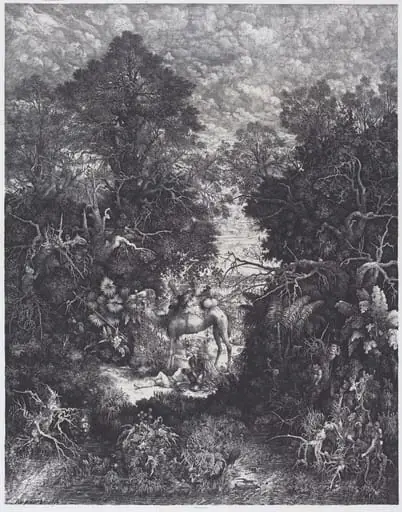 The Good Samaritan
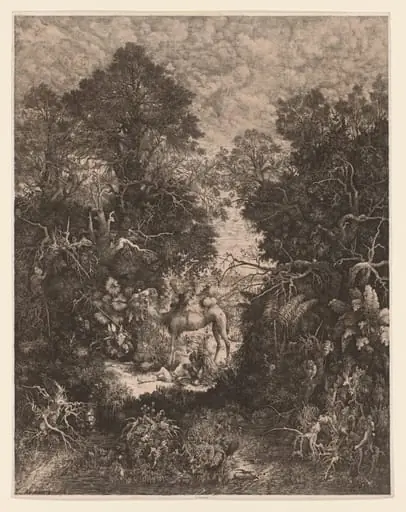 The Good Samaritan