Artwork
Bathing Maiden
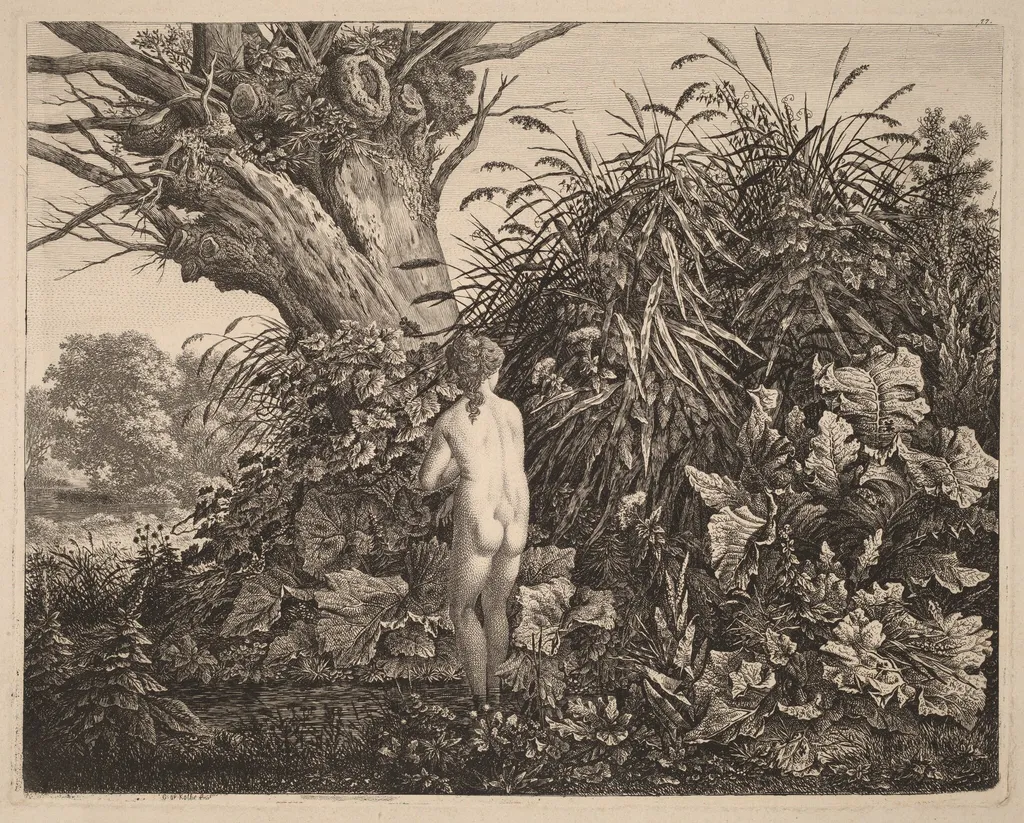
Bathing Maiden is an ink print by the Romanticist artist Carl Wilhelm Kolbe. It dates from 1798 and is held in the collection of the National Gallery of Art.
About this work
Overview
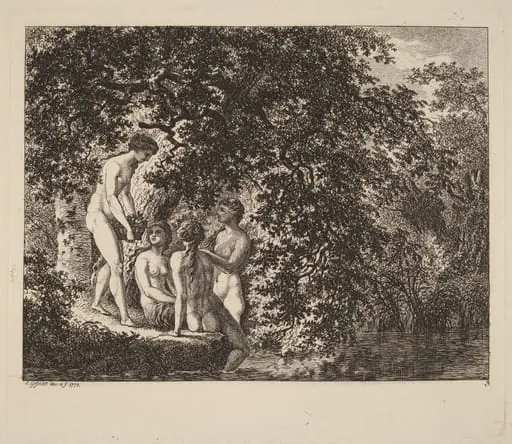
Bathing Maiden is an etching on laid paper executed by Carl Wilhelm Kolbe in 1798. The work presents a solitary nude figure situated within a densely vegetated forest scene, rendered entirely in black and white. The composition balances the human form against a tangle of vines, trees, and a nearby stream, creating a harmonious yet intricate tableau.
Subject & Meaning
The print depicts a woman standing amid overgrown foliage, her body turned slightly and one arm raised as if grasping an unseen object. The surrounding wilderness, with its thick vines and towering trees, frames the figure and suggests a dialogue between nature and the nude, a common motif that invites contemplation of the human form within the natural world.
Technique & Style
Kolbe employed the etching process, incising fine lines into a metal plate before transferring the image onto laid paper. The artist’s meticulous handling of line work produces a dense network of textures, each leaf and twig rendered with realistic detail. This level of precision reflects the 18th‑century emphasis on intricate, tonal variation in printmaking.
History & Provenance
Created at the close of the 18th century, Bathing Maiden belongs to Kolbe’s body of work that explores mythological and pastoral subjects through print. While specific ownership records are limited, the piece has been catalogued among Kolbe’s etchings and remains a representative example of his contribution to German printmaking during the period.
Artist & collection


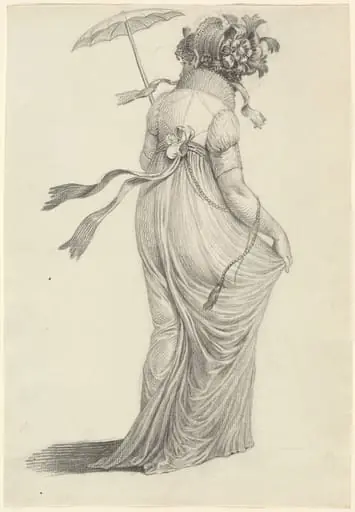 A Fashionable Young Woman Seen from Behind
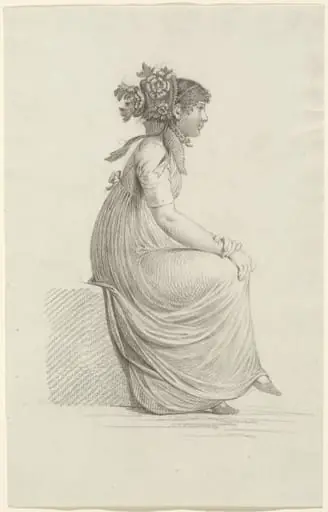 A Seated Young Woman Wearing a Fashionable Hat
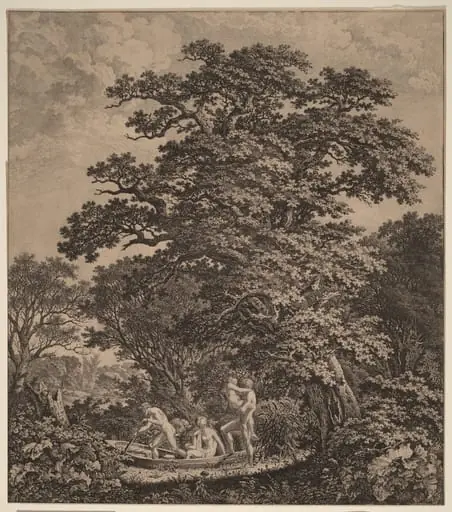 Landscape with Nudes Boarding a Boat
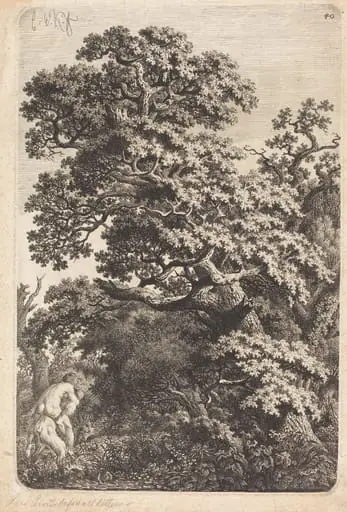 Satyr and Nymph in a Swamp
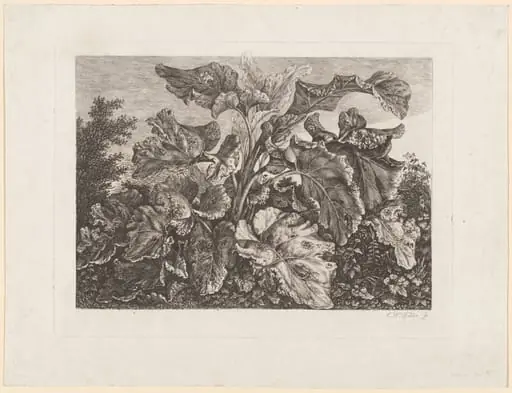 Plant Study with Burdock
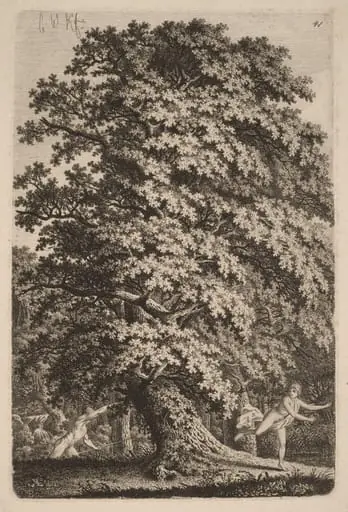 A Large Oak Tree in Gehölz. A Young Man with a Spear Follows a Young Girl.
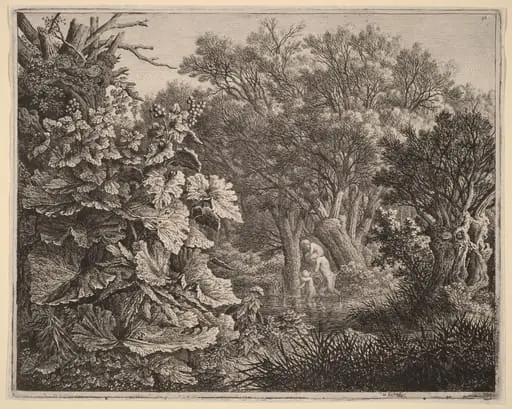 Landscape with Large Leaves and Three Satyrs
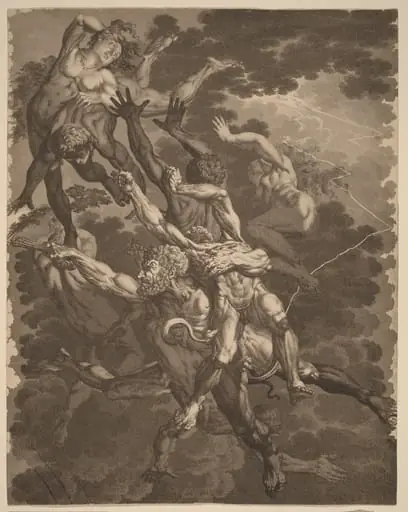 The Damned
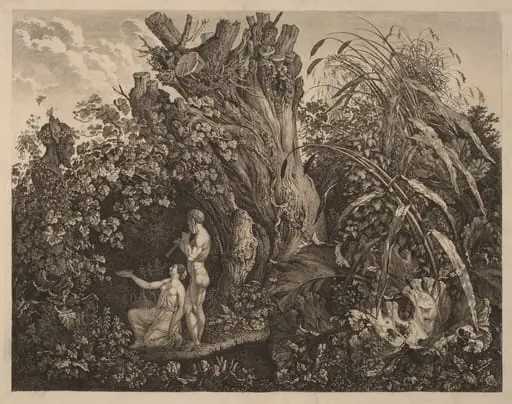 An Offering to Pan
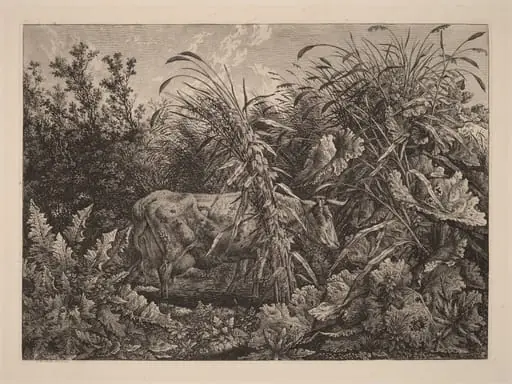 The Cow in the Swamp
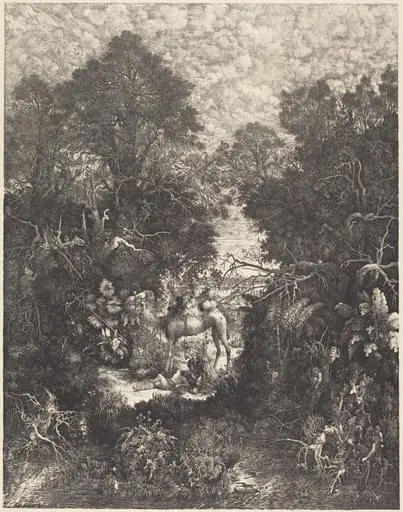 The Good Samaritan (Le Bon Samaritain)
 Girl Carrying a Basket of Fruit
 A Thicket; a Gnarled Willow Tree at Left, a Thicket of Vegetation at Right
 Venus Extracting a Thorn from Her Foot
 An Old Willow by a Stream
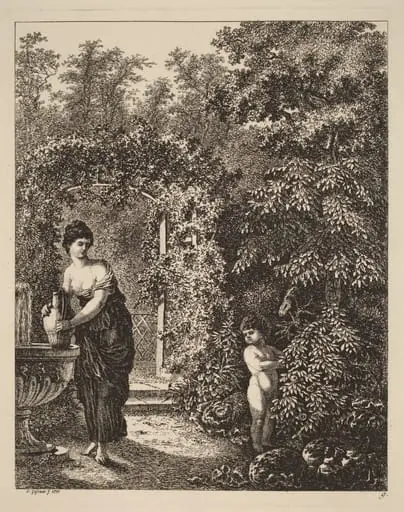 Putto Visiting a Girl at a Fountain
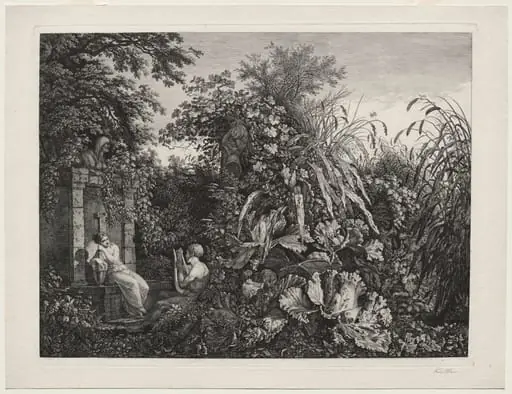 Youth Playing a Lyre to a Maiden by a Fountain
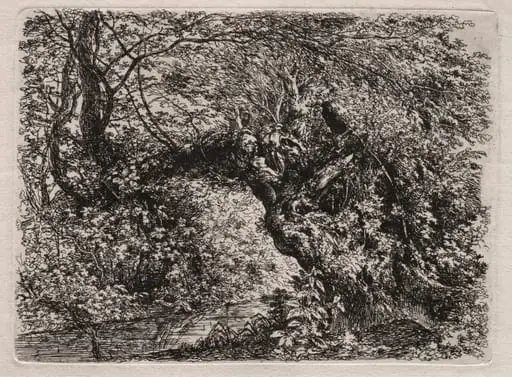 The Old Willow at a Brook
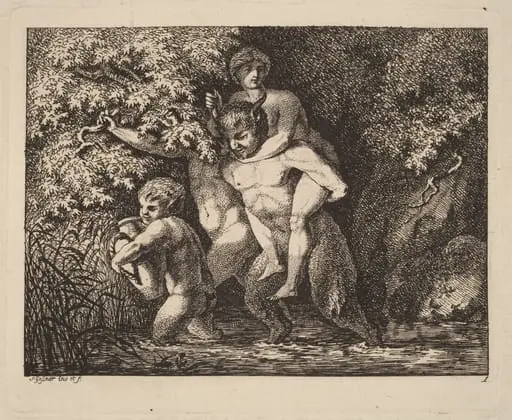 Satyr Carrying a Nymph on His Back