Artwork
Straw-Thatched Hut with Landscape and Figures
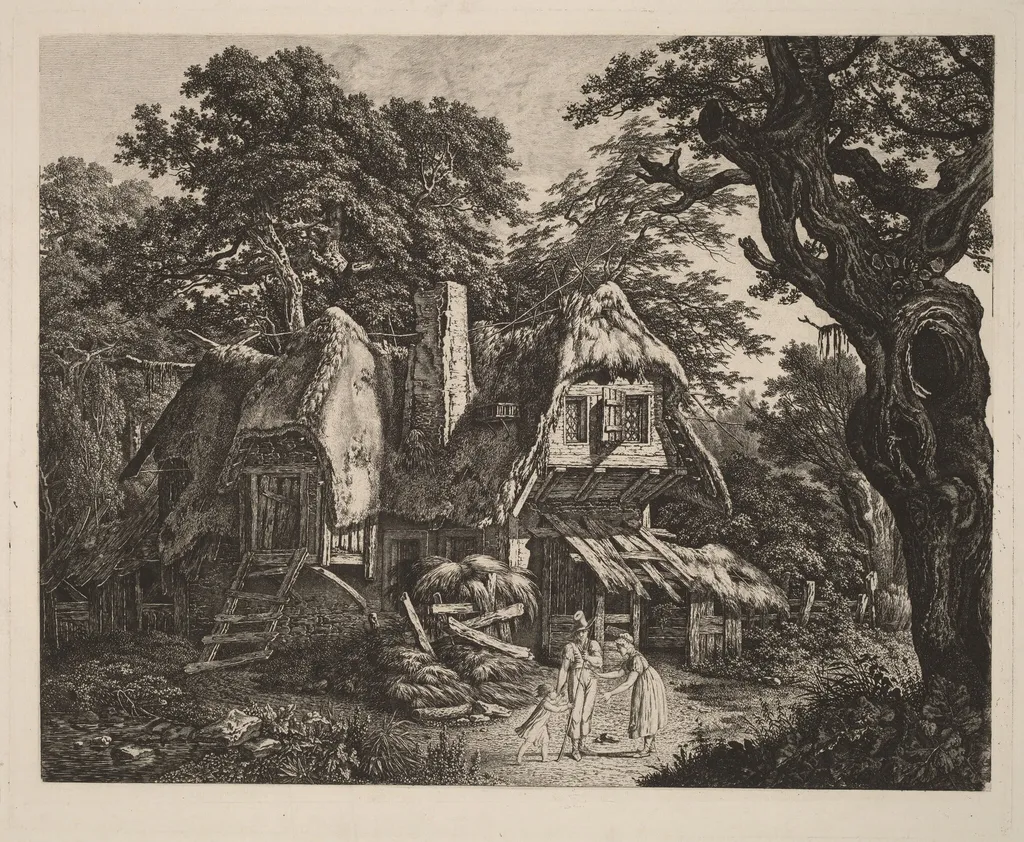
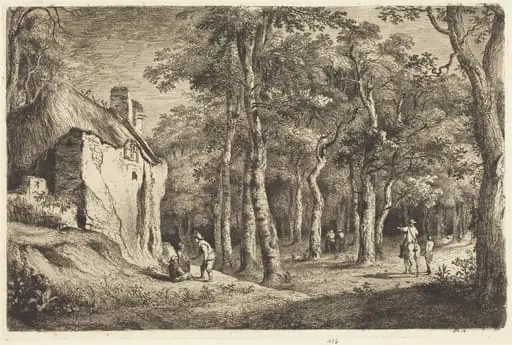
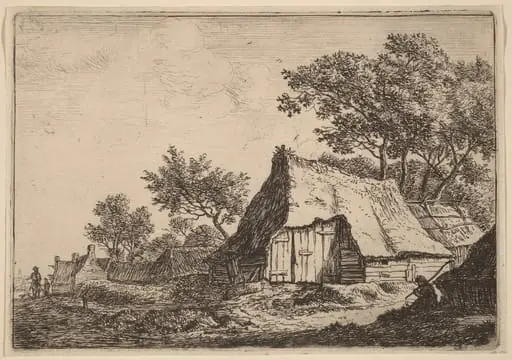
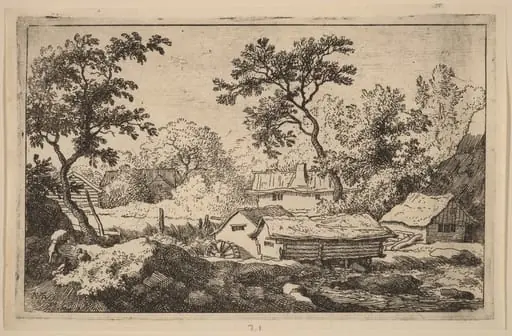
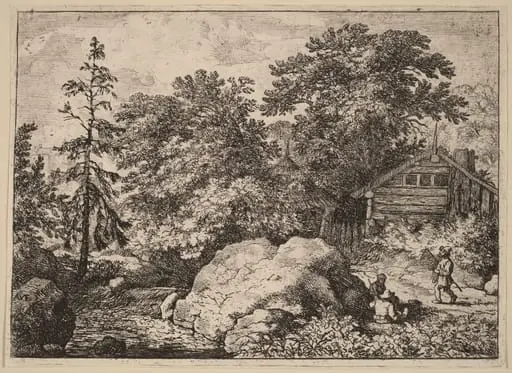
Straw-Thatched Hut with Landscape and Figures is an ink print by the Romanticist artist Carl Wilhelm Kolbe. It is held in the collection of the National Gallery of Art.
About this work
Overview
A woman in a long dress walks beside a child, passing the hut, while a stone shrine rests beneath a mature tree and a small pond occupies the lower foreground.
Carl Wilhelm Kolbe’s 1808 etching, titled Straw‑Thatched Hut with Landscape and Figures, presents a tranquil rural tableau rendered in black and white on laid paper. The composition centers on a modest wooden dwelling capped with a thatched roof, set against a gently sloping hillside. A woman in a long dress walks beside a child, passing the hut, while a stone shrine rests beneath a mature tree and a small pond occupies the lower foreground.
Subject & Meaning
The print captures everyday life in a quiet village, emphasizing the harmony between human activity and the surrounding natural environment. The figures, modest in scale, suggest routine movement through a landscape that is both cultivated and wild, hinting at a pastoral ideal where domestic structures coexist with ancient shrines and untamed foliage.
Technique & Style
Kolbe employed traditional etching methods, incising lines into a metal plate and using acid to create varied tones. Delicate hatching conveys the texture of grass and water, while broader, deeper strokes give solidity to trees and buildings. The contrast between fine detail and broader shading creates a sense of depth, allowing the viewer to perceive the uneven ground and the spatial relationship among the elements.
History & Provenance
Created in 1808, the work reflects the early‑19th‑century German interest in rural genre scenes. While specific ownership records are limited, the print has been catalogued among Kolbe’s landscape series and appears in several museum collections that focus on German printmaking of the period.
Artist & collection


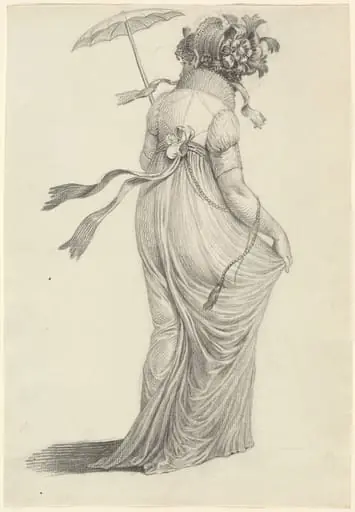 A Fashionable Young Woman Seen from Behind
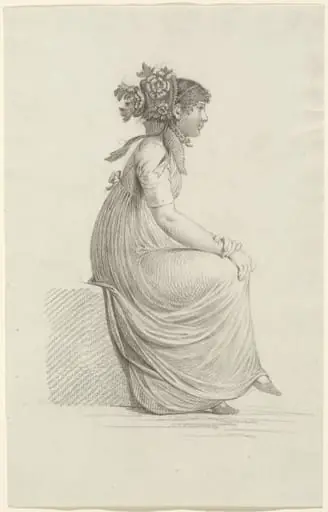 A Seated Young Woman Wearing a Fashionable Hat
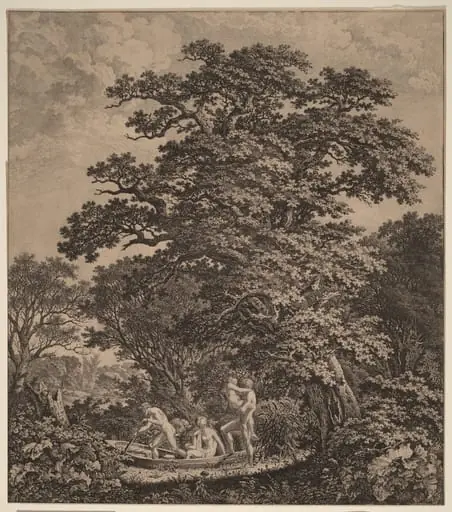 Landscape with Nudes Boarding a Boat
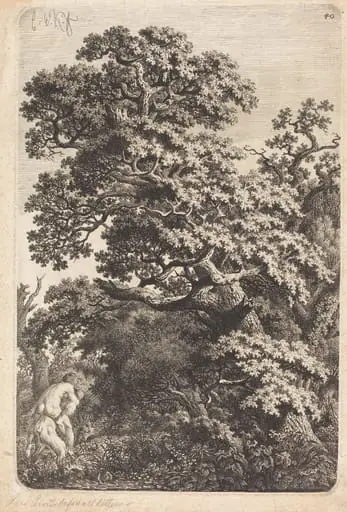 Satyr and Nymph in a Swamp
 Plant Study with Burdock
 A Large Oak Tree in Gehölz. A Young Man with a Spear Follows a Young Girl.
 Landscape with Large Leaves and Three Satyrs
 Bathing Maiden