Artwork
Entree de Foret
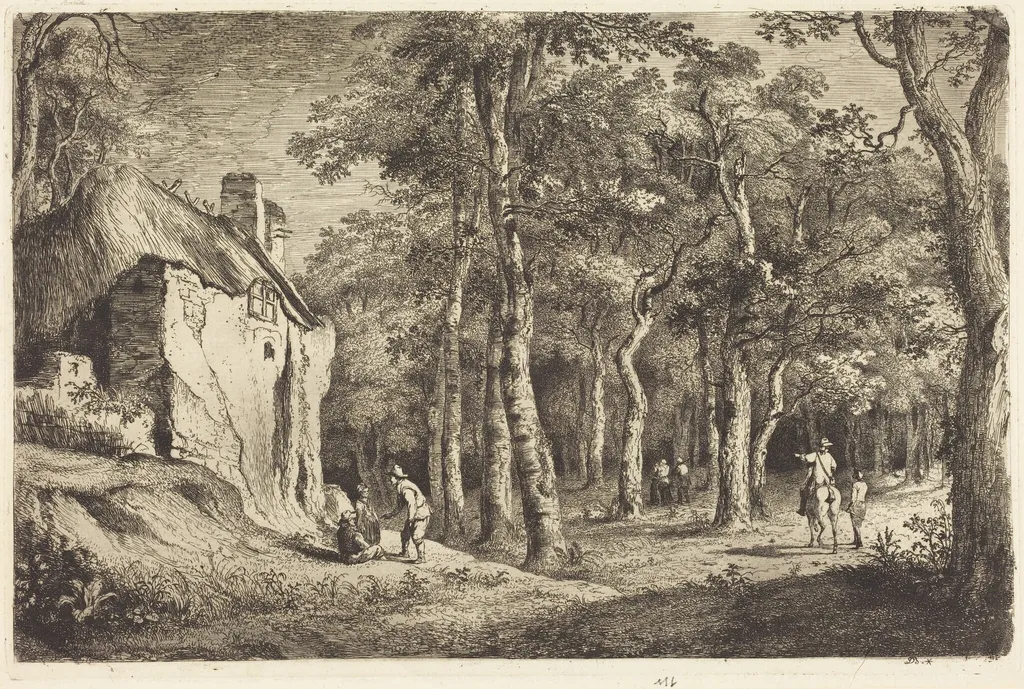
Entree de Foret is an ink print by the Romanticist artist Jean-Jacques de Boissieu. It dates from 1772 and is held in the collection of the National Gallery of Art.
About this work
Overview
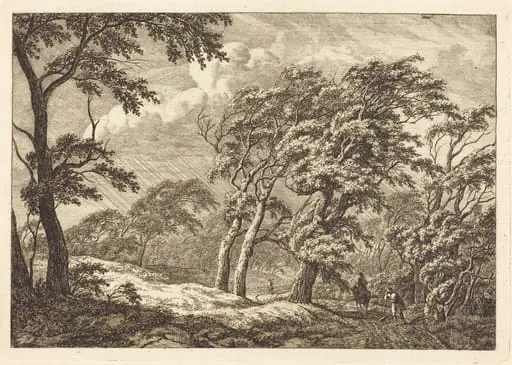
Jean‑Jacques de Boissieu’s 1772 print, Entree de Foret, presents a tranquil woodland lane rendered in black‑and‑white. The composition centers on a narrow dirt path flanked by towering trees, with a modest dwelling glimpsed through the foliage on the left. Figures are placed along the way, some walking, others pausing, creating a sense of quiet activity within the forest.
Subject & Meaning
The scene captures a moment of everyday travel through a sylvan environment, suggesting a harmonious relationship between humans and nature. The solitary figure seated on the ground invites contemplation, while the other travelers convey a communal passage, hinting at the social customs of rural movement in the eighteenth‑century French countryside.
Technique & Style
Executed as an etching with plate tone, de Boissieu employed fine, incised lines to delineate bark texture, foliage, and the details of clothing. The method allows ink to settle in the engraved grooves, producing crisp, layered tonal values that give the work a sketch‑like precision while maintaining depth through varied line density.
History & Provenance
Created in 1772, Entree de Foret reflects de Boissieu’s mature period, during which he produced numerous landscape prints for the burgeoning market of illustrated books and private collections. The print has circulated among European collectors since its publication, exemplifying the spread of French etching techniques in the late Enlightenment era.
Own this work as a print
Artist & collection
Artist
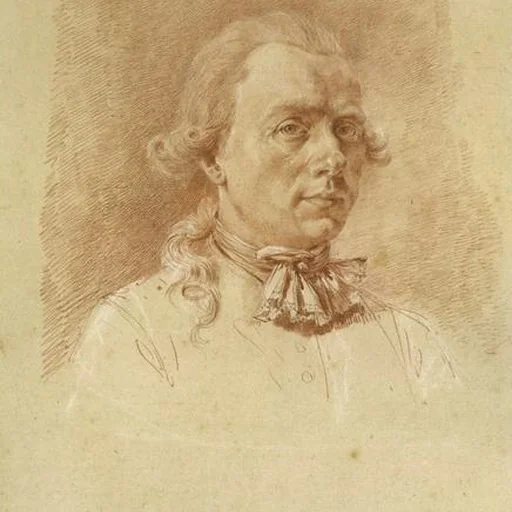
Jean-Jacques de Boissieu (1736–1810) was a French artist, born in Lyon.

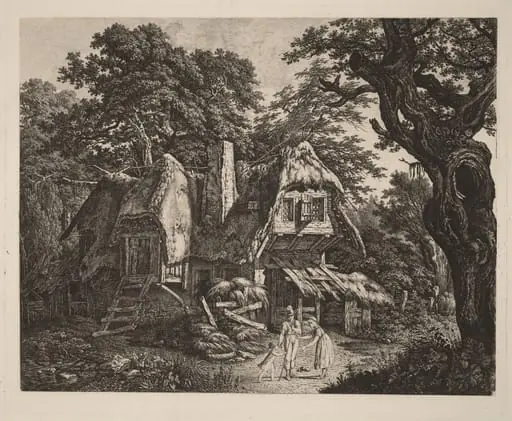 Straw-Thatched Hut with Landscape and Figures
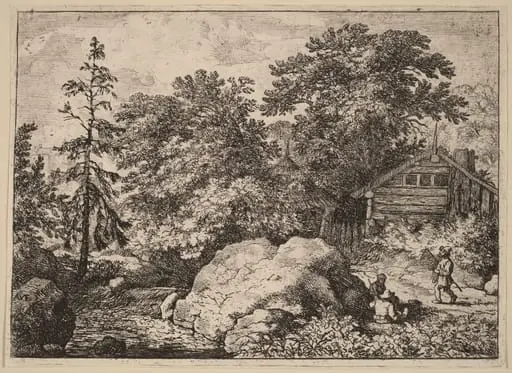 The Knoll
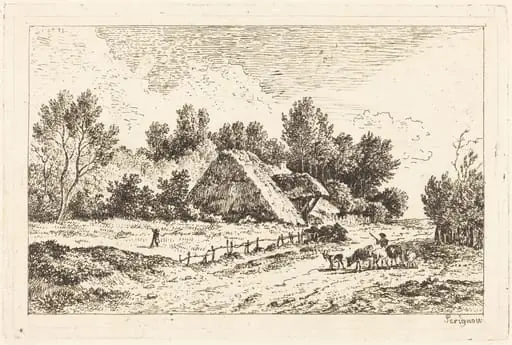 A Low Cottage with a Herdsman Leading His Flock
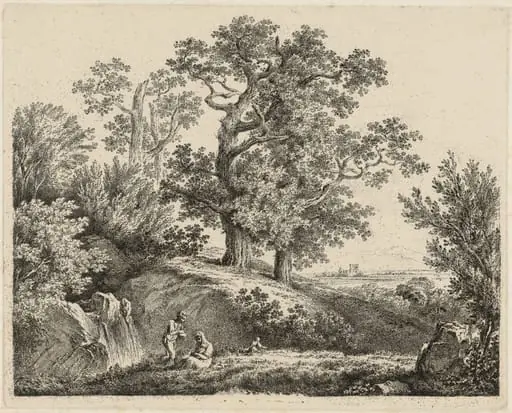 Landscape with a Waterfall and a Resting Family
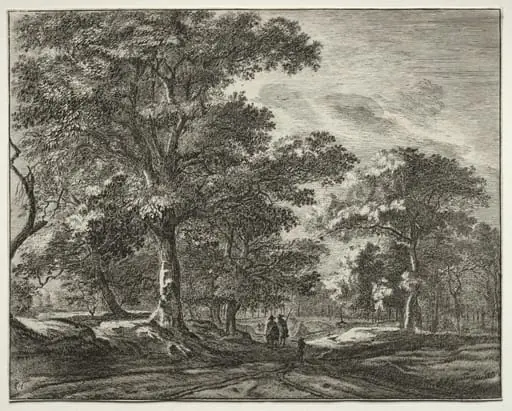 Six views in the Wood of the Hague (series)
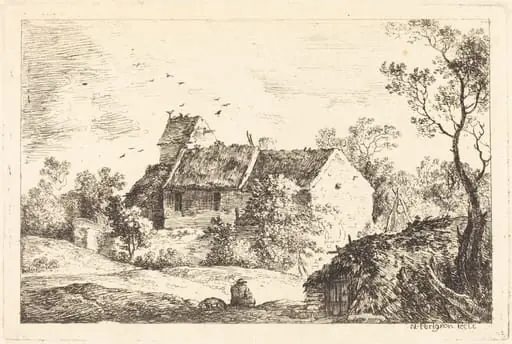 House with a Dovecote in a Rolling Landscape
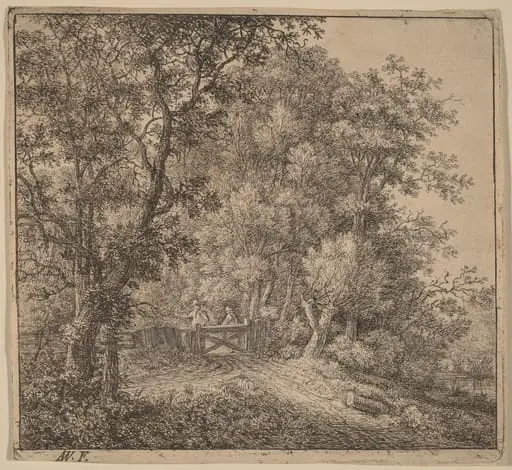 Two Men at a Gate
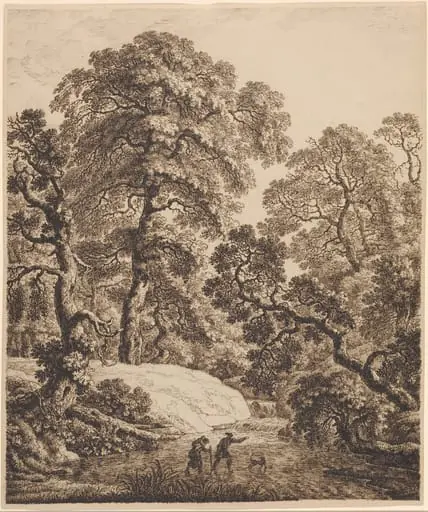 An Oak Forest with a Family of Travelers
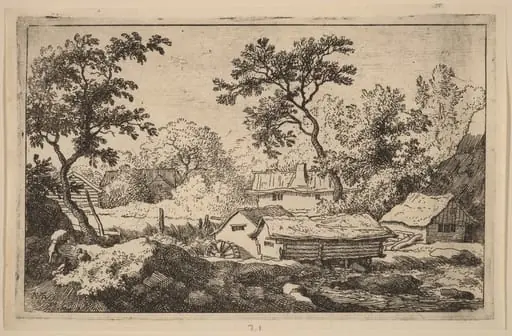 Mill below a Waterfall
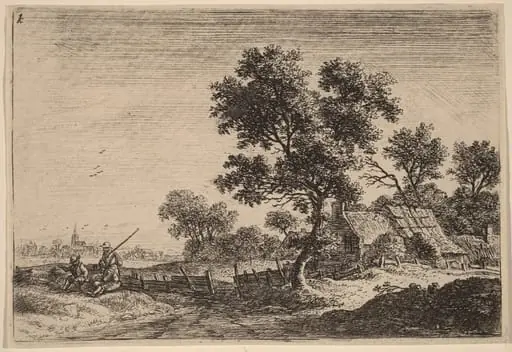 Three Peasants on a Knoll outside a Hamlet
 Travelers on a Forest Road in a Storm
 Hut with the Remains of a Hedge