Artwork
Untitled
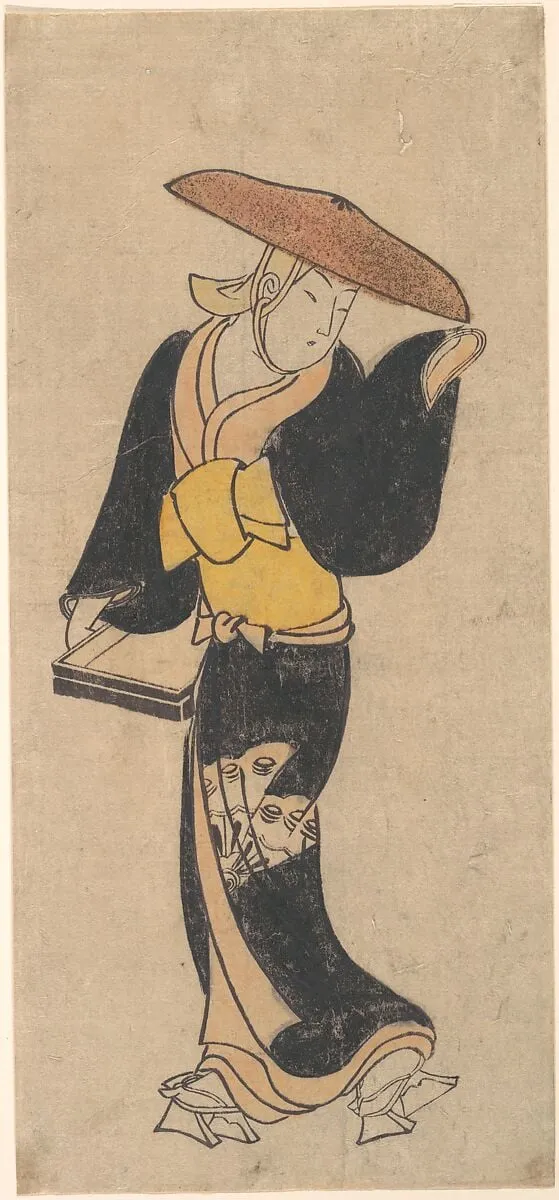
Untitled is an ink print by the Baroque artist Kondo Kiyoharu. It dates from 1715 and is held in the collection of the Metropolitan Museum of Art.
About this work
Overview
Created around 1715, this hand-colored woodblock print by Kondo Kiyoharu is part of The Metropolitan Museum of Art’s print collection.
Created around 1715, this hand-colored woodblock print by Kondo Kiyoharu is part of The Metropolitan Museum of Art’s print collection. Executed in ink and color on paper, it reflects the ukiyo-e tradition of early 18th-century Japan, where everyday and theatrical subjects were rendered for a growing urban audience. The work’s modest scale and refined craftsmanship align with prints produced for private collectors rather than mass distribution.
Subject & Meaning
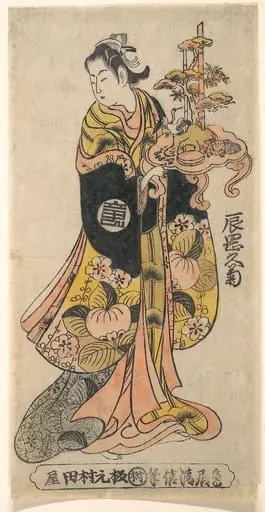
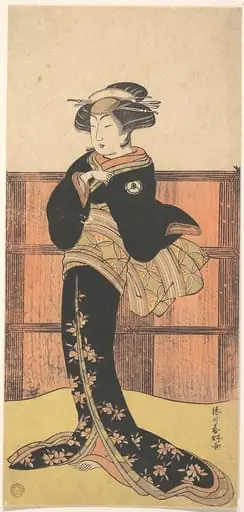
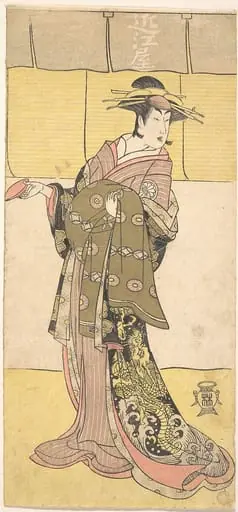
The figure is a woman dressed in a black kimono with a yellow sash and a long black obi, holding a tray in one hand and a hat in the other. Her elaborate hairstyle and attire suggest she may portray a performer, possibly from the kabuki theater. The objects she carries imply a moment of transition—between stage and offstage, or between roles—hinting at the fluid identities common in Edo-period entertainment culture.
Technique & Style
The print employs bold, clean outlines and flat areas of color typical of early ukiyo-e. Hand-coloring adds subtle tonal variations, particularly in the kimono and sash, while the light brown background provides neutral contrast. The composition is restrained, focusing attention on the figure’s posture and attire without decorative distractions, reflecting a deliberate economy of form.
History & Provenance
The work entered The Metropolitan Museum of Art’s collection as part of its broader acquisition of Japanese prints in the late 19th and early 20th centuries. While specific provenance details prior to museum acquisition are not widely documented, its style and condition suggest it was preserved in a private Japanese collection before being exported to the West.
Context
Produced during the early Edo period, this print emerged alongside a flourishing print culture in Edo (modern Tokyo), where ukiyo-e depicted scenes of urban life, theater, and beauty. Unlike later, more elaborate prints, this work’s simplicity reflects an earlier phase of the genre, before full-color nishiki-e became dominant. The subject’s theatrical association aligns with popular interest in kabuki actors and their personas.
Legacy
Kondo Kiyoharu’s work represents a transitional moment in Japanese printmaking, bridging the simpler aesthetics of early ukiyo-e with the more complex color techniques that followed. Though less known than contemporaries like Hishikawa Moronobu, his prints contribute to understanding the evolution of subject matter and technique in 18th-century Japanese art, particularly in the portrayal of performers.
Artist & collection