Artwork
Peisaj de toamnă cu gard
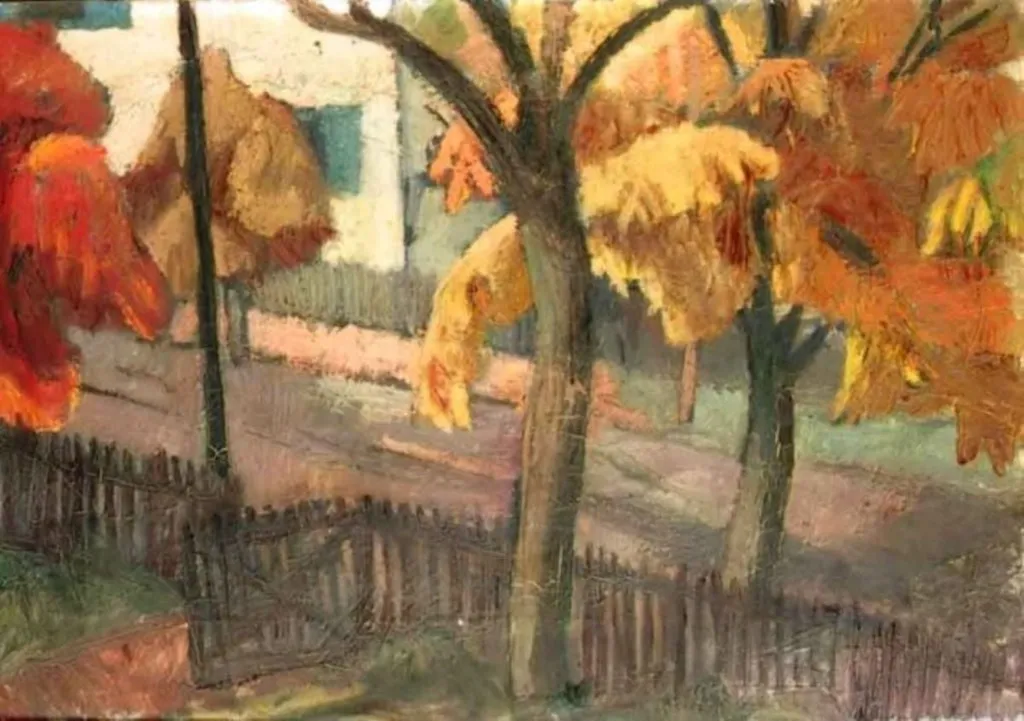
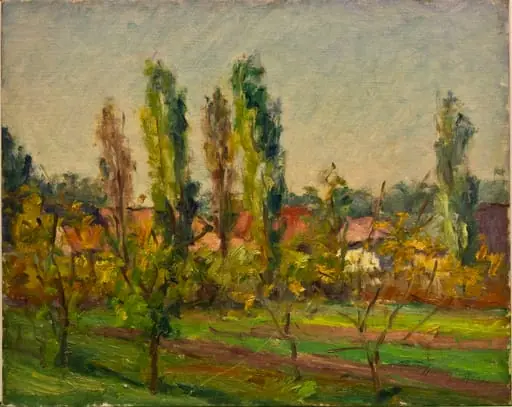
Peisaj de toamnă cu gard is an unspecified painting by Hermann Konnerth. It dates from 1949 and is held in the collection of the Brukenthal National Museum.
About this work
Overview
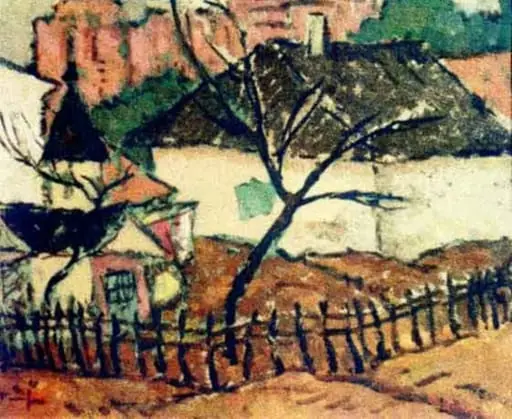
Painted around 1949 by Hermann Konnerth, this landscape captures a quiet autumn scene in rural Romania. The composition centers on a simple wooden fence, framing a view of bare trees and a distant house. The work reflects a personal, observational approach to the natural world, avoiding grand narratives in favor of intimate, everyday surroundings.
Subject & Meaning
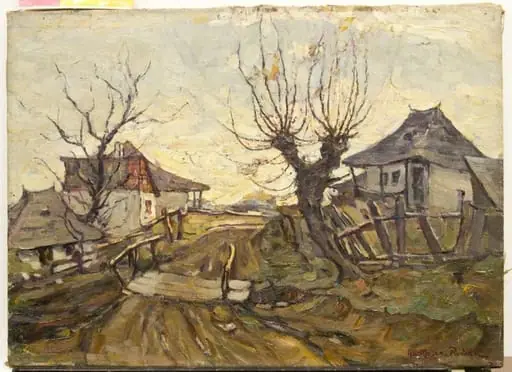
The painting presents a modest rural setting: a weathered fence, three leafless trees, and a small dwelling partially hidden among them. The muted colors and quiet arrangement suggest a moment of stillness, possibly evoking the transition from autumn to winter. There is no overt symbolism; the meaning lies in the quiet dignity of ordinary landscapes and the passage of seasons.
Technique & Style
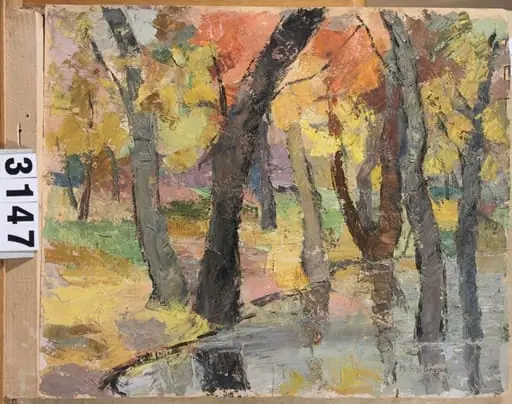
Konnerth employs impasto to build texture across the canvas, applying paint thickly with visible brushwork. The foliage is rendered in layered strokes of red, orange, and yellow, while the fence and ground are built with heavier, more directional marks. This tactile approach emphasizes the physicality of paint and the roughness of the natural environment.
History & Provenance
Created shortly after World War II, the painting reflects a period of cultural reorientation in Romania. Konnerth, active in the mid-20th century, produced landscapes that aligned with regional traditions rather than official artistic doctrines. The work’s survival and recognition suggest it remained in private hands, avoiding state collection or public display during the early communist era.
Context
In postwar Romania, landscape painting offered artists a relatively safe subject, avoiding politically charged themes. Konnerth’s focus on rural scenes aligned with broader European trends of returning to nature after years of upheaval. His style, rooted in observation rather than ideology, resonated with local audiences seeking continuity amid social change.
Legacy
Though not widely exhibited, Konnerth’s work contributes to a quieter strand of Romanian modernism that valued personal expression over state-sanctioned styles. This painting exemplifies how regional artists sustained traditional techniques and themes during a time of political constraint, preserving a visual record of everyday life beyond official narratives.
Artist & collection
Artist
Hermann Konnerth made prints and small paintings of everyday life in 19th-century Romania.