Artwork
Podișcă
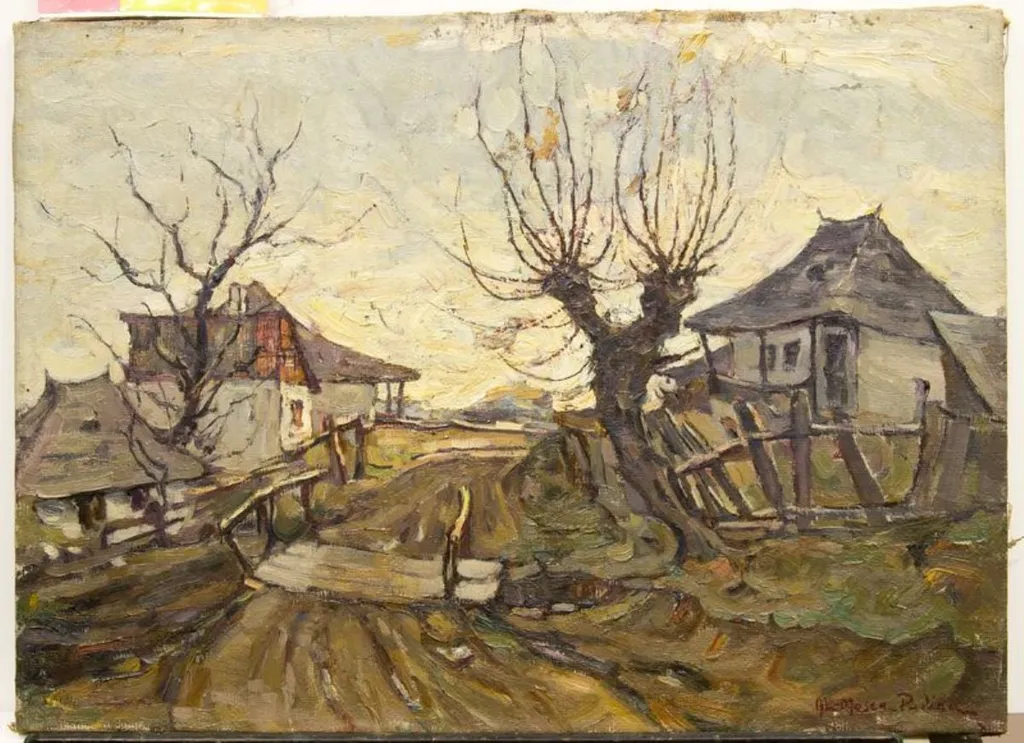
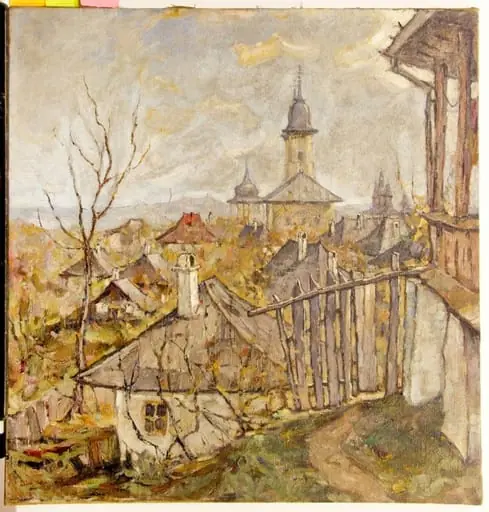
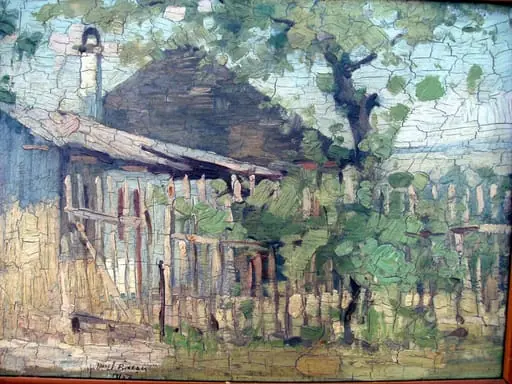
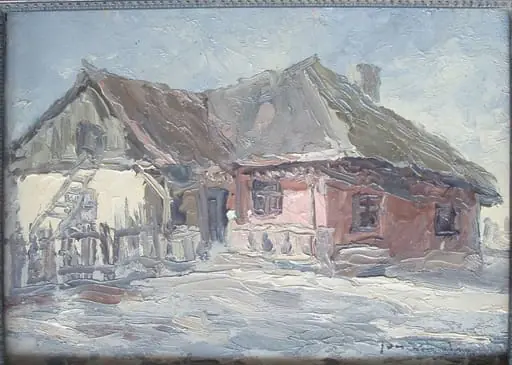
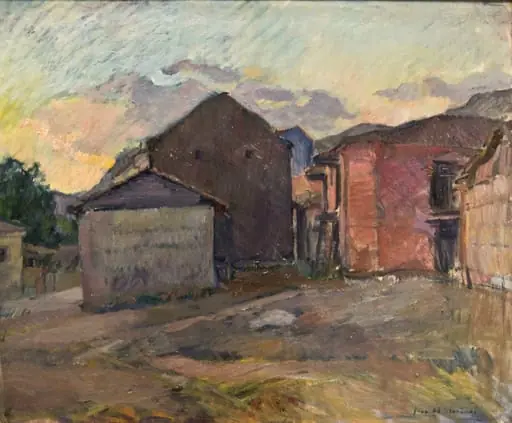
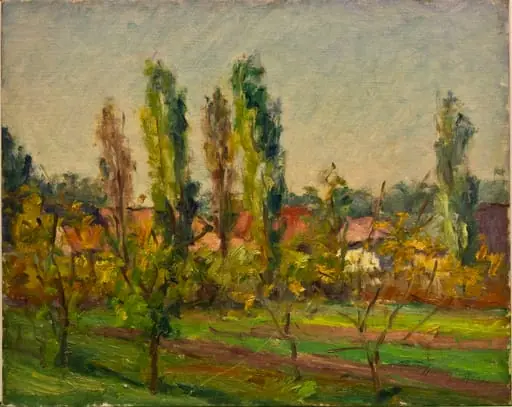
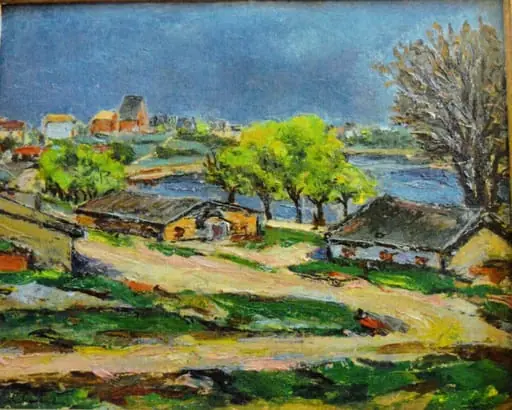
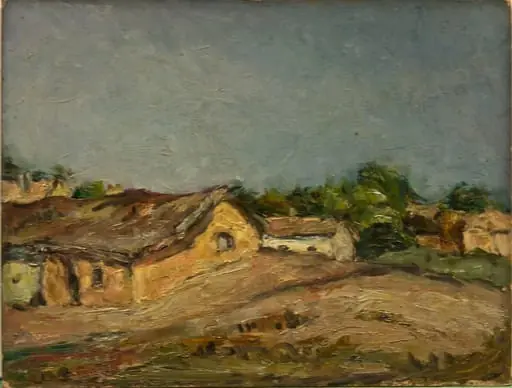
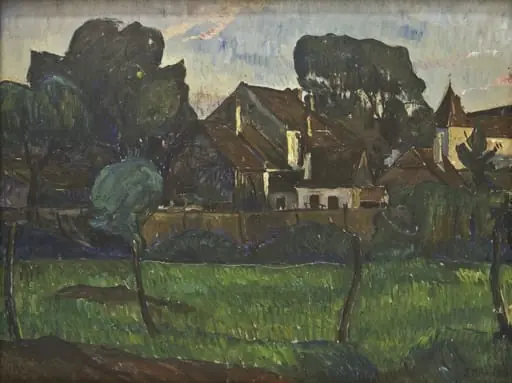
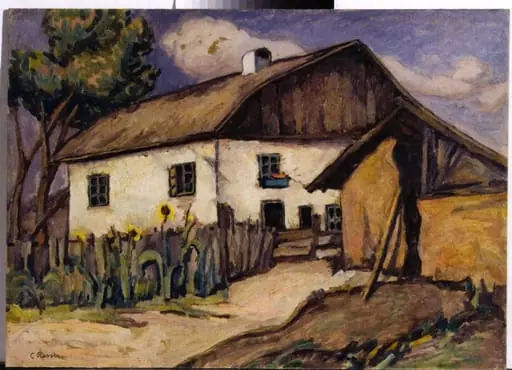
Podișcă is a print by Alexandru Moser Padina. It is held in the collection of the National Museum of Art of Romania. This landscape painting presents a quiet rural scene with a modest village nestled in the distance.
About this work
Overview
The atmosphere is subdued, conveyed through a restrained palette of browns and grays, and a cloud-covered sky that softens the light.
This landscape painting presents a quiet rural scene with a modest village nestled in the distance. A winding dirt path connects the viewer to the settlement, framed by sparse trees in the foreground. The atmosphere is subdued, conveyed through a restrained palette of browns and grays, and a cloud-covered sky that softens the light. Visible brushwork adds tactile depth, suggesting an emphasis on texture over polished finish.
Subject & Meaning
The scene captures an unassuming rural setting, devoid of human figures or dramatic action. The path invites contemplation rather than narrative, emphasizing solitude and the passage of time. The muted tones and overcast sky evoke a sense of stillness, possibly reflecting a quiet reverence for everyday landscapes, common in regional realist traditions of the late 19th or early 20th century.
Technique & Style
The artist employs loose, visible brushstrokes to build form and texture, avoiding smooth blending. Colors are limited to earth tones and cool grays, reinforcing the somber mood. The composition directs attention along the path toward the village, using atmospheric perspective to soften the background. This approach prioritizes emotional resonance over detailed realism.
History & Provenance
The painting is attributed to the Romanian artist Alexandru Moser, sometimes associated with the Podișcă school of landscape painting. While specific provenance details are scarce, its stylistic traits align with regional works from the early 20th century that documented rural life with minimal idealization. It likely originated in Moldavia or Transylvania, areas known for such quiet, observational painting.
Context
This work emerged during a period when Romanian artists increasingly turned to native landscapes as subjects, moving away from academic traditions. Painters like Moser focused on everyday rural scenes, often influenced by French Realism and Impressionism, but adapted to local conditions. The subdued palette and lack of narrative reflect a broader cultural interest in authenticity and regional identity.
Legacy
Though not widely exhibited internationally, this painting contributes to a body of work that documented Romania’s rural character during a time of modernization. Artists like Moser helped establish a visual language for regional realism, influencing later generations who sought to portray the land without romanticism. Its quiet persistence offers a counterpoint to more dramatic national narratives.
Artist & collection
Artist
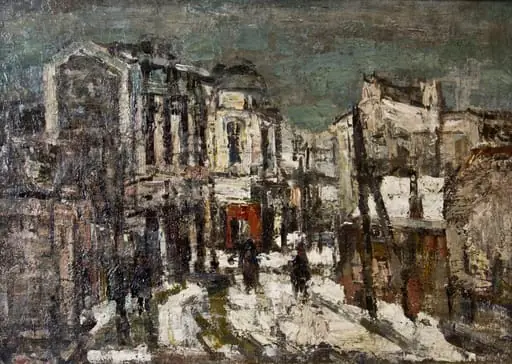
Alexandru Moser Padina painted scenes of everyday life, like Peisaj urban cu stradă and Peisaj urban cu biserică.