Artwork
Untitled
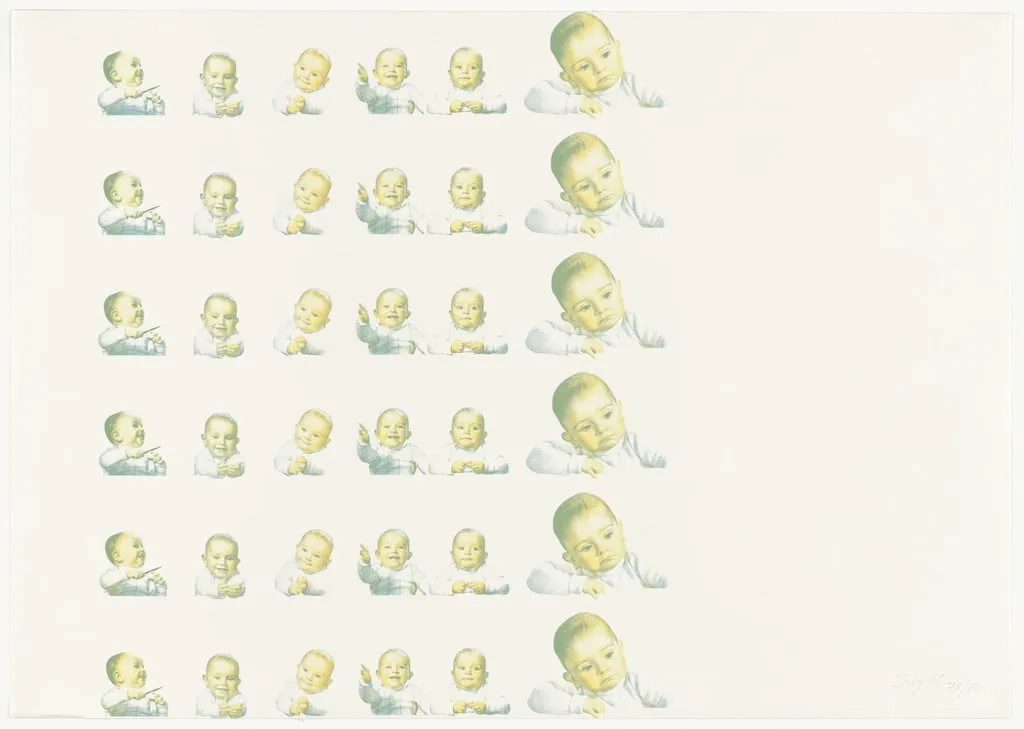
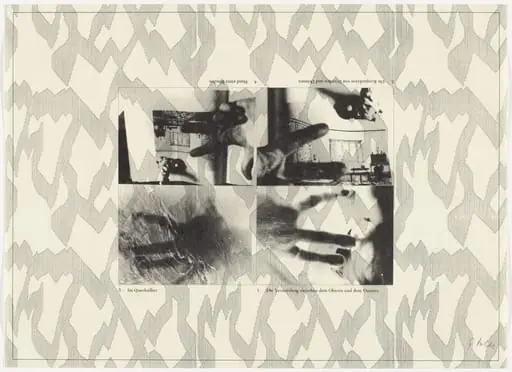
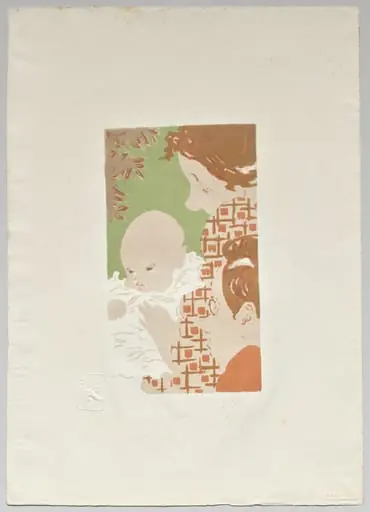
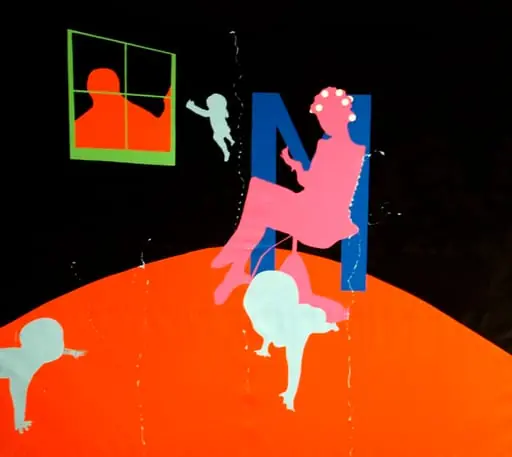
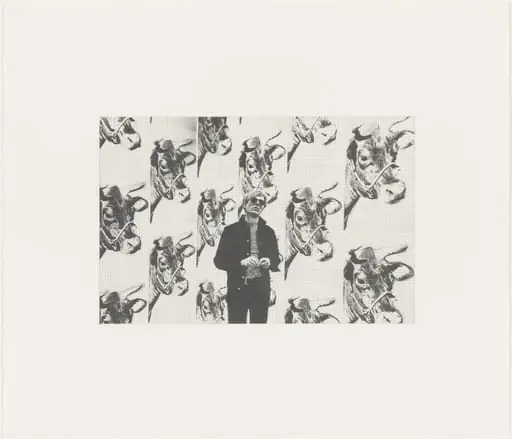
Untitled is an ink print by Konrad Lueg. It dates from 1967 and is held in the collection of the Museum of Modern Art.
About this work
Overview
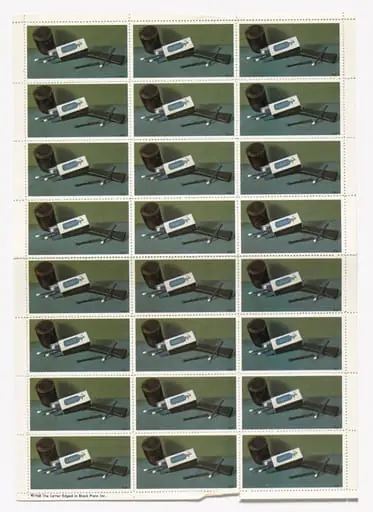
One variant in the series incorporates actual seed packets; another includes glitter, distinguishing it from the others while maintaining the core visual motif.
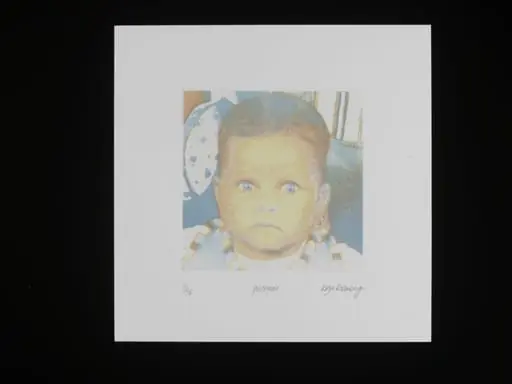
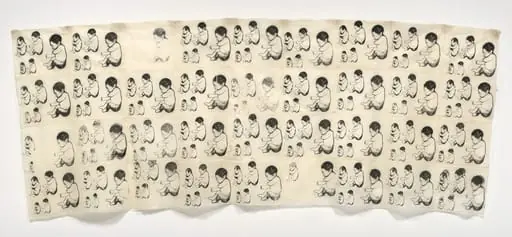
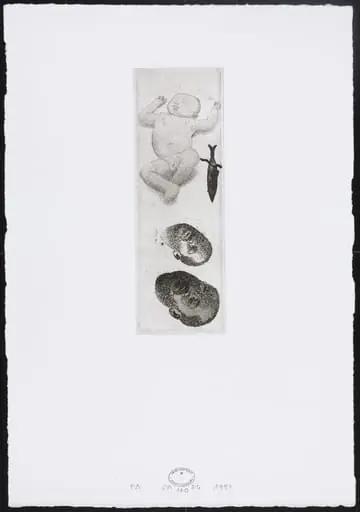
Untitled is a 1967 screenprint by Konrad Lueg, part of a six-piece portfolio exploring repetition and mass production. The work features rows of identical infant faces rendered in pale yellow with blue clothing, arranged in a grid that subtly increases in scale from left to right. One variant in the series incorporates actual seed packets; another includes glitter, distinguishing it from the others while maintaining the core visual motif.
Subject & Meaning
The repeated infant faces evoke themes of uniformity, anonymity, and the mechanization of human life. By rendering each child identically—some thumb-sucking, others gazing upward—the artist strips away individuality, suggesting how societal norms or consumer culture may homogenize identity. The incremental size shift introduces a quiet tension, hinting at growth or proliferation without narrative resolution.
Technique & Style
Lueg employed screenprinting to achieve flat, even fields of color and precise repetition, aligning with Pop Art’s industrial aesthetic. The use of minimal detail and standardized poses reflects a deliberate detachment from emotional expression. Variants in the series introduce unconventional materials—glitter, plexiglass, seeds—subtly challenging the boundaries of printmaking and questioning the value assigned to artistic media.
History & Provenance
Created in 1967, Untitled was produced as part of a limited portfolio by Konrad Lueg, a German artist associated with the Capitalist Realism movement. The work entered the collection of The Museum of Modern Art in New York, where it remains as part of its postwar print holdings. The inclusion of seed packets and glitter suggests an experimental, almost conceptual approach to editioning, unusual for the time.
Context
Lueg’s work emerged alongside German Capitalist Realism, a response to American Pop Art that critiqued consumerism and postwar reconstruction. By using mass-produced imagery—infant faces as generic commodities—he mirrored the era’s anxieties about conformity and industrialized life. The portfolio’s material variations reflect a broader interest in blurring art and everyday objects, a concern shared by contemporaries like Beuys and Richter.
Legacy
Untitled contributed to a broader rethinking of print as a medium capable of conceptual inquiry rather than mere reproduction. Its use of mundane, repetitive imagery and unconventional materials influenced later artists exploring institutional critique and the politics of replication. Though Lueg’s career was brief, this work endures as a quiet but pointed commentary on identity in an age of standardization.
Artist & collection