Artwork
Soft goods. Rostov the Great
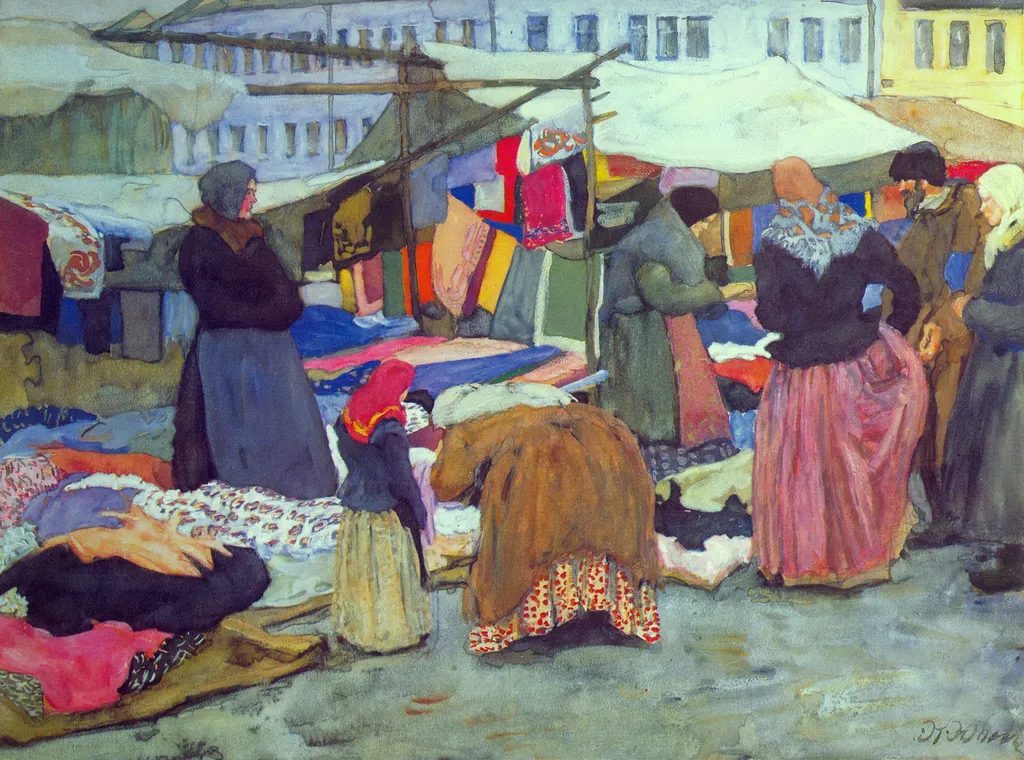
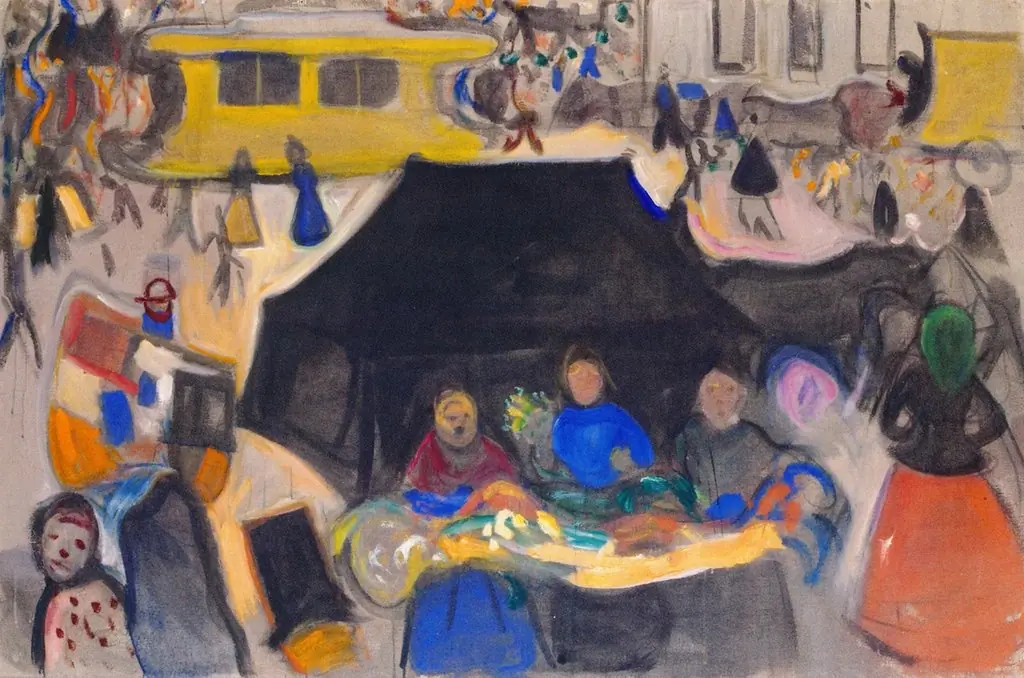
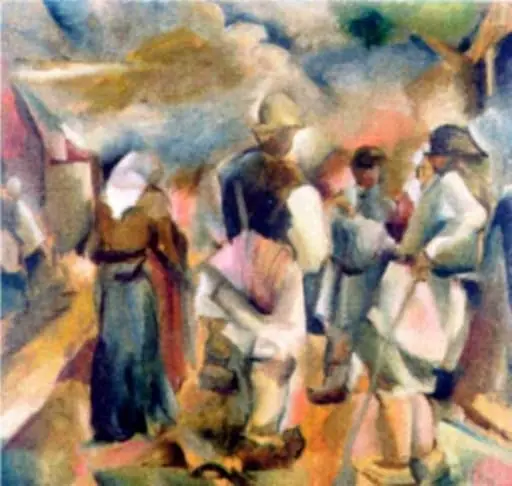
Soft goods. Rostov the Great is a watercolor painting by Konstantin Yuon. It dates from 1905 and is held in the collection of the Tretyakov Gallery.
About this work
Overview
The work belongs to the Tretyakov Gallery’s collection and reflects Yuon’s engagement with everyday Russian life during a period of cultural transition.
Created in 1905 by Konstantin Yuon, *Soft Goods. Rostov the Great* is a watercolor painting depicting a winter market scene in the historic Russian town of Rostov. The work belongs to the Tretyakov Gallery’s collection and reflects Yuon’s engagement with everyday Russian life during a period of cultural transition. His use of watercolor lends the scene a delicate, atmospheric quality, distinguishing it from more rigidly detailed academic works of the time.
Subject & Meaning
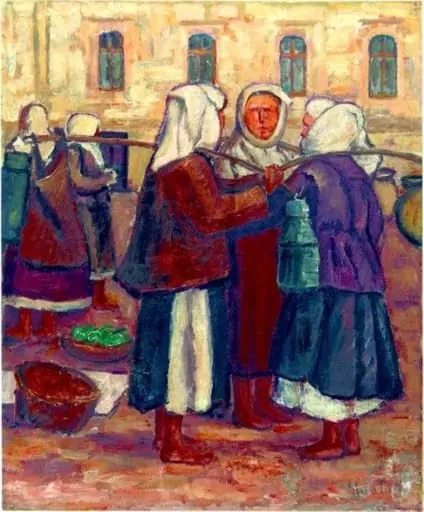
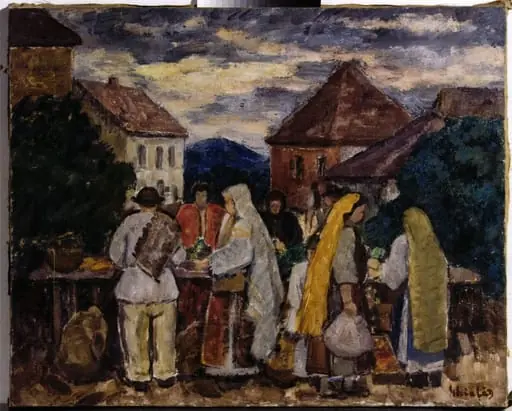
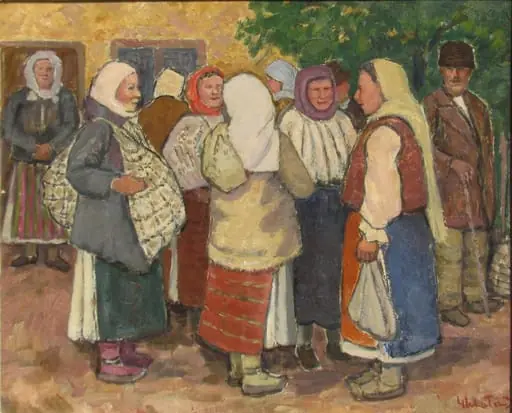
The painting portrays a bustling market in a snow-covered square, where townspeople in traditional attire—long coats, headscarves, and woolen garments—browse stalls piled with textiles and household goods. The scene captures the rhythm of daily commerce in provincial Russia, emphasizing community and routine rather than spectacle. Yuon’s focus on ordinary life aligns with broader interests in national identity and vernacular culture prevalent among his contemporaries.
Technique & Style
Yuon employed watercolor with a restrained, layered approach, allowing subtle washes to suggest the chill of winter and the soft texture of fabrics. The colors blend gently, creating a hazy, almost luminous effect that softens the harshness of snow and stone. Figures are rendered with loose, suggestive strokes, prioritizing mood over individual detail. This technique reflects the influence of the Mir Iskusstva movement’s emphasis on aesthetic harmony and lyrical expression.
History & Provenance
Painted in 1905, the work entered the Tretyakov Gallery’s collection shortly after its completion, reflecting its early recognition within Russian artistic circles. Yuon, already active in the Mir Iskusstva group, would later help establish the Union of Russian Artists and the Association of Artists of Revolutionary Russia, signaling his evolving role in shaping state-supported art. The painting remained in institutional hands, preserving its connection to Russia’s cultural heritage.
Context
In the early 20th century, Russian artists increasingly turned to local traditions and provincial life as alternatives to Western academic norms. Rostov the Great, an ancient religious and commercial center, symbolized cultural continuity. Yuon’s depiction of its market reflects a broader trend among his peers to document regional customs, blending ethnographic interest with artistic sensitivity amid growing social and political change.
Legacy
Though not among Yuon’s most widely reproduced works, *Soft Goods. Rostov the Great* exemplifies his contribution to the evolution of Russian watercolor painting. Its quiet observation of everyday life influenced later artists seeking to portray national character without idealization. The painting remains a quiet testament to the dignity of routine existence in pre-revolutionary Russia.
Artist & collection
Artist
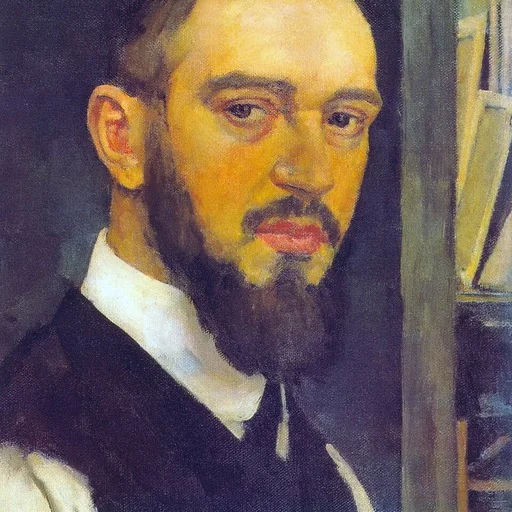
Konstantin Fyodorovich Yuon or Juon (Russian: Константи́н Фёдорович Юо́н; October 24 1875 – April 11, 1958) was a Russian painter and theatre designer associated with Mir Iskusstva.