Artwork
Jewish Street in Amsterdam
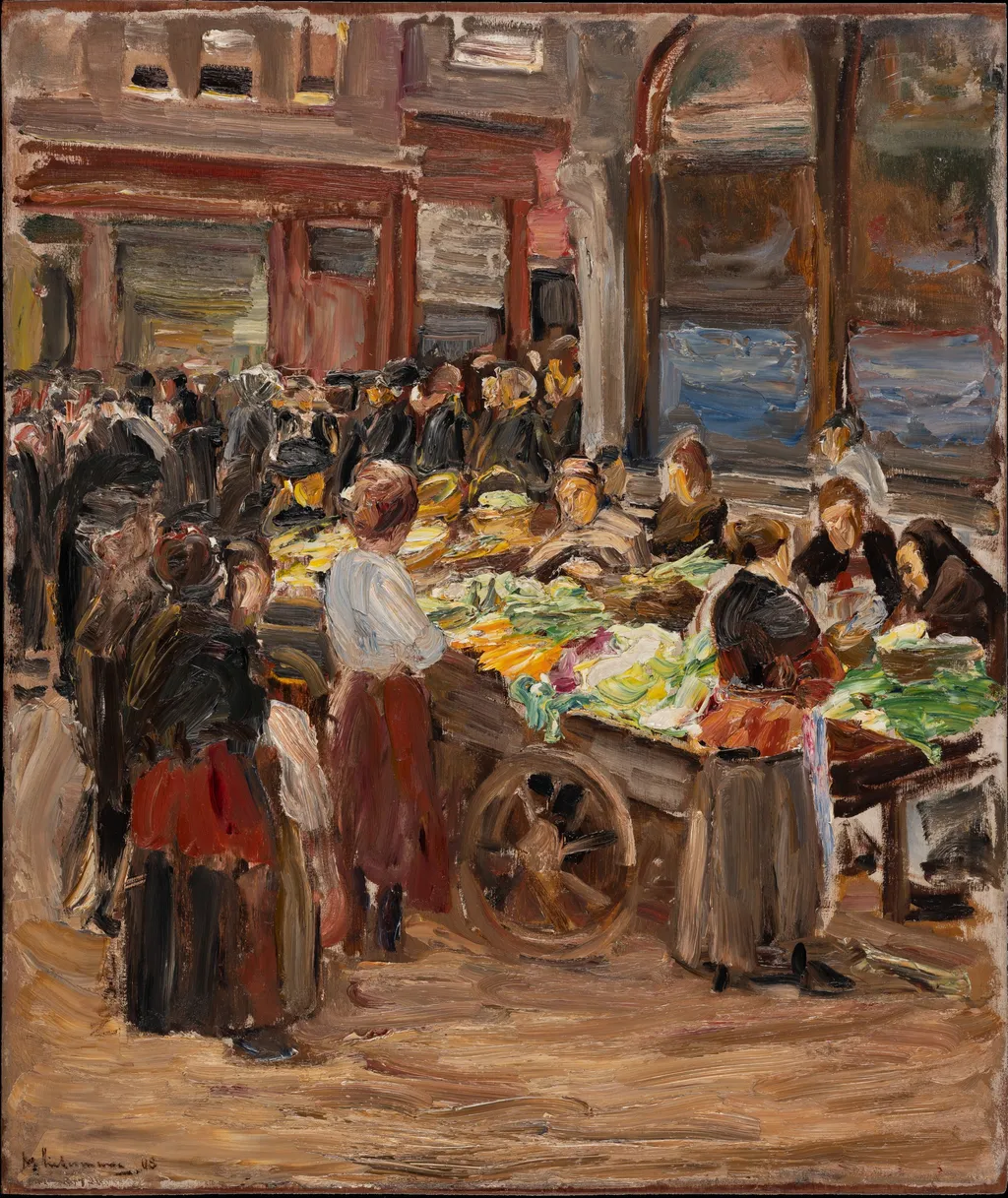
Jewish Street in Amsterdam is an unspecified painting by the Impressionist artist Max Liebermann. It dates from 1908 and is held in the collection of the Städel Museum.
About this work
Overview
Painted in 1908 by Max Liebermann, *Jewish Street in Amsterdam* is a genre scene capturing the daily rhythms of Amsterdam’s Jewish neighborhood.
Painted in 1908 by Max Liebermann, *Jewish Street in Amsterdam* is a genre scene capturing the daily rhythms of Amsterdam’s Jewish neighborhood. As a leading German Impressionist, Liebermann focused on ordinary life rather than idealized subjects. The work reflects his extended stays in the Netherlands and his commitment to depicting contemporary urban environments with observational clarity and muted vibrancy.
Subject & Meaning
The painting portrays a market street alive with vendors and shoppers, centered on a woman in a long dress and apron, her back turned to the viewer. She stands among baskets of fruit and vegetables, suggesting the quiet labor of daily sustenance. Liebermann avoids sentimentality, presenting the scene as an unembellished record of community life, rooted in the cultural fabric of Amsterdam’s Jewish quarter without overt narrative or symbolism.
Technique & Style
Liebermann employed loose, fluid brushwork and a restrained palette to convey movement and light. Colors are applied in patches that suggest form rather than define it, characteristic of Impressionist practice. The composition directs attention through diagonal lines of stalls and the figure’s posture, while the absence of sharp contours enhances the sense of transient, everyday activity.
History & Provenance
Created during one of Liebermann’s visits to Amsterdam, the painting emerged from his broader interest in Dutch urban life and his personal connection to Jewish heritage. Though he lived primarily in Berlin after 1884, his time in the Netherlands deeply influenced his subject matter. The work remained in private collections until entering a public museum, where it continues to reflect his commitment to secular, realist themes.
Context
In early 20th-century Germany, Impressionism was still gaining acceptance, often viewed as too informal for academic taste. Liebermann’s focus on Jewish subjects and working-class scenes challenged prevailing norms. *Jewish Street in Amsterdam* aligns with broader European trends toward documenting urban life, yet its specificity to a marginalized community gives it a quiet social resonance within the period’s artistic discourse.
Legacy
The painting stands as a testament to Liebermann’s role in shaping German Impressionism and his unflinching portrayal of Jewish life in Europe. Though overshadowed in later decades by political upheavals, the work endures as a record of pre-war communal existence. It contributes to a broader understanding of how artists documented identity, place, and routine without overt political commentary.
Artist & collection
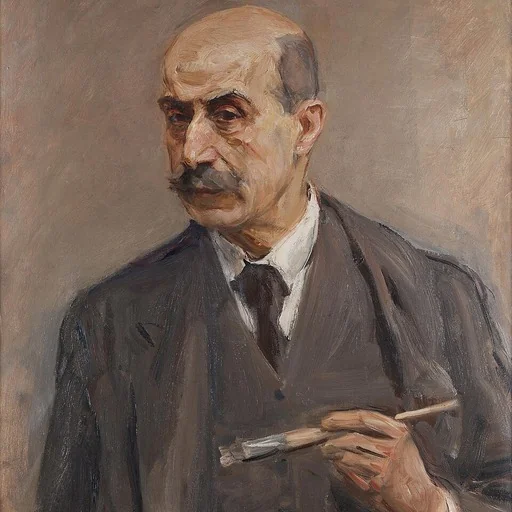
Artist
Max Liebermann (20 July 1847 – 8 February 1935) was a German painter and printmaker, and one of the leading proponents of Impressionism in Germany and continental Europe.

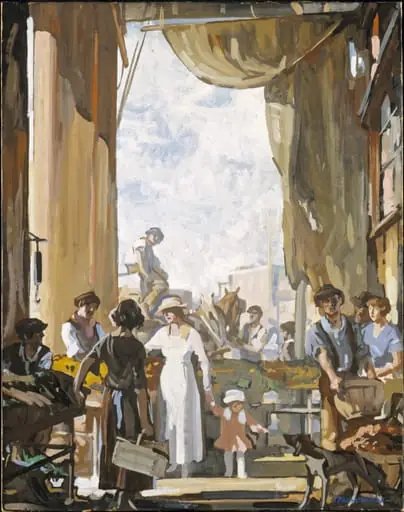 The Old Market, Cleveland
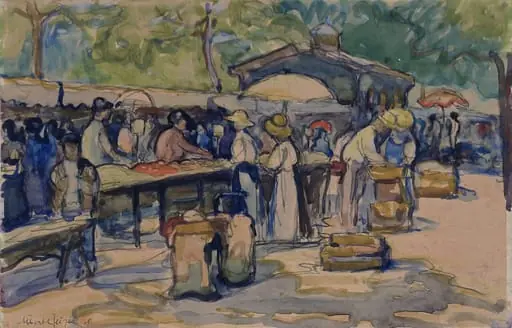 Market Stalls
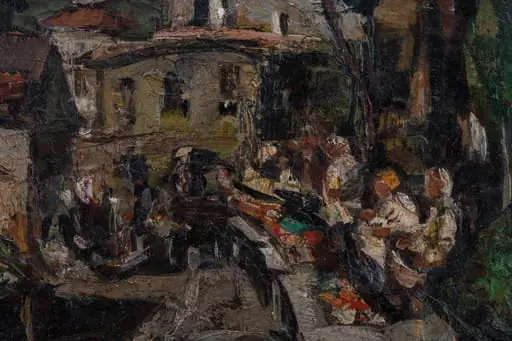 La piață
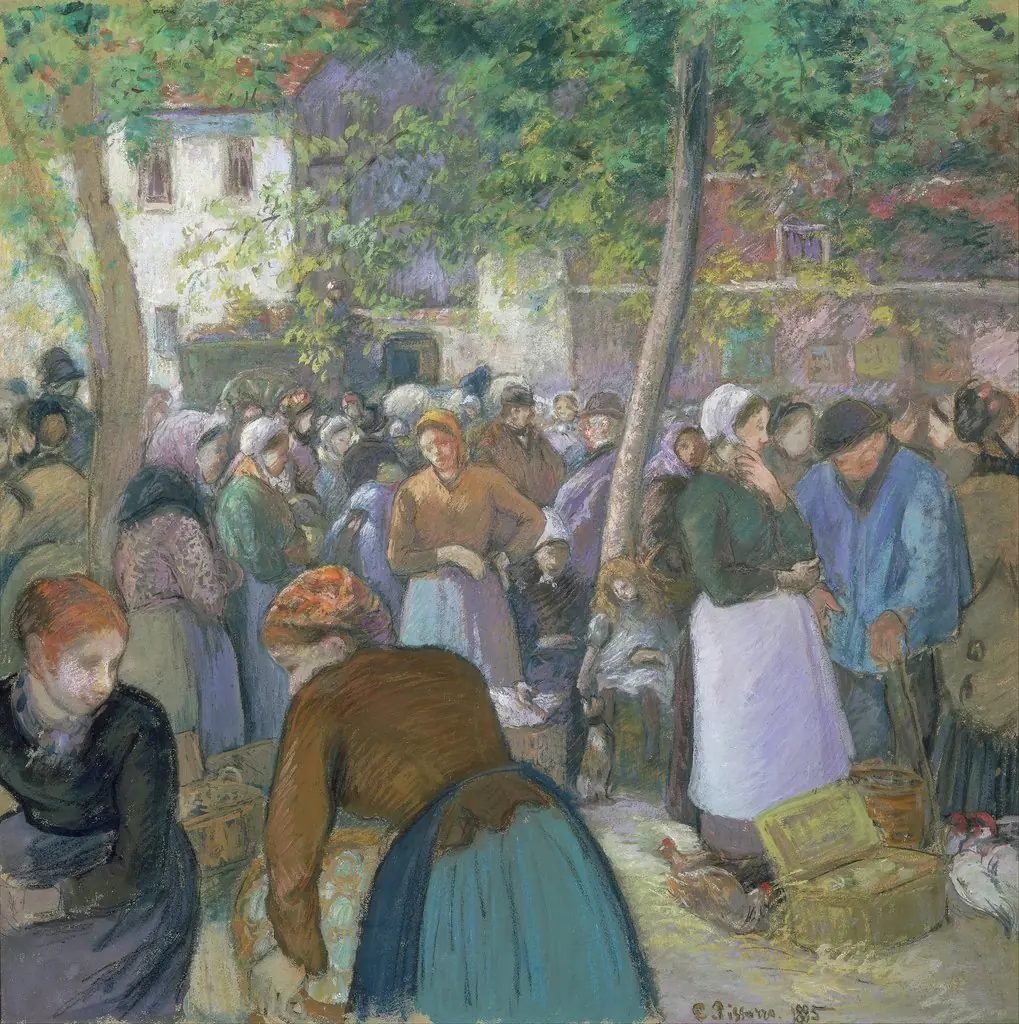 Poultry Market at Gisors
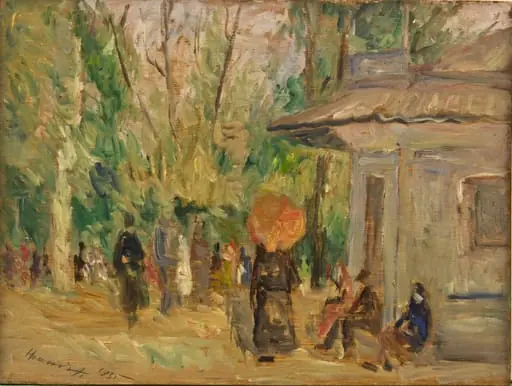 Peisaj din Cișmigiu
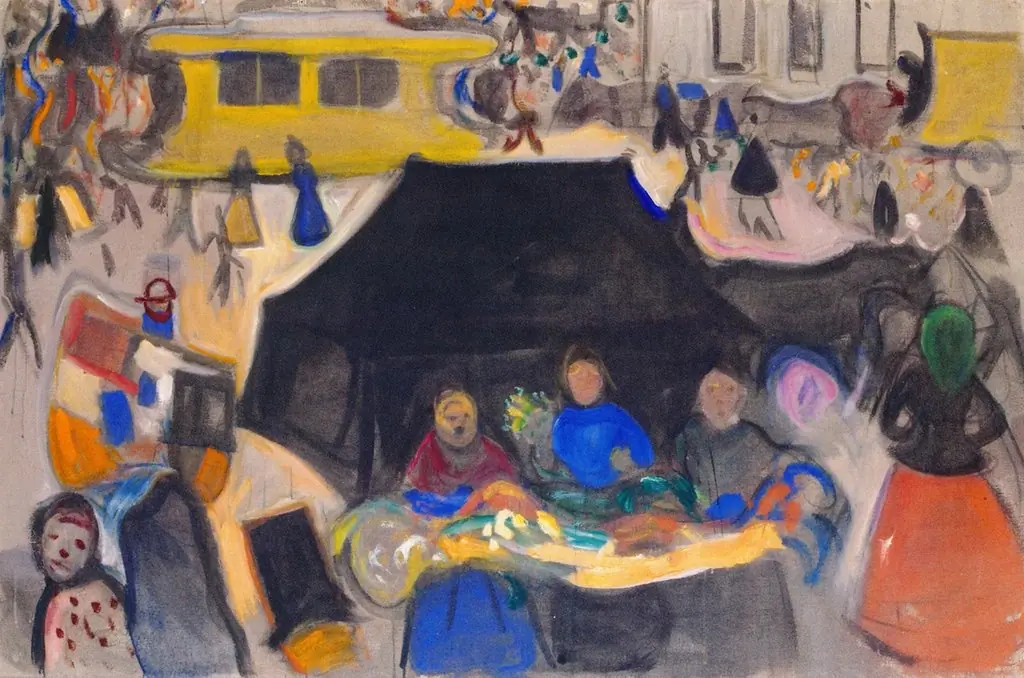 The Hearse on Potsdamer Platz
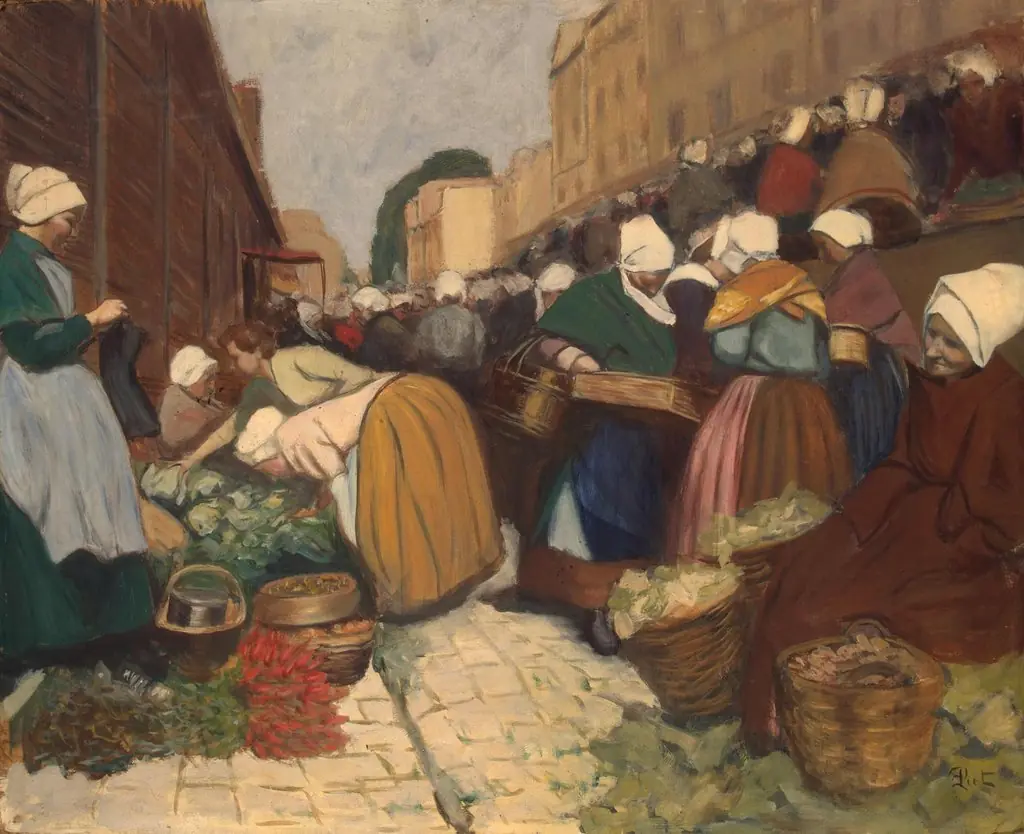 Market in Brest
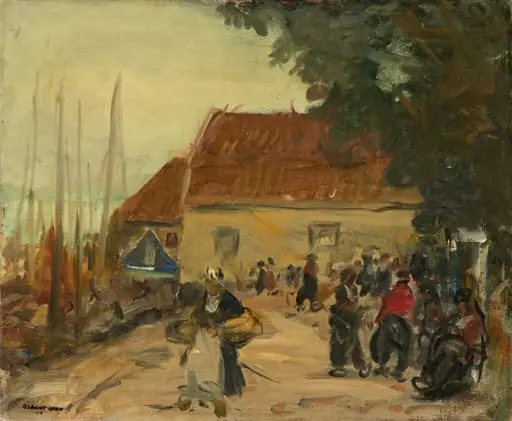 Volendam Street Scene
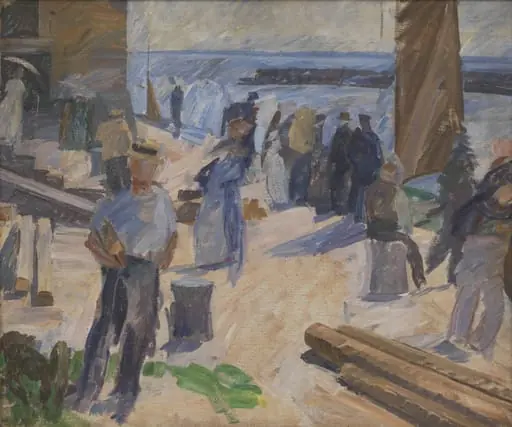 The Mail Boat Arriving, Christiansø
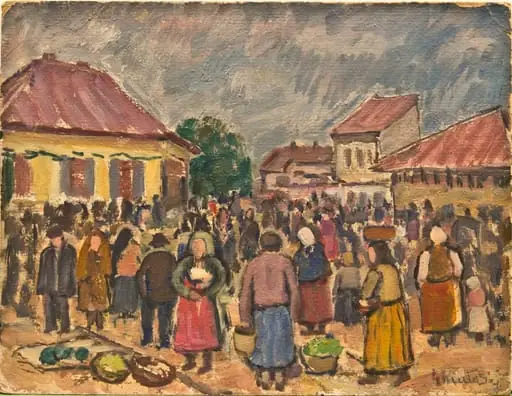 Piață din Turnu Severin
 The Mail Boat Arriving, Christiansø
 From the Jewish Quarter in Amsterdam: Fishmarket on the Street Corner