Artwork
Caricature of Jan Wasilewski /?/
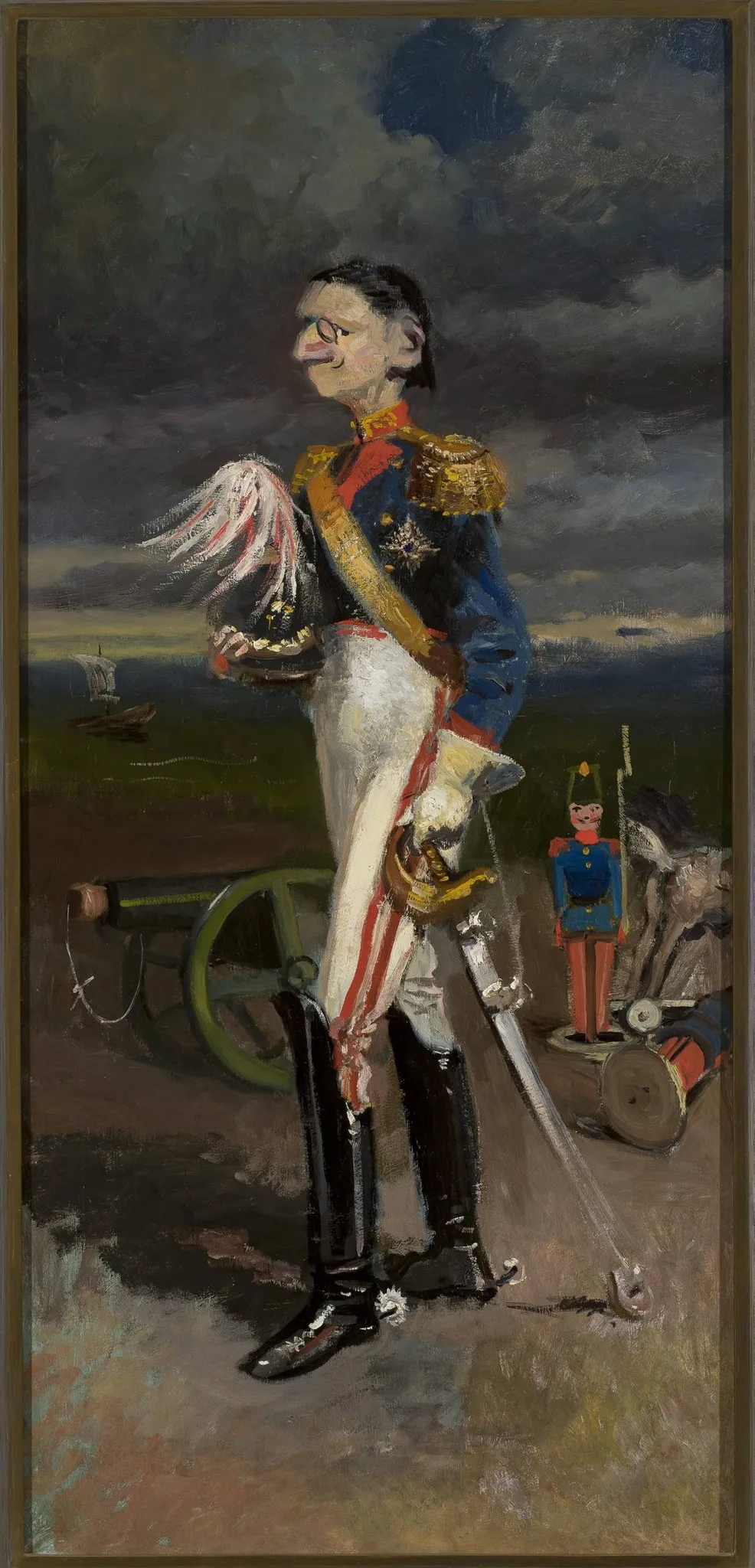
Caricature of Jan Wasilewski /?/ is an oil painting by the Post-Impressionist artist Konstanty Górski. It dates from 1900 and is held in the collection of the National Museum in Warsaw.
About this work
Overview
Painted in 1900 by Konstanty Górski, this oil portrait depicts Jan Wasilewski, a Polish military figure, rendered with exaggerated features.
Painted in 1900 by Konstanty Górski, this oil portrait depicts Jan Wasilewski, a Polish military figure, rendered with exaggerated features. Górski, trained in Moscow, St. Petersburg, and Western Europe, returned to Warsaw in 1895 and developed a style blending realism with subtle caricature. The work is part of the National Museum in Warsaw’s collection and reflects his interest in portraiture and national identity during a period of political tension.
Subject & Meaning
The subject, Jan Wasilewski, is portrayed in military attire—blue jacket, gold epaulets, red sash, and striped trousers—suggesting rank and service. His distorted facial features and the presence of a toy soldier and miniature cannon in the background introduce irony, possibly critiquing militarism or the gap between ceremonial grandeur and actual power. The somber sky and heavy atmosphere imply unease, hinting at deeper societal or personal tensions beneath the formal presentation.
Technique & Style
Górski employed oil paint to build form through controlled contrasts of light and shadow, emphasizing volume without overt impressionistic brushwork. The rendering of fabric and metal is precise, yet the face is deliberately warped, creating dissonance between realistic detail and expressive distortion. Background elements like the cannon and toy soldier are rendered with minimal detail, drawing focus to the figure’s unsettling presence and reinforcing the work’s satirical tone.
History & Provenance
Created shortly after Górski’s return to Warsaw, the painting emerged during a time of renewed Polish cultural activity under foreign partition. It entered the National Museum in Warsaw’s collection early in the 20th century, likely acquired as part of efforts to document contemporary Polish artistic expression. Its survival through wartime and political upheavals underscores its significance as a preserved artifact of pre-independence visual culture.
Context
In early 20th-century Poland, artists often navigated between national pride and critique of institutions. Górski’s work, while rooted in academic training, engaged with emerging modernist tendencies, including caricature as social commentary. The painting reflects a broader trend among Polish intellectuals who used satire to question authority, especially within the military, which held symbolic weight in a nation without sovereignty.
Legacy
Though not widely exhibited outside Poland, the painting remains a notable example of Górski’s ability to merge realism with psychological nuance. It contributes to the understanding of how Polish artists used portraiture to explore identity and power during the late partitions. Its preservation in a national collection ensures continued scholarly attention to the intersection of art, politics, and satire in pre-war Eastern Europe.
Artist & collection
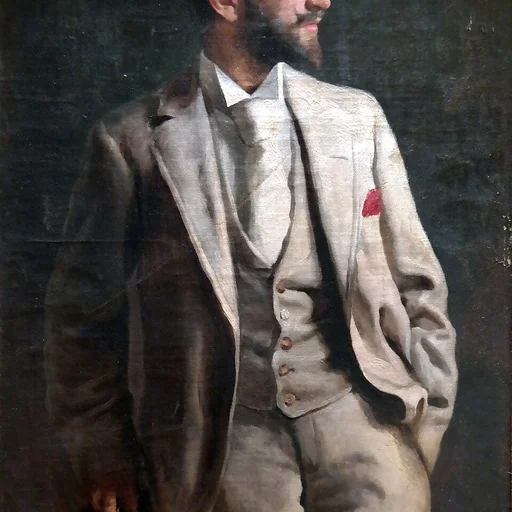
Artist
Konstanty Gorski or Górski (1868–1934) was a Polish painter and illustrator, born in a partitioned Poland which was deprived of independence.

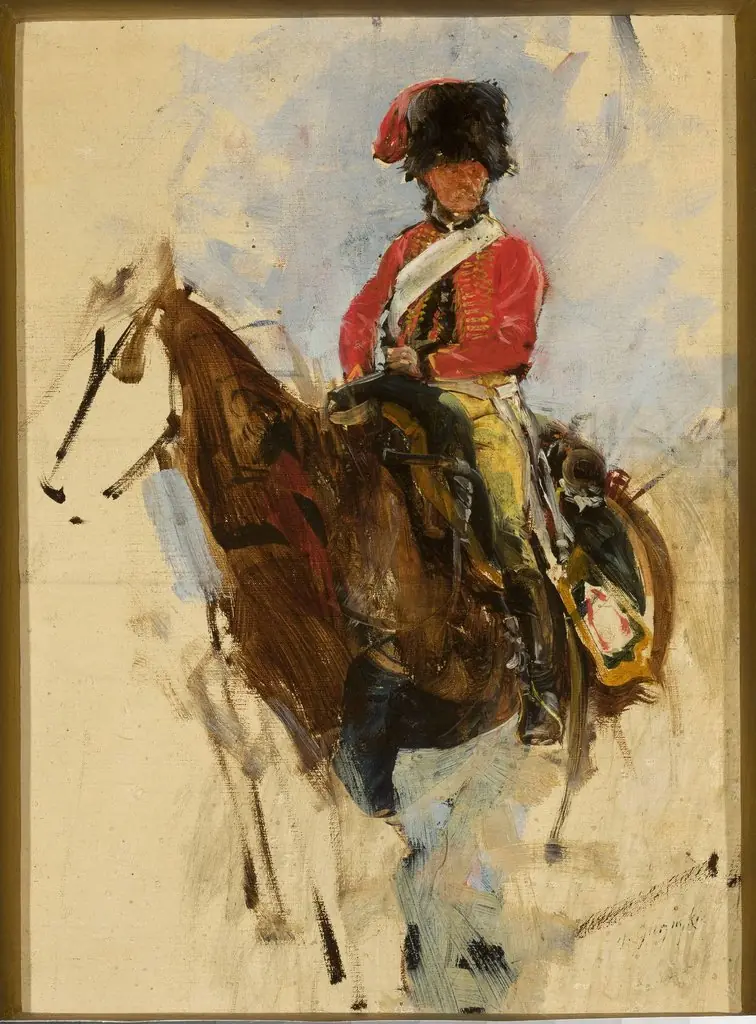 Sketch of a horseman, hussar
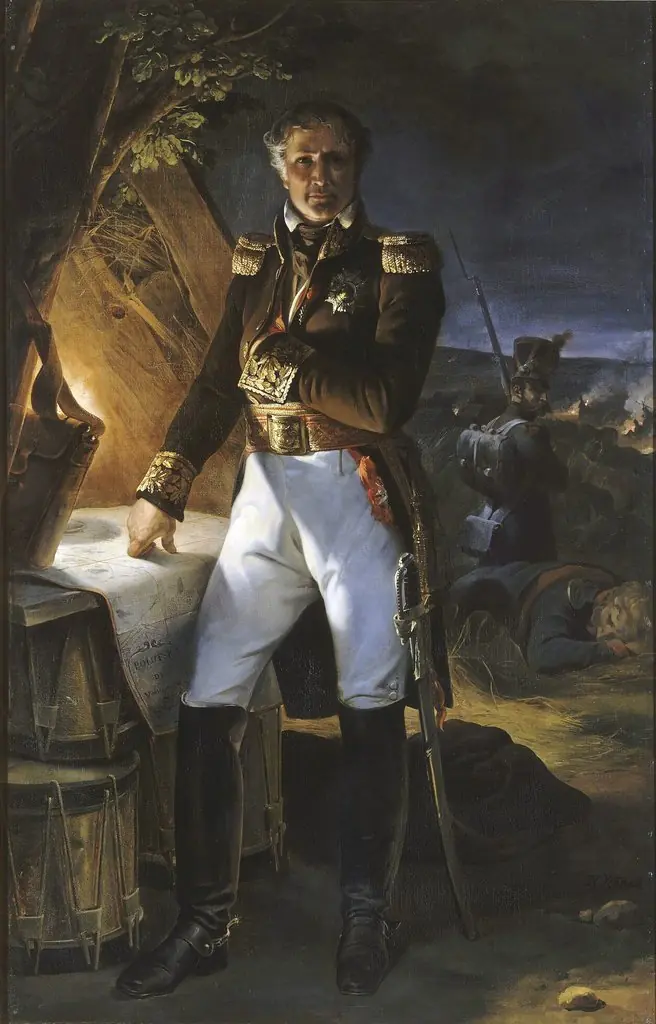 Laurent, Marquis of Gouvion Saint-Cyr
 Artillerist on Horseback
 Blue Hussars
 Jean-Baptiste-Philibert Vaillant, Marshal of France
 Portrait of general Wincenty Krasiński (1782–1858)
 Cavalry
 Portrait of the Duke of Angoulême
 Portrait of Grand Duke Nikolai Pavlovich
 Light cavalryman charging
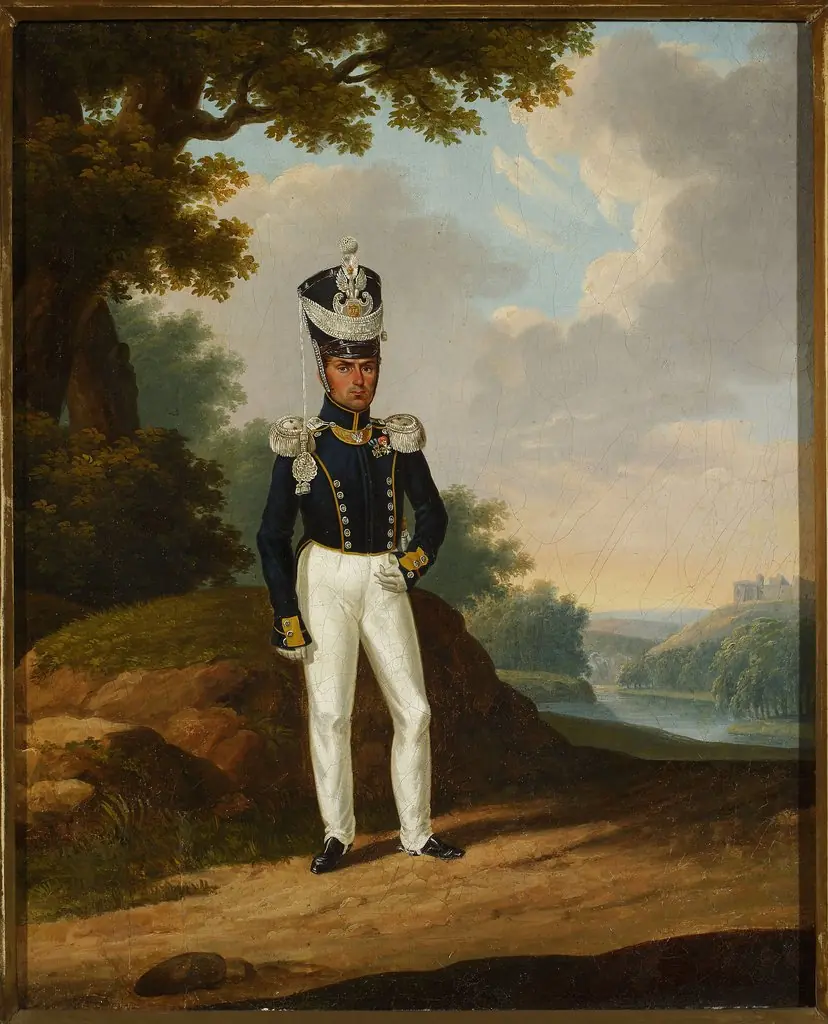 Portrait of Maciej Rybiński
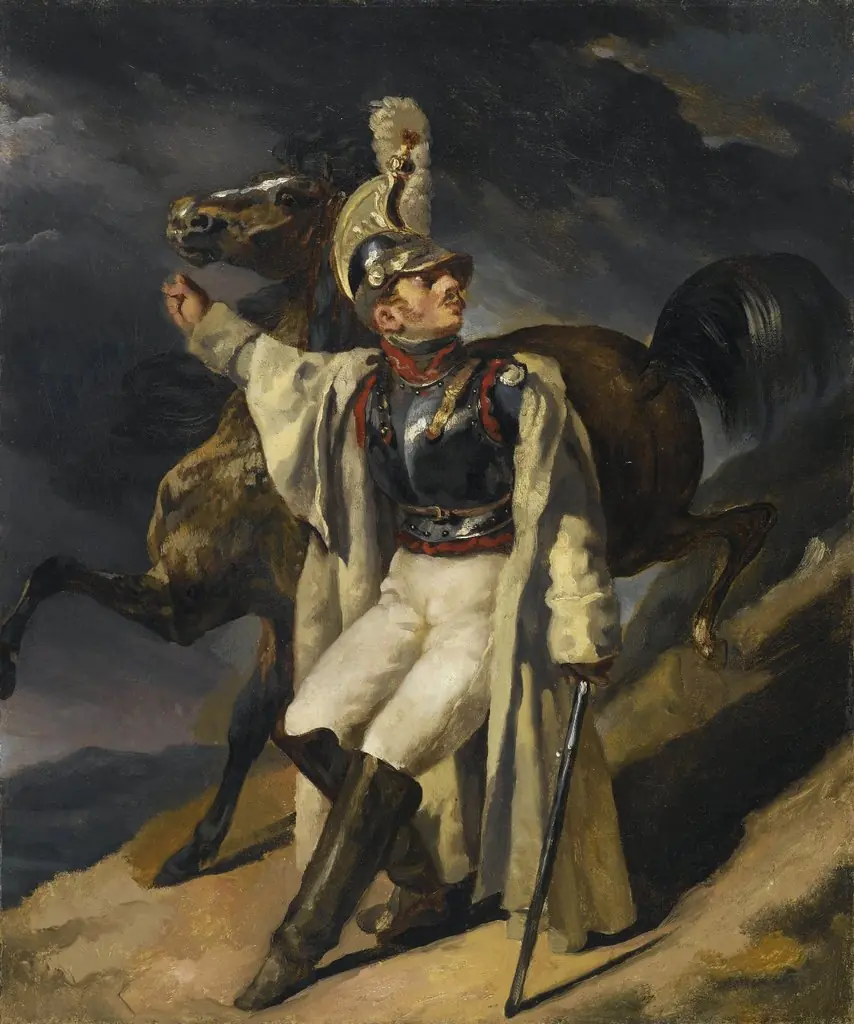 The Wounded Cuirassier, study