Artwork
Untitled
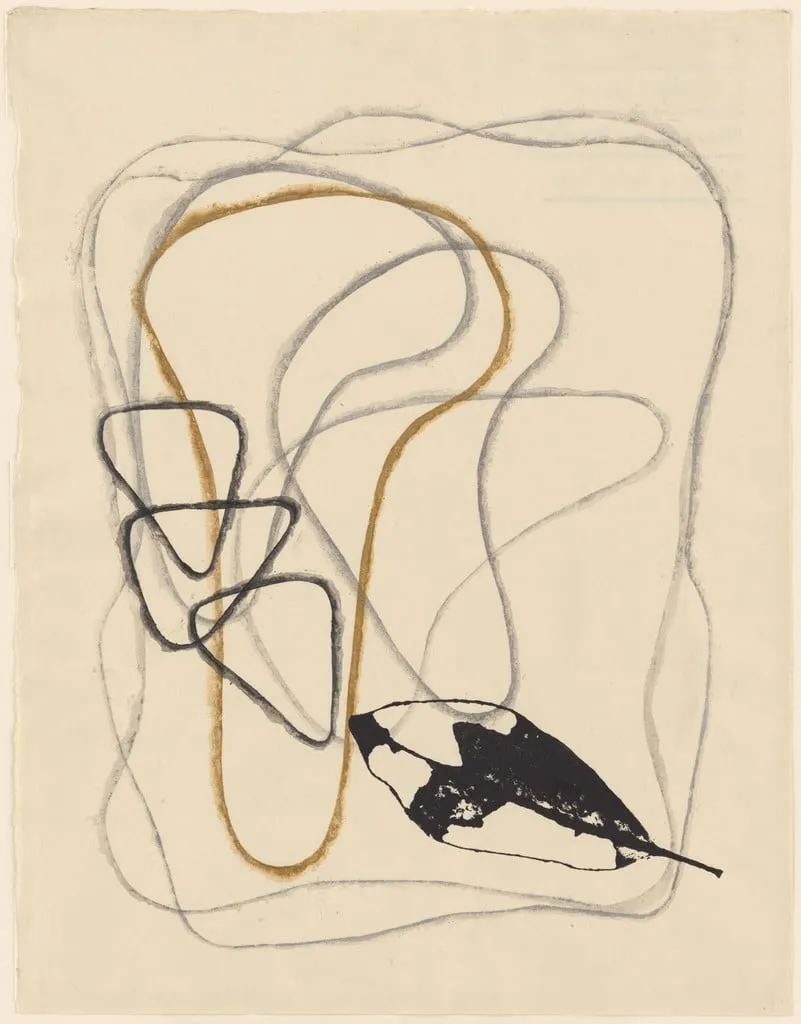
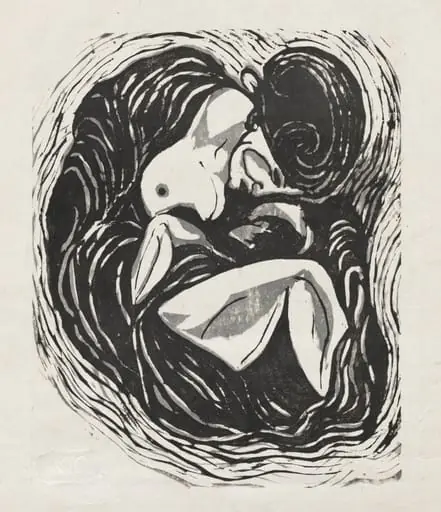
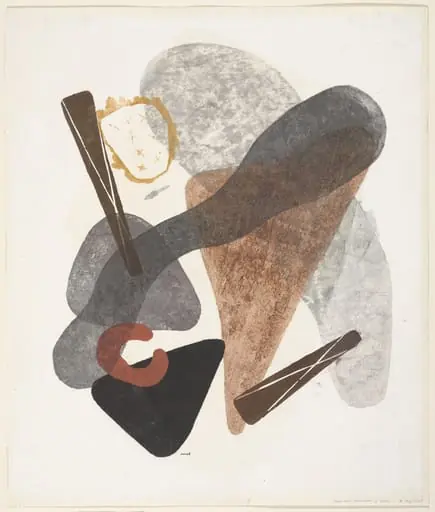
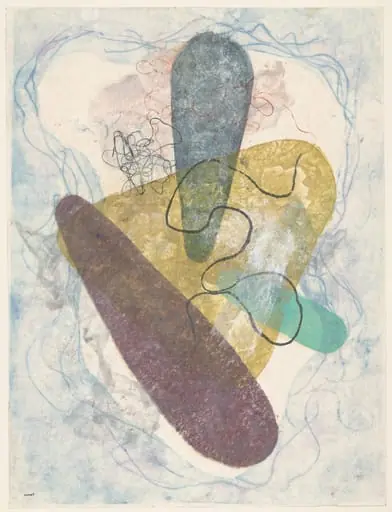
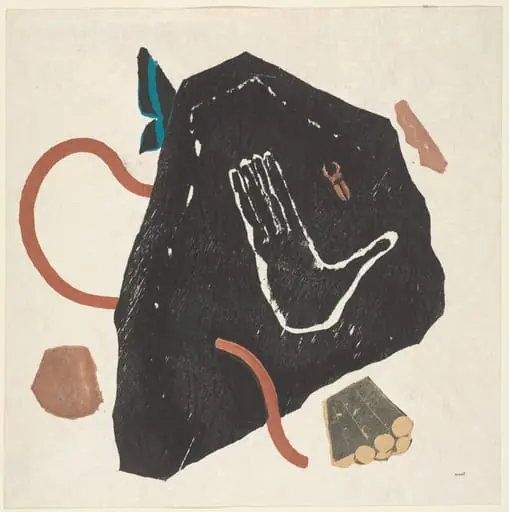
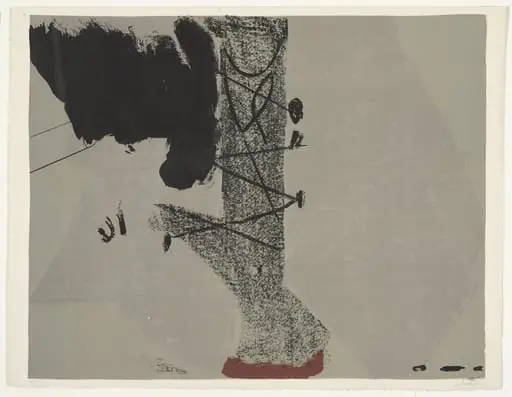
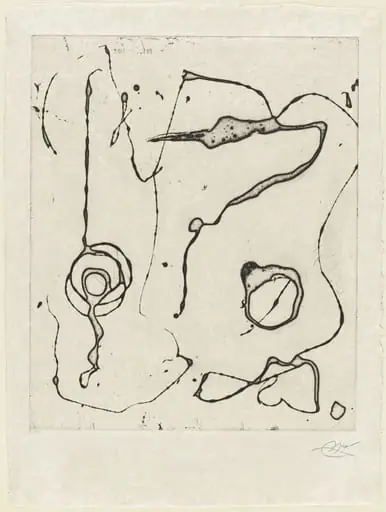
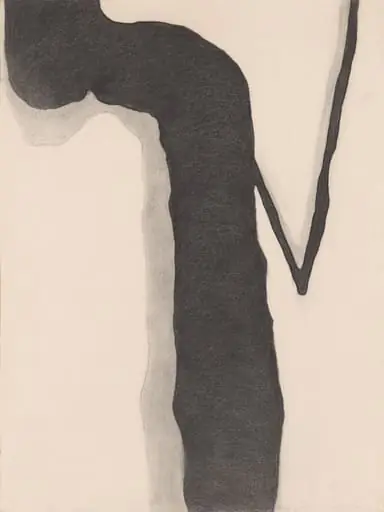
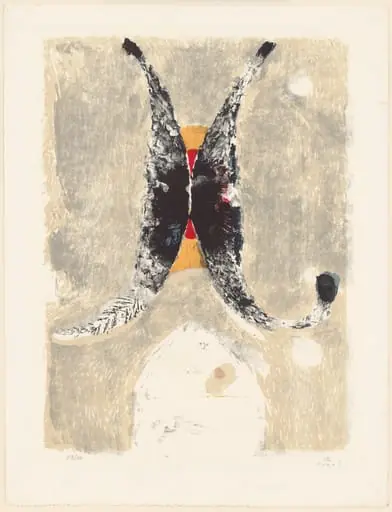
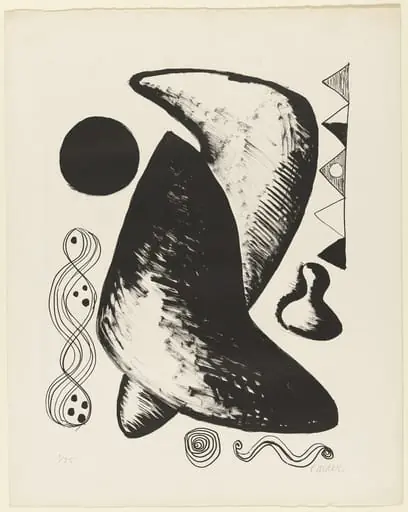
Untitled is an ink print by Koshiro Onchi. It dates from 1953 and is held in the collection of the Museum of Modern Art.
About this work
Overview
Executed in monochrome tones of brown, gray, and black, the piece rejects traditional Japanese print conventions in favor of expressive abstraction.
Created in 1953, this woodcut by Kōshirō Onchi is a non-representational print that exemplifies the sōsaku-hanga movement’s emphasis on the artist as sole creator—designing, carving, and printing the work by hand. Executed in monochrome tones of brown, gray, and black, the piece rejects traditional Japanese print conventions in favor of expressive abstraction. It resides in The Museum of Modern Art’s collection as a significant example of postwar Japanese printmaking.
Subject & Meaning
The work avoids figurative or narrative content, instead presenting an arrangement of organic, swirling lines and a dense, tail-like form in one corner. These elements suggest movement and spontaneity rather than depiction. Onchi’s choice to forgo recognizable imagery reflects his interest in abstraction as a means of personal expression, aligning with broader mid-century artistic inquiries into form and gesture beyond representation.
Technique & Style
Onchi carved directly into a woodblock, then inked and printed by hand, leaving visible traces of the tool’s touch—uneven edges, irregular ink distribution, and textured surfaces. The roughness is not a flaw but a deliberate feature, emphasizing the materiality of wood and the physical act of carving. This hands-on process underscores the sōsaku-hanga principle that the artist’s hand must be evident in every stage of production.
History & Provenance
Onchi, a central figure in Japan’s postwar art scene, helped redefine printmaking as a medium for individual artistic voice rather than commercial reproduction. This print emerged during a period of intense experimentation in Japanese art following World War II. It entered The Museum of Modern Art’s collection as part of its broader effort to document international modernist developments, particularly those challenging Western-centric narratives.
Context
In the 1950s, Japanese artists like Onchi sought to break from traditional ukiyo-e conventions and align with global modernist currents. The sōsaku-hanga movement, which he championed, positioned the artist as author, carver, and printer—rejecting collaborative workshops. This work reflects a broader cultural shift toward abstraction and personal expression in Japan’s postwar intellectual climate, paralleling developments in European and American art.
Legacy
Onchi’s abstract woodcuts, including this untitled piece, expanded the possibilities of printmaking as a fine art form in Japan. His emphasis on material honesty and individual authorship influenced subsequent generations of printmakers both domestically and internationally. The work remains a touchstone in discussions of modern Japanese art, illustrating how traditional techniques could be reimagined through avant-garde sensibilities.
Artist & collection
Artist
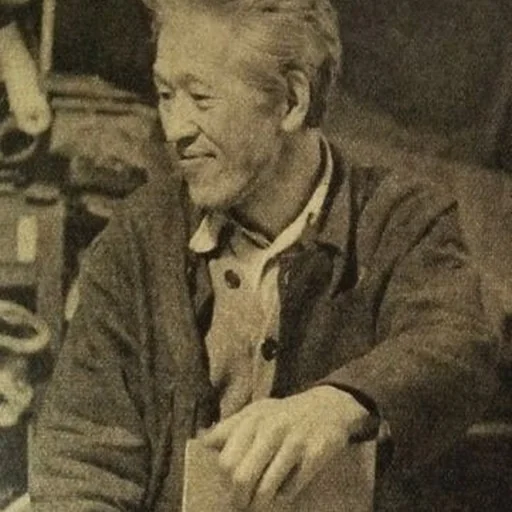
Kōshirō Onchi (恩地 孝四郎, 2 July 1891 – 3 June 1955), who is also known as Onchi Kōshirō was Tokyo-born Japanese artist who is best known for his prints.