Artwork
Untitled
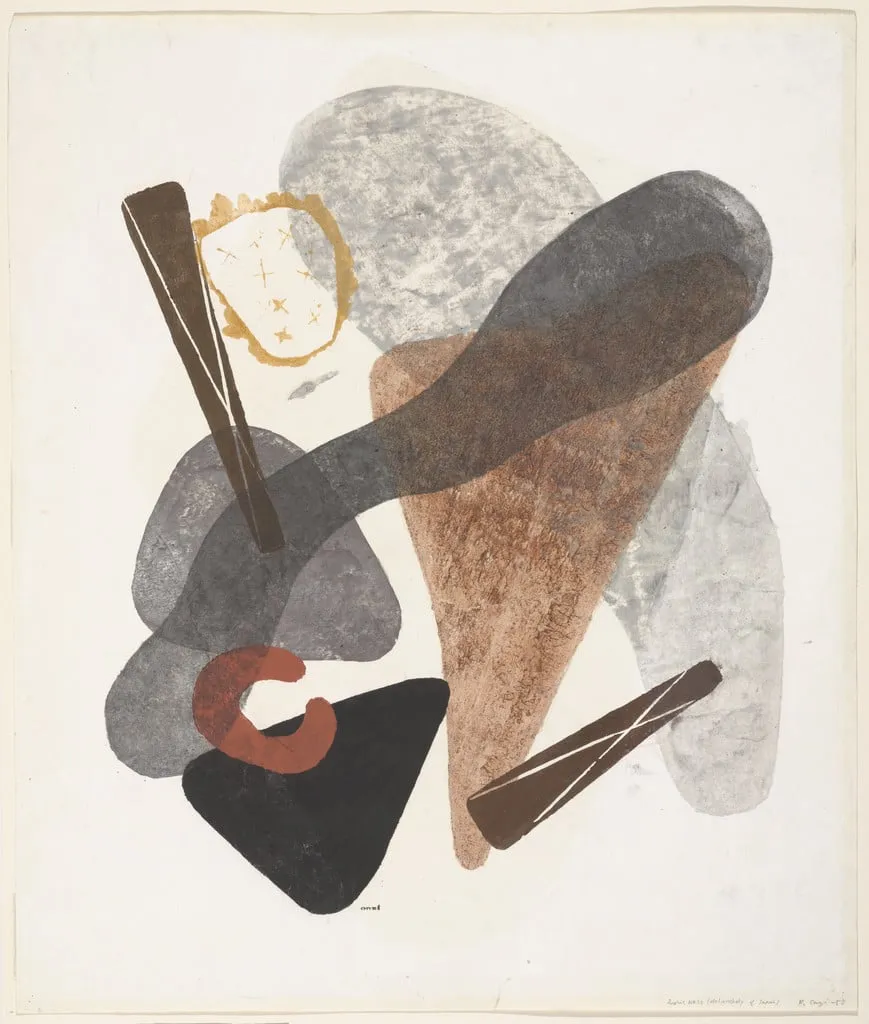
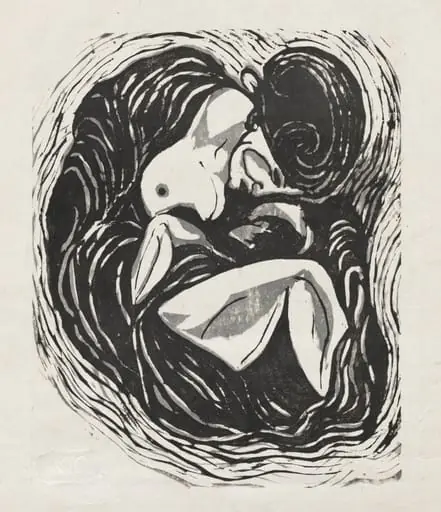
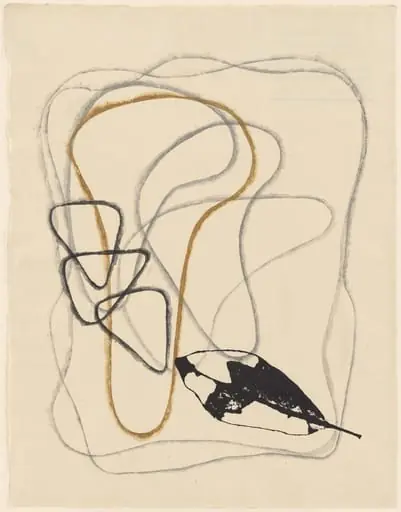
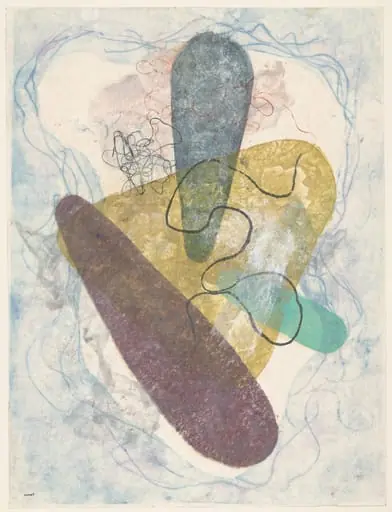
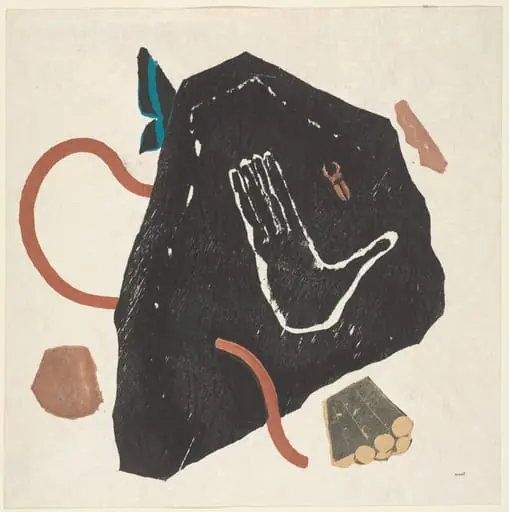
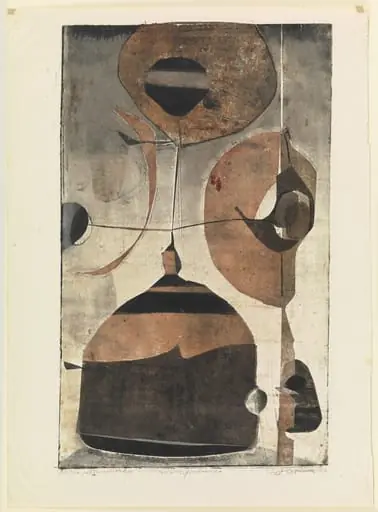
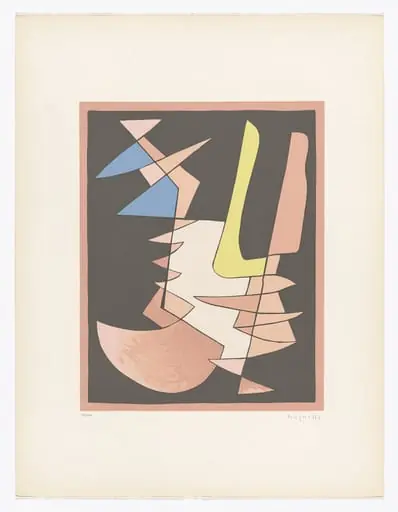
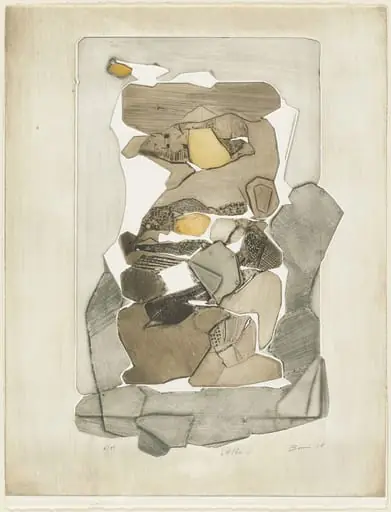
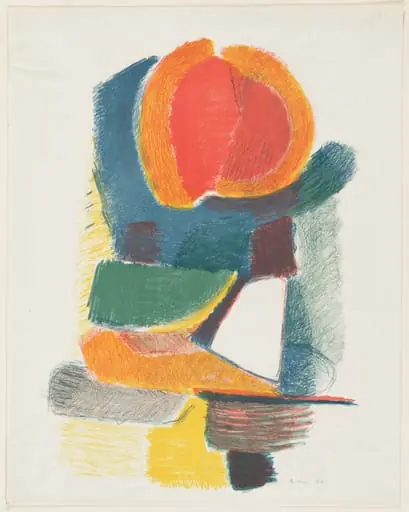
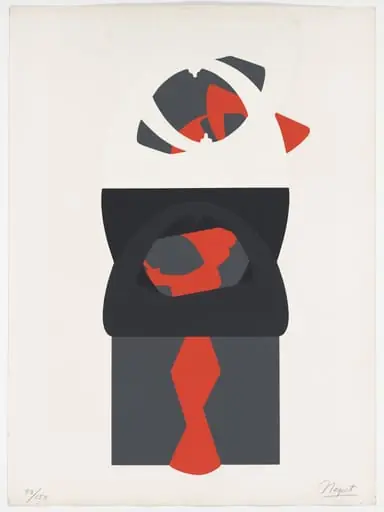
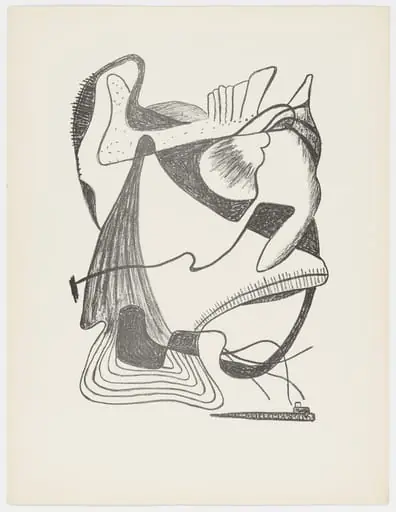
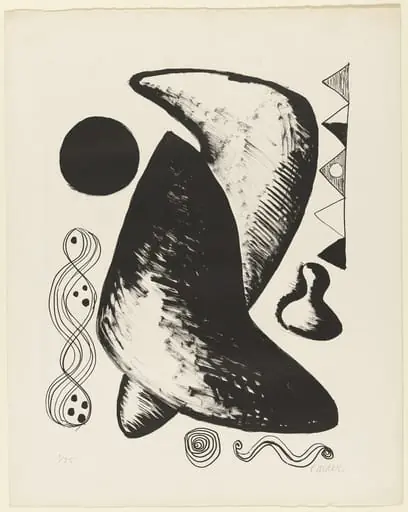
Untitled is an ink print by Koshiro Onchi. It dates from 1952 and is held in the collection of the Museum of Modern Art.
About this work
Overview
Onchi, who carved, inked, and printed the block himself, rejected commercial printmaking traditions in favor of expressive abstraction.
Created in 1952, this woodcut by Kōshirō Onchi is a non-representational print that exemplifies the sōsaku-hanga movement’s emphasis on the artist’s personal hand in every stage of production. Onchi, who carved, inked, and printed the block himself, rejected commercial printmaking traditions in favor of expressive abstraction. The work belongs to The Museum of Modern Art’s collection and reflects his lifelong exploration of form and materiality through print.
Subject & Meaning
The composition avoids literal imagery, instead presenting abstract shapes: a dark oval with radiating lines, a curved red form, and irregular gray and beige masses against a white field. One area suggests a celestial body surrounded by small marks, evoking cosmic or organic rhythms without defining them. Onchi’s intent was not narrative but emotional resonance—inviting contemplation through ambiguity and minimal gesture.
Technique & Style
Executed as a woodcut, the image was carved directly into a wooden block, then inked and pressed by hand. The bold, flat areas of color and crisp edges reflect the medium’s inherent constraints and strengths. Onchi embraced the grain and texture of the wood, allowing subtle imperfections to contribute to the work’s quiet dynamism. His style favors reduction, using few elements to suggest depth and movement without illusion.
History & Provenance
Onchi, a central figure in postwar Japanese art, produced this print during a period of intense experimentation in abstract printmaking. It entered The Museum of Modern Art’s collection as part of its broader effort to document international modernist practices after World War II. The work’s provenance traces directly to Onchi’s studio, consistent with the sōsaku-hanga principle of artist-controlled production from carving to printing.
Context
In the 1950s, Japanese artists like Onchi sought new visual languages beyond traditional ukiyo-e and Western realism. The sōsaku-hanga movement, which he helped define, positioned the artist as both designer and maker, aligning with global trends in abstraction but rooted in Japanese material culture. This print emerged amid Japan’s cultural reorientation, where art became a space for individual expression after wartime conformity.
Legacy
Onchi’s abstract woodcuts, including this untitled work, influenced generations of Japanese printmakers by validating non-representational forms within a traditionally illustrative medium. His insistence on the artist’s direct involvement reshaped printmaking’s status in modern art. Today, his works are studied for their quiet innovation, bridging Japanese craft traditions with mid-century abstraction without overt political or stylistic dogma.
Artist & collection
Artist
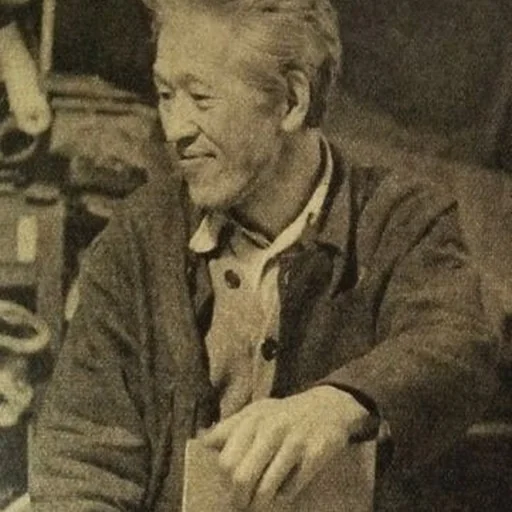
Kōshirō Onchi (恩地 孝四郎, 2 July 1891 – 3 June 1955), who is also known as Onchi Kōshirō was Tokyo-born Japanese artist who is best known for his prints.