Artwork
Gyulai Gaal Miklos
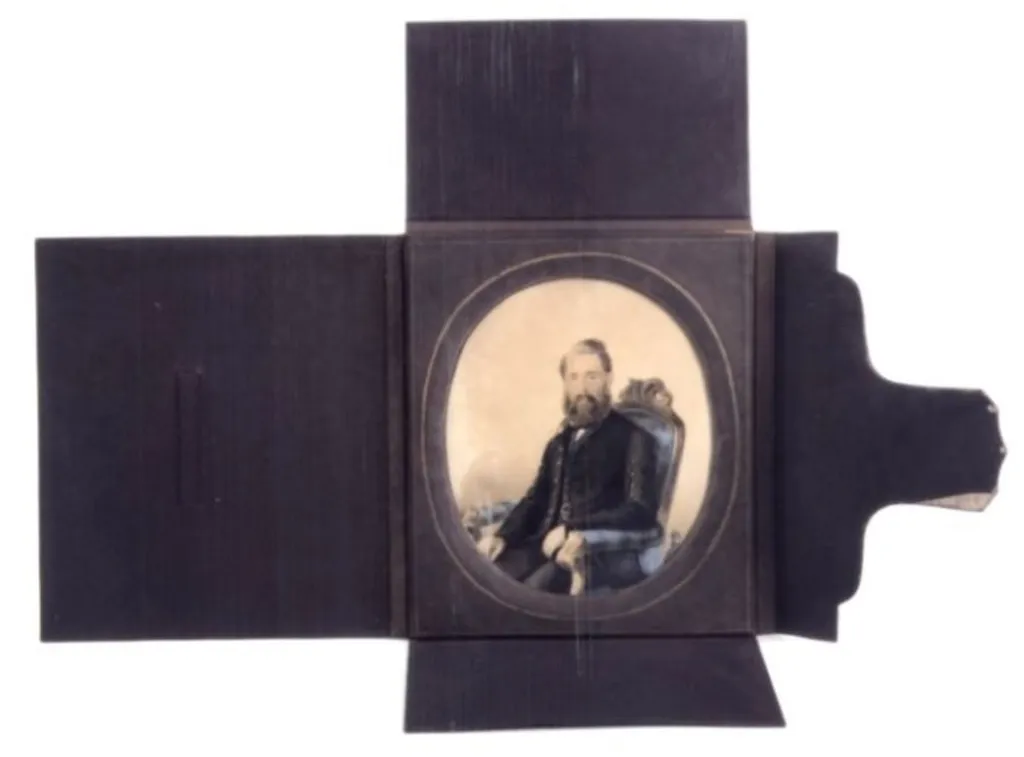
Gyulai Gaal Miklos is a print by the Romanticist artist R. Kowalszky. It dates from 1832 and is held in the collection of the Arad Museum Complex.
About this work
Overview
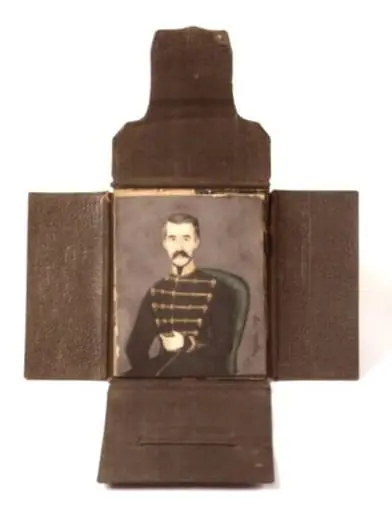
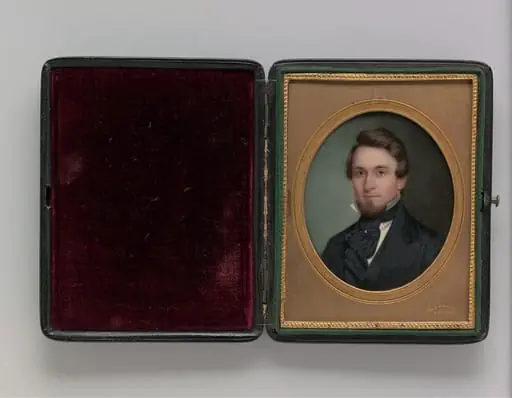
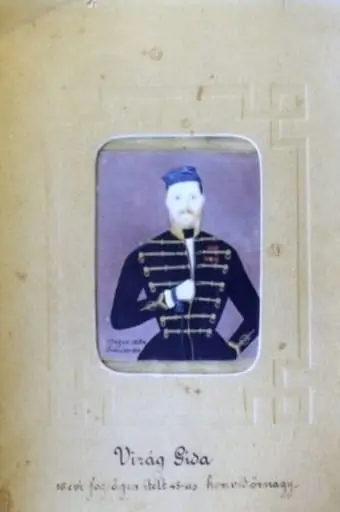
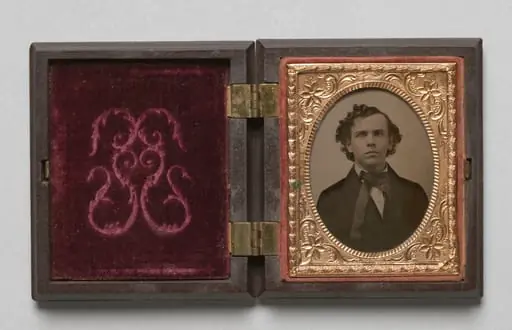
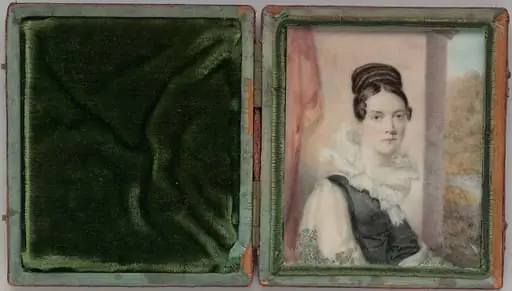
Gyulai Gaal Miklos is an image attributed to R. Kowalszky, dated 1832. The composition presents a solitary male figure seated in a chair, captured within a circular frame that is set into a dark wooden border resembling an open book. The visual tone is subdued, with the subject’s dark, high‑collared coat and solemn expression conveying a formal, early‑19th‑century portraiture style.
Subject & Meaning
The portrait depicts a man whose posture is rigid and composed, suggesting a conventional approach to personal representation of the period. His serious demeanor and attire—particularly the high‑collar coat—indicate a figure of some social standing, possibly intended to convey dignity and respectability within a domestic or institutional setting.
Technique & Style
The image is rendered in a round format, a rarity for the era, and is framed by a wooden case that mimics an opened book, reinforcing a literary or scholarly association. The edges show slight fading, a sign of age that enhances the work’s historic ambience, while the overall composition aligns with the formal portrait conventions preceding Romantic experimentation.
History & Provenance
Created in 1832, the work is linked to the artist R. Kowalszky, though little documentation exists beyond the signature and date. The framing device suggests it may have been intended for display in a private collection or study, and its preservation of a vintage appearance points to careful handling over nearly two centuries.
Artist & collection
Artist
R. Kowalszky made a single known print titled Gyulai Gaal Miklós in 1832. It’s a black-and-white engraving of a man in uniform, all crisp lines and small details. Likely made for books or flyers, it belongs to an era…