Artwork
Sikoja
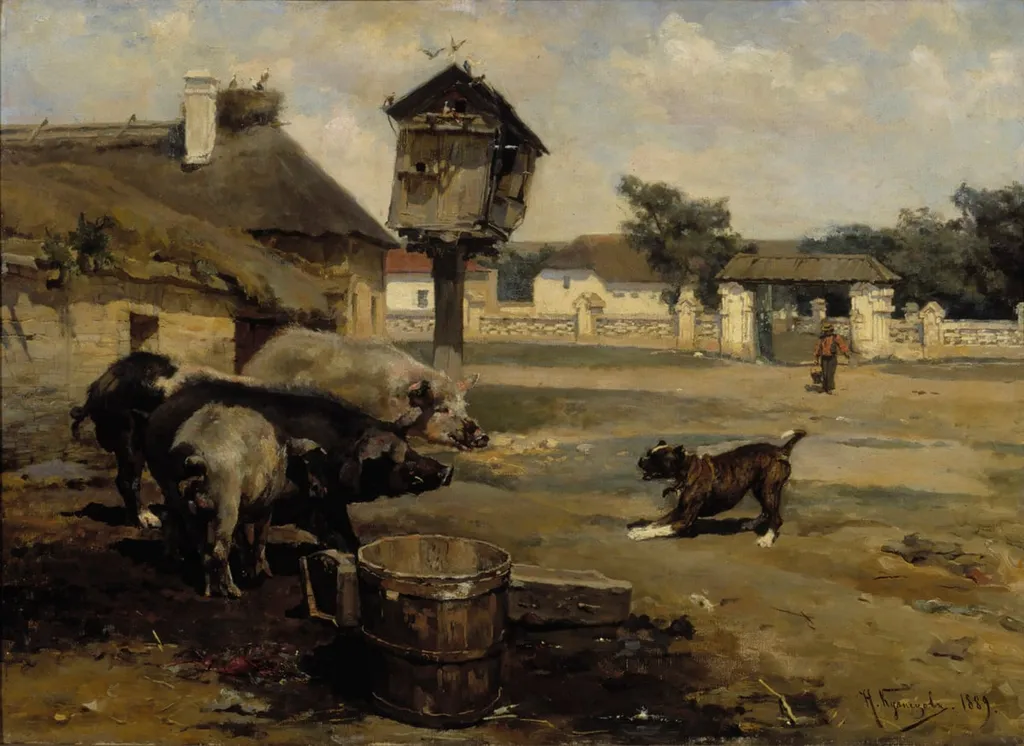
Sikoja is an unspecified painting by Nikolai Dmitrijevitš Kuznetsov. It is held in the collection of the Finnish National Gallery. The work depicts a rural courtyard rendered in muted earth tones.
About this work
Overview
The work depicts a rural courtyard rendered in muted earth tones. A cluster of pigs rummages near a wooden barrel while a small dog darts toward them, and a solitary figure in a coat retreats into the background. Thatched roofs and simple walls enclose the scene, and a tall post bearing a lantern stands in one corner, anchoring the composition.
Subject & Meaning
The painting captures everyday life in a modest village, emphasizing the interaction between humans, animals, and the built environment. The lone wanderer suggests a moment of departure or contemplation, while the pigs and dog convey a sense of activity and domestic routine, highlighting the ordinary rhythms of rural existence.
Technique & Style
Thick, impasto brushstrokes dominate the surface, especially on the pigs and the earthen ground, giving the picture a tactile, rugged quality. Soft, diffused lighting creates gentle shadows that merge with the surrounding dirt and walls, reinforcing the naturalistic atmosphere and underscoring the materiality of the paint.
Context
Set within a simple agrarian landscape, the composition reflects a tradition of genre painting that focuses on the lived experience of peasant communities. The inclusion of thatched roofs, a lantern‑topped post, and modest architecture situates the scene in a historically rural setting, resonating with broader visual narratives of countryside life.
Legacy
While specific details about the artist’s background remain limited, the work’s emphasis on texture and everyday subject matter aligns it with later developments in realist and impressionist approaches, where the physicality of paint and the depiction of ordinary moments became central concerns.
Artist & collection
Artist
Nikolai Dmitrijevitš Kuznetsov
A Finnish painter known for everyday scenes of the 19th-century countryside, Nikolai Dmitrijevitš Kuznetsov left small, quiet works that feel like postcards from the past.

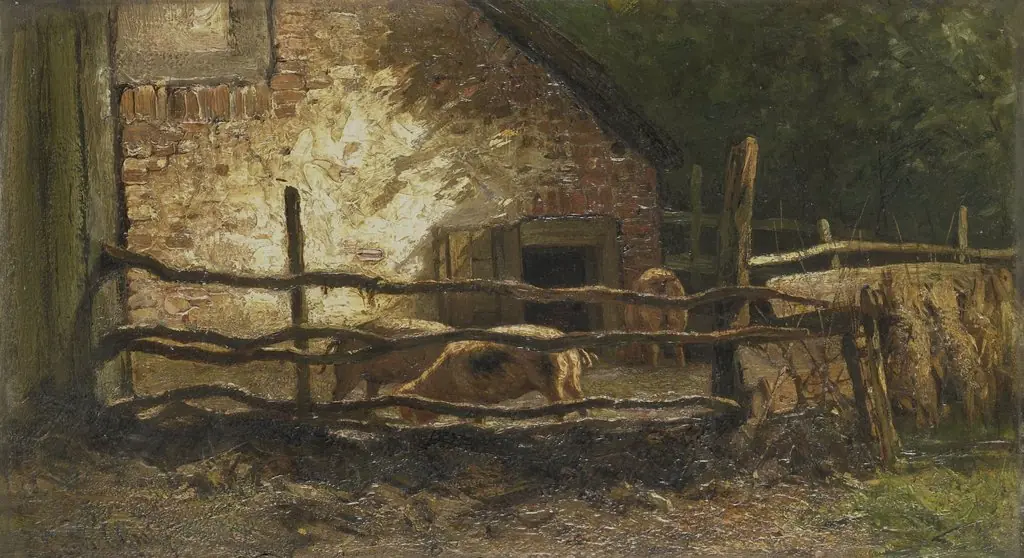 Pigs in a Sty
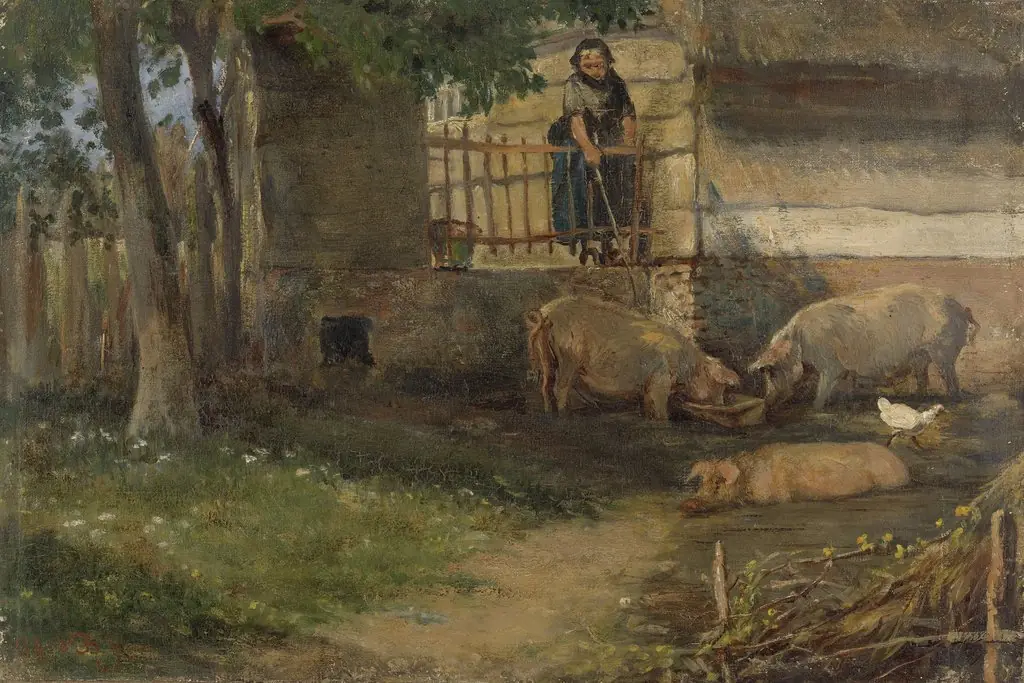 Pigs in a barnyard
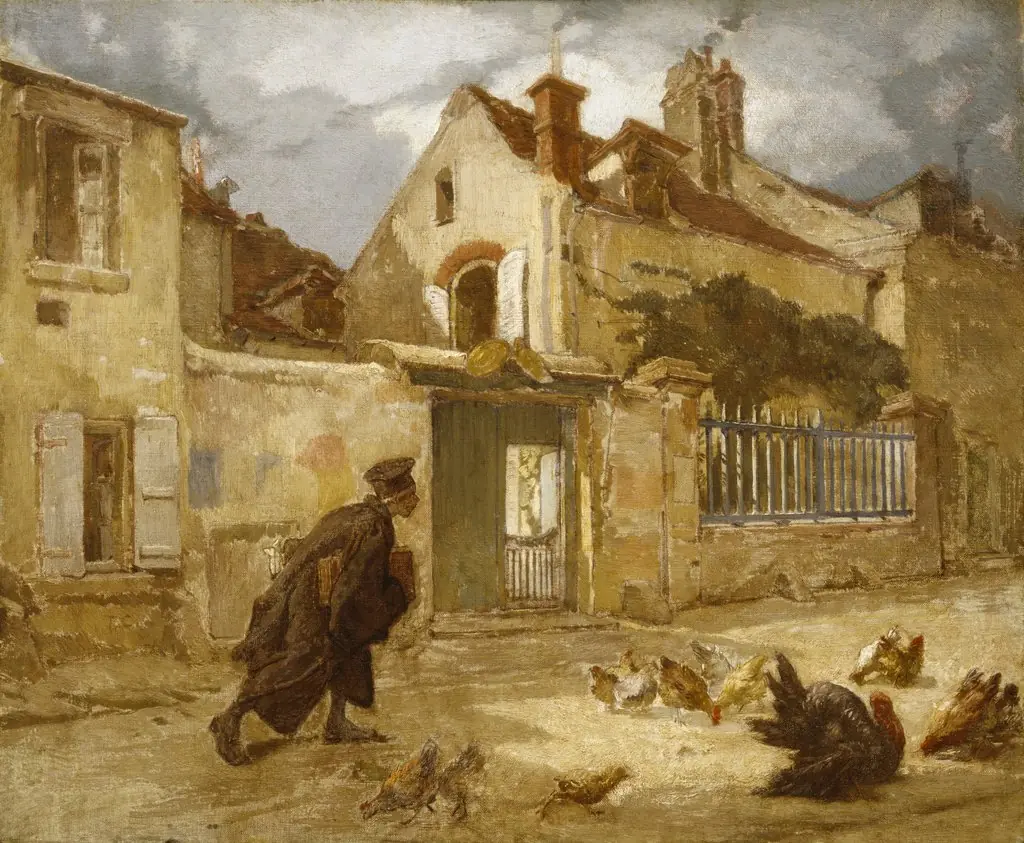 Lawyer Going to Court
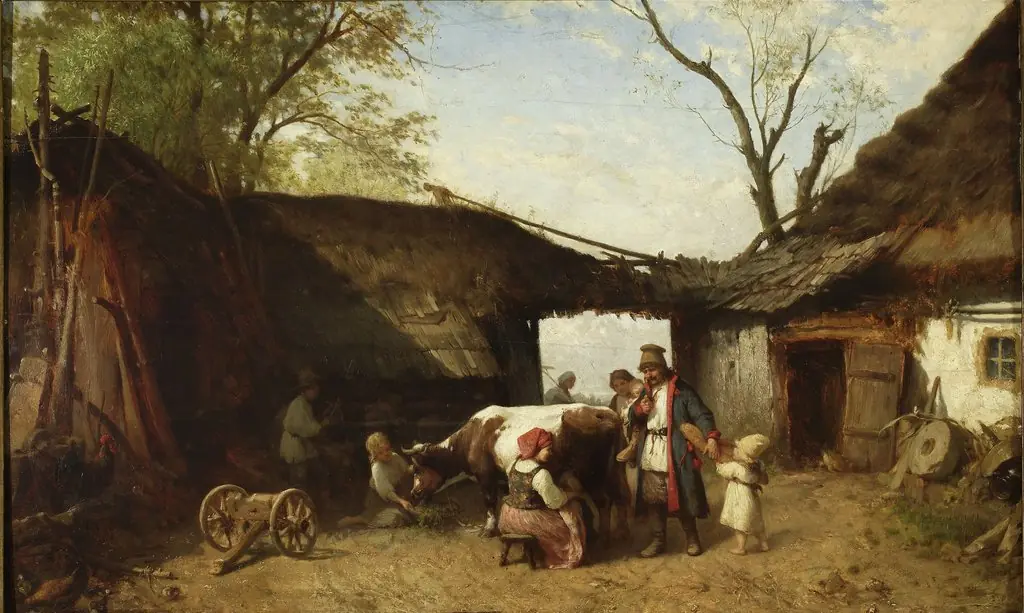 In the farmyard
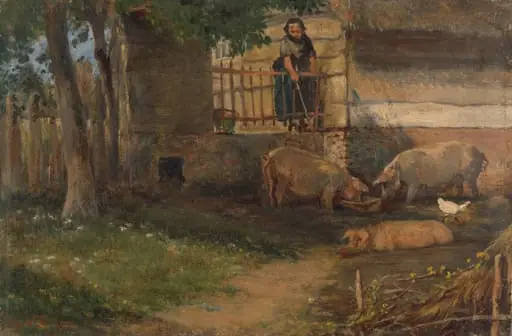 Pigs in a Barnyard
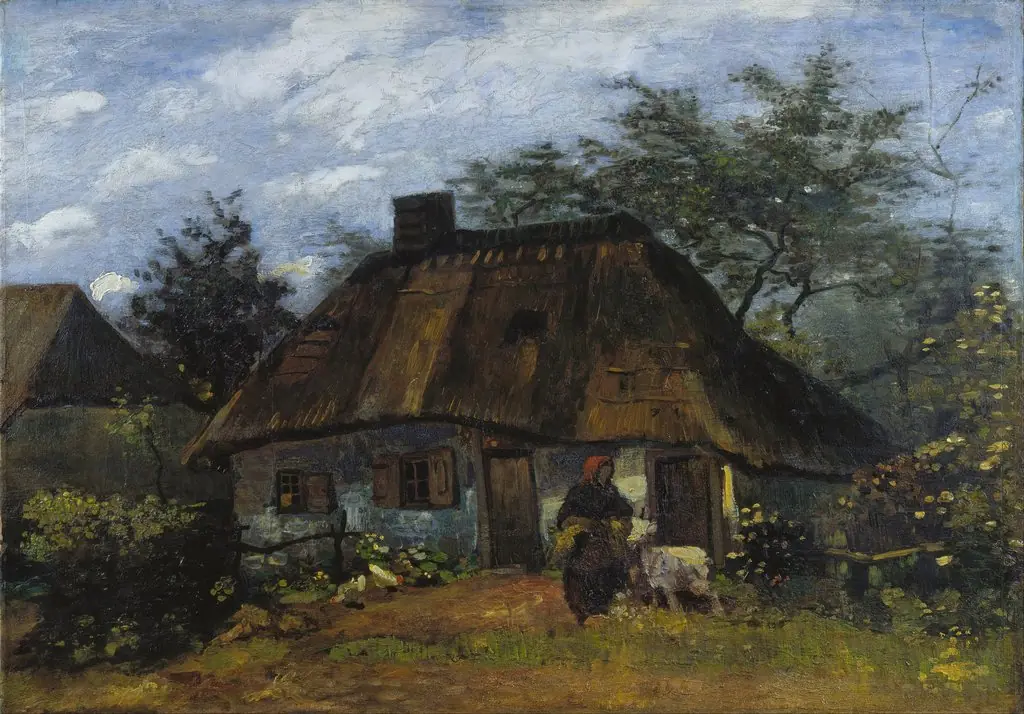 Cottage and Woman with Goat
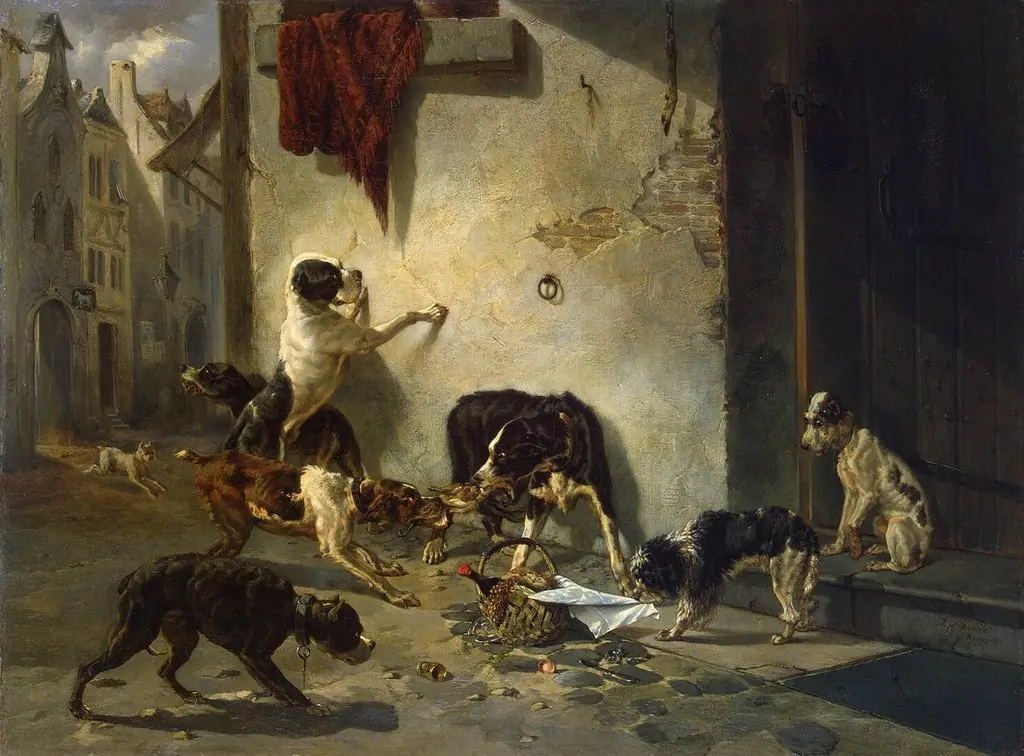 Dog Carrying Dinner to its Master (Fable by La Fontaine)
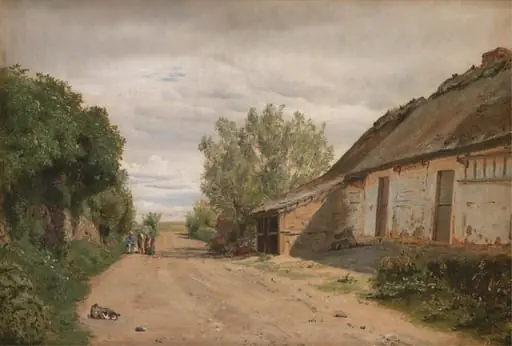 The Outskirts of the Village of Vejby. By the Roadside the Painter J.Th. Lundbye Sketching
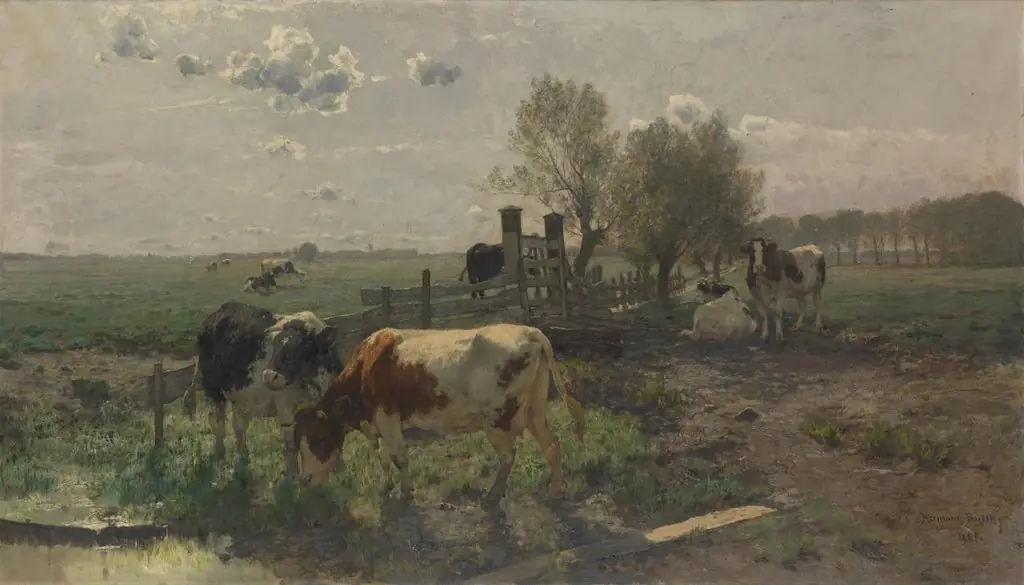 Dutch pastures, morning
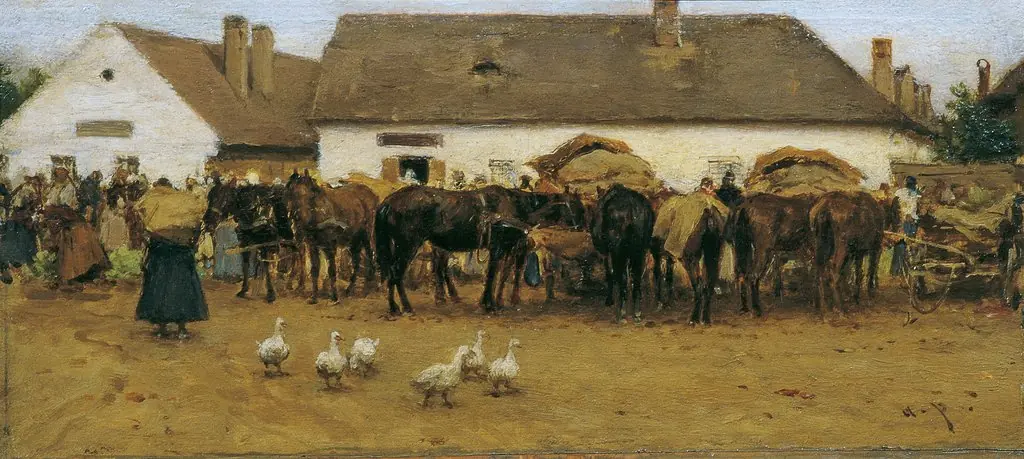 Market in Szolnok
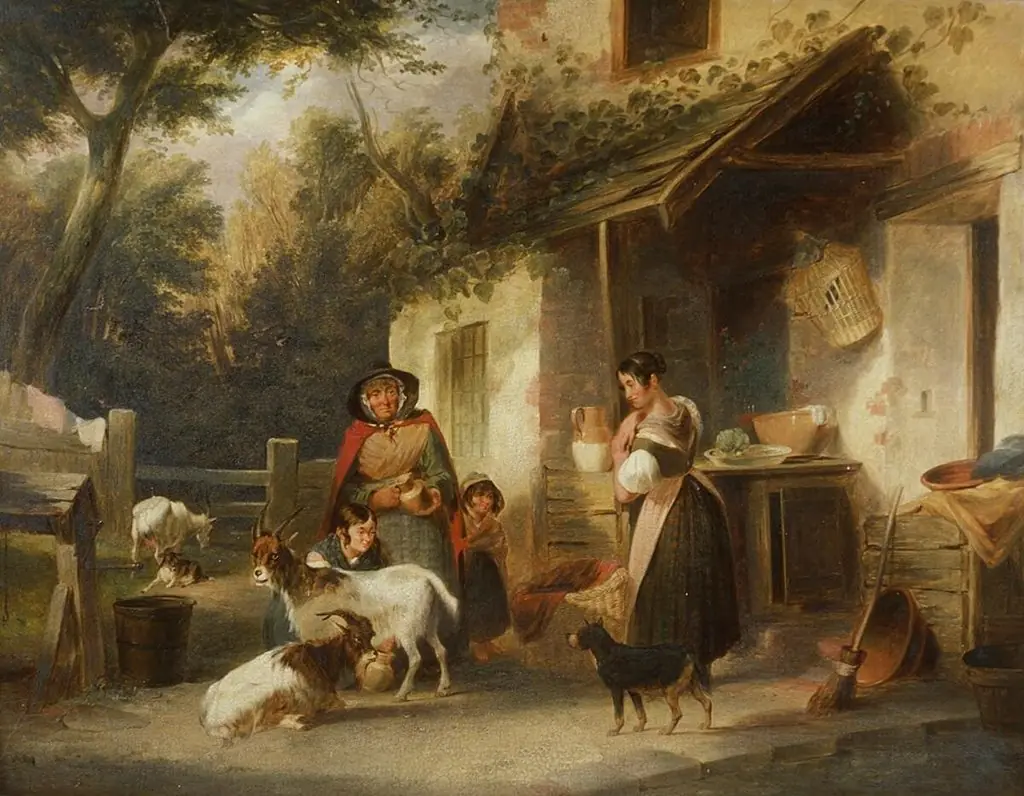 Farm scene, Wales?
 Interieur van een stal met paarden en figuren