Artwork
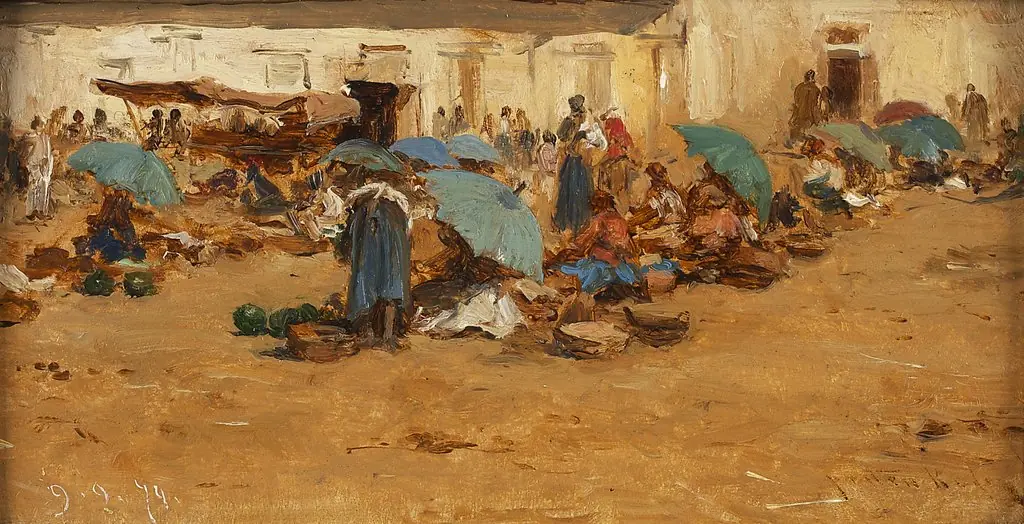
Market in Szolnok
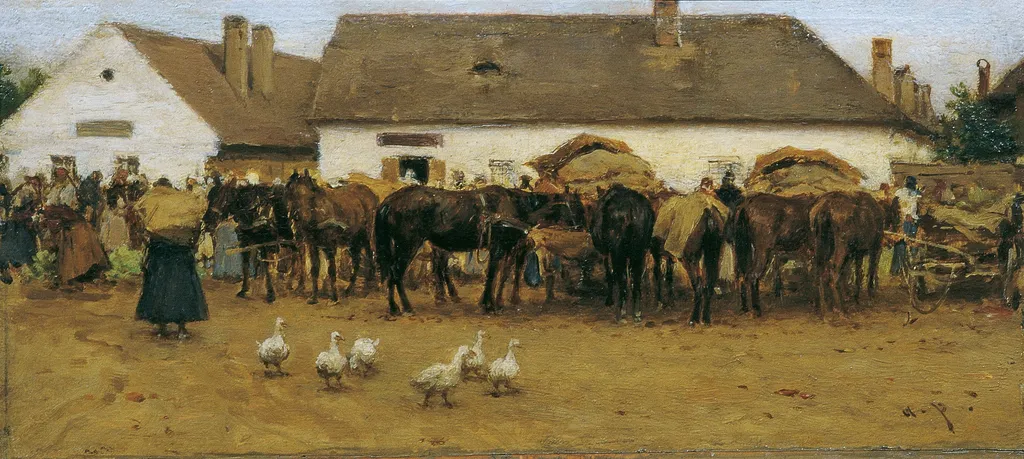
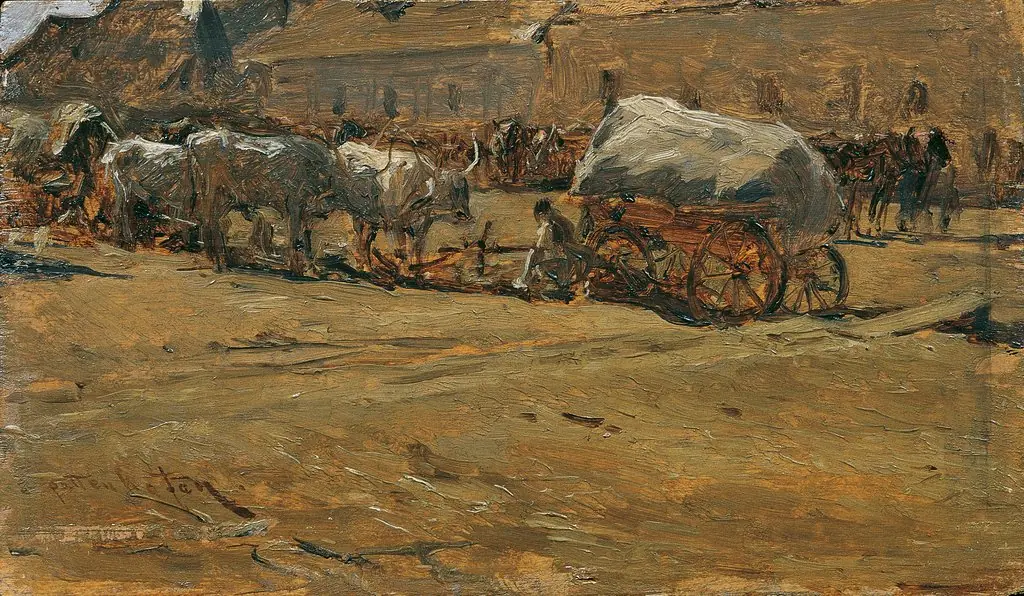
Market in Szolnok is an oil painting by the Realist artist August von Pettenkofen. It dates from 1875 and is held in the collection of the Kunsthistorisches Museum.
About this work
Overview
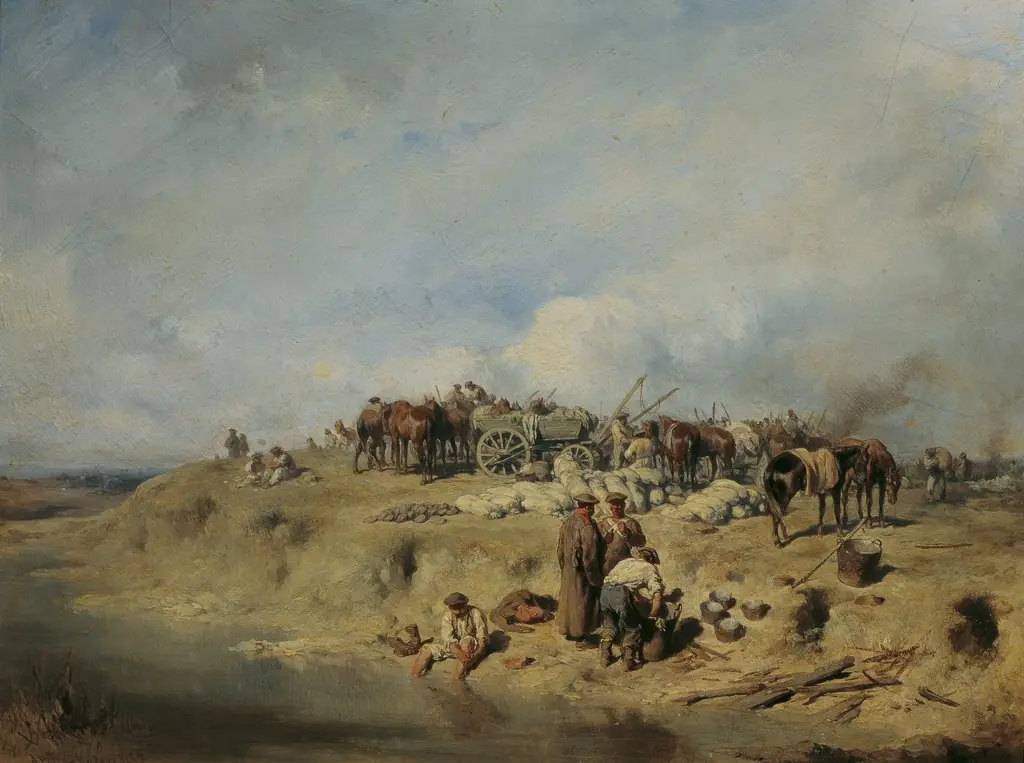
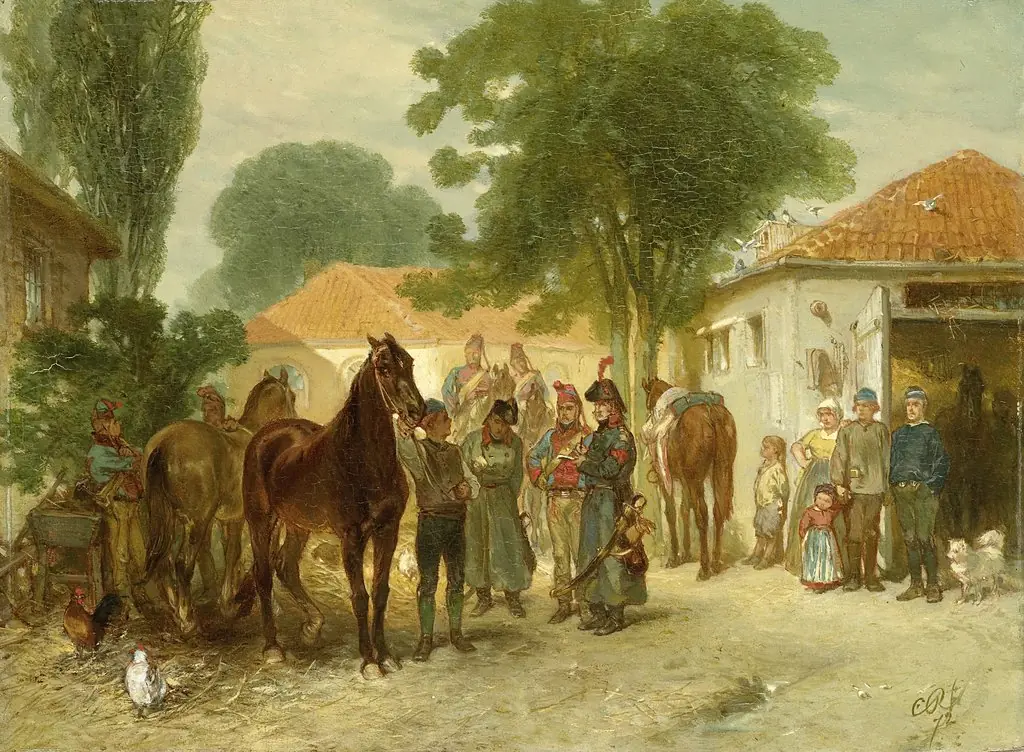
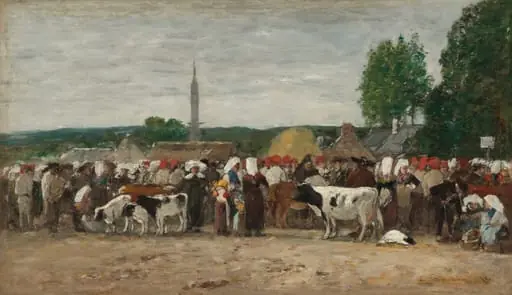
Painted in 1875 by August von Pettenkofen, Market in Szolnok is an oil-on-canvas depiction of a bustling rural marketplace in Hungary. The work resides in the Kunsthistorisches Museum in Vienna, where it represents the artist’s interest in everyday life beyond urban centers. Its composition captures a moment of communal activity, grounded in observation rather than idealization.
Subject & Meaning
The scene portrays a vibrant market in Szolnok, with vendors, shoppers, horses, and carts interacting in a naturalistic setting. No single narrative dominates; instead, the painting emphasizes the rhythm of daily commerce. The presence of local architecture and attire suggests a specific regional identity, reflecting 19th-century Hungarian provincial life without overt symbolism or moralizing.
Technique & Style
Pettenkofen employs loose, fluid brushwork to convey movement and texture, particularly in the clothing of figures and the fur of horses. Warm, sunlit tones dominate, enhancing the sense of a bright midday. While light falls naturally across the scene, the artist avoids dramatic chiaroscuro, favoring even illumination to sustain the lively, unposed atmosphere of the market.
History & Provenance
Created during Pettenkofen’s mature period, the painting was acquired by the Kunsthistorisches Museum shortly after its completion. It remained within Austrian imperial collections, reflecting the Habsburg court’s interest in regional cultural documentation. Its preservation suggests early recognition of its value as a record of everyday life in the empire’s eastern territories.
Context
In the 1870s, European artists increasingly turned to genre scenes of rural and provincial life, moving away from historical or mythological themes. Pettenkofen, trained in Vienna, aligned with this trend, drawing inspiration from local markets and peasant economies. His work contributed to a broader Central European effort to document vernacular culture amid rapid industrialization.
Legacy
Market in Szolnok endures as a representative example of 19th-century Austrian genre painting. While not widely reproduced, it remains a key reference for scholars studying regional identity in Habsburg art. Its quiet realism offers insight into the visual culture of non-urban communities, preserving a moment of ordinary life with unembellished clarity.
Artist & collection