Artwork
The Bud and the Blossom [recto]
![The Bud and the Blossom [recto], by Paul Lacroix, graphite, 1831](https://artifactworldgallery.com/img/paul-lacroix--the-bud-and-the-blossom-recto--ebe32e3a4f39abde-w1024.webp)
The Bud and the Blossom [recto] is a graphite drawing by the Romanticist artist Paul Lacroix. It dates from 1831 and is held in the collection of the National Gallery of Art.
About this work
Overview
The light paper ground enhances the delicacy of the medium, emphasizing the tender interaction between the figures without overt narrative or dramatic setting.
Created in 1831 by Paul Lacroix, this graphite drawing on wove paper presents a quiet, intimate scene of a woman and child. Rendered with fine, controlled lines, the work captures subtle expressions and textured details in their clothing and hair. The light paper ground enhances the delicacy of the medium, emphasizing the tender interaction between the figures without overt narrative or dramatic setting.
Subject & Meaning
The figures—a woman and a young child, both with curly hair and dressed in similar garments—suggest a maternal bond. Their opposing gazes, one turned left, the other right, introduce a sense of quiet contemplation rather than direct engagement. The title, The Bud and the Blossom, implies a natural progression of growth, possibly symbolizing youth and maturity, though no explicit allegory is stated in the image itself.
Technique & Style
Lacroix employed graphite with precision, using varied pressure to model form and texture. The wove paper’s smooth surface allowed for fine gradations in tone, particularly in the rendering of hair and fabric folds. The restrained use of shading and absence of bold outlines reflect a sensitivity to line and subtlety, aligning with the refined draftsmanship common in early 19th-century portraiture.
History & Provenance
The drawing is attributed to Paul Lacroix, a French artist and writer active in the early 1800s, known for his illustrations and historical studies. While its early ownership is undocumented, it has been preserved in institutional collections since at least the late 19th century. Its survival as a standalone sheet suggests it was valued as a study or personal work rather than a commercial commission.
Context
Produced during the height of Romanticism in France, the work shares the movement’s interest in emotional intimacy and natural forms. Yet it avoids theatricality, favoring quiet observation over grandeur. This restrained approach reflects a broader trend among illustrators and draftsmen who focused on domestic scenes, balancing Romantic sensibility with the precision of academic training.
Legacy
Though not widely exhibited, the drawing remains a representative example of Lacroix’s draftsmanship and his engagement with intimate portraiture. It contributes to the understanding of how Romantic ideals were expressed in smaller, personal works, distinct from large-scale paintings. Its preservation highlights the significance of graphic art in documenting private moments of the period.
Artist & collection


![A Duck and a Stag [verso], by Paul Lacroix](https://artifactworldgallery.com/img/paul-lacroix--a-duck-and-a-stag-verso--2ab27b114277d625-w320.webp)
 Two Children
 H Beard Print Collection
 Lady Louth with her daughter
 The children of the 6th Lord Essex
 H Beard Print Collection
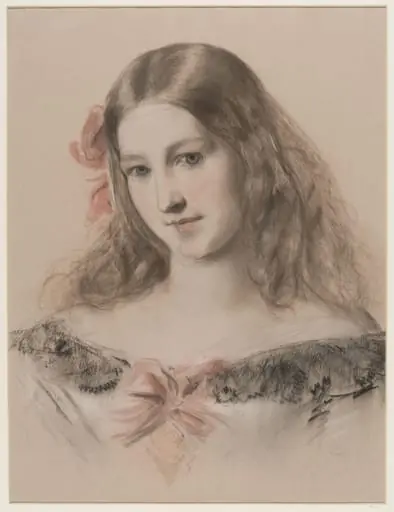 The Blonde, Female Head
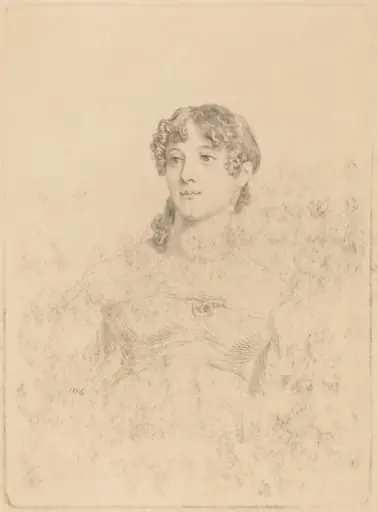 Lady Maria Hooker When Miss Turner at Age Seventeen
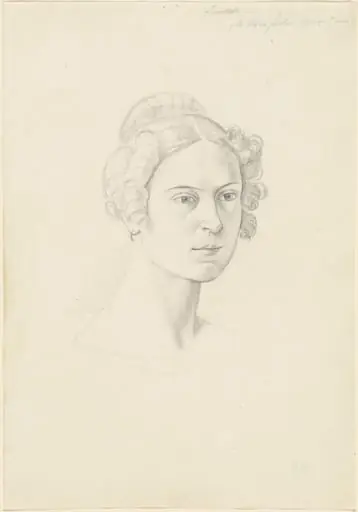 Giuseppina Massimi, Principessa Lancellotti di Lauro
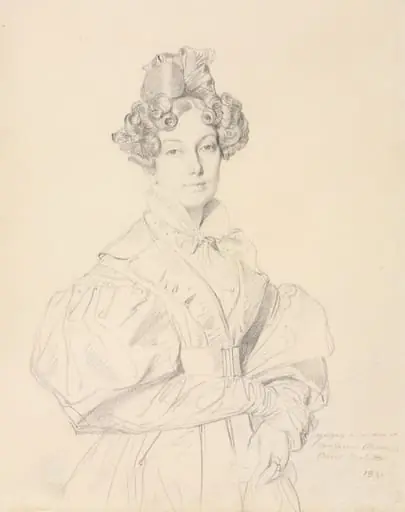 Madame Désiré Raoul-Rochette
 An unknown young lady
 Mme. Horace Vernet
 H Beard Print Collection